
This story contains descriptions of domestic violence and extreme substance abuse. Reader discretion is advised.
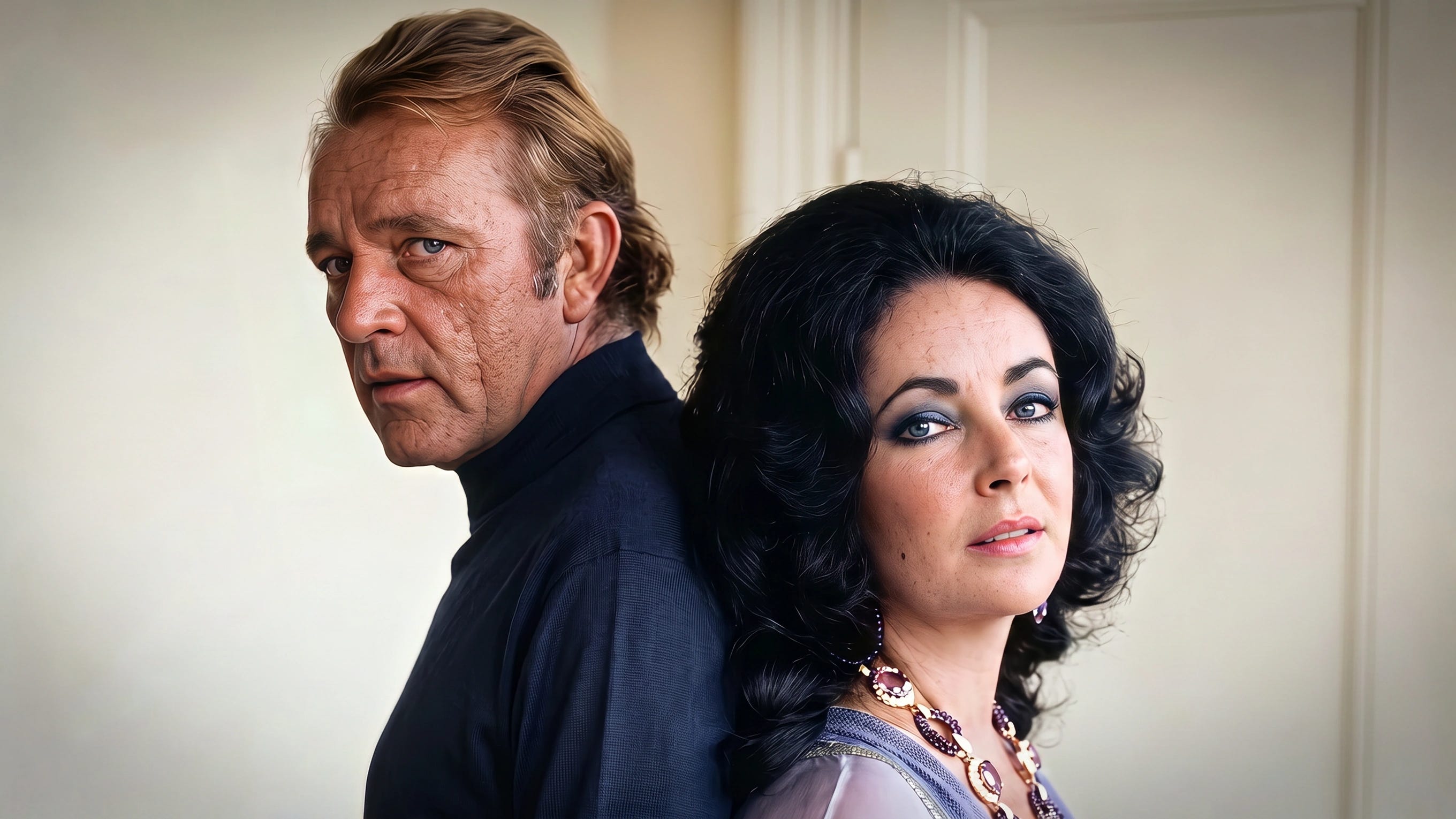
On the set of Cleopatra in Rome in 1962, 20th Century Fox chief Spyros Skouras wrote a letter to production head Darryl Zanuck about the condition of his lead actress.
Elizabeth Taylor, he reported, had sustained “the beating Burton gave her in Santo Stefano.”
She had two black eyes. Her nose was bent out of shape.
And it took 22 days for her to recover enough to resume filming.
Taylor told the press she’d bumped her nose on a car ashtray while sleeping in the backseat on the drive back from Porto Santo Stefano, and the story was subsequently fed to reporters by the studio.
Skouras reportedly told Burton directly that he’d have him beaten so badly he couldn’t work the next day if he ever struck Taylor again.
The Fox chief then added that the threat was “for what he was doing to Sybil,” Burton’s first wife, a detail suggesting the studio’s concern was at least partly about protecting its production schedule rather than its lead actress.
The official story was the car accident. The studio’s internal correspondence said something else.
She was 30. He was 36. They were both still married to other people, and the affair that followed was condemned in The Vatican’s weekly newspaper as “erotic vagrancy.”
A United States congresswoman petitioned to bar both of them from re-entering the country on grounds of “undesirability.”
Indeed, it was the first modern celebrity scandal. But it was only the beginning.
What happened inside those ten years is arguably worse than the headlines ever reported, and most of it is now on the record in their own words.
Before Richard
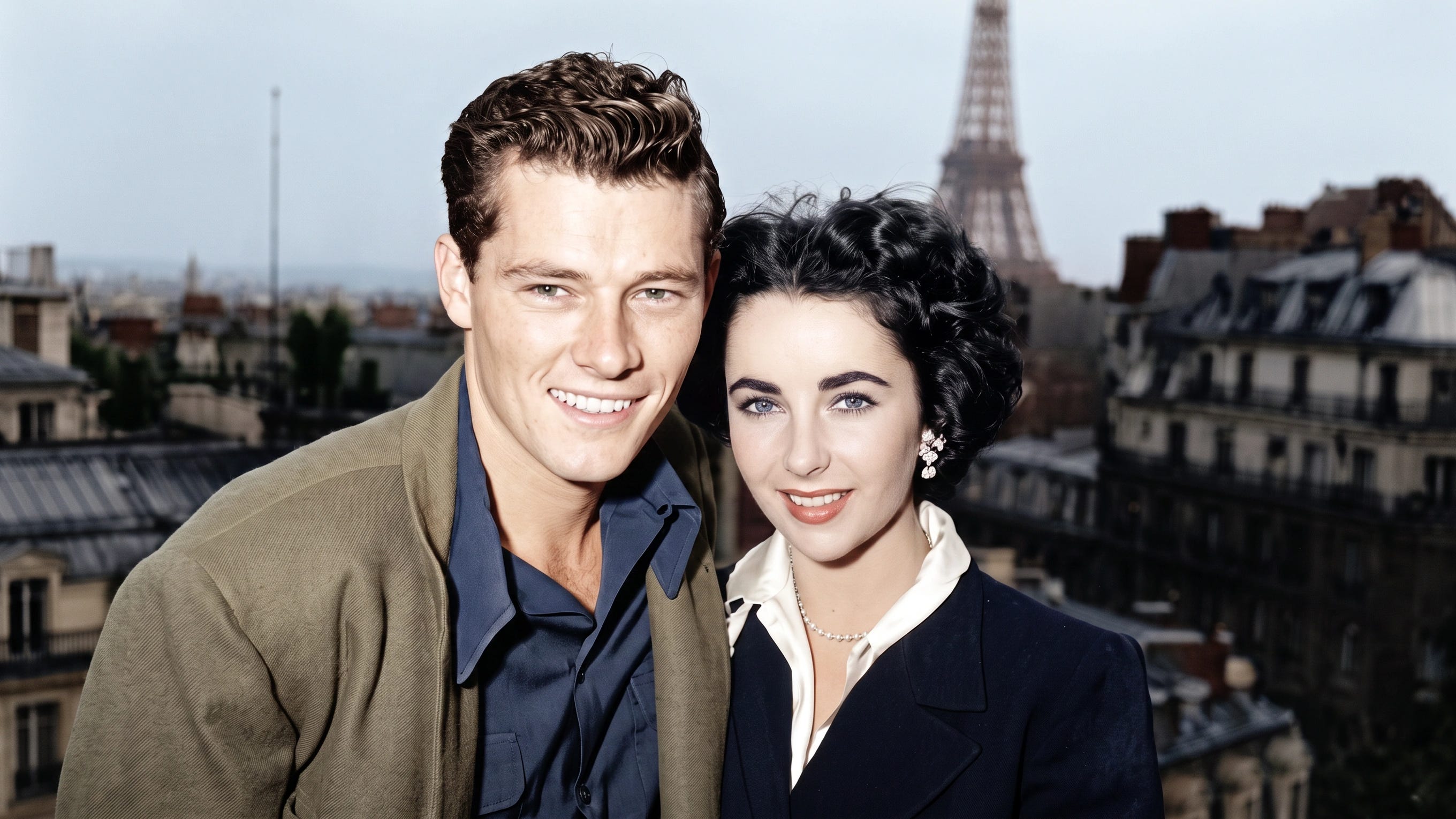
Elizabeth Rosemond Taylor was born February 27, 1932, in Hampstead, London, to two American expatriates.
Her father was an art dealer. Her mother, Sara Sothern, born Sara Warmbrodt, had reinvented her own name in pursuit of a stage career that never arrived, and channeled the ambition directly into her daughter instead.
The family fled to Los Angeles in 1939, and nine-year-old Elizabeth was signed to MGM, which she later described as “a big extended factory” that controlled every aspect of her schedule.
She’d reflect years later that without the war she’d likely have become “an English debutante” who married once and had “lots of children,” a counterfactual that reveals how thoroughly Hollywood, rather than any innate restlessness, shaped the decades that followed.
By the time she met Burton at 29, she’d already survived four marriages, and the pattern they established explains almost everything about the fifth.
Her first husband, hotel heir Nicky Hilton Jr., married her when was 18 years old in a studio-orchestrated ceremony on May 6, 1950, timed to coincide with the release of Father of the Bride.
In 1964 she recorded roughly 40 hours of private audiotapes with journalist Richard Meryman. The tapes were sealed for six decades, until HBO released them as Elizabeth Taylor: The Lost Tapes in 2024. On them, she said entered the marriage “not only a virgin physically, but mentally” and that she believed it would resemble “living in a little white cottage with a picket fence and roses.”
Yet those were happy claims. She also described Hilton “kicking me in the stomach and forcing me to have a miscarriage.”
Biographer J. Randy Taraborrelli wrote separately that Hilton allegedly s*xually assaulted a hotel maid at a Hilton property in 1959, with the family quietly paying to keep the matter out of court, suggesting the abusive pattern Taylor described wasn’t isolated to their marriage. Taylor’s marriage to him collapsed within seven months on grounds of mental cruelty.
Her second husband, British actor Michael Wilding, was 20 years her senior.
She’d met him filming Ivanhoe. She married him explicitly seeking “the calm and quiet and security of friendship” after the Hilton trauma, and for a while the strategy appeared to work.
They had two sons. But the relationship cooled into something she later described as “more like brother and sister,” and Wilding, whose career was fading, had hoped the union would boost his standing in Hollywood more than it did.
In The Lost Tapes she offered a starkly different explanation for the divorce:
“I need someone to dominate me.”
It was a line biographers consistently flag as a direct window into why she was drawn to forceful, controlling men for the rest of her life.
Her third husband, producer Mike Todd, was 23 years her senior and the only one of her seven husbands she never divorced. He died on March 22, 1958, when his private twin-engine plane, grimly nicknamed “The Liz” (a name Taylor said she came to hate), crashed in the Zuni Mountains of New Mexico after an engine failure compounded by an overloaded aircraft and icing. They’d been married just over a year and, tragically, their daughter Liza was only months old.
At his funeral she was consoled by his close friend Eddie Fisher, who was at the time married to Debbie Reynolds. That comfort became an affair, and the tabloid firestorm over “stealing” Fisher from America’s sweetheart functioned as a dress rehearsal for the far larger one to come with Burton.
She married Fisher in 1959 and later admitted with unusual bluntness: “I never loved Eddie. I knew it was a mistake when I walked down the aisle,” and she called the union “one big, friggin’ awful mistake.”
The inability to stop herself from repeating destructive romantic decisions, recognizing the mistake while making it, is precisely the pattern biographers identify in her bond with Burton. She met him on the Cleopatra set in 1962, while still married to Fisher.
By the time Burton entered her life, the pattern was already fully established: trauma, followed by a marriage designed to fix it, followed by a marriage that repeated it.
The Battling Burtons
Burton wasn’t her first encounter with violence in a relationship. But he was the one she went back to.
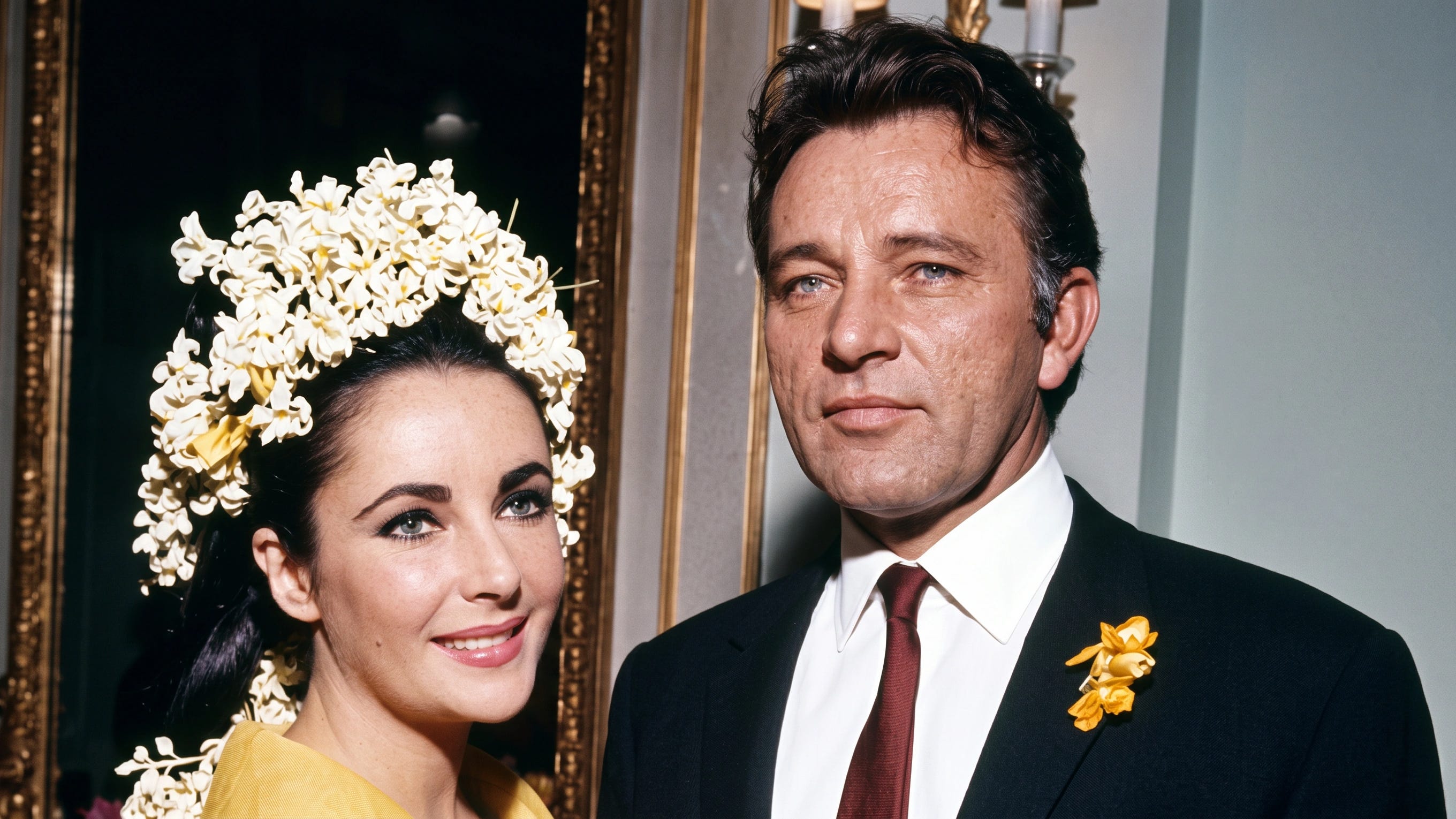
They married for the first time on March 15, 1964, in Montreal. They married for the second time on October 10, 1975, in Botswana. Between and around those two ceremonies they earned the tabloid nickname “the Battling Burtons” for screaming matches that played out in restaurants, hotel lobbies, and film sets across three continents.
And the violence was documented from both sides. Kate Andersen Brower’s biography states plainly that Burton, like Taylor’s earlier husband Mike Todd, was “physically abusive at times,” and adds that “she was physically abusive towards them” as well, framing the relationship as mutually volatile rather than one-directional.
Burton’s own diary entry from September 9, 1969, describes a fight that turned physical: “I went mad, which ended up with Elizabeth smashing me around the head with her ringed fingers. If any man had done that, I’d have killed him. I still boil with fury when I think about it.”
Vogue’s account of their stays at grand hotels describes escalation over the years:
“TVs were smashed, hotel rooms trashed.”
In one incident, Taylor reportedly jumped up, grabbed a broken vodka bottle, and chased a terrified woman out of a hotel room during a jealous rage.
At the Regency Hotel in New York, another couple reportedly took the suite directly below the Burtons’ specifically to eavesdrop on their fights, prompting Taylor’s dryly self-aware observation: “Well, they got an earful, but what the poor schmoes didn’t know was that it was a vocal exercise.”
Burton described the pattern in his own words: “I’m not easy to be married to or live with. I exploded violently about twice a year with Elizabeth. She would also explode. It was marvelous.”
In a joint 1970 CBS interview, both defended the fighting as healthy, with Burton calling it “one of the greatest exercises in marital togetherness,” while also revealing he intentionally avoided her “soft spot,” an unspoken acknowledgment of exactly where the most damaging blows could land.
Their real-life dynamic directly informed their performances as George and Martha in Who’s Afraid of Virginia Woolf? in 1966, a film critics consistently cite as blurring the line between their acting and their actual marriage.
Vanity Fair’s retrospective notes the fights were “initially gleeful” but grew “increasingly brutal” as the years wore on and alcohol and jealousy compounded, eventually escalating from verbal sparring into the object-throwing and hotel-trashing episodes that became their signature.
One further anecdote, reported secondhand in a biography and not independently corroborated, claims Taylor confided to a friend that Burton once “swung her by the hair and punched her so hard that she developed lock jaw.” That claim should be weighed as a reported anecdote rather than settled fact.
What the diaries confirm, without any ambiguity at all, is what they were drinking while all of this was happening.
The Diary
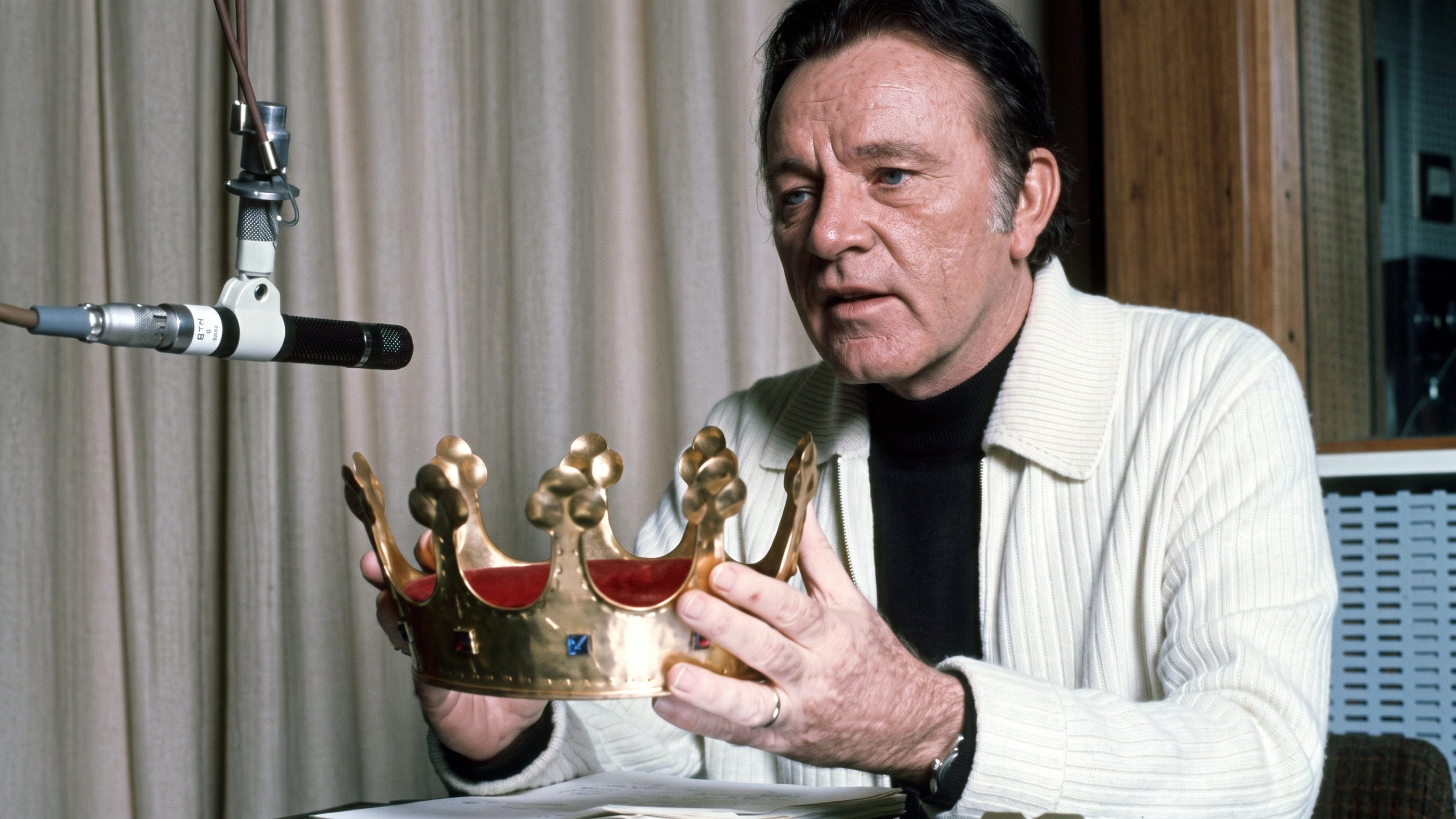
Burton’s diaries, published posthumously in 2012 as The Richard Burton Diaries, are unusually candid primary-source material.
A January 1969 entry describes a single day’s intake: whisky before lunch, wine and brandy after, plus more whisky at night. By 1974, he estimated he’d been drinking “two-and-a-half to three bottles of hard liquor a day.”
In the same diaries he expressed fear about Taylor’s drinking: “E was astonishingly drunk even as I got to lunch... I expect it from the drugs she’s forced to take, but not from the booze... It would be frightful to live the rest of our lives in an alcoholic haze.”
The September 1969 fight he described, the one where Taylor smashed him around the head with her ringed fingers, occurred on exactly one of these evenings. The drinking and the violence weren’t coincidentally linked. They were causally linked.
Taylor herself later admitted: “I used to think that drinking would help my shyness, but all it did was exaggerate all the negative qualities.”
Her substance struggles extended well beyond the Burton years. During her subsequent marriage to Senator John Warner, according to Brower’s biography, she was “abusing alcohol and pain meds, including the injectable ones” for legitimate back problems that spiraled into dependency.
Three doctors wrote a combined 1,000 prescriptions for 28 different drugs for Taylor between 1983 and 1988, covering tranquilizers, sleeping pills, and painkillers. Her son Christopher Wilding gave a harrowing account of Taylor once asking him to inject her with Demerol, which he refused, describing her as looking at him “with deadened yet disappointed eyes” before injecting herself.
A 1988 intervention at Betty Ford stopped her, as she described it, “so dead in my tracks... it leaves you totally speechless.”
But by the time that intervention arrived, both marriages to Burton were already over, and the currency they’d used to hold the relationship together when nothing else worked had already been dispersed at auction.
The Jewelry
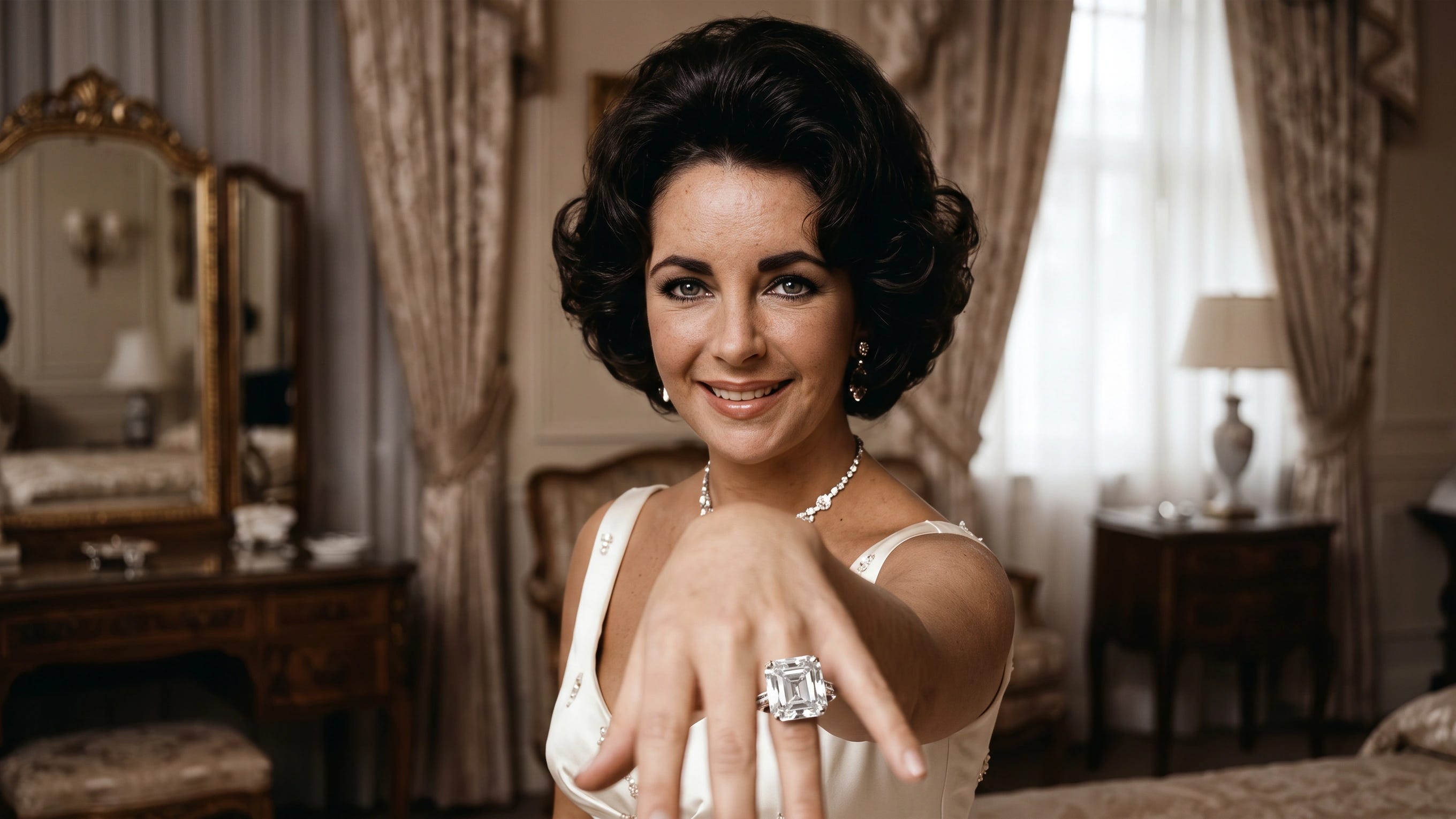
Burton bought Taylor jewelry on average every six weeks for roughly 12 years.
The gifts are extraordinarily well documented, including exact prices and auction outcomes, and they tell a story about the relationship that the diaries only hint at.
The Krupp Diamond, a 33.19-carat Asscher-cut stone, was purchased in 1968 for $305,000 at auction (equal to a whopping $3 million today).
It’d formerly belonged to Vera Krupp, widow of German industrialist Alfried Krupp, whose factories used concentration-camp labor.
Some biographers suggest the stone’s dark provenance appealed to Taylor, who was Jewish, as a way of thumbing her nose at the stone’s Nazi-linked past.
The Puerta Ruby, an 8.24-carat stone from Van Cleef and Arpels, arrived at Christmas 1968, fulfilling Burton’s promise to find her “the most perfect ruby in the world.”
La Peregrina Pearl, bought at Sotheby’s in 1969 for $37,000 against a $50,000 estimate, came with over 400 years of documented royal provenance, having belonged to Philip II of Spain and been worn by generations of Spanish queens.
The Taylor-Burton Diamond, a 69.42-carat pear-cut D-flawless stone, arrived in late 1969 after Burton lost a million-dollar auction bid to Cartier, then personally called the buyer the next day and offered $1.1 million (equal to over $10 million today), which was accepted.
Taylor sold it for $5 million in 1979 (worth around $23 million now) after their second divorce, donating part of the proceeds to fund a hospital in Botswana.
The Taj Mahal Diamond, heart-shaped, was given for Taylor’s 40th birthday in 1972. Burton reportedly joked he “would have liked to buy her the Taj Mahal, but it would cost too much to transport.”
In 2011 there was a Christie’s estate sale following her death.
Across to evenings, the jewelry collection totaled more than $115 million.
The Krupp Diamond alone fetched $8.8 million. La Peregrina sold for $11.84 million, the highest price ever paid for a pearl at auction, with proceeds directed to her AIDS foundation.
Indeed, the gems were the most visible record of what the relationship produced. They were also the most honest. Each one arrived in the aftermath of something that needed to be forgiven, and each one was large enough to suggest that the thing being forgiven was larger still.
The True Cost
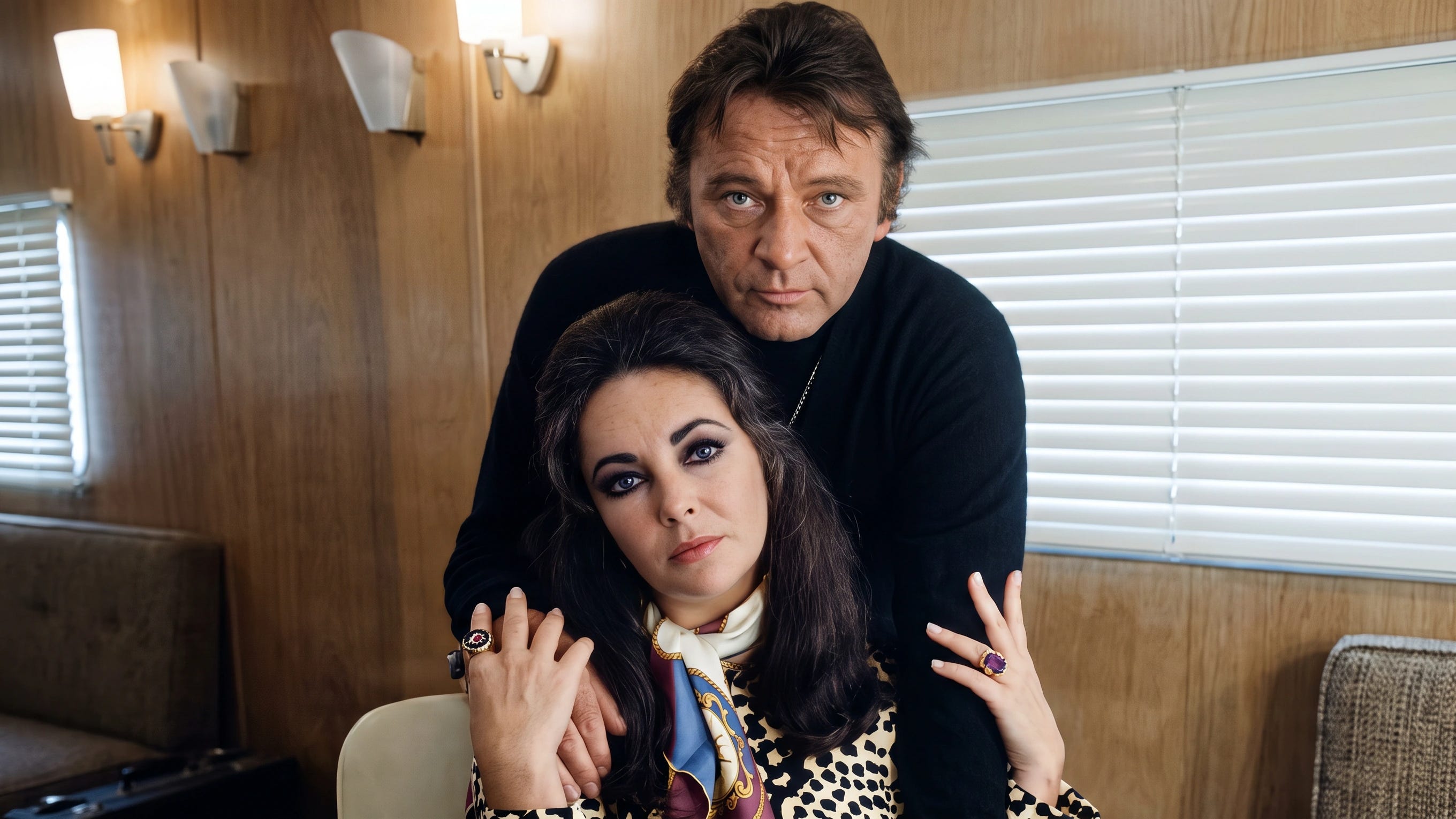
Brower’s biography reveals, for the first time, documented abuse from Taylor’s own father, art dealer Francis Taylor.
In the rare interview where she addressed it, Taylor minimized it, saying only that Francis had a tendency to “bat me around a little” and excusing it as alcohol-fueled.
Brower theorizes that Taylor “did seek out a certain kind of man” throughout her “tumultuous, passionate marriages,” most famously her two marriages to Burton.
The theory isn’t complicated, and Taylor herself supplied the clearest evidence for it in The Lost Tapes when she said of her second husband that she need a bit of domination in her relationships. She was 25 when she said it, two marriages in, and she’d go on to marry five more times.
But the line between what she needed and what she kept choosing was the one she spent her life walking, and the Burton marriages, both of them, sat on exactly that line.
Interestingly, before the Burton affair even began, Taylor had already been pronounced clinically dead. She nearly died of pneumonia in March 1961, requiring an emergency tracheotomy at the London Clinic. She later joked: “I was pronounced dead four times... once I didn’t breathe for five minutes, which must be a record.” She also admitted that the official “food poisoning” story explaining a February 1962 Rome hospitalization was false. She’d actually overdosed on Seconal sleeping pills amid the stress of the burgeoning affair, saying
“I was hysterical and I needed to get away.”
The first divorce came in June 1974. A remarriage followed in October 1975, in Botswana, and a second divorce in July 1976, less than a year later.
Burton married twice more after Taylor: British model Suzy Hunt in August 1976, a marriage that lasted until 1982, and then Sally Hay, a production assistant he met on the set of Wagner in Vienna, whom he married in July 1983.
With both women, unlike with Taylor, he managed to stay sober, and Hay in particular gave him the quiet, health-focused domestic life he’d never had during the “Liz and Dick” years.
Taylor married twice more after him. Five months after meeting him on a blind date, she wed Senator John Warner in December 1976 and spent six years as a political wife in Virginia, a role she later admitted bored her badly and that ended in divorce in 1982, right around the time the prescription drug crisis in her life reached its worst.
She married once more, to Larry Fortensky in 1991, and afterward declared she was done with marriage for good.
Professionally, both faded from their earlier heights: Burton kept working steadily in film and stage, including a well-received Broadway run in Equus and a final film role in 1984’s adaptation of 1984, while Taylor took progressively fewer roles after the mid-1970s, redirecting much of her energy into Warner’s Senate career and, later, AIDS activism.
Despite the divorces, they never fully let go of each other.
Friends and biographers describe an enduring bond: Burton wrote to her frequently, they reunited professionally in the 1983 stage production of Private Lives, and Taylor later called him the love of her life.
Burton died on August 5, 1984, of a cerebral hemorrhage, at 58. Taylor died on March 23, 2011, of congestive heart failure, at 79. Between them they’d produced two marriages, two divorces, one of the most documented collections of jewelry in private hands, and a body of evidence about what happens when two people who can’t stop performing find each other in a room where nobody is willing to say stop.
Okay, new proposal. We (we’re a we now) put together a pitch turning your Substack into an anthology series like American Horror Story, featuring a different train wreck each season. Practically a licence to print money.
Now THOSE were people who knew how to do “toxic.” Not like these modern wusses.