
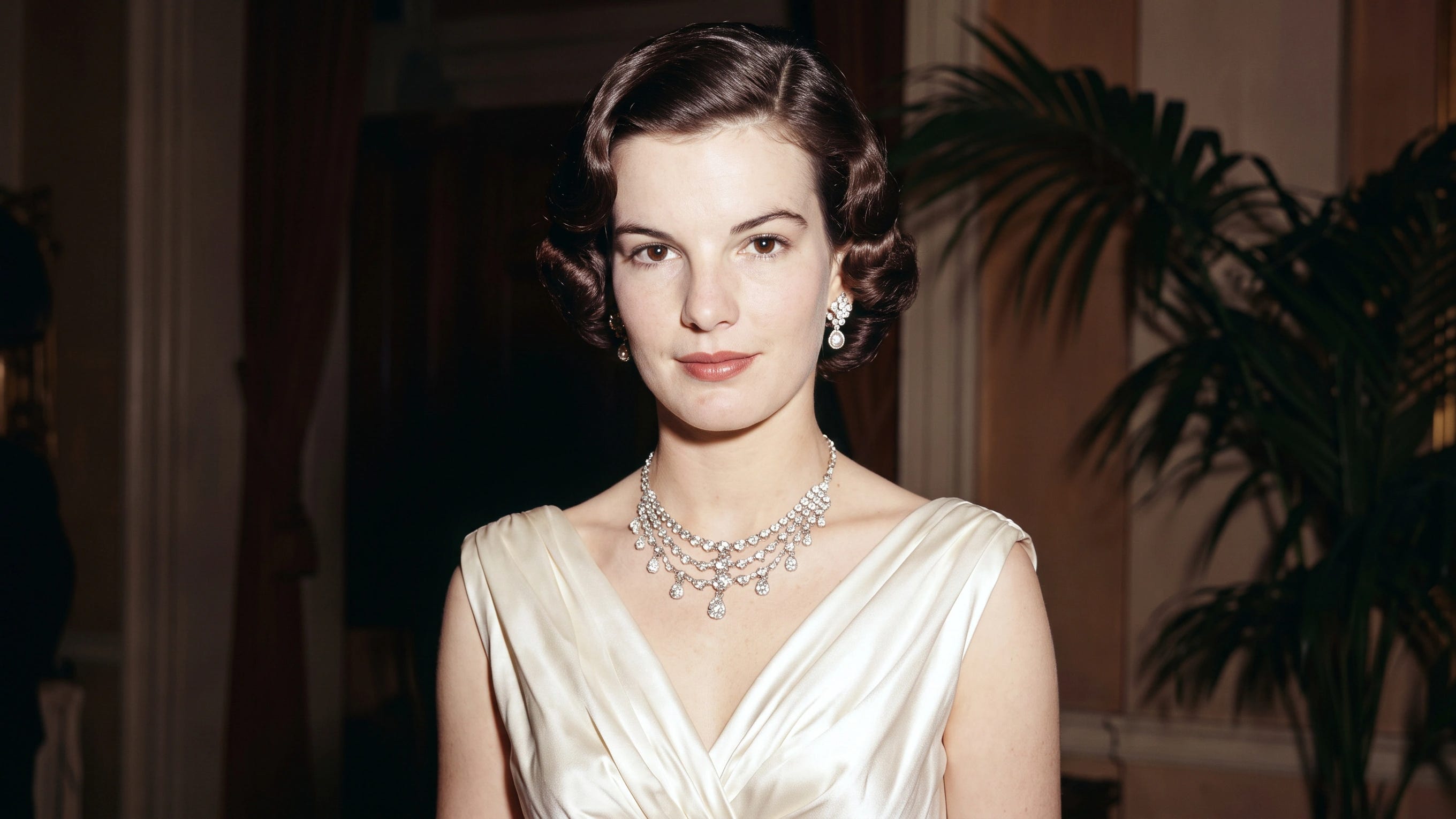
The prosecutor was still speaking when Nancy Oakes de Marigny rose from her seat.
For weeks, she’d listened as the Crown described her husband as the man who had beaten her father to death, tried to burn his body, and left him beneath a slowly turning ceiling fan.
Her mother had attended the trial convinced that the prosecution had charged the right man.
Nancy, feverish during her own testimony and close to fainting in the witness box, had reached the limit of what she would hear in silence. She said that she could no longer sit through such attacks on her husband, then walked out of the packed Nassau courtroom.
She was 19 years old.
The gesture reached newspapers around the world because it compressed an impossible family argument into a few steps toward a door.
Nancy’s father had been Canada’s richest man; her husband had been arrested within 36 hours of the killing; and the evidence meant to join those facts was beginning to come apart in public.
The trial had turned her father’s authority into an accusation, leaving Nancy to decide whether family loyalty meant accepting the verdict before the jury delivered one.
Father Meets Fortune
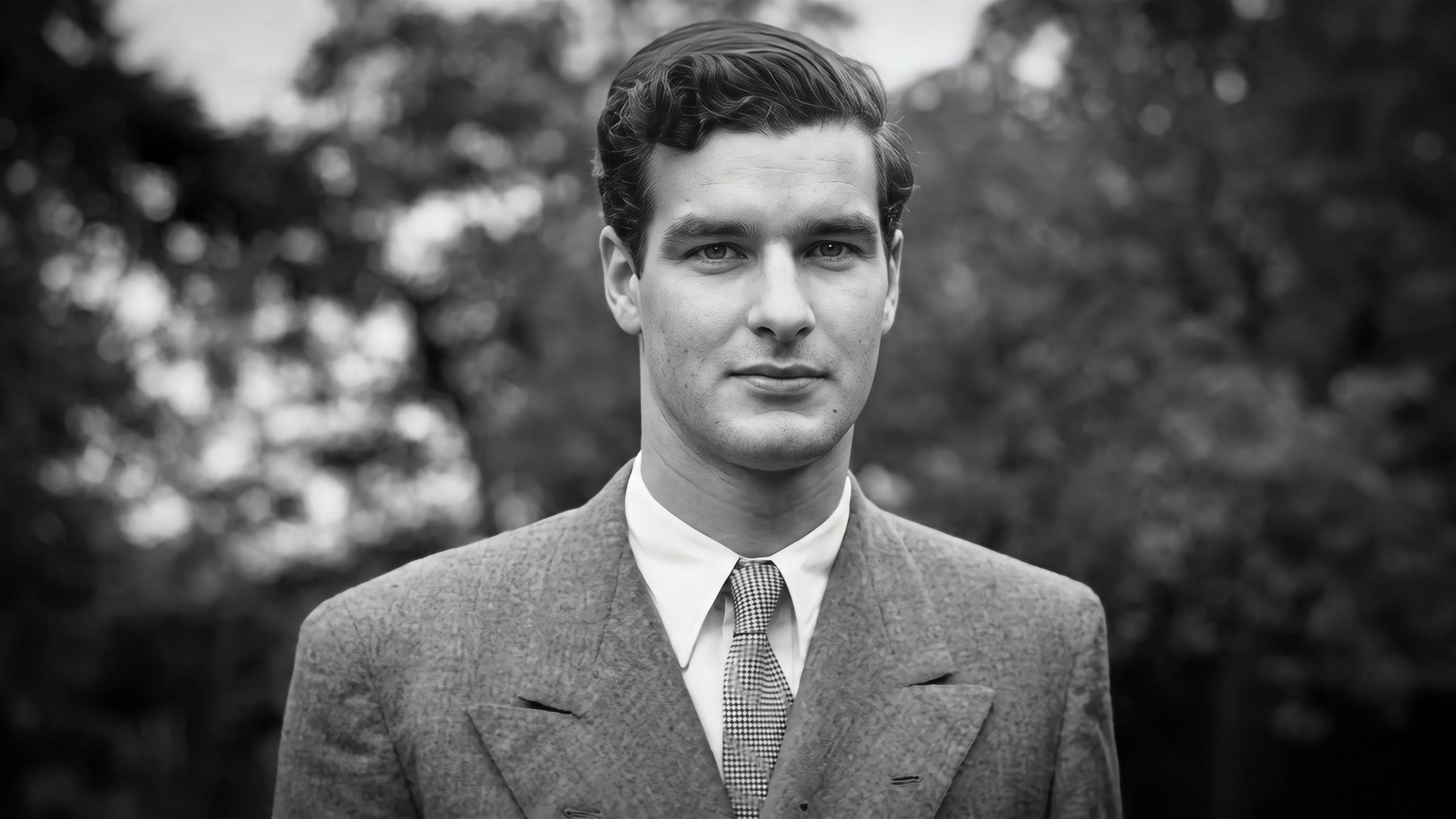
Harry Oakes had built his fortune by refusing to accept other people’s judgments.
His daughter would inherit exactly that instinct, with consequences he could never have anticipated.
Born in December 1874 in Sangerville, Maine, Harry began life on a path toward respectable New England professionalism. His father practiced law and his mother was a teacher.
After graduating from Bowdoin College, Harry entered medical school at Syracuse University, slowly marching toward the predictable career awaiting him.
Then, in 1898, the Klondike fever reached its peak.
Gold had been discovered in the Yukon, setting off one of the great speculative stampedes of the age. Tens of thousands of men were abandoning jobs and families for the northern goldfields. Most would return with little to show for it.
For a 22-year-old Harry Oakes, prospecting placed fortune on personal judgment rather than credentials.He left medical school and joined them.
For the next fifteen years, fortune mostly refused to cooperate.
Oakes searched for gold across Alaska, Australia, New Zealand, Mexico, Africa, and the American West. He slept in mining camps, studied geology in the field, and learned to read rock formations for himself.
But the failure hardened him. He became suspicious of experts, impatient with caution, and almost impossible to dissuade once he believed he was right.
And that stubbornness finally made him rich.
In 1911, nearly broke, Oakes reached Kirkland Lake in northern Ontario and secured an unpromising claim near the water. The surface offered little reason for excitement. Financing became difficult.
But Oakes kept digging.
The country around him was still becoming a mining district. Claims were being staked, rough settlements were appearing, and hydroelectric power only reached the camp in 1914.
As Canada entered the First World War, Oakes was still pouring money into a property whose richest ore remained somewhere beneath him.
Then, in 1918, his miners found it.
A crosscut struck the high-grade vein Oakes had insisted was there. Lake Shore became one of the great gold mines of its era and ultimately produced millions of ounces of gold.
The nearly broke prospector became one of the richest men in the British Empire.
His eldest daughter was about to learn the same lesson from him.
The problem was what she would eventually refuse to yield on.
A Daughter Like Dad
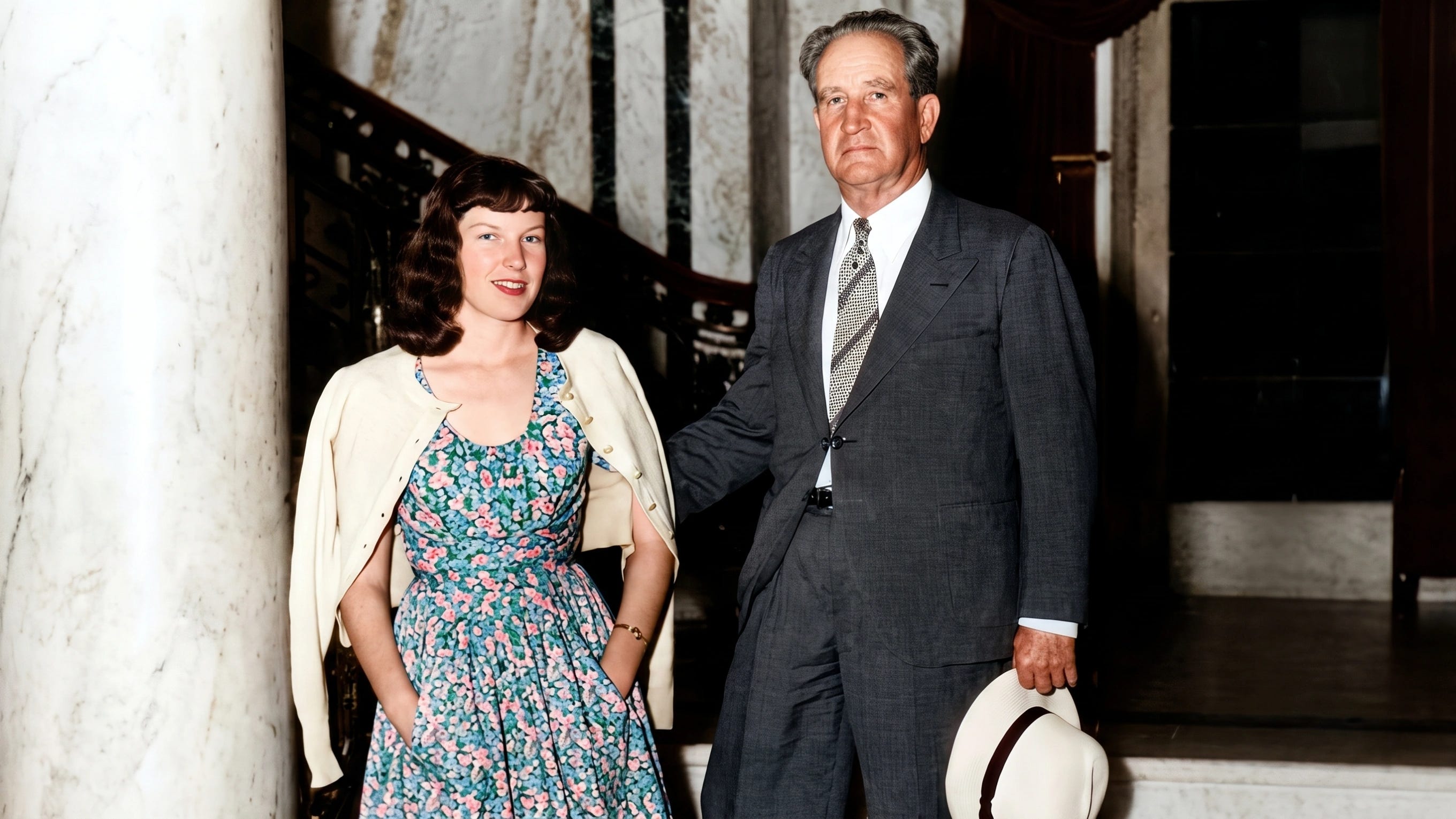
Now, Harry’s gold discovery and consequent wealth gave him an almost perfect justification for his personality.
He’d certainly spent years ignoring doubters, rejecting conventional advice, and refusing to quit… then the earth itself had proved him right.
But, from then on, compromise rarely came naturally.
On a voyage in 1923, the 48-year-old Oakes met Eunice McIntyre, a young Australian from Sydney who was roughly half his age.
She came from a government-service family and had grown up far removed from Harry’s mining camps. Their courtship moved quickly, and they married in Sydney that June. Nancy arrived the following year, and four more children followed.
Harry’s mammoth wealth soon became difficult to comprehend.
There were estates in Canada, Maine, Florida, and England. There were servants, society dinners, political connections, and the freedom to cross an ocean when one country became inconvenient.
He distrusted banks. He fought governments. He guarded his fortune closely and expected his decisions to carry weight.
Then, a bitter dispute over Canadian taxation eventually pushed him out of the country.
In 1935, Harry moved Eunice and their children to Nassau, where he began buying property and investing heavily in the island.
Within a few years, he was one of the most powerful men in the Bahamas, with a fortune commonly estimated near $200 million (equal to over $4 billion today).
Oakes invested in hotels, real estate, and the airport. He entered the House of Assembly and formed a close business relationship with developer Harold Christie. At Westbourne, his Nassau estate, the former prospector now presided over lavish dinners attended by the island’s elite. In 1939, King George VI made him a baronet.
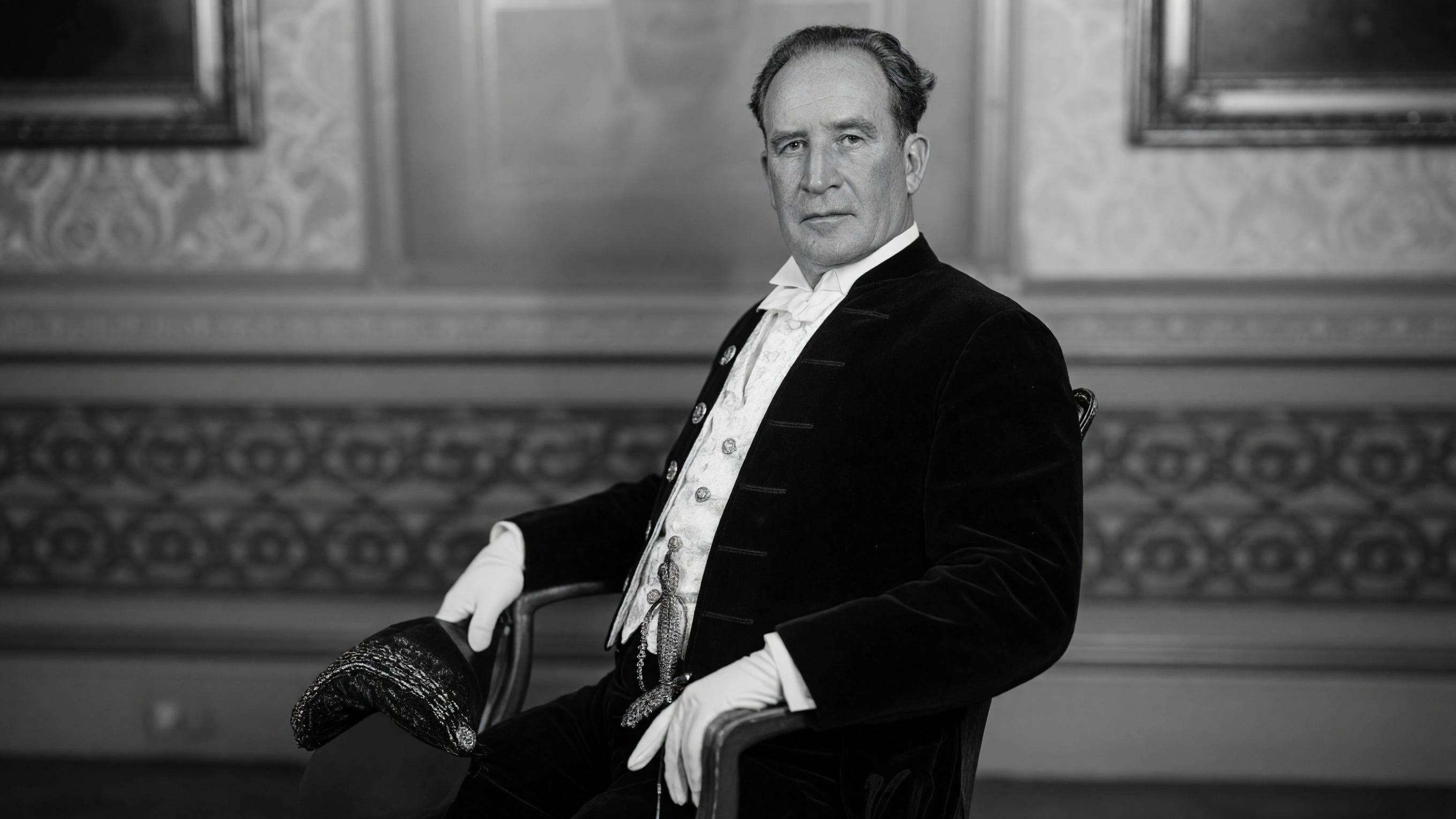
Nancy grew up inside the world his gold had purchased, raised largely by governesses between Niagara Falls, Bar Harbor, and Nassau.
Her childhood was a maelstrom of grand houses, servants, travel, and entry into social circles Harry had spent half his life working to reach, yet the old prospector remained at the center of it all.
The same man who had refused to surrender a mining claim expected considerable authority over his family.
Nancy proved unusually difficult to manage.
By many accounts, she was also his favorite. She’d inherited his stubbornness, his independence, and his tendency to dig in when challenged.
As Nancy entered her teens, the resemblance that drew father and daughter together began placing them on opposite sides.
Then Alfred de Marigny entered her life.
He was older, twice divorced, aristocratic in manner, and already carried a complicated reputation around Nassau.
Father Harry saw trouble.
Nancy saw something else.
