
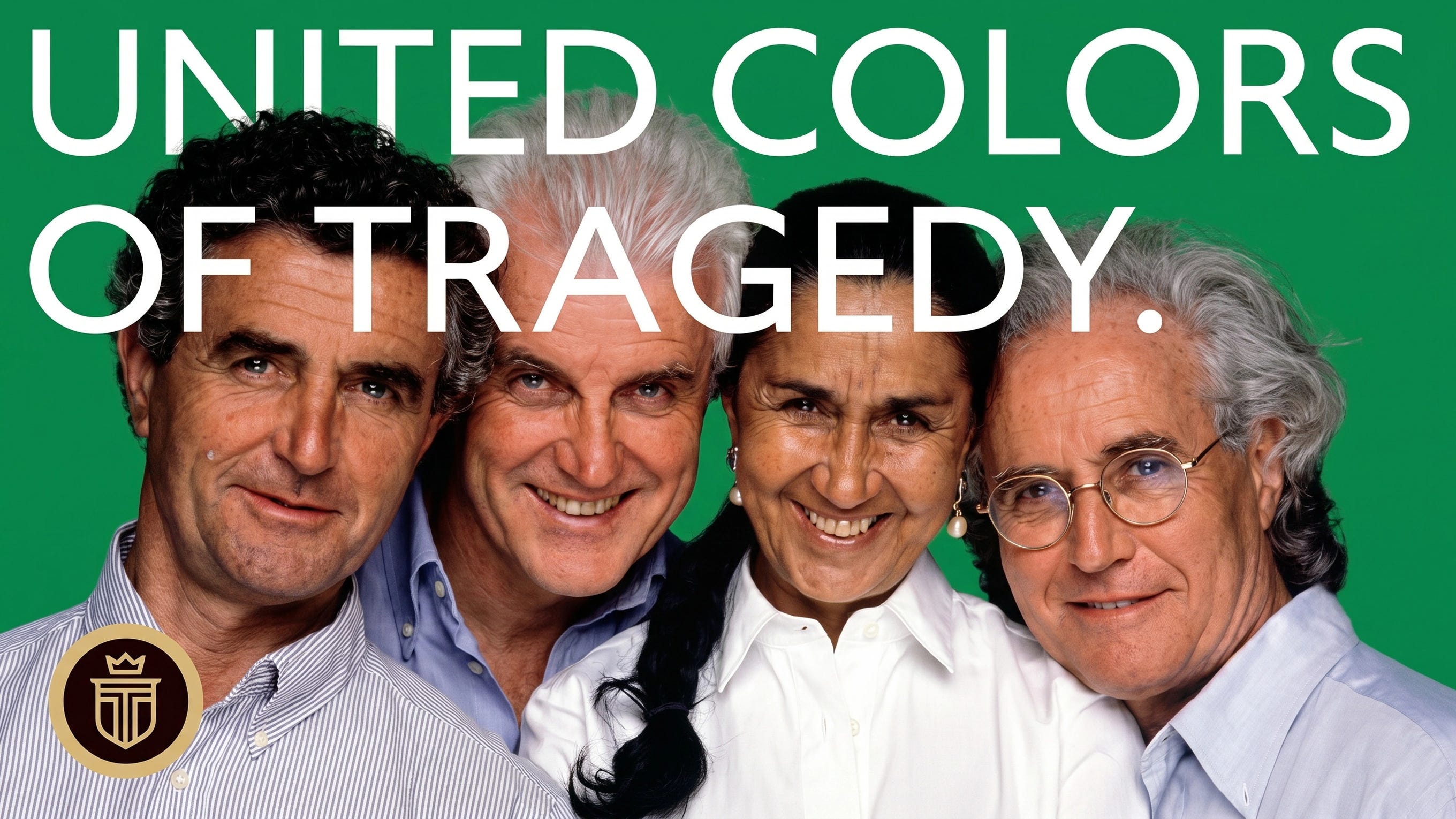
If you walked through a mall in 1990, you saw the rainbow.
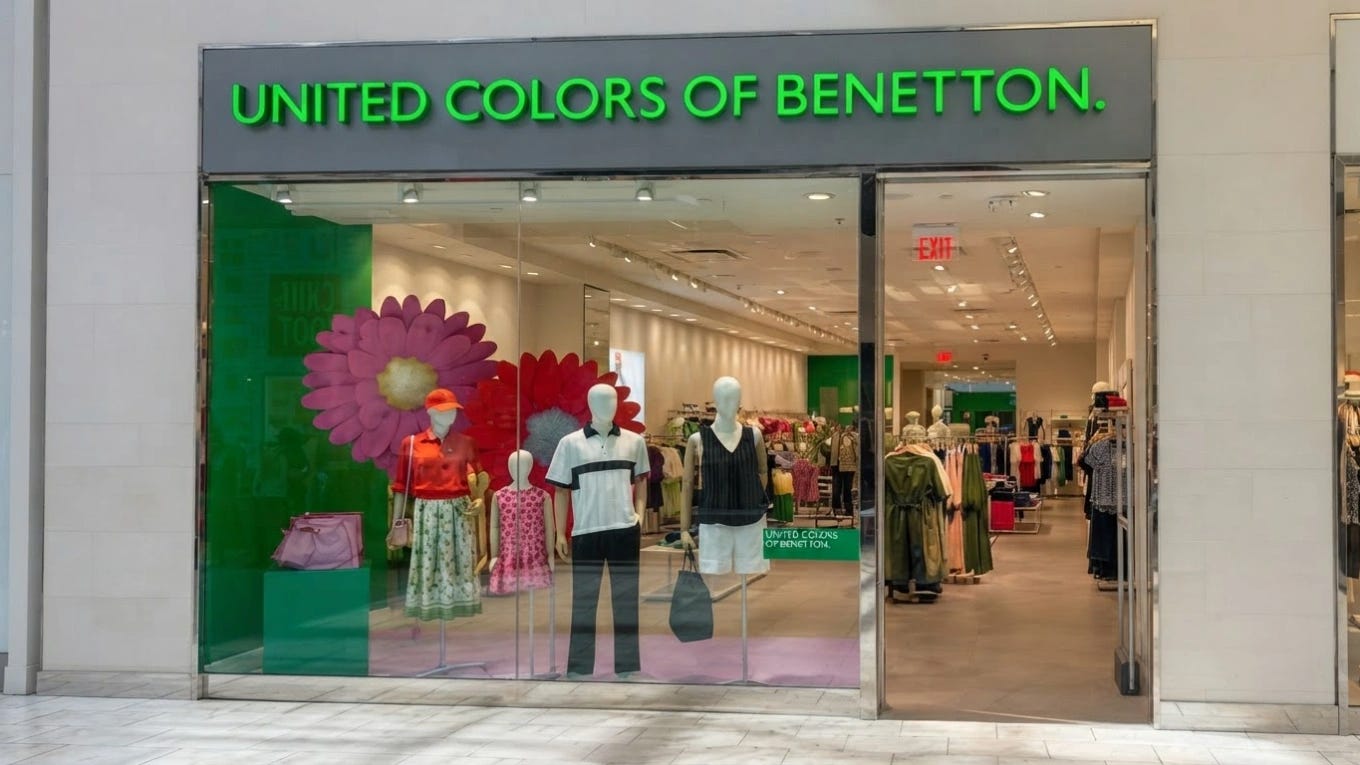
Stacks of sweaters in canary yellow, electric blue, emerald green, and hot pink sat arranged like a painter’s palette against crisp white walls, beneath three words that needed no translation in any of the hundred and twenty countries where they appeared: United Colors of Benetton.
The stores were everywhere, seven thousand of them, and the advertisements were harder to avoid than the stores: a priest kissing a nun, a newborn still attached to its umbilical cord, models of every ethnicity pressed together in colorful knitwear.
Whether you found them profound or obscene, you remembered them, and that was the point.
At their peak the four Benetton siblings took in more than $2 billion a year in sales and were each, individually, billionaires.
They owned the Formula One team that won championships with Michael Schumacher, controlled two thirds of Italy’s toll highways, and ran the largest chain of roadside restaurants on earth.
By 2024 the fashion company was bleeding $270 million in a single year and closing stores by the hundred, and the family name was no longer attached to colorful knitwear.
It was attached to forty-three dead people beneath a bridge the family was supposed to maintain.
The Rainbow at Its Peak
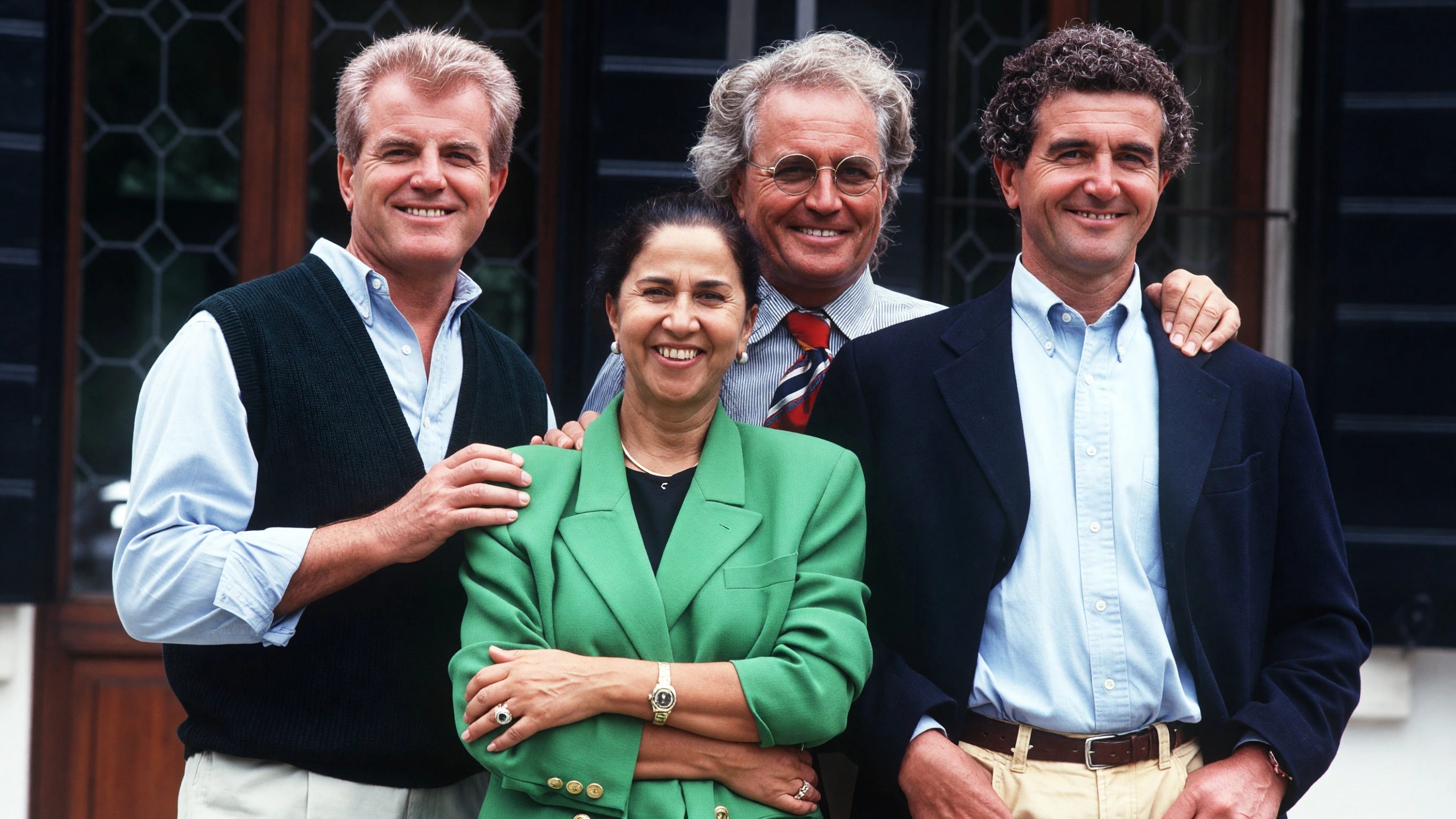
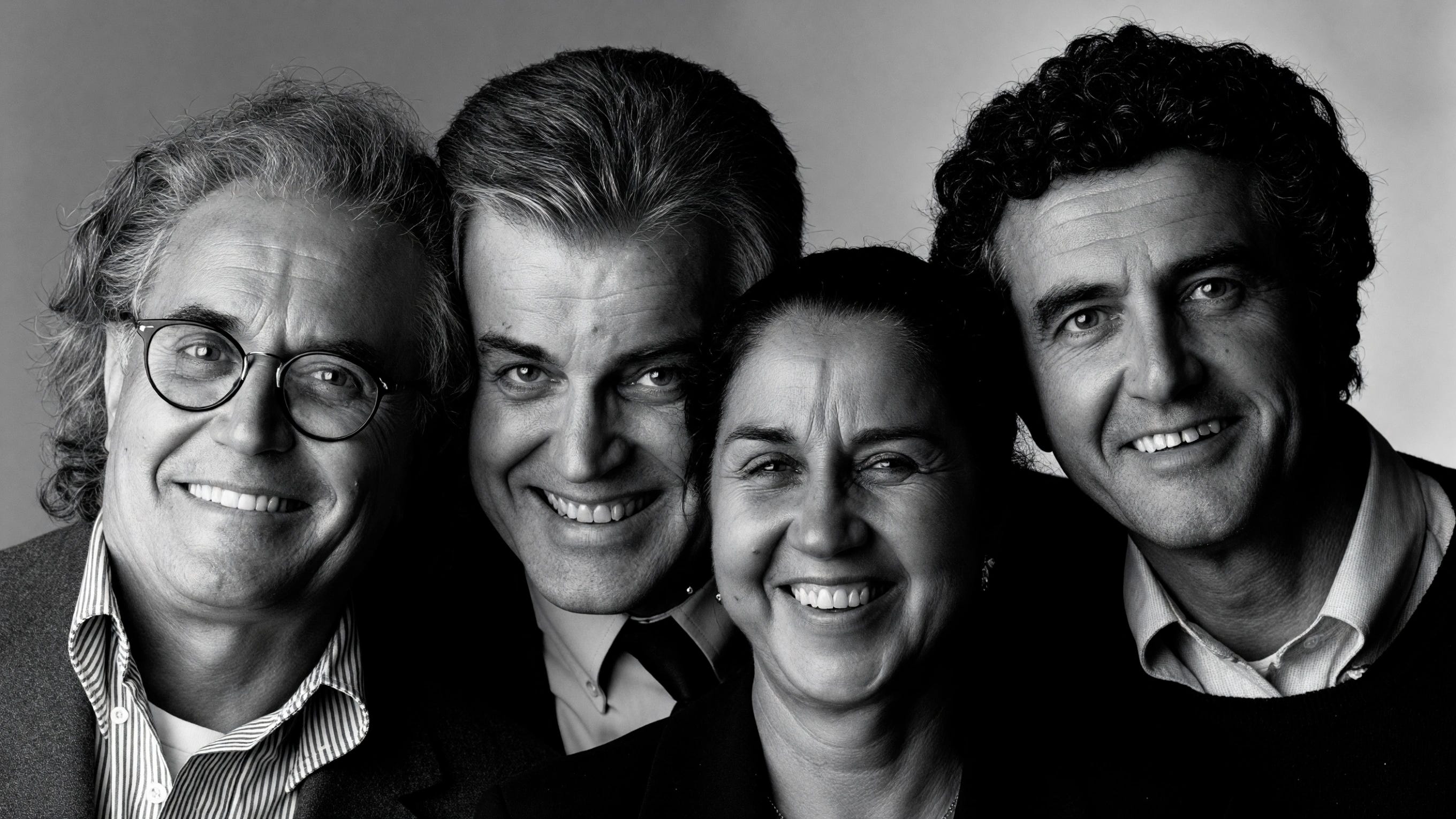
At their zenith in the late 1990s the four Benetton siblings, Luciano, Giuliana, Gilberto, and Carlo, commanded a fashion empire without equal.
7,000 stores carried the name by 1999, the plant at Castrette outside Treviso turned out a hundred and twenty million garments a year, and Forbes would later put each sibling’s fortune at close to three billion dollars.
The arrangement behind it was clean in a way older dynasties would have envied.
Through Edizione, their holding company, the four owned Benetton Group outright in equal quarters, and each kept to a lane: Luciano as chairman and the face of the brand, Giuliana over the collections, Gilberto over the money and the real estate, Carlo over production and the long drive between headquarters and the factories.
The sweaters were only one asset in the portfolio, and by then far from the largest.
Benetton Formula ran in two hundred and sixty Grands Prix and won twenty-seven of them, along with back-to-back drivers’ titles for Schumacher in 1994 and 1995.
A 30% stake in Atlantia gave the family control of the company operating nearly two thirds of Italy’s toll highways, a majority of Autogrill gave them the motorway restaurants and the airport concourses, and there were stakes in Cellnex, Generali, and Mediobanca besides.
The logistics hub at Castrette, designed by Tobia and Afra Scarpa and opened in 1984, moved more than a 120,000 packages a day to 5,000 outlets with almost nobody on the floor.
Across everything, the family employed more than a 100,000 people.
Edizione would grow into a holding with €10 billion in revenue and a net worth north of €13 billion.
The bet on infrastructure paid off brilliantly everywhere except in the sweater business that had made them famous.
The siblings who commanded this empire had started with nothing more than a yellow sweater and a desperate sacrifice.
The Accordion and the Bicycle
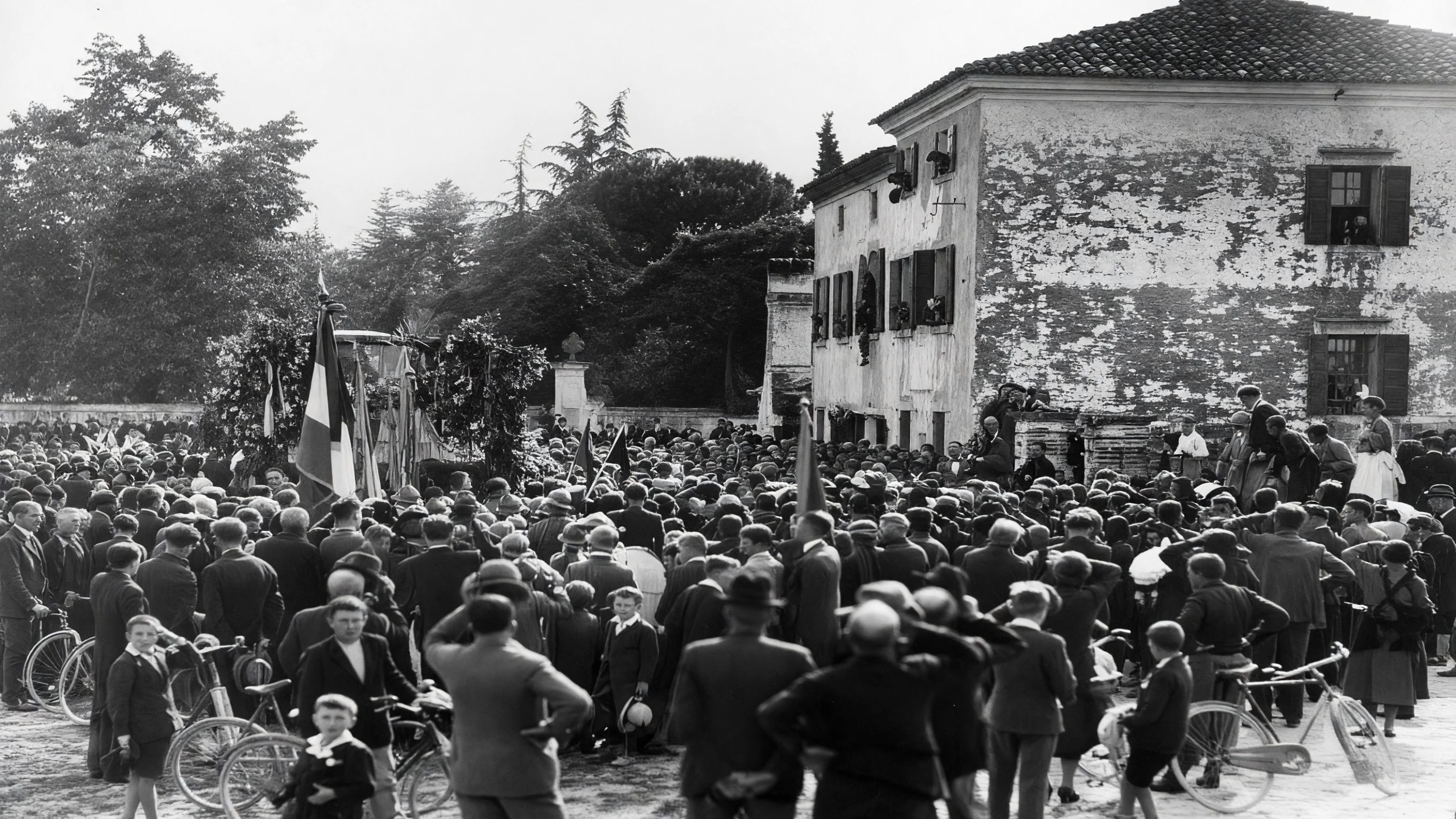
The saga that would produce the Benetton family empire begins in the wreckage of Italy in 1945.
Northern Italy emerged from the war battered, poor, and short of almost everything. In Ponzano Veneto, a farming village outside Treviso, the Benetton family was trying to survive the collapse of a much smaller world.
Leone Benetton rented bicycles and cars from a small shop in Treviso and lived with his wife, Rosa Carniato, and their four children. The final year of the war destroyed the business and ruined his health.
He died that July at age thirty-four.
Luciano was ten. Giuliana was eight, Gilberto four, and Carlo not yet two. Rosa was left with four children, a few small pieces of property, and little reliable income.
Luciano later said that from the day his father died, he understood he could no longer be a boy.
At fourteen, he left school and took a job in a clothing shop, selling newspapers on the side. Giuliana learned to knit.
In the early 1950s she made Luciano a sweater in a yellow bright enough to stand out against the gray postwar streets. Customers in the shop asked where he bought it. Strangers did too.
Luciano spent his days watching what people reached for, and he saw the opportunity immediately: Italian shops offered plenty of respectable clothes in respectable colors. People wanted something brighter.
In 1955 the siblings sold what they could to buy a knitting machine.
Luciano gave up his accordion. Their youngest brother, Carlo, gave up his bicycle.
The sale raised about 300,000 lire (equal to only around $6,400 today), and they borrowed the rest.
Giuliana made the sweaters. Luciano sold them around Treviso under the label Très Jolie, moving roughly twenty a week. Within four months, according to the family’s account, the loan was repaid.
An accordion and a bicycle had become a knitting machine. The machine became a business.
Gilberto and Carlo joined as soon as they were old enough, and by 1965 the operation had a formal name, “Maglificio di Ponzano Veneto dei Fratelli Benetton”, and a proper factory.
What it still lacked was a store.
The first opened the following year in Belluno, where the Benettons were about to break one of the oldest rules of Italian retail.
Knit Now, Dye Later
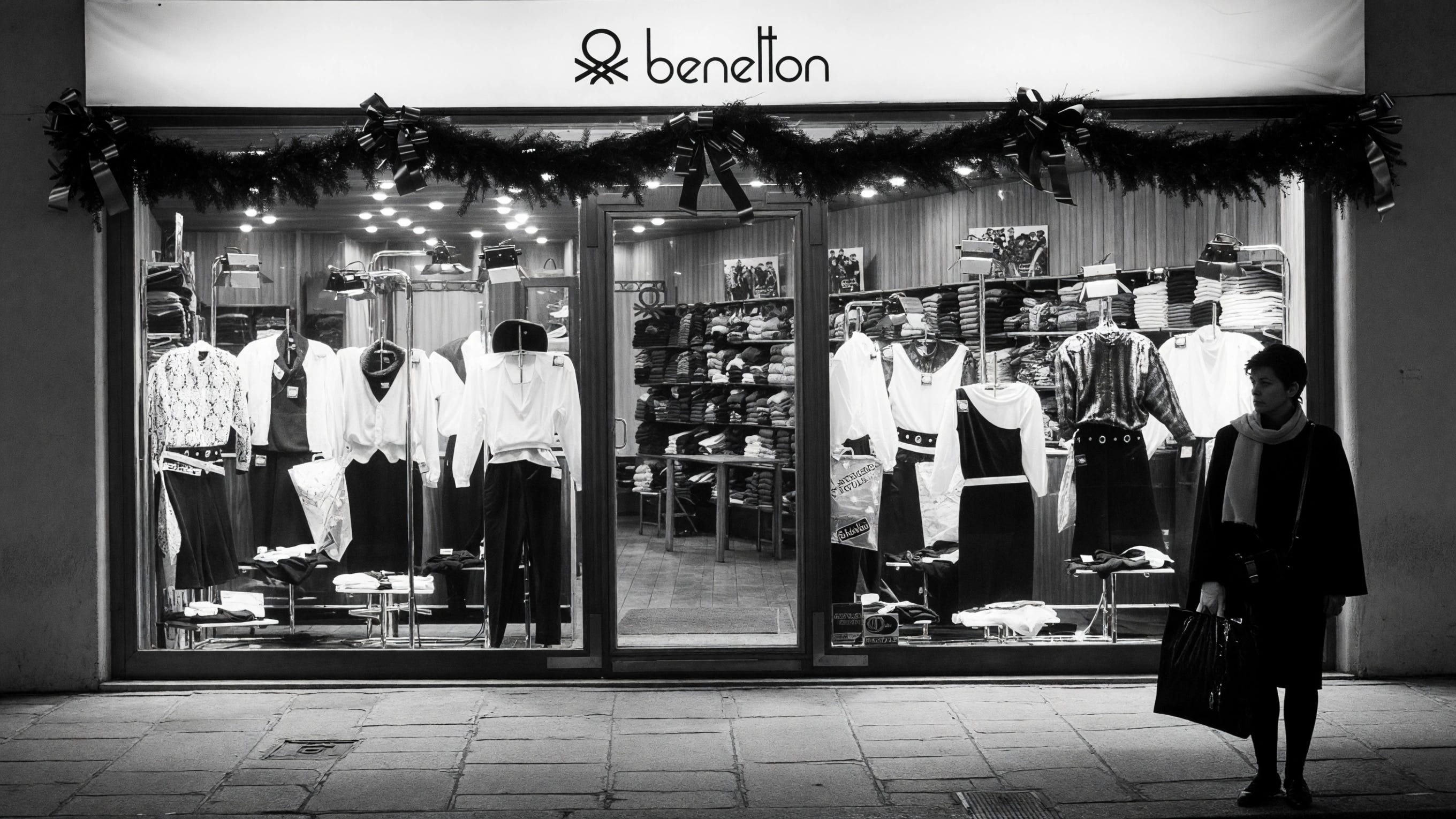
The shop opened in Belluno in 1966, in the foothills of the Dolomites, and it broke the first rule of Italian retail: customers were allowed to touch things.
They browsed the shelves alone, pulled out what they liked, and paid at a small table by the door. The Benettons called it My Market, and their partner Piero Marchiorello, a merchant’s son, said that if it worked in Belluno it would work anywhere.
It worked in Cortina d’Ampezzo the following winter, where the Scarpas designed a white room in which the sweaters supplied the only color and Milanese skiers carried them out by the hundreds a day.
Paris followed on the Boulevard Saint-Germain in 1969, then Madison Avenue in 1980, Tokyo in 1982, and, in the year the Wall came down, Moscow.
The stores multiplied because the Benettons rarely paid for them.
Franchisees put up the capital and, at first, paid no royalties, so the brand could plant a shop in a new city for the price of a handshake, and by the turn of the century some five and a half thousand independently owned Benettons dotted the globe.
The trick behind the shelves came from Scotland. Luciano had gone there to study old wool-processing methods and returned with a heresy: what if you knitted the garment first and dyed it afterward?
Working with Ado Montana, the son of a dyeing family, he spent months in a basement ruining sweaters until one night a flawless one came out of the vat. Tinto in capo, dyed in the garment, meant Benetton could knit mountains of undyed stock and color it in whatever shade that week’s sales reports demanded, while rivals were stuck with the colors they had guessed at six months earlier.
The controversial man Luciano chose to give all this a face was born to the work.
Oliviero Toscani was the son of Fedele Toscani, one of the first photojournalists at Corriere della Sera, and he had trained at the Kunstgewerbeschule in Zurich and shot for Elle, Vogue, and Harper’s Bazaar, but Italy knew him for a single photograph from 1973: a young woman’s backside in cut-off denim shorts stamped with the words Chi mi ama mi segua, who loves me follows me, for a label called Jesus Jeans.
L’Osservatore Romano cried blasphemy, the vice squad seized the posters, and the jeans sold, which was the whole of the lesson Toscani took from the affair.
Luciano’s problem in 1982 was how to give thousands of independently owned shops in dozens of countries a single identity, and he solved it by hiring the man who had proved that a scandal travels farther than a sweater, then granting him what almost no client grants a photographer: a budget without an agency and a direct line to the chairman.
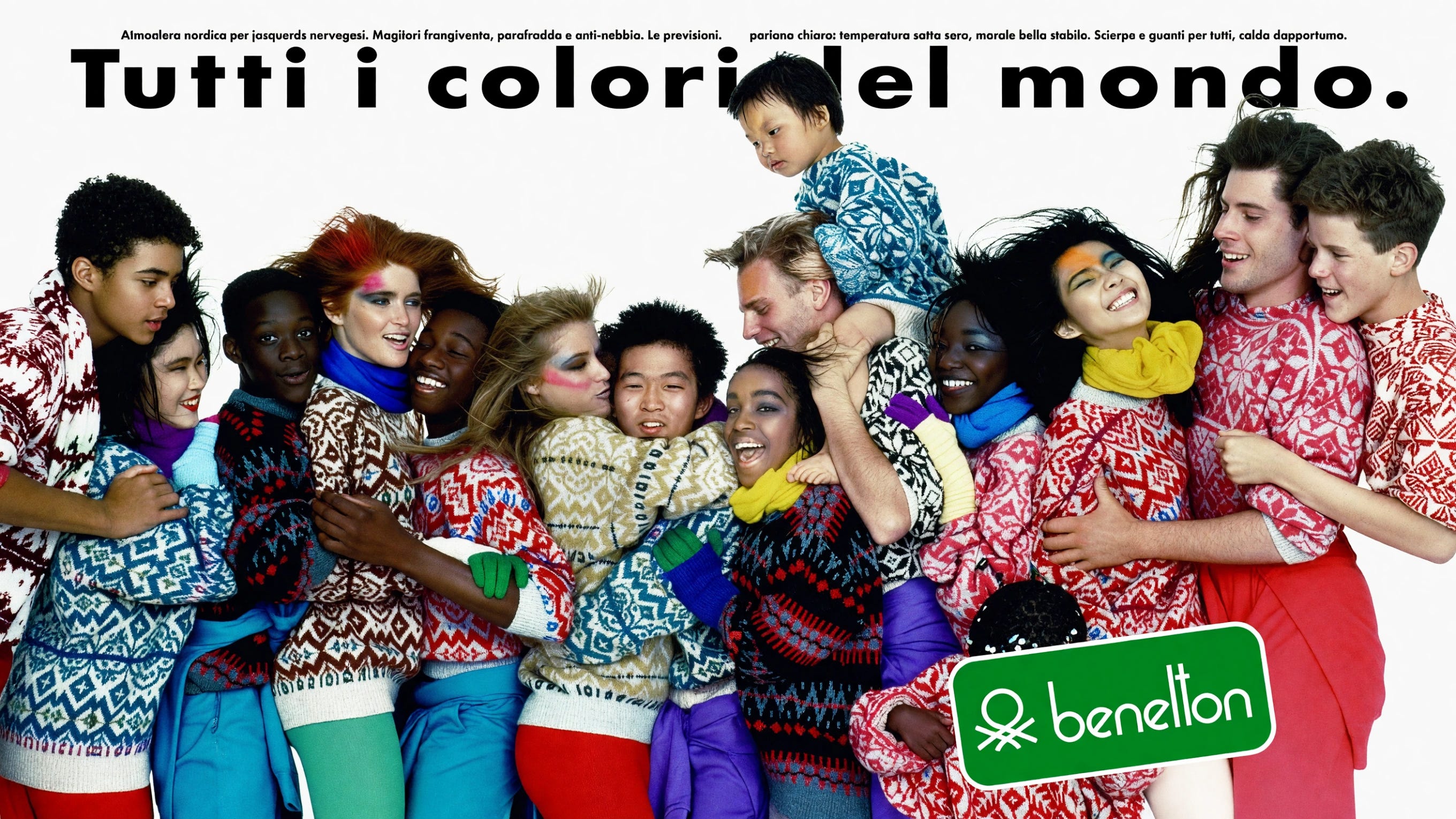
Toscani’s first big campaign, All the Colors of the World, put smiling models of every ethnicity in a row of Benetton knitwear against a white background.
It was warm, it was commercial, and it bored Oliviero almost at once. Toscani had an eighty-million-dollar budget and a conviction that advertising was the most powerful medium on earth, and he saw no reason to waste it announcing that a sweater was pretty.
Within a few years the sweaters had left the advertisements entirely, and something far less comfortable had taken their place.
Shock and Backlash
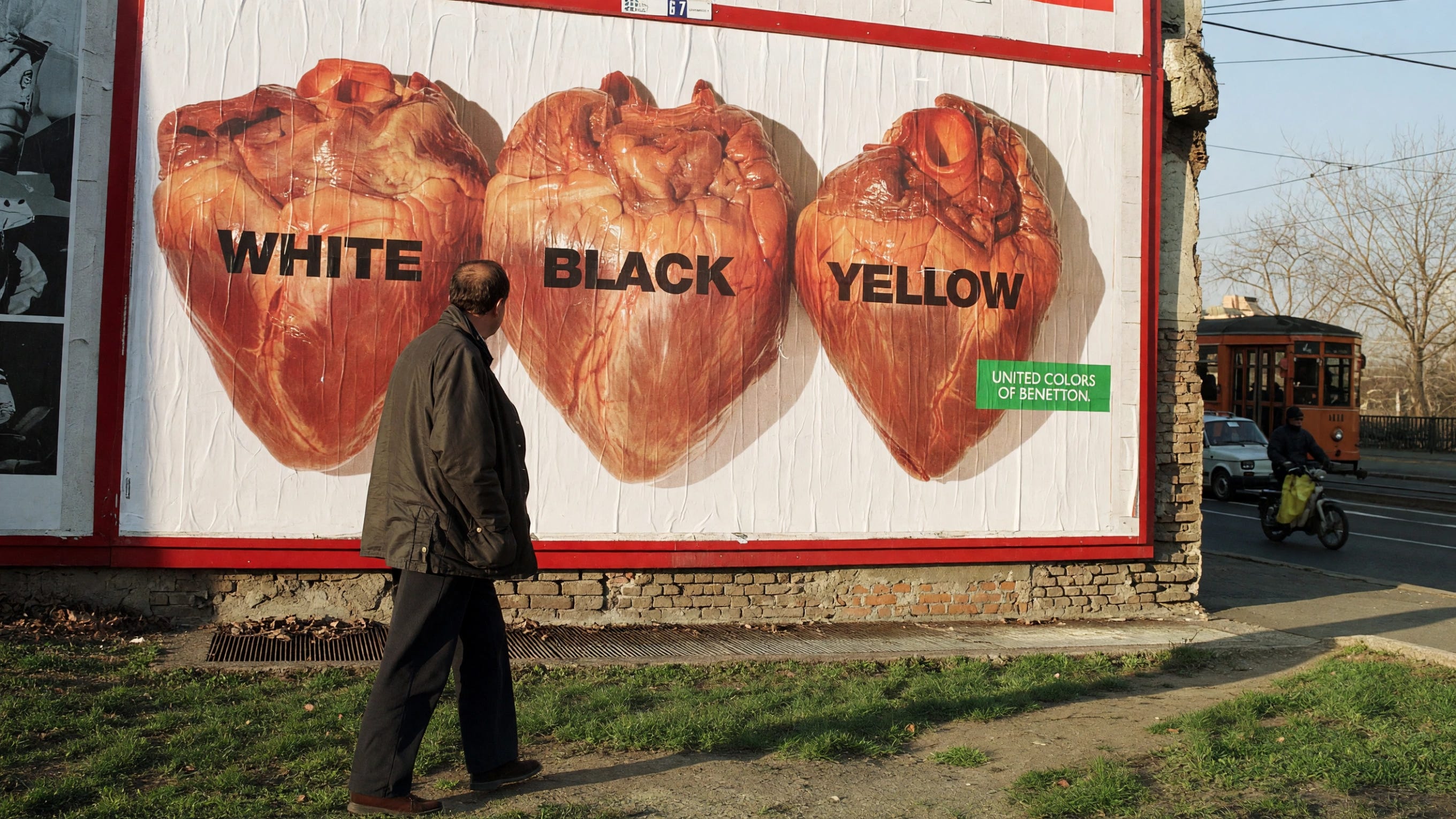
The autumn of 1991 brought the priest and the nun, lips nearly touching, black habit against white, and the Church accused Benetton of profaning the sacred to move knitwear.
Toscani took the complaint as proof the campaign was working, and pushed Benetton into one of the most notorious advertising campaigns in fashion history.
