
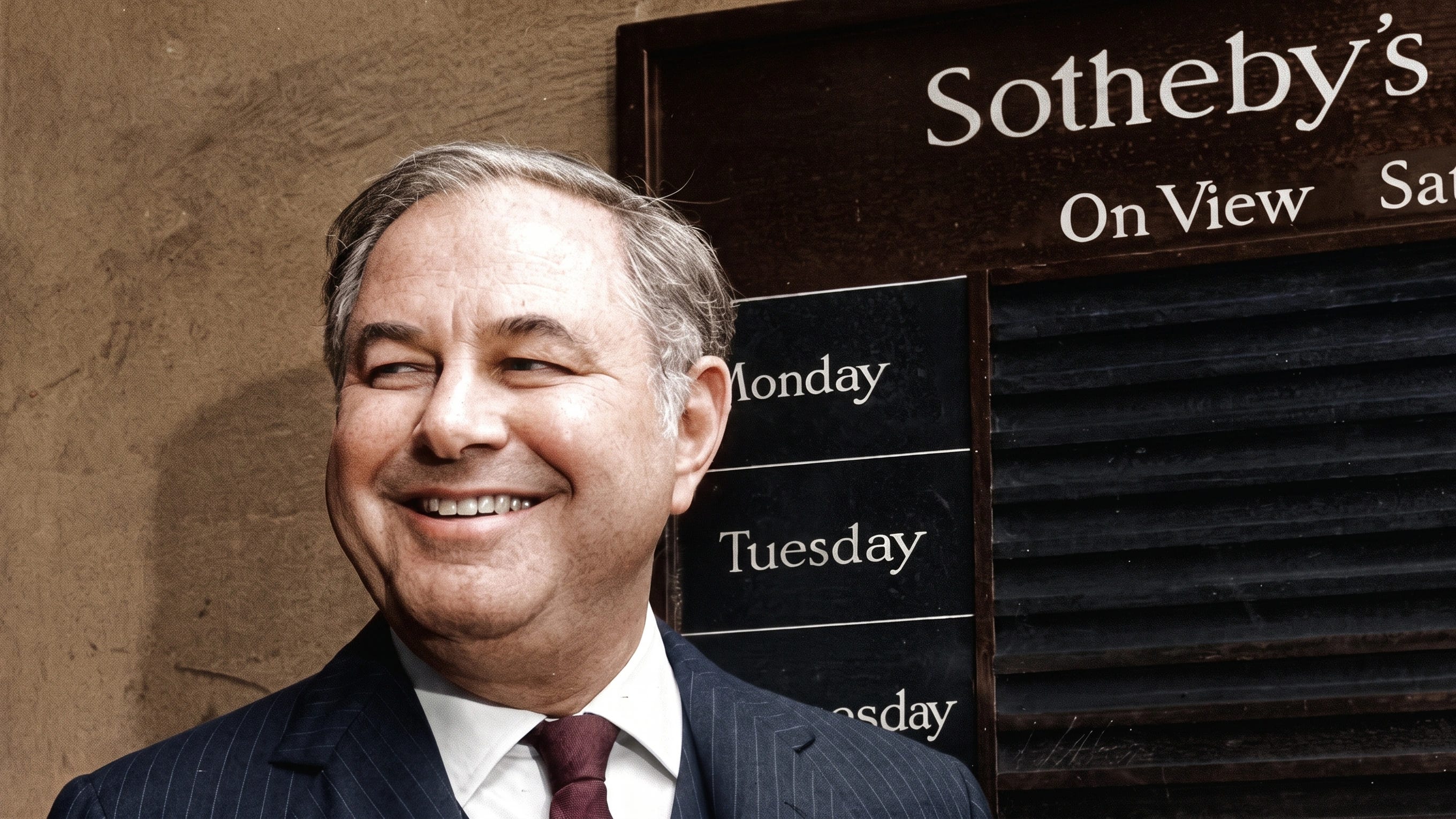
He was heavyset, dyslexic, and so convinced that customers thought with their feet that he’d built an empire on one idea: put the parking lot in front of the store.
He couldn’t spell half the artists’ names on the walls of the salesrooms he now owned, and he didn’t need to.
He could read a crowd better than anyone in the art business, and he’d proved it in a hundred shopping malls from Pontiac to Orange County before he ever set foot inside Sotheby’s.
His name was A. Alfred Taubman, and on November 9, 1983, he took full ownership of the most famous auction house in the world.
Money at his altitude bought the usual comforts, a home in Bloomfield Hills and an apartment in London’s Mayfair, but Sotheby’s bought him something far rarer. It gave a man from a Depression-era fruit farm a seat at the very center of the international art market, with the richest collectors on two continents as his clients.
But Taubman never pretended to see the art business as anything holier than retail. “Selling art has much in common with selling root beer,” he said.
He meant it, adding that people didn’t need root beer and didn’t need to buy a painting, either.
That philosophy made Sotheby’s richer than it had ever been and made Taubman one of the most admired dealmakers in America.
It would also carry him from the chairman’s office to a federal prison cell, by a route that began with the way he chose to treat his only real rival.
The $139 Million White Knight
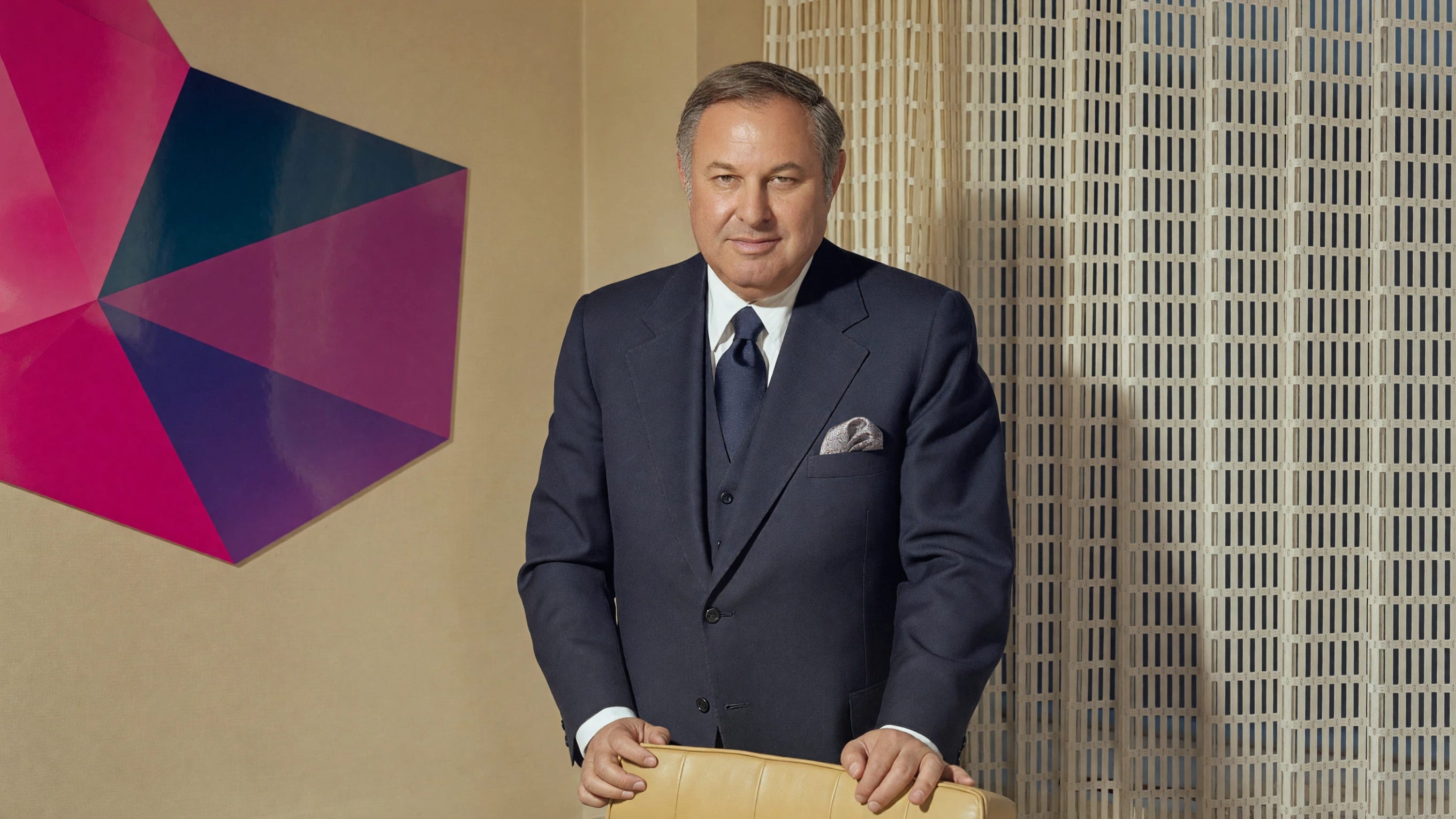
The year Taubman bought Sotheby’s, the auction house was under attack.
Two New York businessmen had launched a hostile bid, and the company’s own art experts were threatening to resign en masse if the takeover went through.
Taubman stepped in as what Wall Street calls a white knight, a friendly buyer who rescues a company from an unwanted suitor, even though he’d never run an auction house in his life.
Among his partners in the deal was none other than Leslie Wexner, the Victoria’s Secret founder who’d let Jeffrey Epstein run his personal fortune for years and later tell investigators he never knew what was happening under his own roof.
It was that kind of circle, and Taubman would eventually have his own problems with explaining what he knew and when he knew it.
And the structure Taubman built afterward told you exactly who was in charge. When Sotheby’s went public in 1988, his circle controlled 97 percent of the voting power.
The public could own a piece of Sotheby’s without ever having a say in how it was run.
The timing was perfect for a retailer, because the late 1980s art boom sent Sotheby’s annual sales to $1.81 billion, roughly three times what they’d been five years earlier.
Taubman didn’t pretend to be an art scholar, but he collected anyway, buying what caught his eye, including a de Kooning, “Untitled XXI,” that he’d picked up years before the auction house was his.
And his private life had been rearranged on the same grand scale. His first marriage, to Reva Kolodney, produced three children, Gayle, Robert and William, before it ended in divorce in 1977.
In 1982, a year before the Sotheby’s deal, he married Judith Mazor Rounick, a former Miss Israel and an art collector in her own right, and the couple would stay together for 33 years.
Born Jehudit Mazor, the daughter of a paste jewelry importer, she spoke seven languages and brought two children from her first marriage, to the clothing maker Herbert Rounick.
The Taubmans lived like people who’d always had money, which made it easy to forget how recently he’d had none at all.
Threshold Resistance
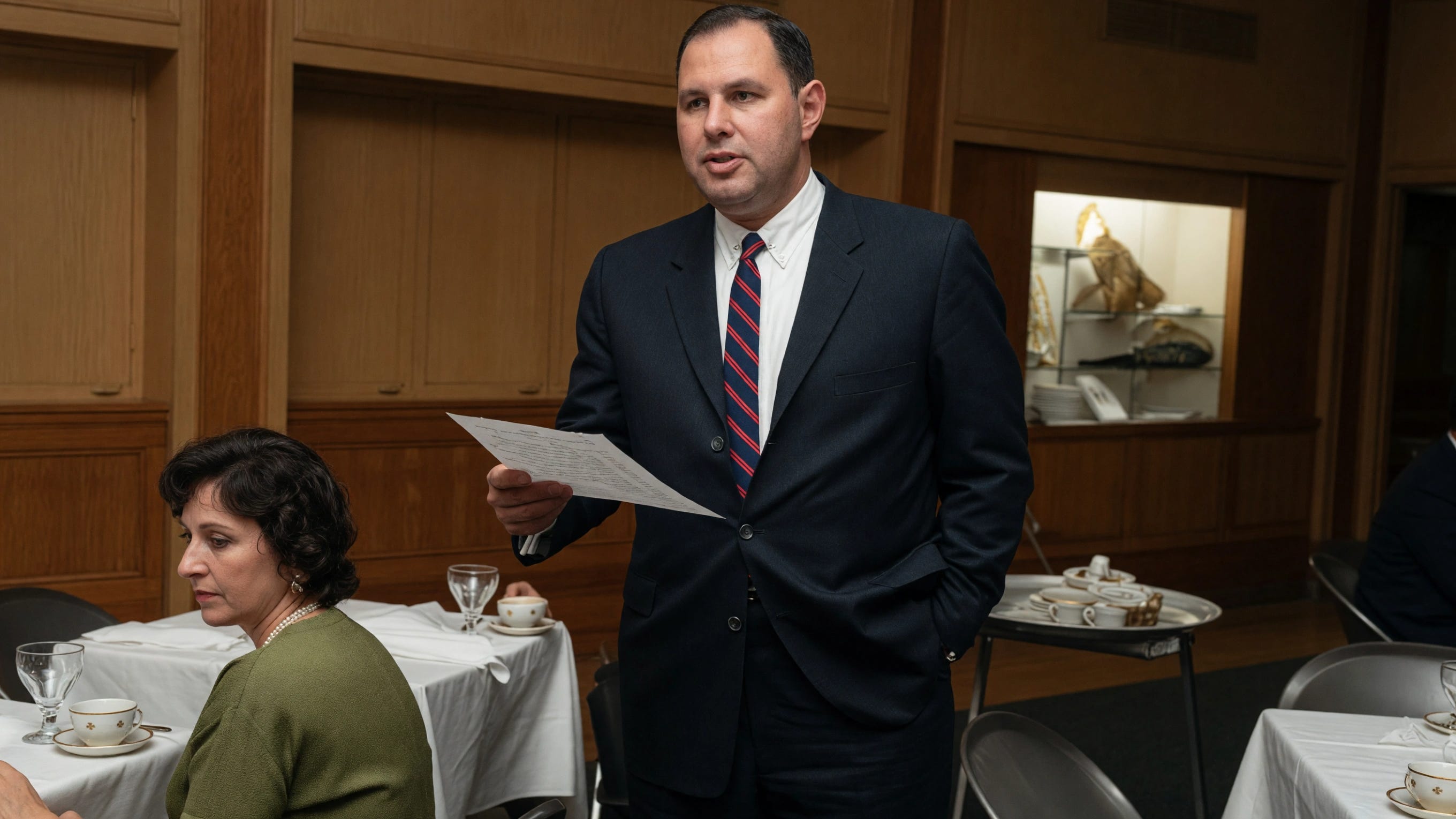
Adolph Alfred Taubman was born in Pontiac, Michigan in 1924, the son of Jewish immigrants.
Even the family’s origins depend on who’s telling it: one archive places them in Bialystok, Poland, while a retail trade group called them German. His father, Philip, farmed fruit before turning to custom homes and commercial property, building the town’s first synagogue along the way.
Then the Depression arrived, and the family lost everything.
Alfred went to work at nine, caddying for $1.10 a round, and spent every afternoon from 11 through high school at a discount department store in Pontiac.
Christopher Mason later summed up the odds: “They had no money. He was profoundly dyslexic. He was also overweight. And he was Jewish at a time when there was a lot of anti-Semitism in Michigan and in the country.”
He enrolled at the University of Michigan in 1942, left to serve in intelligence with the Thirteenth Air Force in the Pacific, came home on the G.I. Bill to study architecture, and walked away without a degree.
In 1950 he founded The Taubman Company with a $5,000 bank loan, his father as his first employee, and a bridal shop in Detroit as his first job.

The breakthrough came three years later at North Flint Plaza, a 26-store center in Flint, where he put the parking in front and pushed the stores to the back of the lot.
Every other builder had it the other way around. He kept refining the idea until the stores came indoors, first Sunvalley in Concord, California, billed as the world’s largest air-conditioned shopping center, then Woodfield outside Chicago, the largest enclosed mall built to that date.
Taubman Centers was incorporated in 1973 and went on to develop the Beverly Center in Los Angeles.
But the biggest paydays came from land, not retail. A syndicate he led with Max Fisher, Henry Ford II and Donald Bren bought the 77,000-acre Irvine Ranch in 1977 for $337.4 million, outbidding Mobil Oil, and sold out to Bren six years later for $1 billion.
Taubman’s share came to $100 million. He called it the best deal since the Louisiana Purchase.
He’d built every one of those fortunes by studying customers, but at Sotheby’s the customer that mattered most turned out to be the competition across town.
Two Houses and 90% of the Market
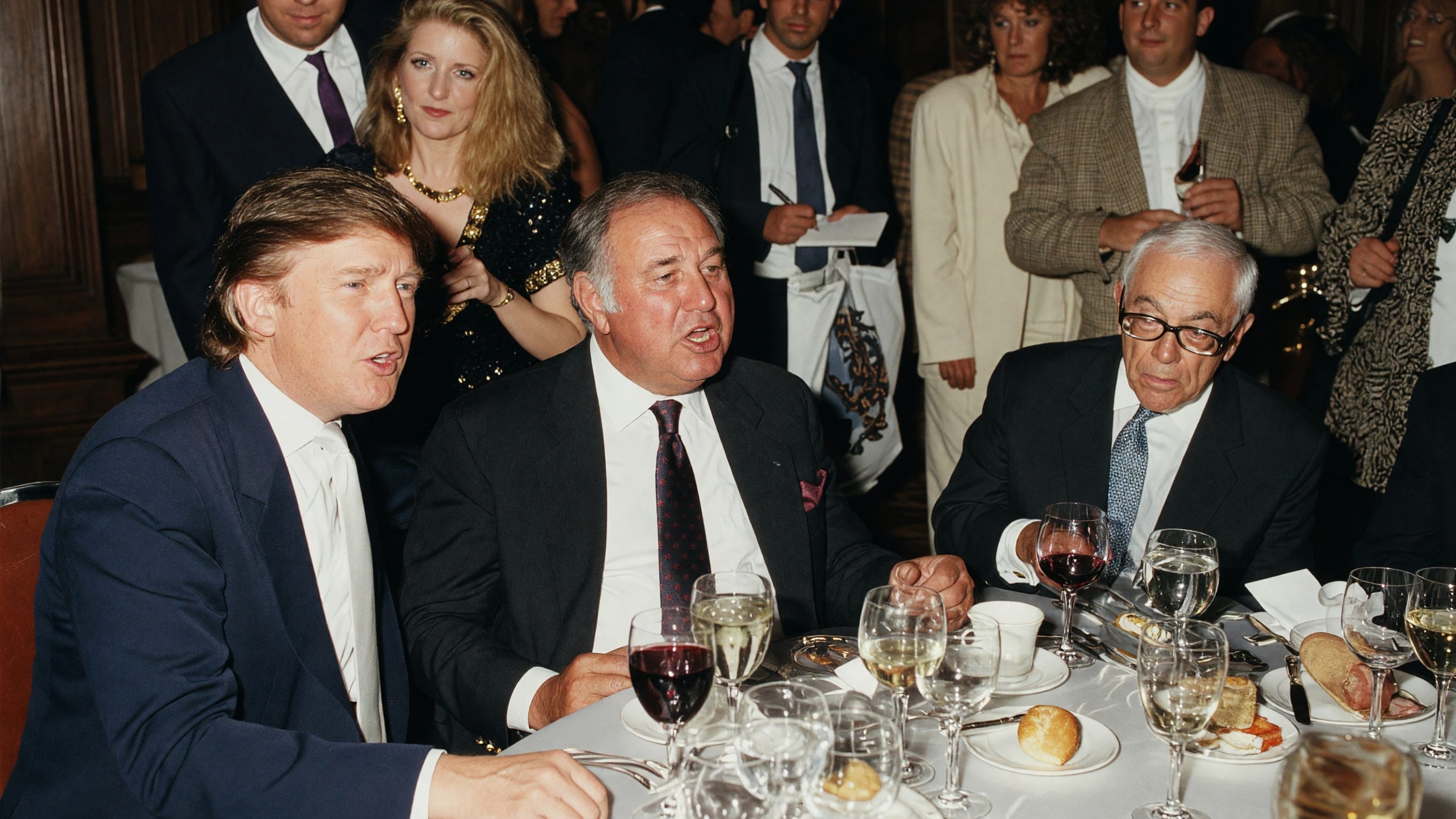
There was only one rival that mattered.
Sotheby’s and Christie’s together controlled roughly 90 percent of the world market for fine art, furniture and jewelry auctions. Whenever a famous collection came up for sale, both houses courted the heirs at once.
They flew the client in for private viewings, they flattered the prospect, and they slashed their own commissions… or waived them entirely.
The families loved it. The auction houses were bleeding.
Running Sotheby’s day to day was Diana “DeDe” Brooks, a six-foot-tall Yale graduate who had started at the company as an unpaid intern and clawed her way to chief executive by 44.
She grew up on Long Island competing with two older brothers, and colleagues said she ran Sotheby’s the same way: relentless, sharp, and so obsessed with the place she knew staffers by name three floors down.
Across town, Christie’s had brought in a new chairman in 1993: Sir Anthony Tennant.
He was Eton-educated, knighted after running Guinness, and used to boardrooms where problems got sorted quietly over drinks. He looked at both houses’ shrinking margins and decided the solution started with breakfast.
In April 1993, Tennant and Taubman sat down at a private meal. According to Christopher Mason, whose book The Art of the Steal remains the definitive account of what followed, Taubman opened with a line worthy of a mob movie: “Whatever we do, we mustn’t discuss prices.”
It was a wink. The entire point of the meeting was to discuss exactly that: how to stop undercutting each other and start charging sellers the same rates.
What they were agreeing to was price-fixing, a felony under the Sherman Antitrust Act.
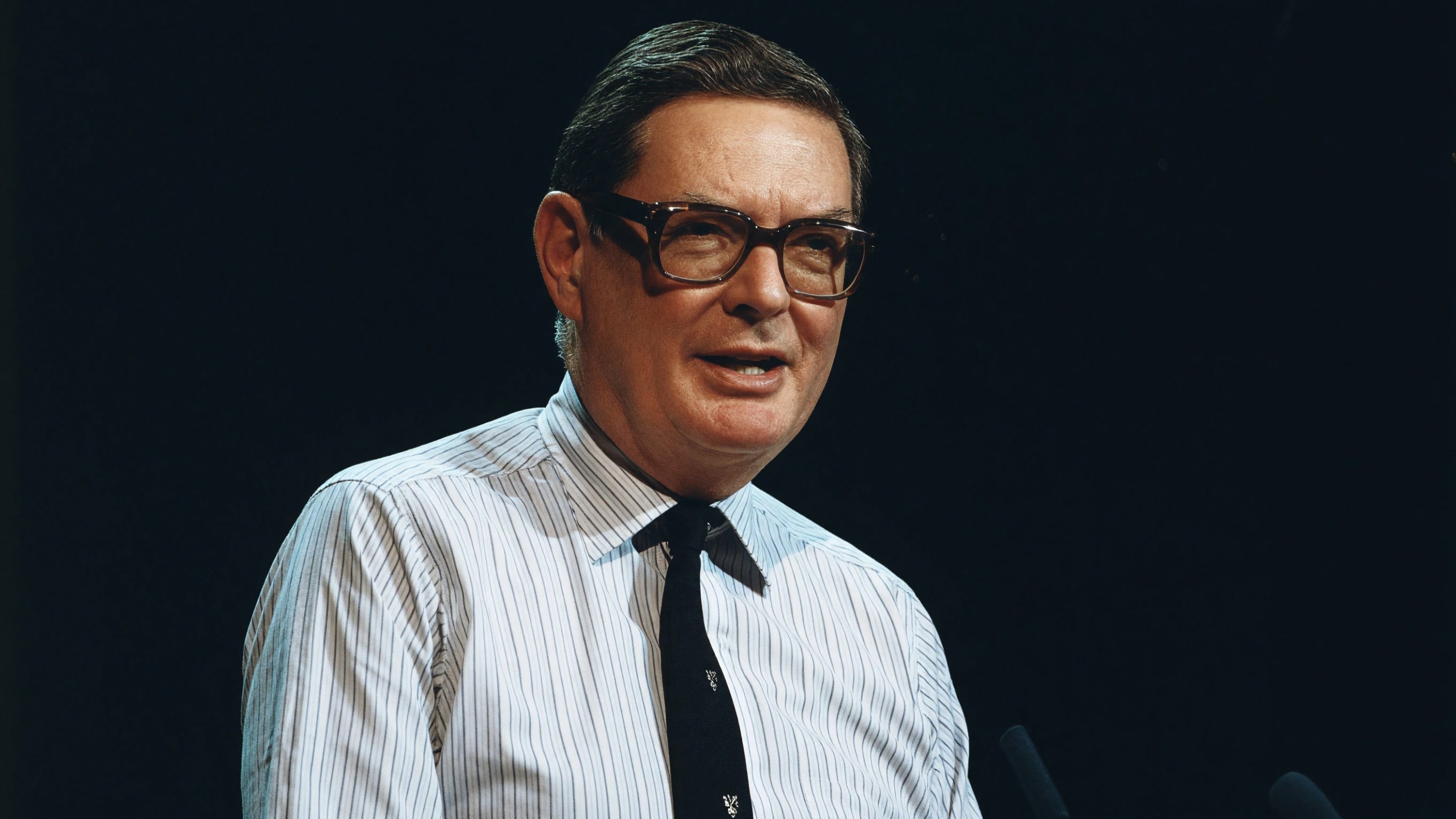
But for years the only trace of that breakfast on Taubman’s side was a note in his appointment book.
Tennant, though, did something that would eventually destroy both of them. He wrote the conversation down.
