

For most families, an embarrassing relative shows up drunk to Thanksgiving.
Or they post something regrettable on Facebook. Maybe they even borrow money they won’t pay back.
For dynastic wealth, the calculus for what is “embarrassing” takes on a whole new meaning when the stakes are generational.
An embarrassing relative is a daughter whose behavior might derail a son’s Senate campaign.
A brother whose addiction could spook investors during an acquisition.
A cousin whose Instagram posts suggest instability to the trustees managing a nine-figure fortune.
See, the threshold for embarrassment drops as the zeros multiply… and, at a certain level of wealth, eccentricity becomes liability.
Often, “shunning” the ‘black sheep’ can do irreparable harm to a legitimate heir, however…
What outsiders often miss is the fact sometimes the family is right to be concerned.
Today, we’ll investigate both sides of the argument, and show why the $64 million dollar question has never been whether wealthy families would make embarrassing relatives disappear.
The question is how.
$160,000 For “Recovery” Buys a Lot of Discretion
If you’re thinking this’ll be a “One Flew Over The Billion Dollar Cuckoo’s Nest” kind of a thing, guess again.

For example, Paracelsus Recovery in Zurich deploys fifteen professionals per single patient. Annual costs exceed $160,000.
The Kusnacht Practice near Lake Zurich promises “absolute confidentiality” in private residences with lake views, staff “entirely dedicated to one patient at a time, guaranteeing total discretion.”
Then there’s Privé-Swiss, with locations in Connecticut and California.
They maintain deliberate obscurity—no social media presence, minimal public information, the kind of place you only hear about through a family office referral.
And each therapist, psychiatrist, and life coach has a minimum of twenty years’ experience.
Now, from what we’ve heard, the accommodations rival five-star hotels. Private chefs. Lake views. Limousine transfers from the airport.
Then you arrive.

Phones and laptops are confiscated or heavily restricted. Communication with the outside world flows through the facility. Visits require approval.
The average stay at facilities like Silver Hill Hospital in Connecticut runs about one month—but there’s no maximum. As long as someone keeps paying, the treatment continues.
One therapist explained the clientele: “Some clients, they come here because everybody in their life is on the payroll. They just don’t know who to trust.”
Naturally, the question of who decides when treatment ends gets complicated.
Technically, these stays are voluntary. An adult patient can theoretically leave. But when your family controls the money, when your access to apartments and credit cards depends on completing the program, when leaving means returning to a life where every financial lifeline has been severed—how voluntary is the choice, really?
As one observer noted, “These are loopholes available to wealthy people but not available to others.”
Indeed, the whole arrangement bypasses the legal system entirely—no court order, no commitment hearing. Just a credit card and a family decision.
But this infrastructure didn’t emerge from nowhere.
The Template Was Set Decades Ago
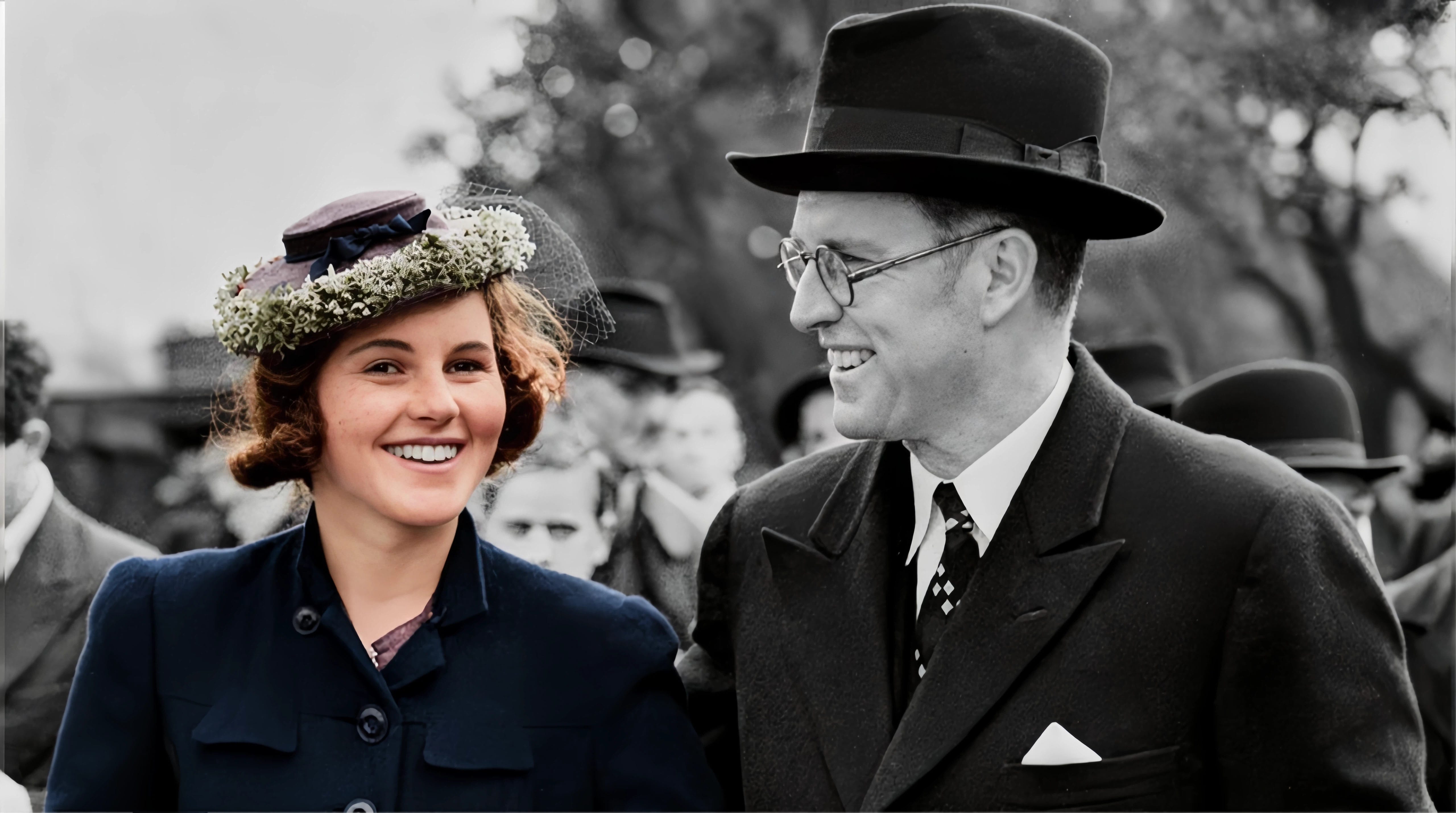
In November 1941, Joseph Kennedy authorized a prefrontal lobotomy for his 23-year-old daughter Rosemary.
He didn’t tell his wife Rose. He didn’t consult Rosemary herself. And laws at the time permitted fathers to make medical decisions for their daughters without consent.
Dr. Walter Freeman drilled two holes in her skull and severed the connection between her prefrontal cortex and the rest of her brain.
The operation failed catastrophically. Rosemary could no longer walk or speak coherently. She was immediately institutionalized—first at Craig House, then at St. Coletta School in Wisconsin, where she remained for sixty-four years.
The Kennedy family maintained near-complete silence. Photos were cropped. Her name vanished from family discussions. Their ascent to political power coincided with Rosemary’s systematic erasure.
The same year, across the Atlantic, the British royal family made a similar calculation.
Nerissa and Katherine Bowes-Lyon—first cousins to Queen Elizabeth II—were committed to Royal Earlswood Hospital.
They were 15 and 22.
The institution housed over 200 residents in overcrowded wards with just two staff members for every 40 patients.
But the most striking detail involves Burke’s Peerage, the definitive genealogical record of British aristocracy.
The 1963 edition listed both sisters as deceased. Complete with specific dates of death.
Yet, both women were alive.
According to a 2011 documentary, no member of the royal family ever visited during their institutionalization—despite their aunt, the Queen Mother, serving as patron of MENCAP, the charity for people with learning disabilities.
When Nerissa actually died in 1986, a few nurses attended her burial in a pauper’s grave marked with a plastic tag. Katherine lived until 2014, reaching 87 without the royal family ever publicly acknowledging her existence.
The concealment lasted forty-six years.
The $23 Billion Machine
What happens when the embarrassing relative is a teenager?
Maybe it’s the daughter whose social media posts are becoming increasingly erratic. The son whose drug use has escalated beyond what family therapists can manage. The heir whose behavior threatens to derail a carefully planned merger or political campaign.
Now, sometimes these kids genuinely need intervention.
Addiction is real. Mental illness is real.
And wealthy teenagers with unlimited resources and minimal accountability can spiral faster and harder than their middle-class peers.
When you can afford any substance, any experience, any escape—and when no one around you has the authority to say no—the trajectory can turn dangerous quickly.
Well, for these situations, an entire industry exists.
The troubled teen industry encompasses wilderness programs, therapeutic boarding schools, and residential treatment centers.
An estimated 200,000 to 300,000 youth pass through annually, generating approximately $23 billion in revenue.
Monthly costs range from $9,000 to $12,000, and three-month wilderness programs routinely exceed $70,000.
Educational consultants—often receiving referral fees from the programs they recommend—guide desperate parents toward these facilities as the “only option” for children on paths to destruction.
The admissions process sets the tone for everything that follows.
Survivors call it “gooning.”
In the middle of the night, strangers appear in the teenager’s bedroom. They’re transport agents hired to deliver the child to a facility hundreds or thousands of miles away. The parents have signed consent forms. The teenager has no idea what’s happening.
The shock is intentional. It immediately establishes that the child has lost all autonomy—that even sleeping safely in their own bed is no longer guaranteed.
For example, Paris Hilton attended Provo Canyon School.

Her testimony described being woken for sham gynecological examinations alongside other girls, daily physical and emotional abuse, and forced medication. And when her activism brought attention to the industry, she noted how “these facilities are incentivized to keep kids longer to bill for services” with “staff who unfortunately are not appropriately trained.”
Once inside, communication with the outside world becomes tightly controlled. Calls home happen with staff members in the room—no privacy, no opportunity to honestly describe conditions. Letters are read before being sent. Children learn quickly that complaints lead to punishment, loss of privileges, or extended stays.
The outcomes data is devastating.
A survey conducted with the Menninger Clinic and Baylor College of Medicine found that only 2.9% of therapeutic boarding school attendees considered the experience helpful. Just 1.9% of wilderness program participants thought it eased their struggles.
The deaths continue regardless.
Taylor Goodridge, 17, died at Diamond Ranch Academy in Utah in 2021 after staff failed to provide medical care despite knowing she was ill.
In February 2024, a 12-year-old boy from a “well-to-do New York family” who had attended an elite private school in Manhattan died of asphyxiation at Trails Carolina in North Carolina.
For families seeking to remove a problematic teenager from view without court proceedings, the infrastructure stands ready. The industry markets transformation. Some families get it. Others get tragedy. The checks clear either way.
When the Money Itself Becomes the Cage

Institutionalization requires physical control and ongoing payments. A more elegant solution uses money as the mechanism itself.
Trust law enables families to leave assets where beneficiaries never gain direct ownership. A trustee controls all distributions according to terms in the document—terms that can include nearly unlimited behavioral conditions.
Sobriety clauses require clean drug tests before distributions. Treatment compliance provisions demand written confirmation from rehabilitation providers. Some trusts authorize trustees to conduct personal interviews or mandate substance testing through whatever means they choose.
One attorney’s guidance states it plainly: “If a beneficiary won’t cooperate, the trustee may withhold distributions.”
The dead hand controls the living through legal instruments that outlast mortal life.
To critics, this sounds draconian. But consider the alternative.
“Janice” was a 29-year-old living in a homeless shelter who had inherited over $800,000 when her father died in 2011.
Had he placed the assets in a trust with behavioral provisions, she might have achieved stability. Instead, he left everything directly. Within months, the money vanished—relatives grabbed cash from her hands, spending sprees consumed the rest.
The attorney who handled the estate described the aftermath: “There was one phone call she made regarding whether her father owned a car that she could sell, and then the calls stopped.”
That same attorney recommended the father should have used a trust. Under that structure, Janice would have spent her life requesting permission from a trustee to access her inheritance—her father’s posthumous judgment binding her forever.
Which outcome is worse? Perpetual financial supervision, or an $800,000 inheritance gone in months?
The families establishing these trusts would argue they’re protecting heirs from themselves. The heirs would argue they’re being controlled from beyond the grave. Both are probably right.
This makes me wonder if the Reiner family had taken some of these measures would rob and Michelle be alive today?