
George Orwell sat down to write in 1941, with the Luftwaffe still overhead and the country rationing everything, and he produced a sentence that landed like a verdict:
Britain was “the most class-ridden society under the sun.”
He meant it as an indictment. The problem was that he was right, and that it stayed right, and that it is, in most of the ways that count, right today.
Thirty-four years after Orwell, Helmut Schmidt, the West German Chancellor, made the observation from the outside.
British society, he said in 1975, was “characterized by class struggle” on both sides, upper and working alike.
Two leaders, two languages, two generations apart. The same diagnosis.
But the system they were describing didn’t arrive by accident. It was built in a single autumn, in a field in southern England, and it has been maintained, absorbed and renovated and occasionally sold, ever since.
The families behind the gate in 1066 are still behind it. The only question is how they kept it shut for nine centuries.
This is the story of how it works.
The Norman Foundation
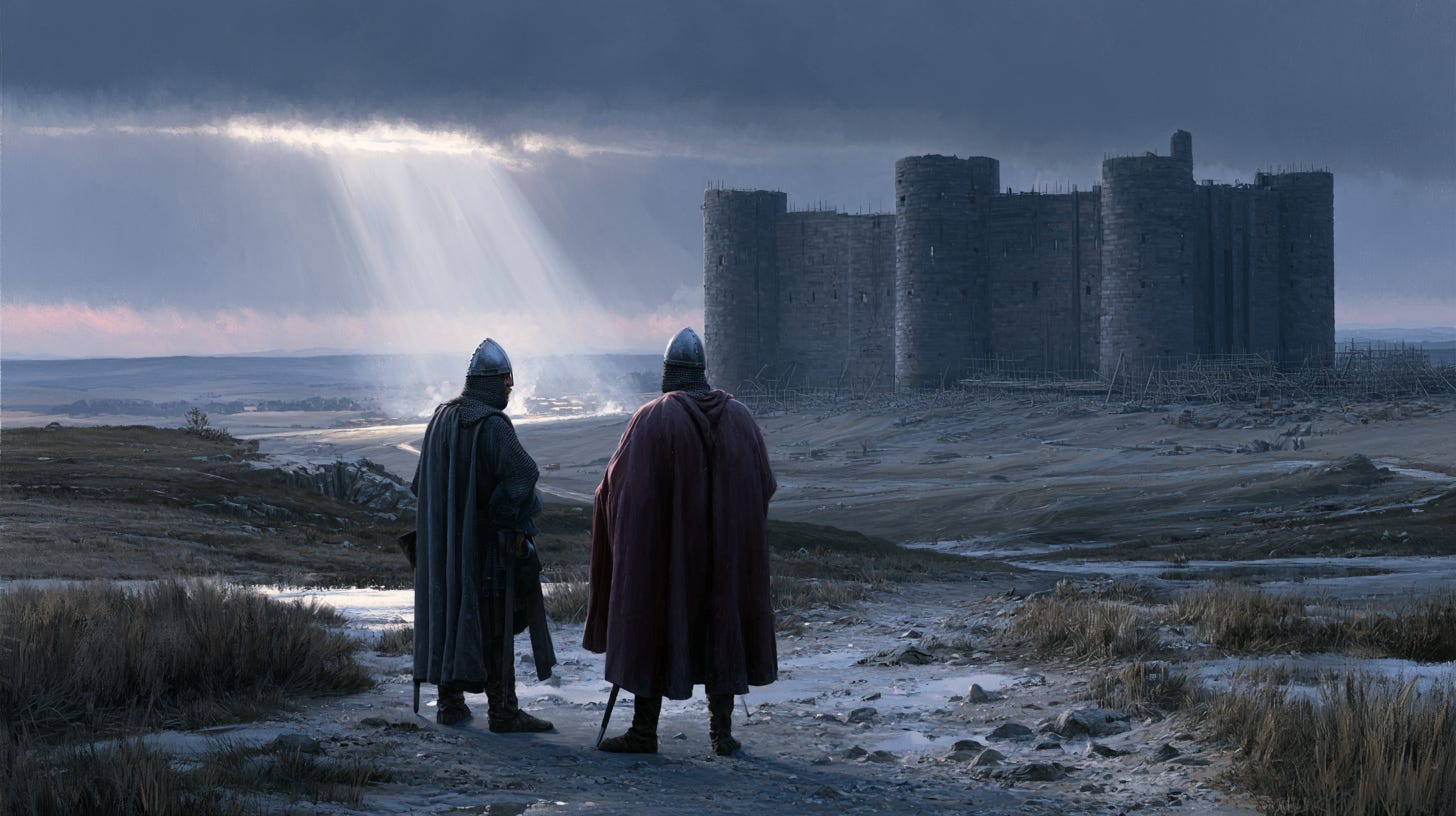
On the morning of October 14, 1066, at Hastings, William the Conqueror’s cavalry broke the Saxon shield wall and, in doing so, broke the English social order that had existed for centuries before it.
William won a battle that morning. By nightfall, he owned a country.
The formula was clean. Loyal Norman knights received parcels of English land. The Saxons who had owned that land were reduced, within a generation, to a subordinate class, with contemporary observers describing something close to an apartheid existence. The language of power shifted to Norman French, and the laws followed, and the church followed, and the structures followed.
The country surrendered over the next decade rather than the next afternoon, through a long attritional campaign against Saxon resistance in the north and west. Villages burned. Northern populations were displaced.
The Domesday Book, ordered in 1085 and largely completed the following year, recorded the result: a parcel-by-parcel land audit of every shire in England, naming who held what, and from whom.
The buildings the Normans raised were instruments of administration before they were monuments. A Norman castle in a Saxon town was a daily reminder of who held the keys to the country, and the Normans built them in every town that mattered. Canterbury Cathedral, Durham Cathedral, the Tower of London, Windsor Castle: they still stand because the families that built them intended permanence, and permanence was the point.
Two aristocratic names survive in direct lines from that original redistribution: the Percys and the Grosvenors.
The Grosvenors today own large sections of Mayfair and Belgravia, some of the most expensive real estate on the planet, and the land grant that created their position was signed in the eleventh century by a man on horseback.
The royal family itself takes its current name from a Norman building. Windsor Castle, built by William the Conqueror in the years after Hastings to dominate the Thames Valley west of London, eventually lent its name to the dynasty that occupies the throne today. The line from 1066 to the current reign is literal: the same family, the same stones, the same logic of inheritance.
Over time, Norman men and Saxon women intermarried, often because Norman knights were more interested in the land that came with a Saxon heiress than in any objection to her ancestry. The two traditions fused, but on Norman terms, at Norman timescales, with the Norman families holding the land and the Saxon families working it.
What emerged across two and three centuries was an English ruling class that was technically hybrid but functionally Norman in every detail that mattered: the land, the titles, the right to sit in the same rooms their grandfathers had built.
The hierarchy had been set in one autumn afternoon, and the next great challenge to it would arrive not from a rival army but from a microbe.
Plague And Parliament
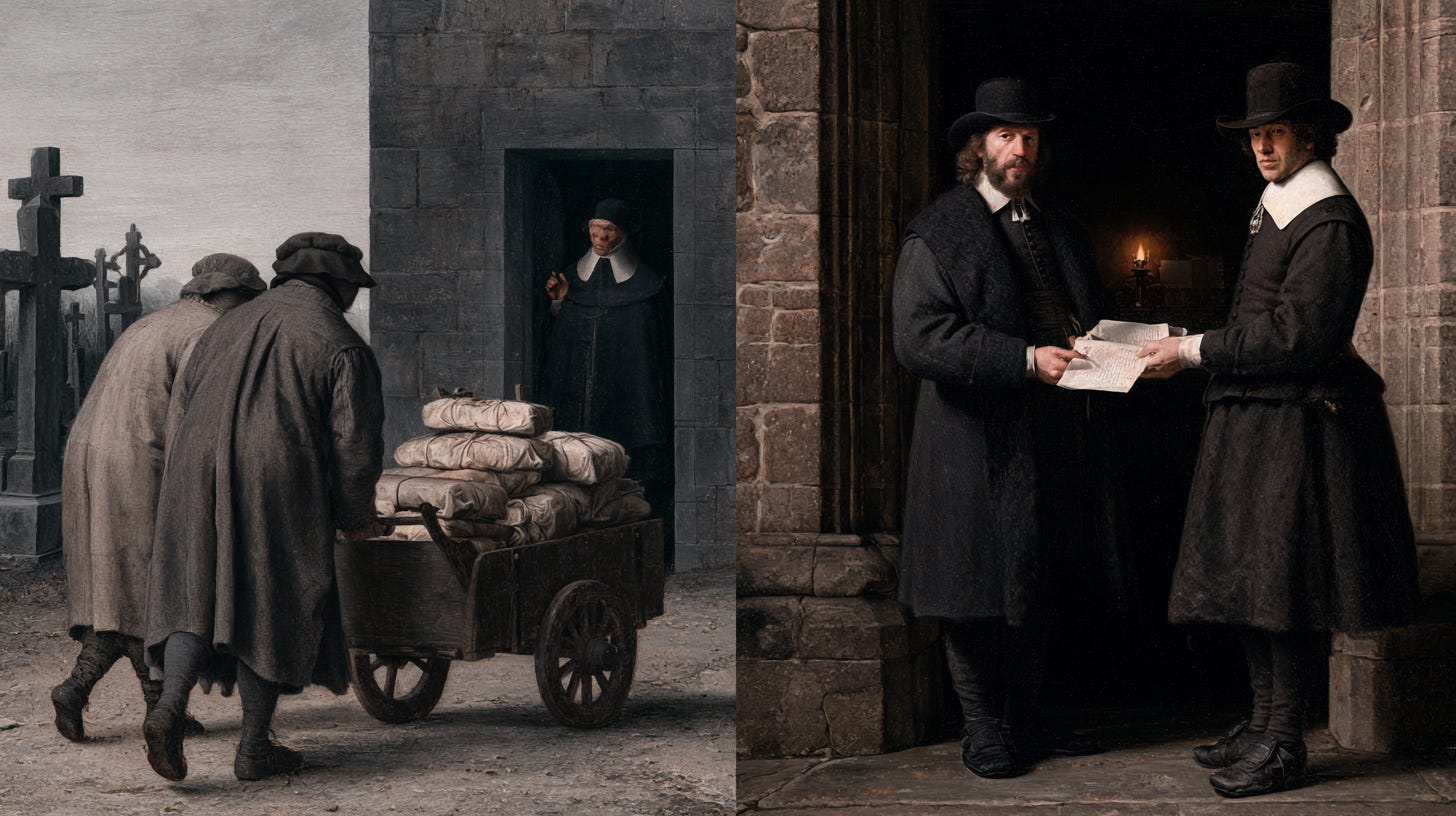
The Black Death reached England in 1348. By the time it passed, somewhere close to half the population was gone.
The immediate effect on the Norman class structure was demographic rather than ideological. Suddenly there weren’t enough workers. The peasants who survived found, for the first time in three centuries, that their labor had value. Wages rose, and the ground shifted.
The ruling language felt the pressure too. With so many Norman and church-educated speakers dead, French’s grip on official life weakened.
English, the tongue of the workers and the survivors, moved up. By the end of the fourteenth century it was the language of the law courts, then of literature, then of everything.
Two new classes emerged from the wreckage.
The first was a managerial class: men who administered the lands of Norman lords who were either dead, distracted, or operating estates too large to oversee themselves. These men were administrators, growing in influence, sitting between the aristocracy and the peasantry in a space that had barely existed before.
The second was a merchant class, building through maritime trade in the fourteenth and fifteenth centuries, accumulating money through routes that had nothing to do with land ownership.
The aristocracy responded with studied indifference. They maintained strict endogamy to keep the class lines clean. Daughters married cousins. Sons married into other aristocratic houses. The titles passed through inheritance laws designed to keep land consolidated rather than distributed.
They controlled the church too. Bishops and archbishops were, by custom, the children of aristocrats, which meant the higher reaches of religious life stayed closed to anyone born below a certain line. A Saxon peasant could become a parish priest. He could never become an archbishop. The institution that preached spiritual equality enforced social inequality at every senior level.
The class system absorbed the Black Death the way it absorbed everything that followed.
It flexed, admitted some new figures into the middle ranks, then reset. The peasants got better wages. The merchants accumulated capital. The aristocrats lost some manpower and gained some trading partners. The families at the top stayed at the top.
Three centuries later, when the next great rupture arrived, it came through a different route entirely.
The English Civil War of the 1640s is usually taught as a constitutional crisis, a conflict between Crown and Parliament over where sovereign power resided. That framing is accurate as far as it goes, but it misses the social fact underneath it.
Parliament was aristocrats. The men who raised armies against Charles I were, with very few exceptions, drawn from the same Norman-descended gentry and nobility that had run England since 1066. The House of Commons in the 1640s was a body of landed gentlemen who happened to disagree with the king about taxation and religion.
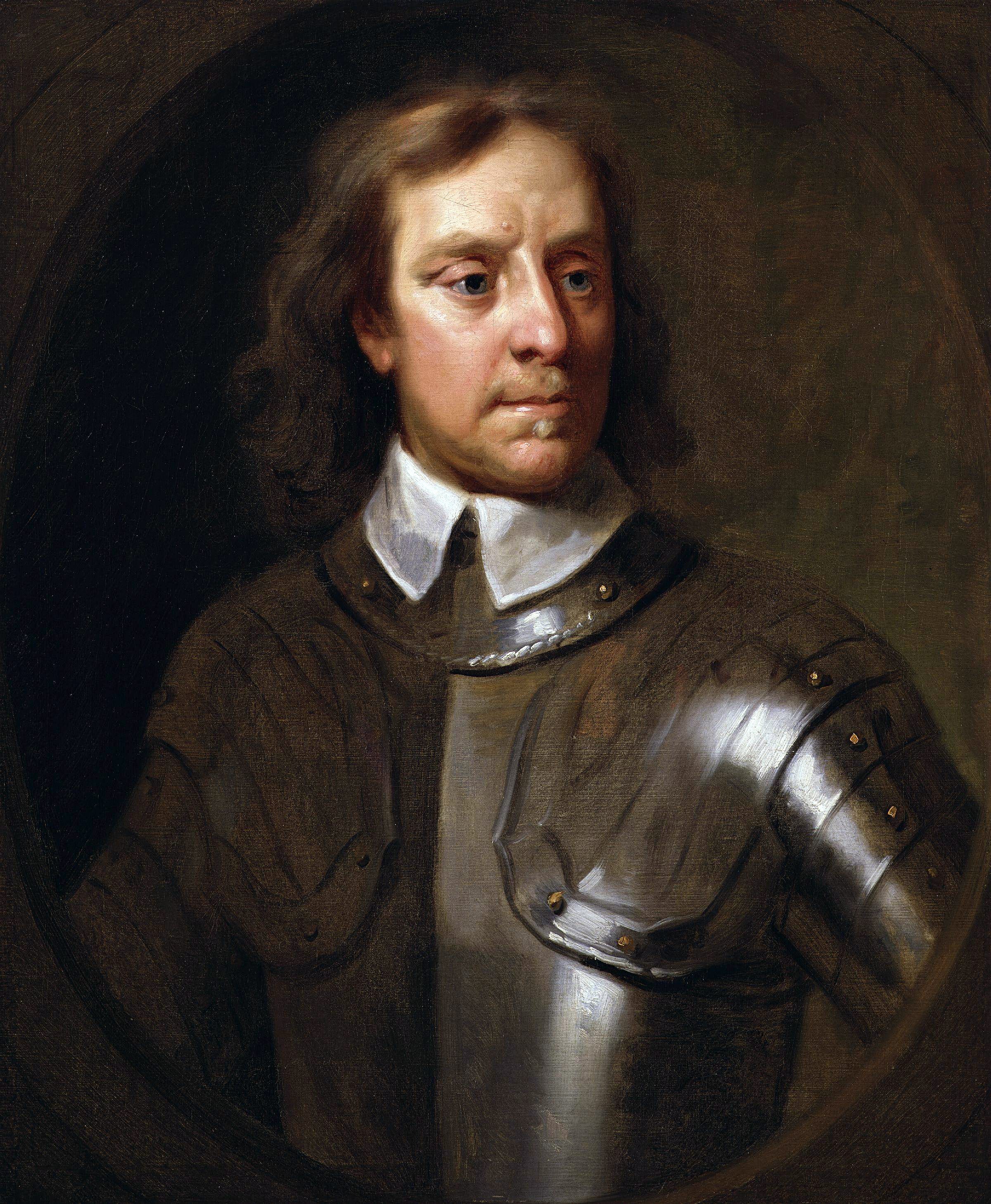
Oliver Cromwell himself, the man who eventually executed Charles I and ran England as Lord Protector, traced his lineage back to a knight who came over with William the Conqueror. The regicide was a Norman descendant. The man who killed a king to defend Parliament from royal absolutism was, genealogically, the product of the same conquest that had installed the kings in the first place.
The Parliamentary cause was a dispute within the ruling class about which portion of the ruling class should hold the ultimate card.
Compare that to France in 1789. The French Revolution guillotined the aristocracy and started over with a declaration that birth conferred no legal privilege. The German revolutions of 1848 aimed at democratic mobility and a society where birth had no bearing on station.
England did neither. England’s aristocracy was already on the winning side of the argument, and the men with the muskets and the men with the manor houses turned out to be, in many cases, cousins.
The Civil War ended with a king executed, a republic established, and then, eleven years later, the monarchy restored and the same families back in the same rooms. The aristocrats who had fought for Parliament kept their land. The aristocrats who had fought against it were restored. The class architecture survived the revolution by quietly running it.
Three hundred years of disruption, from the plague pits of 1348 to the scaffold of 1649, and the Norman framework was still holding. The next pressure on it would come from a ship full of spices sailing into the Thames.
The Empire That Bought Titles
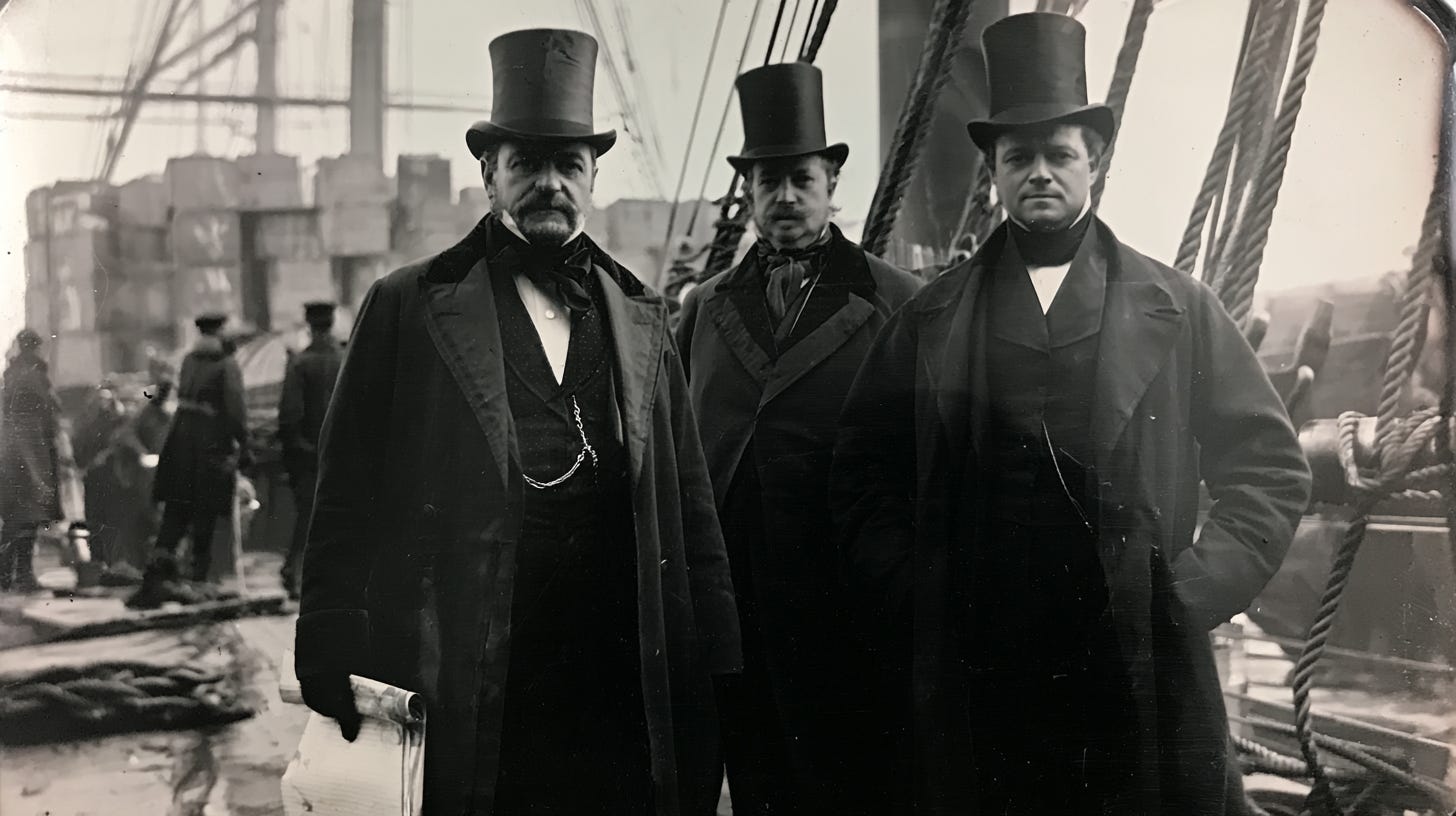
Britain’s empire began with a trading company.
The British East India Company arrived in India commercially: it wanted spices, then textiles, then territory as a means of protecting the textiles.
The Royal Navy followed the trade routes, protecting them against the Spanish, the French, and the Dutch in a series of conflicts that stretched across the Caribbean, South America, India, and Africa.
The City of London financed the Navy. The City financed the routes. The whole apparatus ran on a logic of commercial protection first, sovereignty second.
The century of wars that followed had a financial logic the textbooks often skip. Britain won most of them because Britain could borrow.
The City of London developed a credit market sophisticated enough that the government could finance fleets years before the tax receipts came in. France, with a more rigid fiscal system and an aristocracy that resisted taxation, couldn’t match the cash flow. The Royal Navy sailed on credit raised in London coffeehouses, and the empire that followed was a banking achievement before it was a military one.
The Industrial Revolution, which took root in the English Midlands in the late eighteenth century, added a new class of wealth that had nothing to do with land or empire.
Quakers, locked out of universities and the established church on religious grounds, redirected their energies into the only fields that would have them: trade, banking, and industry. They led the early innovations in iron and steel.
The Darby family in Coalbrookdale developed the techniques that made cast-iron production commercially viable. Quaker bankers underwrote much of the early industrial expansion. The religious minority barred from social legitimacy ended up building the engine that produced the next great wave of it.
The fortunes that followed dwarfed anything England had seen since the Norman land grants.
Three names stand as representative cases.
Sir John Ellerman, the shipping magnate born in Hull in 1862, was believed to be the richest man in England by the time he died in 1933, his estate assessed at over £36 million at a time when the average British annual wage sat around £180. He owned shipping lines, breweries, newspapers, and enormous tracts of London property, and almost nobody outside the City had heard of him. He cultivated invisibility as deliberately as the Norman aristocracy had cultivated visibility.
Thomas Holloway built a fortune selling patent medicines in the mid-nineteenth century, then turned it into a women’s college, Royal Holloway, that still bears his name.
George Cadbury, a Quaker chocolate manufacturer in Birmingham, built the model village of Bournville in the 1890s, a planned settlement of cottages, garden plots, and schools for his workers. Each of them, in different ways, sought either aristocratic titles or the proximity that served the same purpose.
The aristocracy absorbed industrial money rather than collapsing under its weight. The new tycoons wanted titles. The old aristocrats needed cash. Both sides got what they wanted, and the gate opened just wide enough, then closed again.
The transaction was usually subtle. A wealthy industrialist would donate to a political party, host the right people at his country house, perhaps marry a daughter into a struggling baronial family. Within a generation, the family had a title. Within two, the trade origins were quietly forgotten and the family appeared, for all practical purposes, as long-established gentry.
The phrase “new money” was an insult precisely because, given enough time and discretion, it could be erased.
Urbanization pulled workers from the Midlands and the north into Birmingham, Manchester, and London, filling the factories, then the shops, then the call centers. The peasants of 1348 became the urban working class of 1848 became the service-economy workers of 1948. The labor kept getting reclassified. The position in the hierarchy held.
The conditions in the new industrial cities were grim: slums, child labor, sixteen-hour shifts, factory injuries with no compensation. The political response came partly from reformers within the working class itself and partly from a small cohort of wealthy industrialists who took the workers’ side. Seebohm Rowntree, son of the chocolate manufacturer Joseph Rowntree, published a landmark 1901 study of poverty in York that helped force welfare reform onto the national agenda. The Labour Party, founded in 1900, was the working class’s political vehicle, and by the time the twentieth century arrived, it had the numbers to use it.
Post-war Labour governments taxed the great landed estates heavily. Death duties, set at punitive rates, broke up estates that had been intact for half a millennium. Country houses were demolished or handed to the National Trust to avoid the bills. A managerial class, suited and credentialed, moved into the vacuums the landowners left. They ran the banks, the corporations, the universities, the BBC. The shape of the system changed. The logic of it held.
By the late twentieth century, the most reliable way to place a stranger in the British hierarchy was no longer their bank statement. It was the first sentence out of their mouth.
The Accent and the Apex

The British class system has an audio signal that functions almost like a passport check.
At the working-class end, regional accents carry the full local color.
The London glottal stop, the dropped consonants that run through Guy Ritchie’s gangster films, marks a particular London working-class identity.
Scouse, the accent of Liverpool, and Mancunian, the accent of Manchester, sit in the same register: strongly local, strongly working-class in association, audible in the voices of actors like Stephen Graham and musicians like the Gallagher brothers of Oasis.
Moving up, the accents moderate. The middle class speaks with regional flavor softened, identifiable by county or city but no longer by street. The upper-middle class speaks in what’s usually called received pronunciation light: regional traces gone, clipped but not theatrical.
At the top, the accent shifts to what’s colloquially called plummy English. The Eton-educated tone. Long vowels, precise consonants, an unhurried quality to every syllable that signals a person who has never needed to rush to be heard. The broadcaster Douglas Murray is a frequently cited example: his speech patterns are legible as Eton almost before you’ve registered what he’s saying.
But accent isn’t destiny in Britain in 2026. People code-switch. Actors play across registers. Politicians sometimes sand their edges deliberately. But accent remains the fastest and most instinctive class signal in a country with no other reliable visual marker. A house can be renovated and an address can change… but an accent, picked up in the first decade of life, sits considerably deeper.
Above the accent sits the architecture itself. The modern British class system, as it operates today, has five recognizable layers, and accent is only one of the markers that move people between them.
At the bottom sits the working class: urban, regional, often unionized, defined now less by manual labor than by service work, shop floors, warehouses, hospitality, call centers.
Stronger regional accents, income paid weekly or hourly, an education that ended at sixteen or eighteen. The working class is the largest stratum in numerical terms and the one with the deepest cultural distinctiveness.
Above that sits the middle class proper. Salaried work, mortgage rather than rent, accents regionally legible but moderated.
Teachers, nurses, civil servants, mid-level managers. The middle class is the buffer the system has always needed: credentialed enough to run the country day to day, comfortable enough to have a stake in its continuation.
The upper-middle class is the layer where the system’s signaling sharpens. Private school education, often a less famous one than Eton but still selective.
A professional career: barrister, surgeon, City banker, consultant. The accent moves toward neutral British, the regional traces sanded down. Many of the country’s senior managers and senior bureaucrats live here, the credentialed gentry of the late twentieth and early twenty-first centuries.
At the top of what most people would call normal society sits the aristocracy and gentry. Landed families, the dukes and earls, the surviving Norman lineages and the absorbed industrial titles. They send their children to the major public schools, Eton, Harrow, Winchester. They marry inside their own circle when they can. Their wealth is increasingly held in trusts and property portfolios rather than productive farmland, but the geography of their position, the country houses, the London addresses, the seats in the House of Lords, has held for two centuries.
And above all of them, occupying a category entirely their own, sits the royal family.
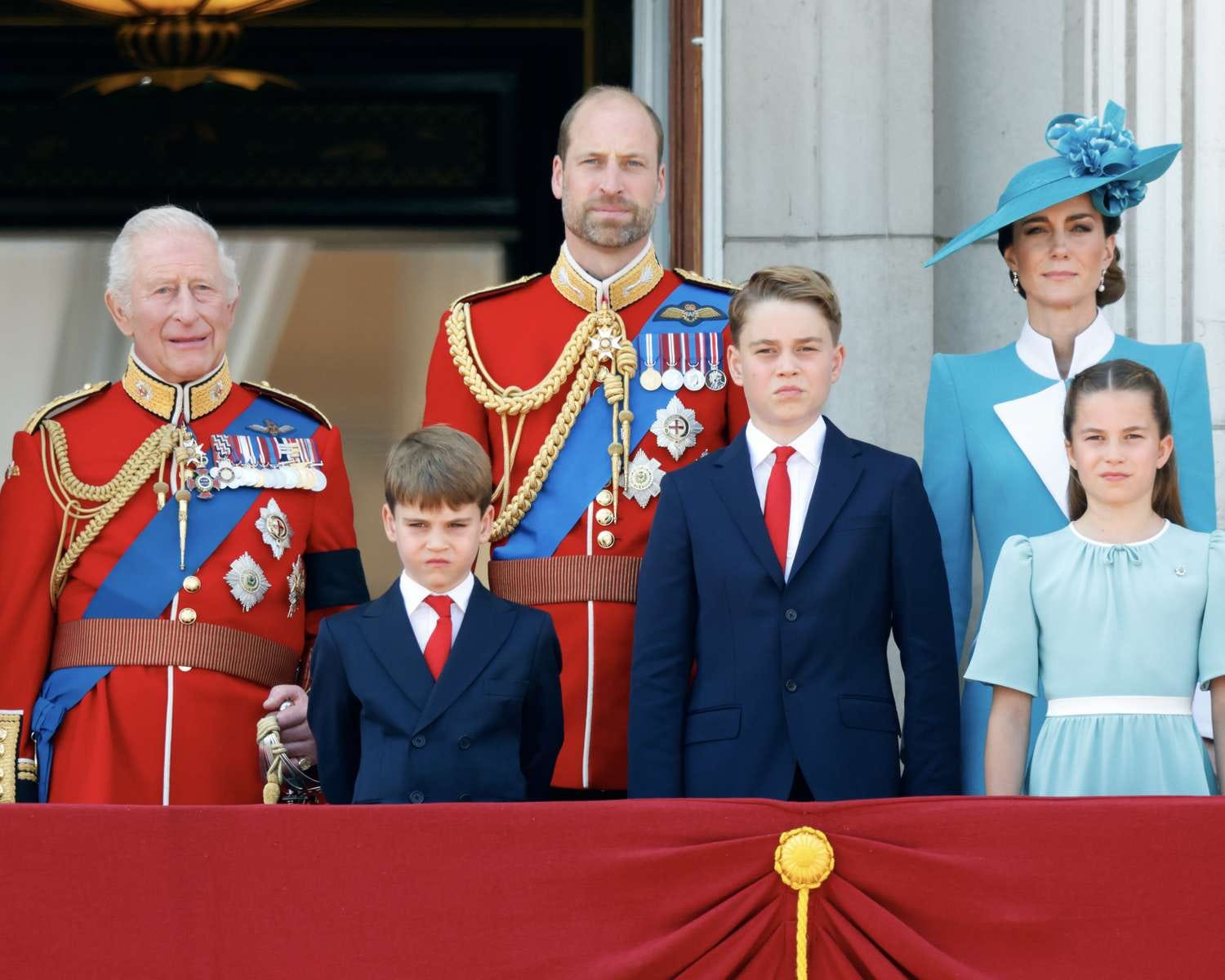
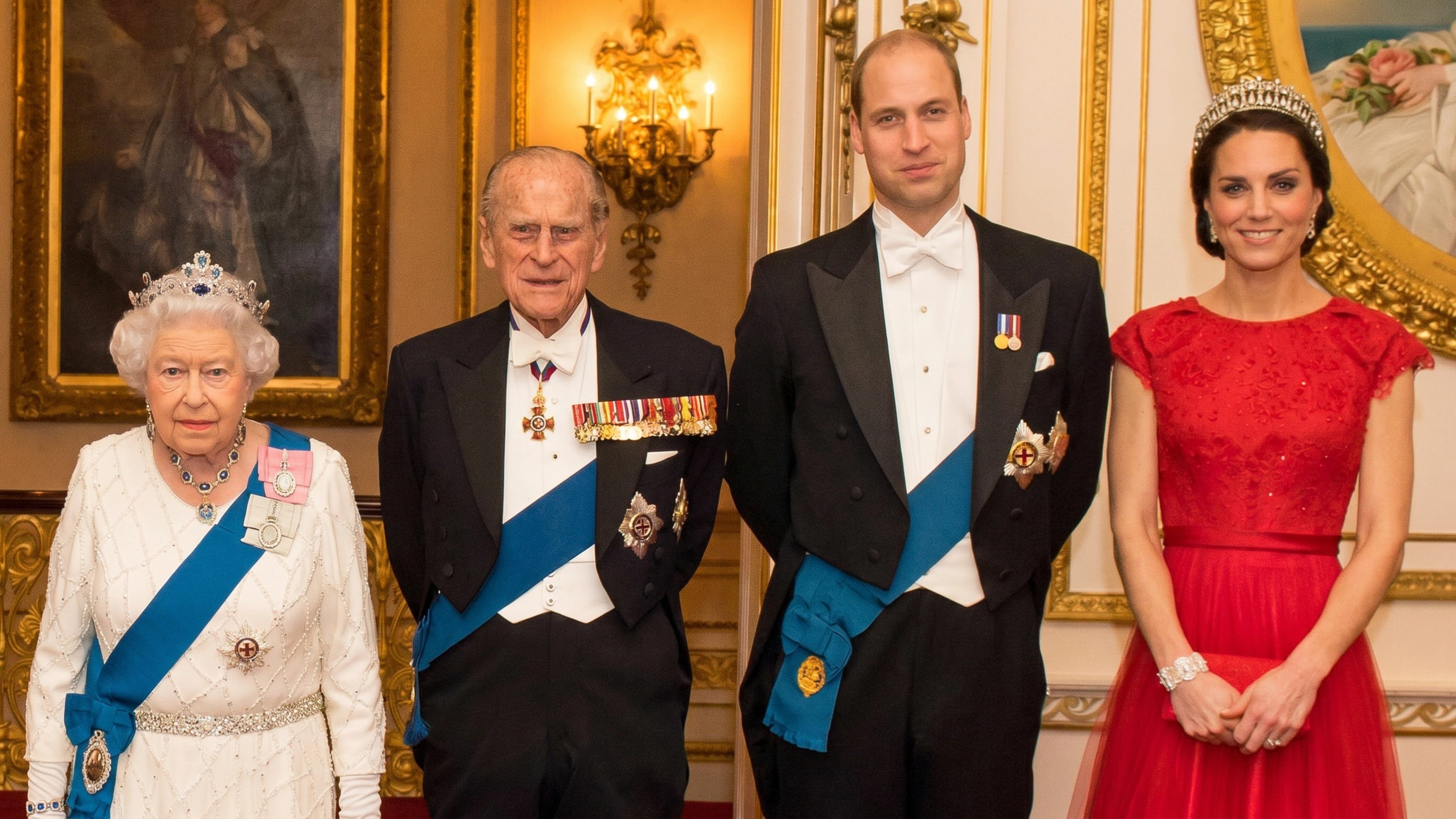
The family at the very top of the British class system was called Saxe-Coburg and Gotha until 1917.
King George V changed it to Windsor because Britain was at war with Germany, because anti-German sentiment had reached a pitch where German-sounding names were being removed from shop fronts and streets, and because his own cousin, Kaiser Wilhelm II, was commanding the opposing army. The most British of institutions renamed itself for its own survival. The castle won over the dynasty.
Windsor is the name they’ve kept since, so thoroughly absorbed into public imagination as English that the Germanic origins read as trivia rather than substance. That rebranding was itself a class act in the technical sense: a rapid repositioning to maintain altitude, executed with the instinct the family had been practicing for centuries.
The role of the royal family in the class system is structural rather than purely ceremonial. They sit above the cultural and political squabbles that preoccupy the rest of the hierarchy, stewards of the Crown lands, beneficiaries of state funding, figures of public service in a formal sense. The monarch is technically the largest landowner in the country, steward of the Crown Estate, the Duchy of Lancaster, and the Duchy of Cornwall.
In the architecture of the British class system, the monarchy holds the keystone position: Parliament holds the practical power, but remove the monarchy and the hierarchy that runs from Norman knight to factory worker to Eton graduate needs a new symbolic anchor. The British have never wanted to find one.
Why The Gate Still Holds
Every country with an entrenched class system eventually faces the same pressure: break the hierarchy, or sell entry to it.
France broke it in 1789, with the guillotine and the declaration that birth conferred no legal privilege. Germany, through the nineteenth-century revolutions and, more decisively, the catastrophe of the twentieth century, rebuilt itself on the principle of democratic social mobility. The United States banned a formal aristocracy in its Constitution and maintained an informal one through wealth, prep schools, and zip codes.
Britain did something different. It absorbed every shock by widening the gate just enough to let the right new money in, then closing it again.
The Black Death sent wages up and the managerial class entered. The Industrial Revolution sent fortunes up and the tycoons bought their baronetcies. The Labour governments of the 1940s taxed the landed estates and the credential class inherited the corridors. Each time, the logic recalibrated. Each time, the families at the very top, the ones with the Norman surnames and the Crown lands and the Eton educations, stayed exactly where they were.
Orwell’s 1941 line still has teeth because the mechanism he identified was never incidental to Britain. It was Britain’s design. The class system survived nine centuries through active maintenance, not inertia, because every generation of new arrivals found it easier to climb inside the existing frame than to dismantle it. The Percys and the Grosvenors understood that in 1066. The aristocracy understood it when it opened the gate to Ellerman and Cadbury. The House of Windsor understood it when it changed its name, swallowed the embarrassment, and carried on.
The system rests on the monarchy the way a stone arch rests on its keystone. The keystone carries no more weight than the stones beside it. It holds the position that keeps every other stone in place.
You missed out the Hereward rebellion, centred around the Isle of Ely and probably the most dangerous anti-Norman rising, because it was never put down (Hereward disappeared into the Fenland mist, as befits any self-respecting semi-mythical rebel). Saxon society itself wasn’t any great model of social mobility; when Hereward needed help from abroad he called on his cousin, King Swayne of Denmark. There’s also a little logical flaw; Normans didn’t need to marry Saxon heiresses to get their land. All the land suddenly belonged to Guillaume of Normandy, very shortly after Hastings. The same man who made sure women didn’t own land in the way that Saxon women had. Other than that, you’re writing exactly what I’ve been saying for the past 40 years. It’s England’s tragedy. Each “revolution” was a pretence of one, where if it looked anywhere near as if it might overturn what’s looked on as “the natural order of things” the leaders are subsumed into that order. The industrialists sent their sons to study Greek and Latin, not chemistry or electronics. And here we are; nicely-spoken and not a clue how to really do anything any more, except fetishise the past and pretend not just that “it’s always been like this” but that it can carry on carrying on.