
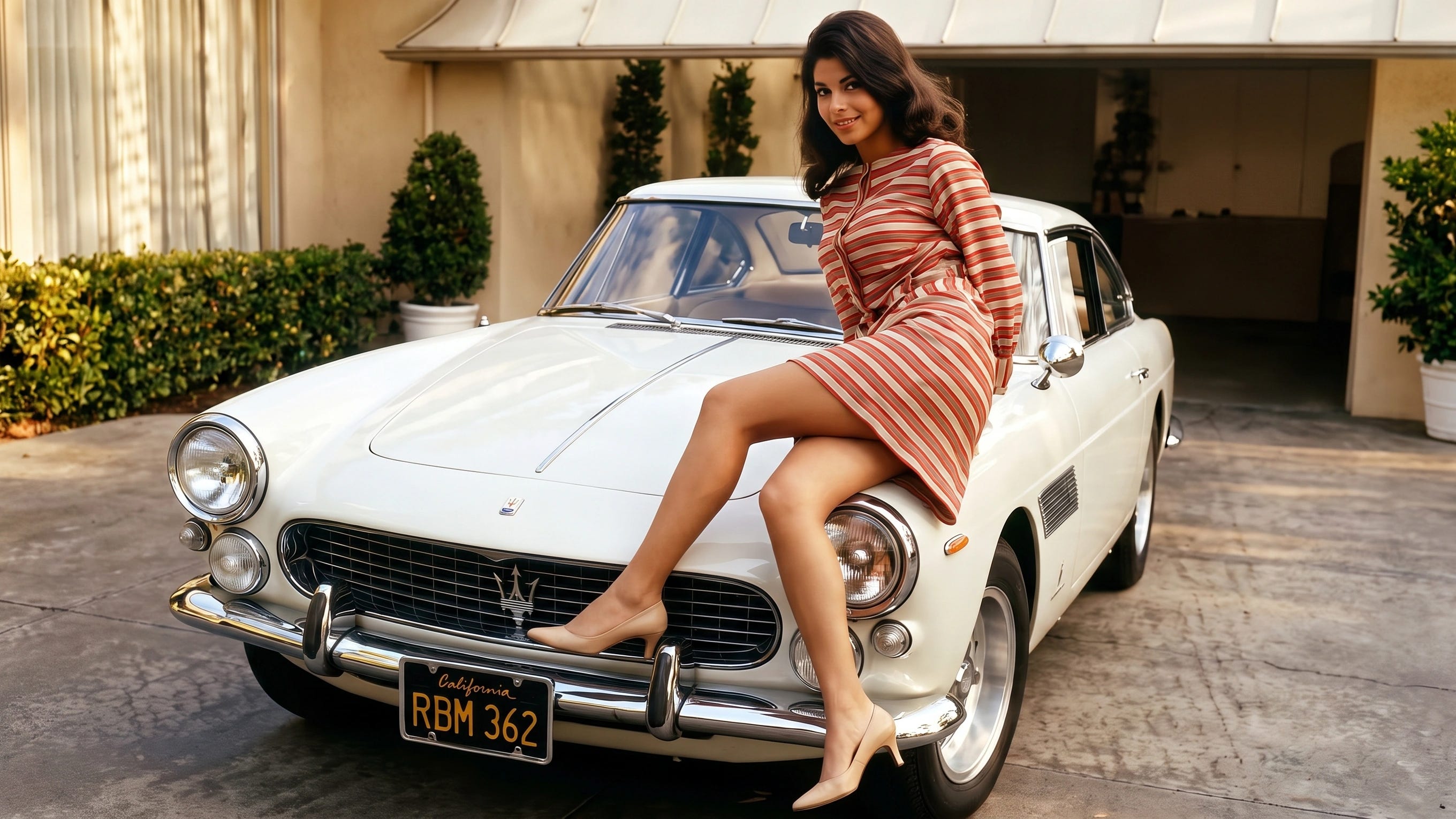
The year is 1977, and on a sweltering May afternoon in San Antonio, Texas, the crane operator at Alamo Masonic Cemetery is guiding a sealed wooden crate into the widest grave anyone at the cemetery can remember digging.
The container is the size of a small garage and weighs over three thousand pounds. Inside it, the body of Sandra West sits behind the wheel of a powder-blue Ferrari 330 America, dressed in a white lace nightgown with the seat slanted comfortably back.
That bizarre parting request had been written into her will as calmly as another woman might have specified flowers.
Three hundred people have come to watch. Most of them never knew her.
They’d read about her in the paper and come out to watch the thing happen, the way people will come out for anything that confirms the world is stranger than they thought it was.
Concrete is poured over the container to seal it permanently underground, and when it’s finished, the only thing left above the surface is a headstone that mentions nothing about what lay beneath.
At the time of death, Sandra was 38, a childless widow worth an estimated $5 million, equal to around $47 million today. She’d been preparing for this moment since she was 33, the same age her husband had been when he died in a Las Vegas hotel room.
How a shopkeeper’s daughter from Beverly Hills ended up sealed in concrete beside a Texas oilman is a story that starts, like most of them, with someone else’s money.
The Shopkeeper’s Daughter
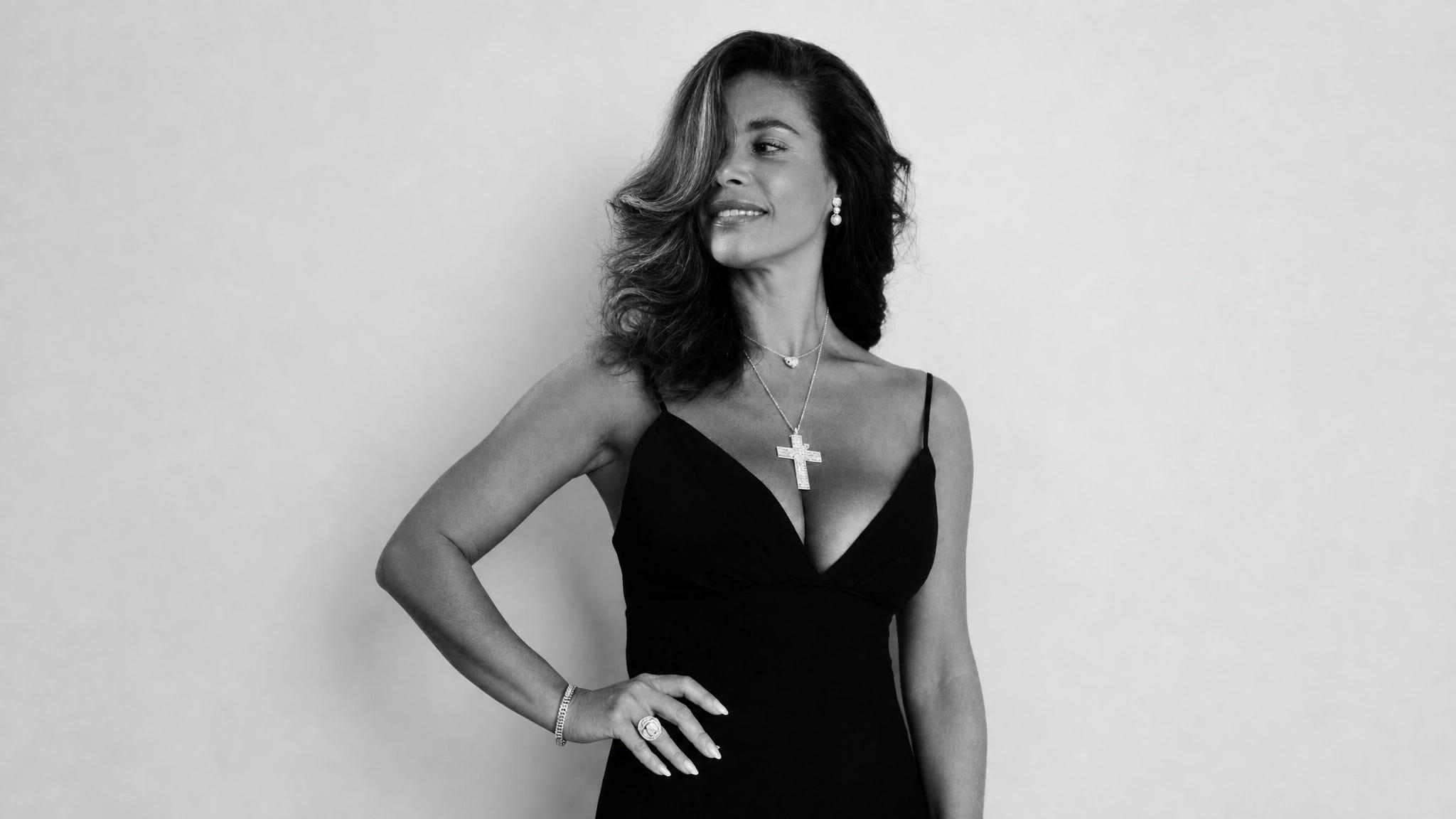
Sandra Ilene Hara grew up behind the counter of a children's clothing store in Beverly Hills, a neighborhood that placed her within walking distance of extraordinary wealth without giving her any of it.
Born on January 2, 1939, she was the daughter of a dress-shop owner, a background that suited proximity to fame but not the possession of it. The multimillion dollar fortune that would eventually carry her name belonged, for now, to a man she hadn't met.
She left high school before graduating and pursued a brief career as a model and actress that produced no substantial screen credits.
"Actress" in Sandra's case likely meant auditions, promotional appearances, and minor work that generated society-page mentions rather than film roles. A first marriage came and went in two months.
By her early twenties, Sandra Hara had a short résumé, a shorter marriage and nothing on paper to indicate what was coming.
Solomon “Sol” West III changed the trajectory. Sol was a South Texas rancher connected to a prominent family whose wealth ran through cattle, land, oil, and mineral rights.
His grandfather, George West, had been a rancher and town founder whose 1926 funeral drew the most prominent families in the region. Half a century later, Sandra’s burial in the same cemetery complex would draw a very different crowd.
She dated Sol in the early 1960s and drifted into the gravity of a genuine Texas dynasty.
So she married his brother instead.
The way the love triangle began, according to later San Antonio reporting, was that Sol introduced Sandra to his brother Isaac “Ike” West Jr., and within days the two went to Las Vegas and got hitched.
The year was 1965, she was 26, and she’d just gotten her first taste of The Good Life by marrying an heir to ranching and mineral interests whom the press described simply as “a San Antonio oilman.”
But Ike had married at least twice before Sandra, with one of those marriages producing two daughters… a detail that would complicate any simple picture of her as the sole claimant to his estate.
Their marriage subsequently moved Sandra across three American landscapes.
In San Antonio, she wore cowgirl clothing and helped the Wests bid on livestock at the stock show and rodeo. In Las Vegas, where they’d married and where Ike felt most at ease, resort culture replaced ranch culture.
And in Beverly Hills, Sandra became the woman friends would later describe as a “grand duchess,” theatrical, mischievous and determined to command every room she entered.
In one reported episode, she wore $200,000 in jewelry and a $30,000 mink coat, had her chauffeur drive her to an expensive Hollywood restaurant, and ordered a hamburger to take away.
In another, she repeatedly moved Ike’s parked car until he questioned his own memory of where he’d left it. These were the anecdotes friends chose when they described Sandra: a woman who treated spectacle as a native language and control as a form of entertainment.
She had less than three years before the marriage ended in a way no performance could prepare her for.
The Flamingo
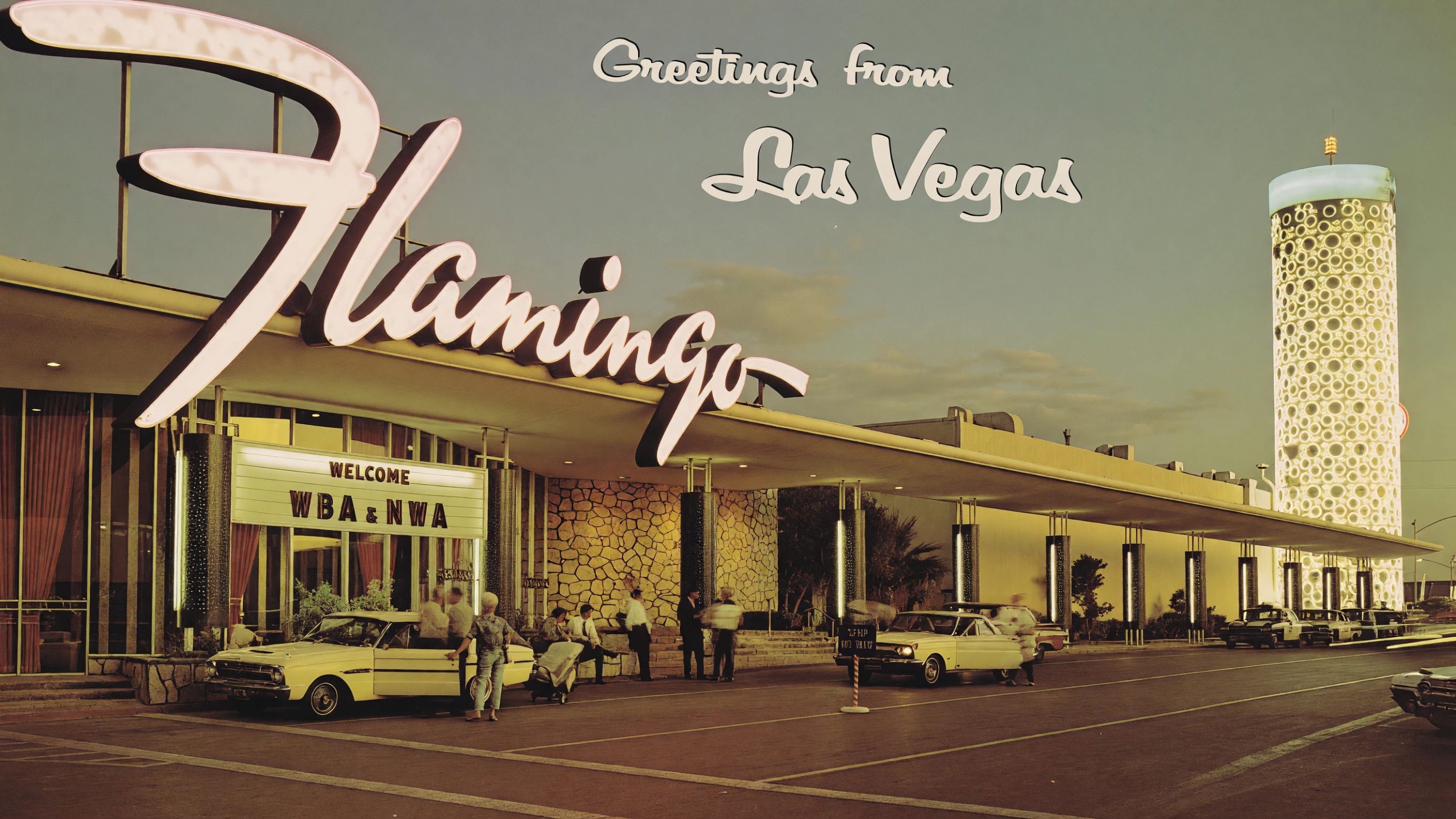
Sandra had been married for less than three years when the call came from Las Vegas.
Ike West Jr. died at 33 on January 5, 1968, at the Flamingo Hotel.
Later coverage described his death as likely an overdose, but no official cause was ever confirmed publicly. A young oil heir, a famous hotel, and a death that arrived without explanation. That’s all that survived.
Three days after her 29th birthday, Sandra inherited an estate that would be valued at $47 million in today's money.
The haul was staggering for a woman who'd grown up behind a dress-shop counter: the Beverly Hills residence, mineral rights, jewelry, stamps, multiple automobiles, and whatever cash survived taxes and the legal claims of Ike's other heirs.
But the “oil heiress” label the press settled on was imprecise: Sandra married into the money, was widowed out of it, and inherited what remained.
She stayed in Beverly Hills and answered to nobody. Celebrity names drifted through later accounts, among them the British singer Engelbert Humperdinck, described as an apparent boyfriend, though no direct confirmation from either of them was ever located. Sandra’s collecting said more about her than any relationship could, and the scale of it made clear she intended to be taken seriously.
She drove fast, kept erratic hours, and opened her door only when she felt like it.
Two Ferraris sat in the garage alongside a 1975 Stutz Blackhawk. Upstairs, a jewelry collection that Christie's would one day divide into 58 lots, anchored by a rare pink diamond and a blue-white diamond ring that together sold for more than $400,000.
In a separate room, stamps valued at an estimated $500,000, serious enough that Harmers gave the "Sandra Ilene West Collection: Germany" its own specialist catalogue when it went to auction in London in 1980.
Somewhere among all of it, a solid-gold fishing reel, an object whose cheerful pointlessness said more about her than anything in the jewelry case. She'd grown up watching wealthy women browse her father's shop, and now she bought the way they had, except with less restraint and considerably more imagination.
Nine years of widowhood had turned Sandra into a one-woman institution of acquisition.
But one car stood apart. Sandra's Ferrari 330 America was a transitional model of which only 50 were ever produced. The car was powder blue, and by one account Ike had given it to her as a wedding present. True or not, the car had come from Ike, and it was hers.
In 1972, four years after his death, she sat down and wrote a holographic will entirely in her own handwriting. She instructed that she be buried next to Ike, at Alamo Masonic Cemetery, by Porter Loring Mortuary, dressed in a lace nightgown, inside her Ferrari, “with the seat slanted comfortably.”
She was 33 when she wrote those words. Ike had been 33 when he died at the Flamingo. The instructions would sit undisturbed for five years, and by the time anyone read them again, Sandra would be dead and two rival wills would be fighting over her fortune, her sanity and her body.
