
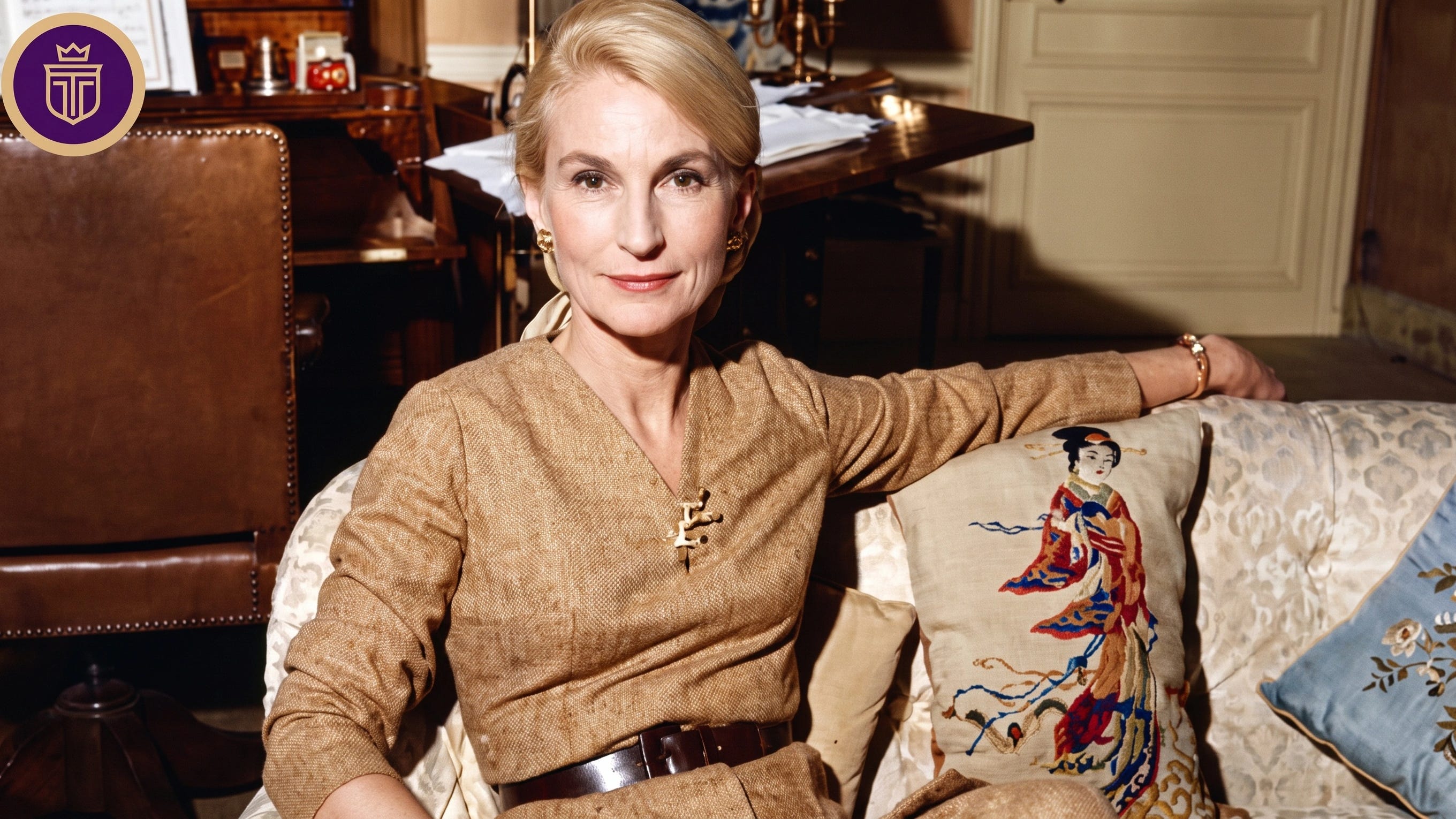
When Rebekah Harkness died in 1982, she left behind a ballet company that had folded, a $5 million theater that couldn’t fill its seats, a son in a Florida prison for murder, and a daughter who would take her own life two months later.
The jeweled urn she’d commissioned from Salvador Dalí turned out to be too small for her ashes, so the overflow went into a Gristedes grocery bag.
It was an appropriately chaotic ending for a woman who had inherited a reported $75 million in 1954, roughly $720 million in today’s money, and spent most of it turning private wealth into public spectacle.
The money became buildings, performances, salaries, parties, medical treatments, and at least one swimming pool reportedly cleaned with Dom Pérignon.
But the legacy her largesse left behind extended past vanity.
Harkness House, her five-story Manhattan mansion, trained some of the finest dancers in America, while her money endowed both a foundation that still bears her name and a $2 million medical research building at New York Hospital.
And dozens of careers existed because a woman with more money than judgment decided American ballet deserved a patron who refused to sit quietly and write checks.
Long before the ballet companies, the Dalí urn, or the champagne-filled swimming pool, Harkness had already developed a taste for testing how far money could carry a person past consequence.
The first experiments began when she was still a schoolgirl.
The B*tch Pack
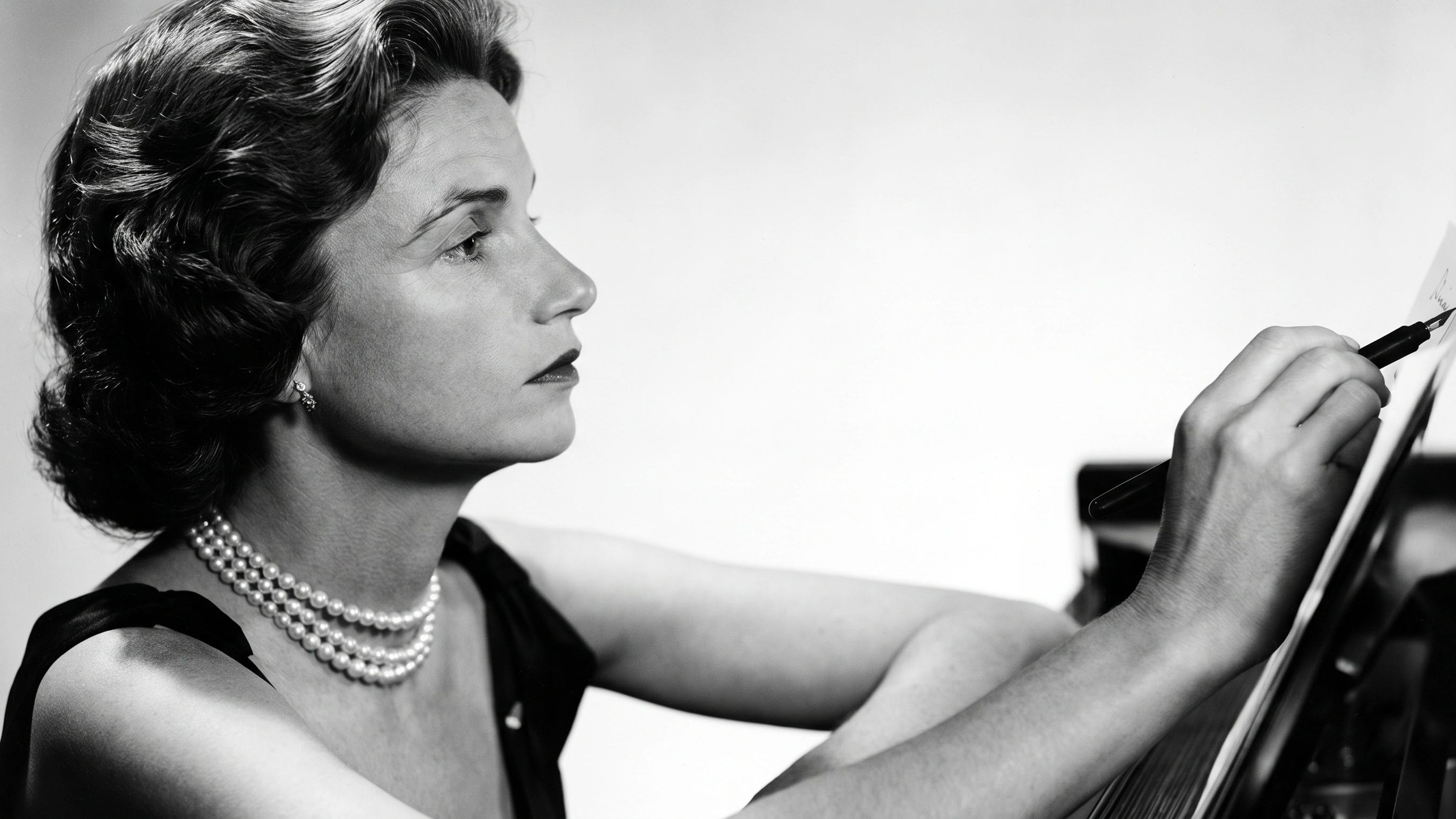
Rebekah Semple West was born on April 17, 1915, in St. Louis, into money that came with servants and without much parental attention.
Her father, Allen Tarwater West, was a stockbroker who’d helped establish G. H. Walker & Co. with George Herbert Walker, a name that would later appear in two presidential family trees.
Her grandfather had founded the St. Louis Union Trust Company. It fell a rung below Standard Oil wealth, but it was the financial elite of a major American city, complete with private schools, summer colonies, and debutante rituals.
The warmth was harder to find. Her father drank heavily, her mother devoted herself to society, and Rebekah and her siblings were raised largely by nannies, a pattern she’d reproduce almost exactly with her own children decades later.
As a girl she was considered ‘heavy’, and she responded with dance and ice skating practiced with punishing intensity.
Ballet became her first language for transforming what she’d been given into something she’d chosen, a discipline she maintained long after the childhood weight was gone.
At the Fermata School for Girls in Aiken, South Carolina, a finishing school that served families like the Roosevelts and Auchinclosses, she found rebellion more interesting than refinement.
She and several friends called themselves the “B*tch Pack,” a name startlingly modern for the 1930s, and were credited with spiking a punch bowl with mineral oil and performing a striptease on a banquet table.
Debutante society existed to display compliance: the right posture, conversation, and husband.
Rebekah learned early that disruption could make her the central character in a room arranged to make every young woman interchangeable.
In 1939 she married Charles Dickson Pierce, a Yale graduate in advertising. She later said she married because she had ‘nothing better to do’.
Two children followed, Allen in 1940 and Terry in 1944, before the divorce in 1946.
A postwar divorcee with two small children and a familiar nickname, Betty was still rich and socially connected but had failed at the one institution her education had prepared her to enter.
Then she met the man whose family had helped bankroll John D. Rockefeller.
The Standard Oil Widow
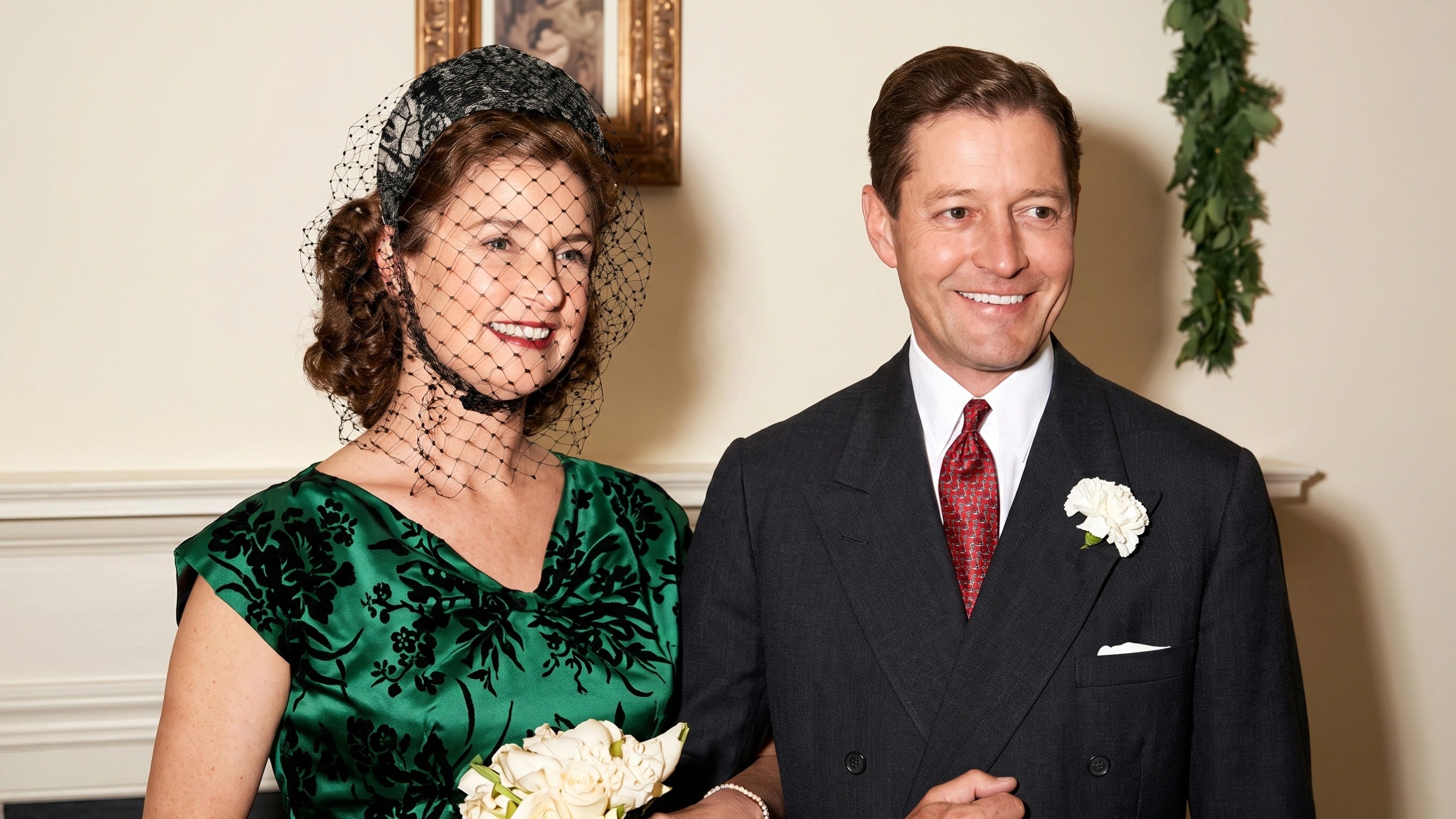
William Hale Harkness was older, previously married, an attorney, and heir to a fortune rooted in Standard Oil.
His great-uncle Stephen V. Harkness had been one of John D. Rockefeller’s earliest financial backers, and the wider Harkness name appeared on buildings at Yale, Harvard, and New York Hospital. It represented the classic “old money” conversion: industrial profits translated into universities, hospitals, foundations, and architecture.
Rebekah was an unusual addition to that world. William was 46 and entering his second marriage; she was 31, divorced, raising two children, and remembered from her St. Louis debutante years as a member of the “B*tch Pack”.
Whatever attracted him initially had hardened into something considerably more durable by the time they married. By most accounts, William gave her something she had rarely encountered in either childhood or marriage: room to be difficult without threatening to leave.
And he was affectionate toward the children she brought with her, and her interests in music and dance were treated less as embarrassing eccentricities than as pursuits worth financing.
They married on October 1, 1947, at his apartment at 730 Park Avenue. Their daughter Edith was born the following October. In Rhode Island they acquired the great house above Block Island Sound that became Holiday House, and for seven years Rebekah lived about as close to conventional domesticity as she ever would.
William suffered a serious heart attack in 1953 and died after another on August 12, 1954. He was 54. Rebekah was 39.
His will makes the nature of their marriage easier to read than society gossip does.
William divided his residuary estate in half. One half went to Rebekah; the other was divided among four trusts for the children of their respective marriages. But he added an unusually consequential protection: none of the estate or inheritance taxes was to come out of Rebekah’s share. The children remained provided for, while his wife received her half intact.
The result was enormous.
In 1955 alone, the executors distributed more than $27 million to Rebekah (equal to over $330 million today).
For seven years, William Harkness had given Rebekah both freedom and limits. His death removed one of those things and multiplied the other.
What followed was a spending spree so extravagant, ambitious, and destructive that by the end, it was hard to tell where Rebekah Harkness’s dream ended and the wreckage began.
