
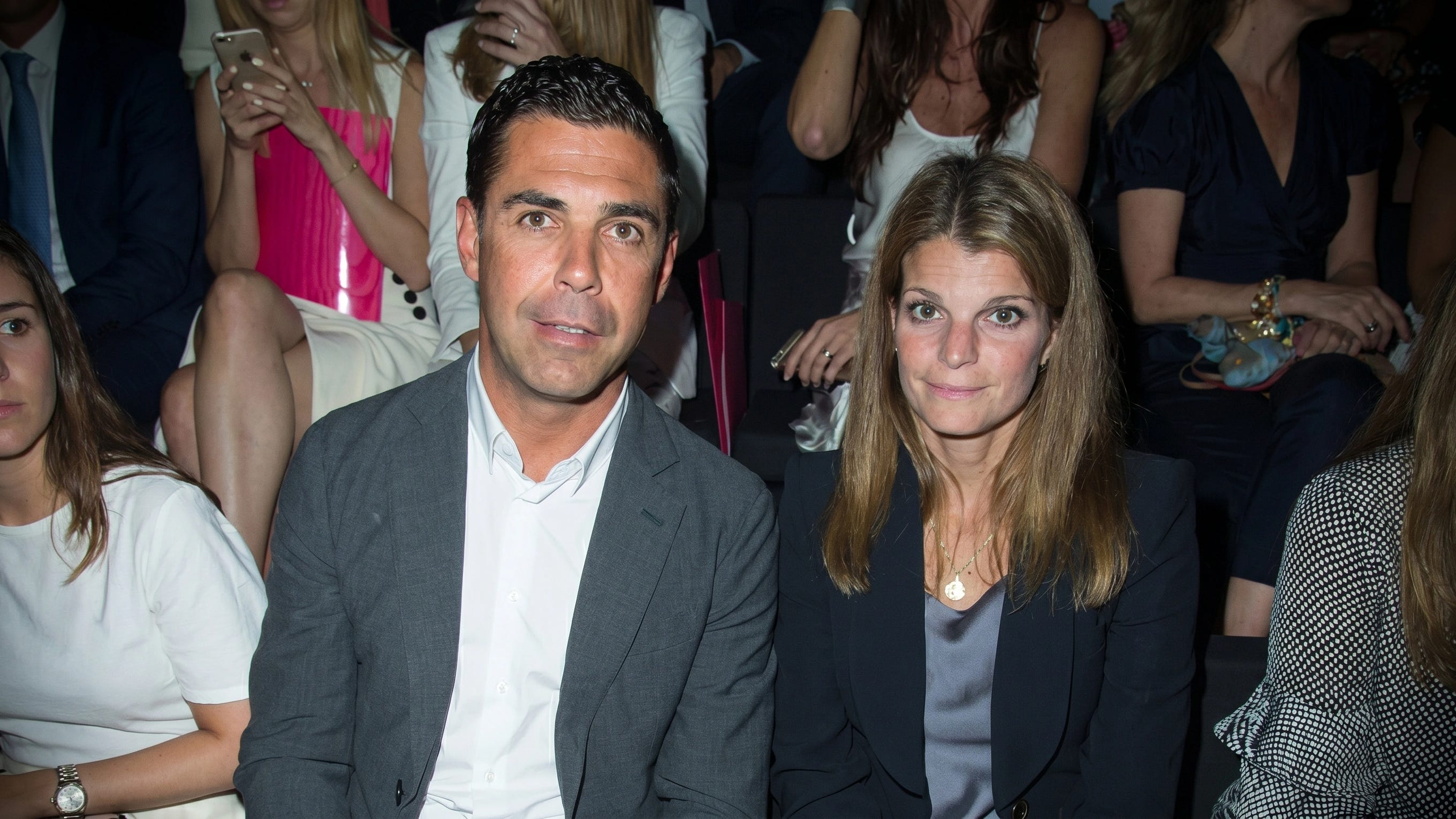
When you picture inheriting a monumental “old money” fortune that spans not one but two European dynasties, the imagination tends to fill in the same images.
Sun-drenched yachts in the Mediterranean. Galleries of inherited art. Couture, weekend islands, the soft hum of inherited staff.
A life arranged, in advance, around the assumption that nothing important will ever have to be earned.
For granddaughter of Aristotle Onassis and the great-niece of Stavros Niarchos (the only living heir to both lines), this is the life the world assumed she would receive.
The life she actually received was different.
The richest eighteen-year-old in the world in January 2003 was a girl in a Brussels boarding school whose primary attachment in life was to horses and whose primary grievance was the surname on her passport.
She had yet to legally receive the money.
Her late mother had locked the entire estate (somewhere between $700 million and $1 billion) inside a four-trustee board with absolute discretion over every withdrawal but until her daughter’s eighteenth birthday.
Yes, this daughter, who lived in Switzerland and studied in Belgium, did not speak Greek… the native language of the dynasties of her birthright.
By the end of that calendar year she would sit, for the first time, on top of the money her great-grandfather had begun building in the port of Smyrna in 1922.
Three years later, on her twenty-first birthday, she would attempt to take her natural place at the head of the family’s permanent institution, the Onassis Foundation, and the same Greek board would issue a written finding that she did not qualify:
No Greek culture, no working command of the language. No formal higher education… No work experience.
She accepted the verdict, sold the family island within seven years, and moved her professional life to a Brazilian show-jumping ring.
This is the story of how the two largest Greek shipping fortunes of the twentieth century, the Onassis and the Niarchos Empires, narrowed across two violent generations into a single eighteen-year-old in Brussels, and what the family then did, with great deliberation, to prevent her from inheriting more than the money.
A Rivalry the Two Sisters Were Used to Build
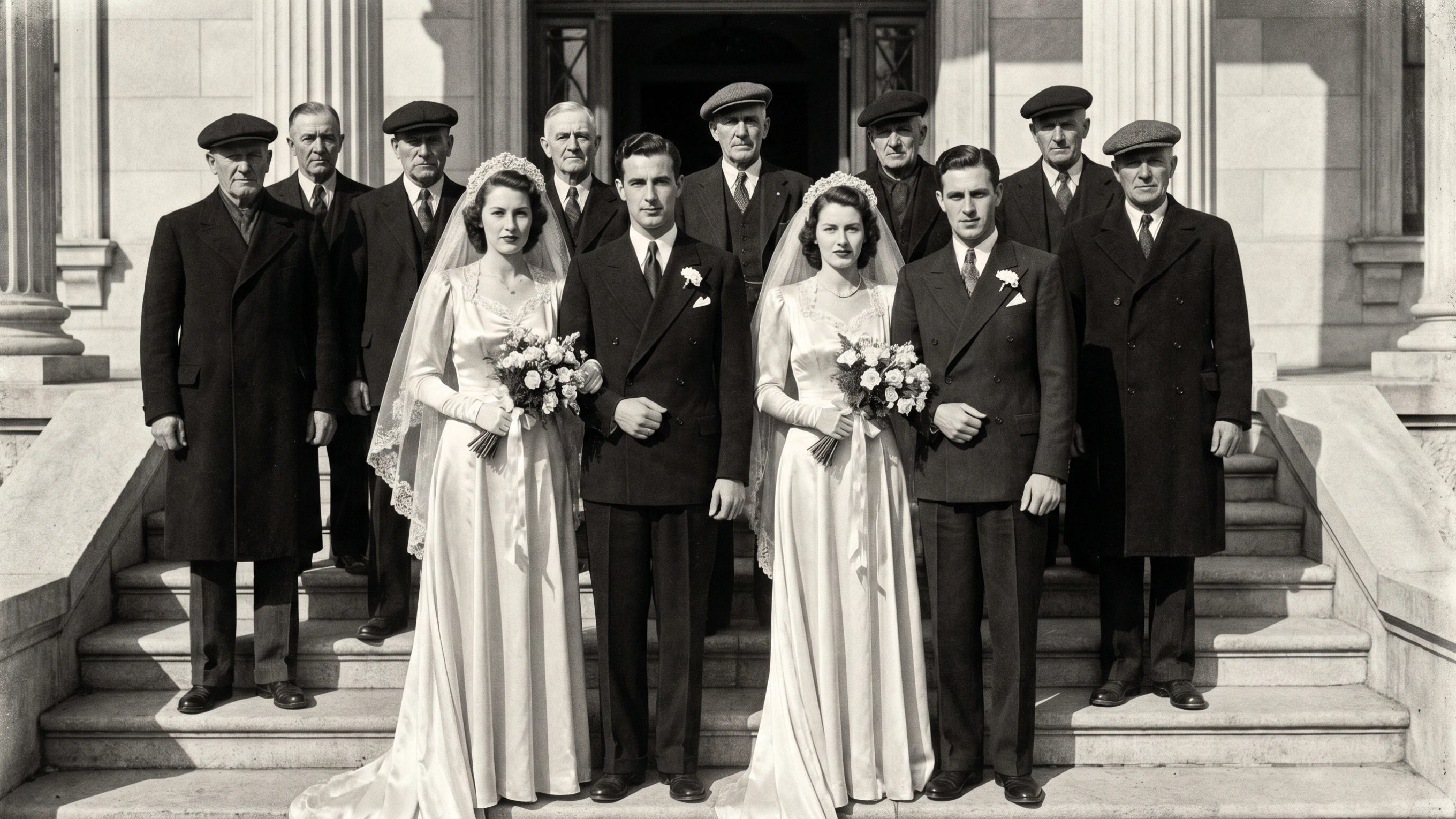
The Greek shipping world that produced Athina Onassis was, by mid-century, a closed economy of perhaps twenty families who arranged their alliances the way 18th-century European royalty had arranged theirs, by trading their daughters across the boardroom.
The most important of those daughters in this story were Tina Livanos and her younger sister Eugenia Livanos, the only female children of the shipping magnate Stavros Livanos.
Aristotle Onassis married Tina in 1946. She was 17.
Stavros Niarchos married Eugenia a year later, at her father’s encouragement and her sister’s quiet alarm. The two men, already the two most aggressive of the new Greek shipping operators, were now also brothers-in-law.
This was the arrangement Livanos wanted.
It was the arrangement the rest of the global shipping market would spend the next 30 years watching disintegrate, in the form of a bilateral business rivalry conducted simultaneously across boardrooms, regatta clubs, the front pages of three continents, and the marriages of the two women whose father had constructed the alliance in the first place.
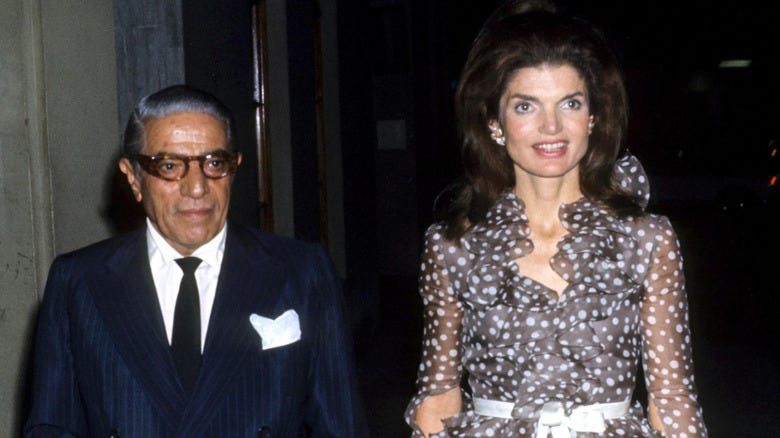
Now, Aristotle’s strategy was visibility; he bought tankers, and he bought banks. He bought, in 1956, the entire principality of Monaco’s operating company, the Société des Bains de Mer, and effectively ran the gambling and hotel infrastructure of the country until Prince Rainier moved against him a decade later.
He purchased the Greek island of Skorpios in 1963 and turned it into the private theatre of his second marriage, to Jacqueline Kennedy in 1968, an event whose value to him was, by his own accounting, less the woman herself than the geopolitical signal of marrying the widow of an American president.
Niarchos’s strategy was scale. He pioneered the supertanker. He built the largest privately owned merchant fleet on earth. He bought his own Greek island, Spetsopoula, and ran it as a closed estate the international press could neither photograph nor approach.
The two sisters, Tina and Eugenia, lived between these two men through the 1950s and 60s as a kind of mobile front line.
Eugenia died in 1970 at the age of 44, under circumstances Spetsopoula’s medical staff and Greek prosecutors were never able to reconcile to a single verdict, and Niarchos was investigated, briefly held, and eventually cleared.
Two years later, in October 1971, Tina Onassis married her recently deceased sister’s widower.
Tina was now Stavros Niarchos’s third wife and Aristotle Onassis’s ex-wife and the mother of Aristotle’s only two surviving children, Alexander and Christina.
The Livanos sisters had now been married, in sequence, to both of the men their father had originally chosen as his sons-in-law, and the operational rivalry between the two empires had been laundered through the lives of the two daughters until there was almost nothing left of either marriage but the corporate diagrams.
Tina died in Paris in 1974, age 45, of a pulmonary edema her family attributed to barbiturates.
Within the same 18 months, Aristotle’s only son Alexander died in a plane crash in January 1973, age 24, on takeoff from Athens.
Aristotle himself died in March 1975.
And Christina Onassis, 24 years old, depressive, four times divorced over the next decade, found herself the sole inheritor of the visible half of an empire that had been engineered for a son.
Christina, and the Marriage That Produced the Last Heir
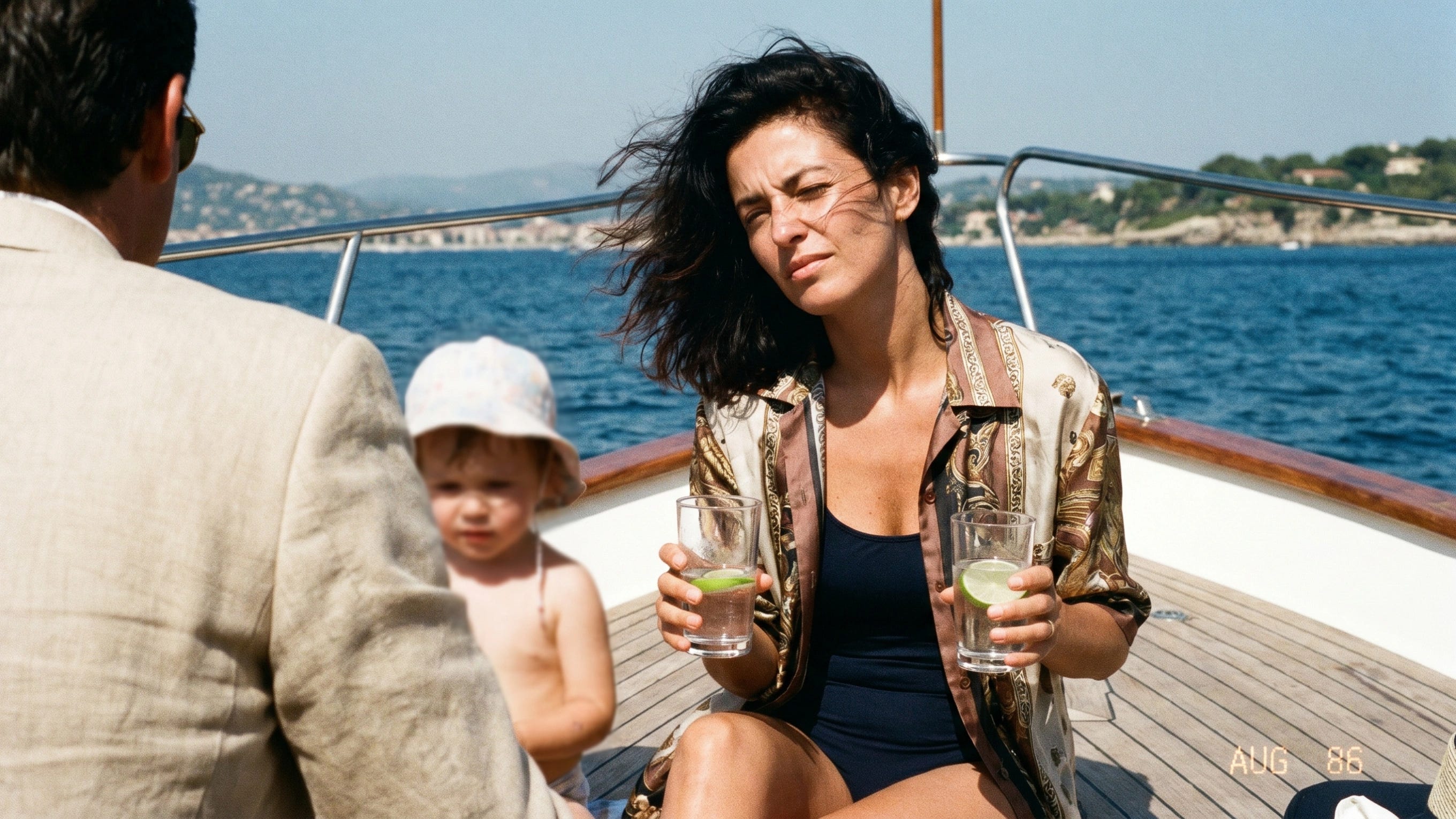
Christina Onassis spent the thirteen years between her father’s death and her own death assembling, dismantling, and reassembling a personal life intended to produce the heir the family did not yet have.
Her first marriage, in 1971 at age 20, was to Joseph Bolker, a Los Angeles real-estate developer 27 years older than her, conducted over her father’s furious objection. It lasted nine months.
Her second, in 1975 shortly after Aristotle’s death, was to Alexander Andreadis, a Greek shipping heir. It lasted just over a year.
Her third, in 1978, was to Sergei Kauzov, a Soviet shipping official whose biography was largely produced by the Soviet state. It lasted 15 months.
The pattern across all three was visible to everyone except the woman inside it. Christina was attempting, in compressed form and in public, to manufacture the marriage Aristotle had refused to design for her, and each successive husband was reverse-engineered from the deficiencies of the previous one. The wider Greek family watched without intervening because intervention in that household had never been the family’s mode.
Her fourth marriage, in 1984, was to Thierry Roussel, a French heir to a different kind of fortune.
Roussel’s grandfather had founded the pharmaceutical company that, in 1980, developed mifepristone, the compound the world would learn to call RU-486. The Roussel pharmaceutical fortune was old enough to be embarrassed by Christina’s shipping money and large enough to retain its independence from it.
Thierry was 31. He was tall, blond, and unconcerned with appearing to want anything from Christina.
He was also, throughout the courtship and into the early months of the marriage, conducting an open and continuous relationship with a Swedish model named Gaby Landhage, a fact Christina knew on her wedding day and accepted on the explicit ground that the marriage’s purpose was the production of a child rather than the resolution of his personal life.
Their daughter, Athina Onassis Roussel, was born on January 29, 1985, in the American Hospital of Paris.
Christina filed for divorce within months of the birth. The marriage was officially dissolved in 1987. By the time of the dissolution, Christina was financing Thierry’s continuing life with Gaby Landhage on the explicit understanding that she would retain primary custody and the formal Roussel surname for the child. The arrangement she proposed, in the final year of her life, was a triangular household in which she, Thierry, and Gaby would raise Athina together. Thierry declined.
Christina Onassis died in Buenos Aires on November 19, 1988, at the age of 37, of pulmonary edema.
Athina was three.
The Onassis family, what was left of it, gathered in Athens that month to begin the work of building, around a three-year-old child, the institutional armature the family had failed to build around her mother.
The Four Trustees, and the Fence Christina Built
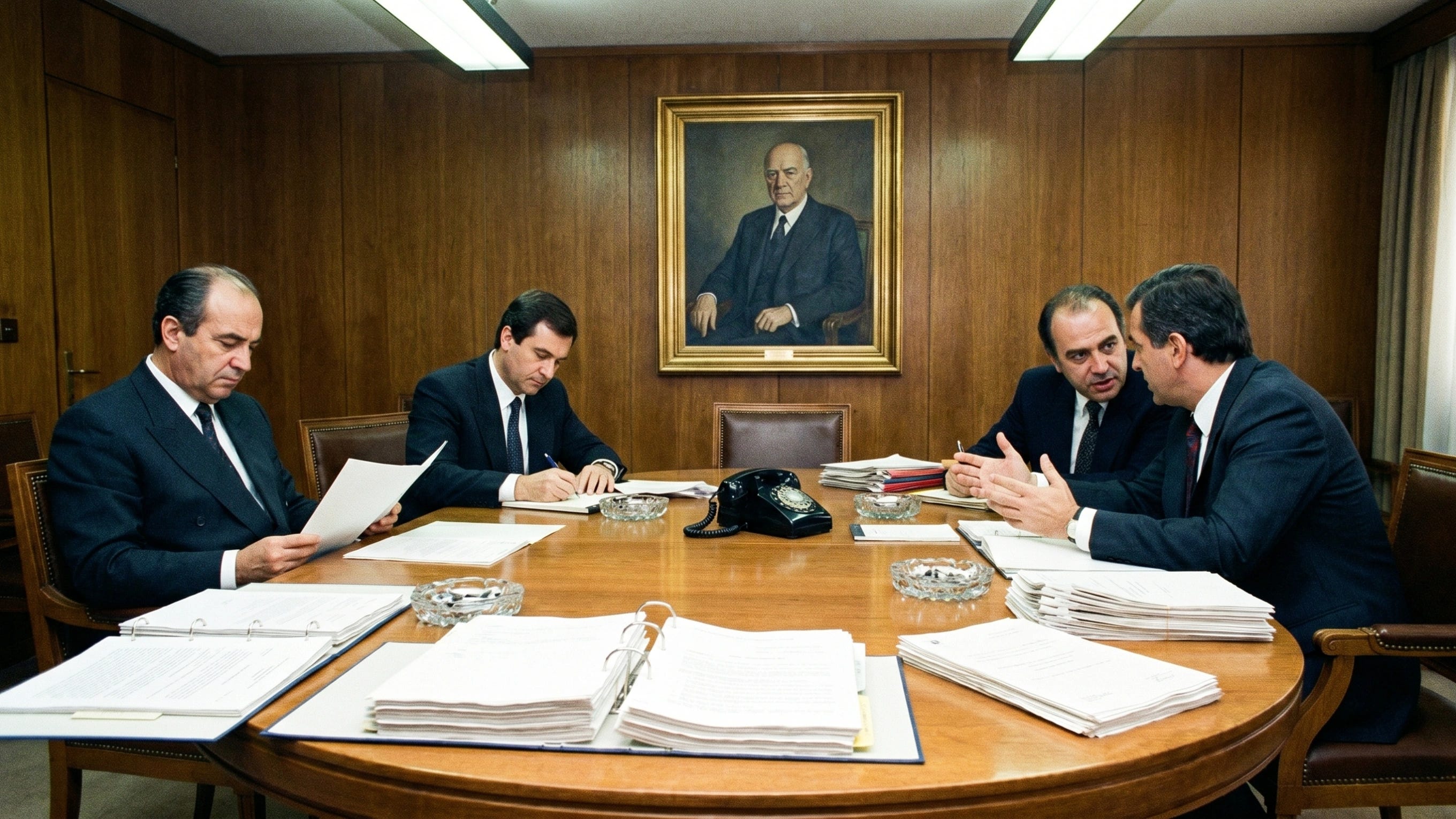
The will Christina Onassis filed in the months before her death assumed, correctly, that the principal threat to her daughter’s inheritance was not the open market but the man Christina had divorced and continued to fund.
She designed the estate accordingly.
The Onassis half of Athina’s inheritance was placed inside an irrevocable trust administered by a board of four men personally selected by Christina. The four were Stelios Papadimitriou, the lawyer who had built the Onassis Foundation’s institutional structure since the 1970s; Paul Ioannidis, a former Olympic Airways executive; Apostolos Zambelas, a senior auditor with three decades of relationship with the family; and Theodore Garoufalides, the husband of Aristotle’s late sister Artemis and the man closest, in the inner family, to the late Aristotle himself.
The four had instructions to administer the entire estate, including living allowances, education choices, residence locations, staff hiring, and any expenditure over a defined threshold, until Athina’s eighteenth birthday.
The four had instructions to approve every individual disbursement.
The four were also, by Christina’s deliberate design, four Greek men in Athens whose authority operated in a country and a language her ex-husband did not work in and could not contest.
Thierry Roussel raised Athina in Lussy-sur-Morges, a quiet Swiss village on Lake Geneva, with his new wife Gaby Landhage and the three children they would have together.
He repeatedly threatened, across the 1990s, to move the household to France, where the estate’s tax exposure would have shifted substantially and where French family courts would have offered him a more familiar instrument of leverage. Each threat collapsed against the Athens board’s standing refusal to fund the relocation.
Athina was given, on the household’s interior accounting, the same pocket-money allowance as her three Roussel half-siblings.
She rode horses, intensively, from the age of six. She attended a private school in Lussy-sur-Morges, then a preparatory year in Brussels where she sat the European Baccalaureate in the summer of 2003.
Across that adolescence, Athina gave two recorded interviews of any substance, both to Italian magazines, both in her late teens. In one she described the Onassis surname as the root of every problem in her life. In the other her stepmother Gaby Landhage cited her telling the household that if she could she would burn every dollar of the Onassis fortune.
Both quotes circulated in Greece and were received by the Onassis Foundation’s board precisely as Christina had assumed, fifteen years earlier, they would be received.
The girl was not Greek. She did not want to be Greek. She wanted to be a show jumper.
On January 29, 2003, Athina Onassis Roussel turned 18 in a Brussels apartment, took possession of her mother’s portion of the Onassis estate, valued at between $700 million and $1 billion depending on which year’s report one accepted, and effectively dissolved the four-trustee board that had managed her childhood.
Three years later she would discover what her mother had not arranged for her.
The Foundation Vote
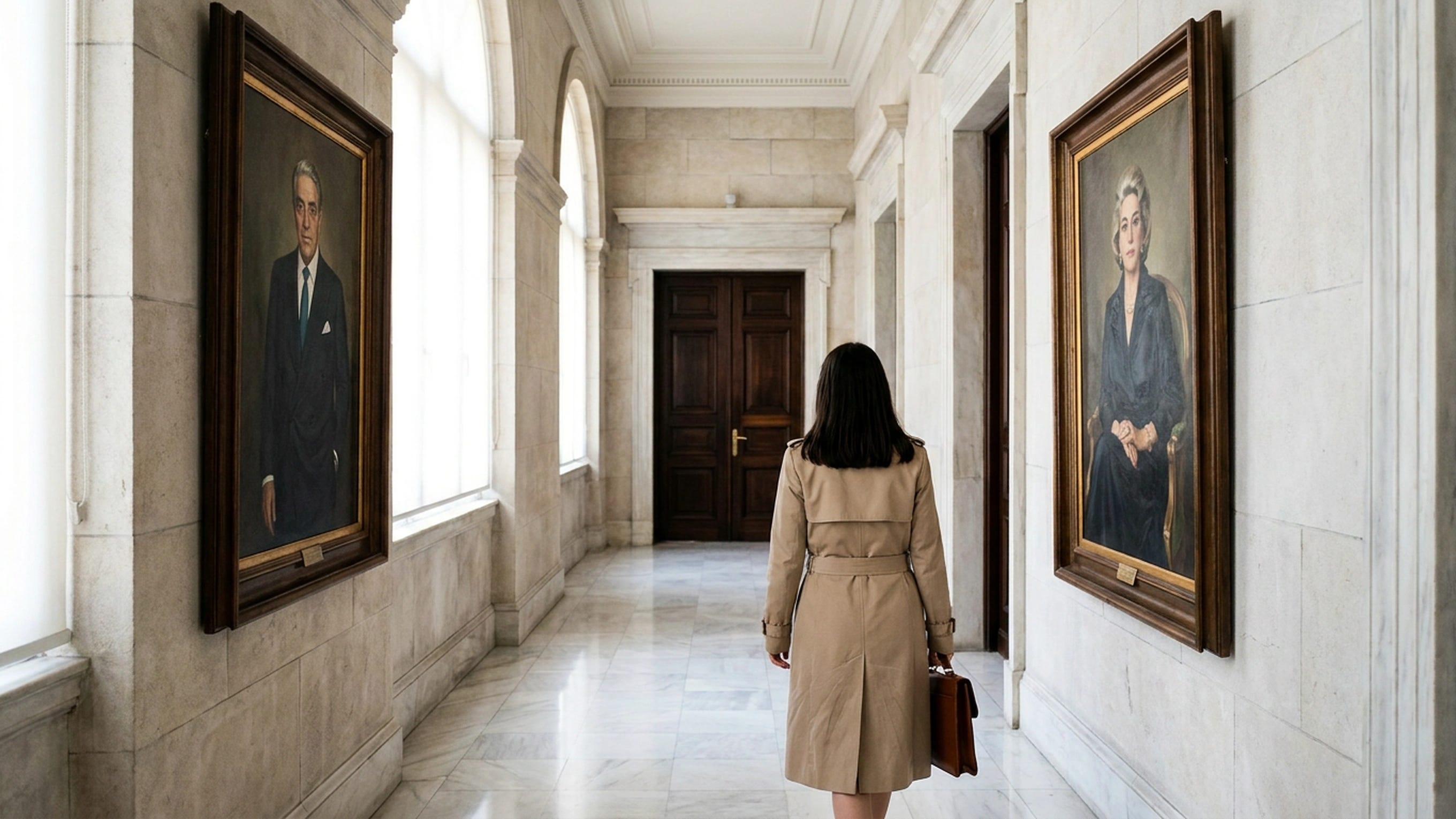
The Onassis estate had always existed in two halves.
One half was Christina’s personal inheritance from her father, the floating pool of cash, real estate, jewellery, art, and operating businesses that Aristotle had built across his lifetime and that passed, on his death, to Christina, and on her death, to Athina. This was the half that arrived in Brussels in January 2003.
The other half was the Alexander S. Onassis Public Benefit Foundation, the institutional vehicle Aristotle had created in 1975 specifically to hold the more permanent components of the fortune, including the cultural endowment, the maritime philanthropy, the Athens cultural centre that would later open under the foundation’s name, and a controlling stake in the operating shipping companies.
The foundation was named for Aristotle’s dead son, the son Aristotle had originally intended to inherit the empire, and it operated, by design, outside the reach of any single individual heir.
The foundation’s president, by Aristotle’s original deed, was to be a male family member chosen by the board.
After Aristotle’s death the role had passed through three older Greek men, all of them lawyers or executives drawn from the same network that had produced Christina’s four trustees.
In 2006, after her 21st birthday, Athina filed, through her own legal team, a formal request to be considered for the foundation presidency.
The board met. The board declined.
The written finding cited the absence of Greek language, the absence of Greek education, the absence of professional experience in shipping or philanthropy, and the absence of any demonstrated engagement with Greek civic life.
The board also cited her late uncle Alexander Onassis, the original intended heir, and noted that Athina, in their view, did not resemble in any institutional sense the man whose name the foundation carried.
The Greek press treated the finding as a quiet formality.
Athina did not appeal.
Within the same year she sold her personal stake in two of the smaller operating shipping companies and consolidated her personal liquid wealth in equestrian property, principally in Belgium and Brazil.
In 2013 she sold Skorpios, the island her grandfather had bought in 1963 and treated as the family’s private theatre, to the daughter of Russian fertilizer billionaire Dmitry Rybolovlev for a reported $150 million.
Her marriage to Brazilian show jumper Alvaro Affonso de Miranda Neto, contracted in São Paulo in December 2005 in a ceremony her father did not attend, ended in 2016 with allegations of infidelity and the formal involvement of New York divorce attorney Robert Stephan Cohen, whose previous clients had included Ivana Trump and Christie Brinkley.
The Antwerp courts settled the divorce in November 2017, the prenuptial agreement was upheld, the shared horses were divided, and Athina returned to Greece for the first time in nearly two decades as a private citizen.
The two greatest Greek shipping fortunes of the twentieth century, the Onassis and the Niarchos lines, had now converged into a single 32-year-old woman whose stated professional ambition was to win an Olympic medal in show jumping under the Greek flag, and whose stated relationship to the family institution was no relationship at all.
What the Family Decided in 1988
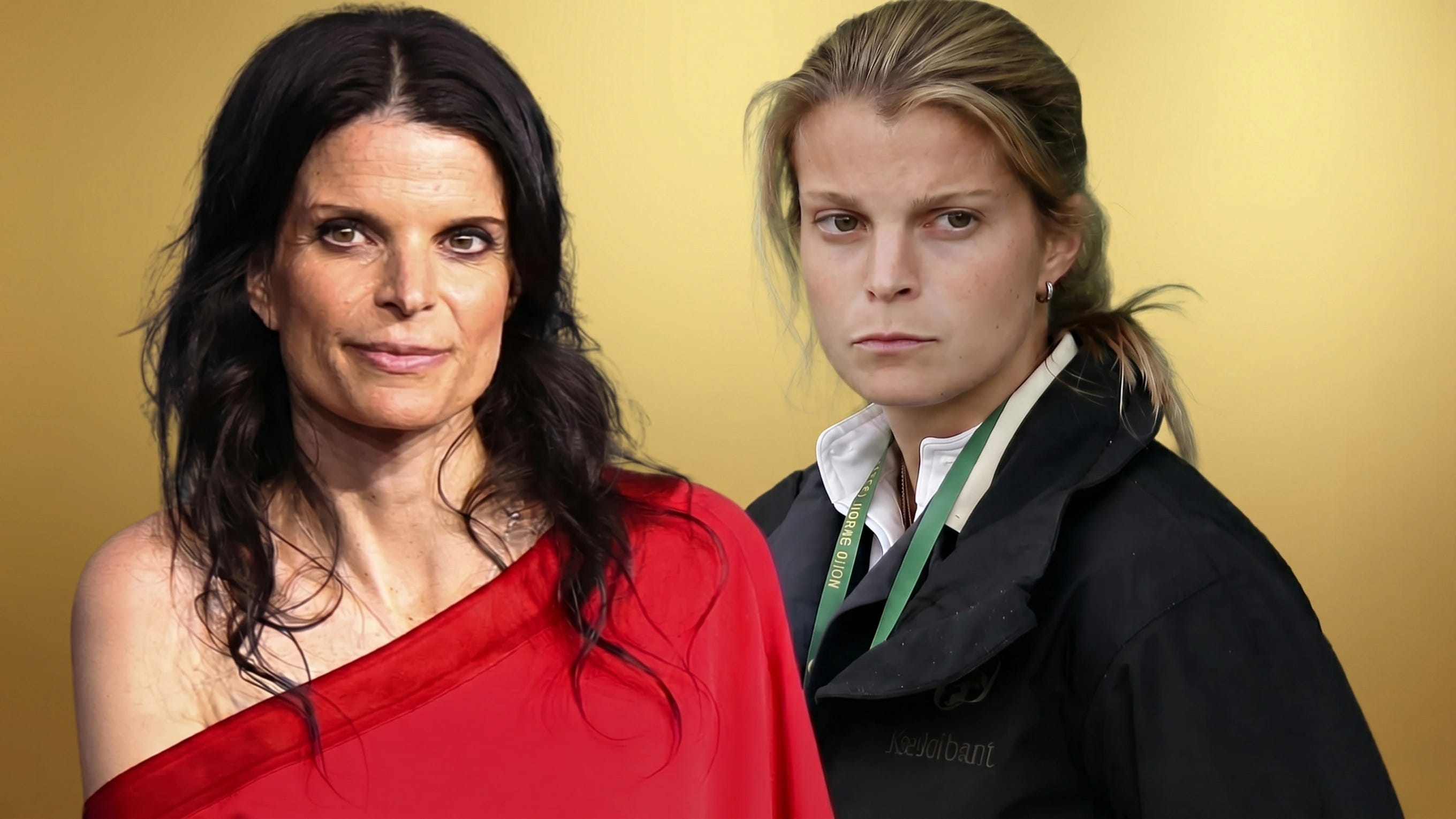
The rule, the one the Onassis case made unusually legible because it was executed in a single generation rather than three, is that a dynastic family that suffers a catastrophic loss of male inheritors will often respond by building an institutional structure that protects the asset from the surviving female heir rather than for her.
Christina Onassis built the four-trustee board in 1988 because she correctly assessed the threat her ex-husband posed to her daughter’s money.
The Onassis Foundation board built its 2006 finding for a different reason. The foundation was not protecting itself against Thierry Roussel.
The foundation was protecting itself against the possibility that the last surviving direct heir of Aristotle Onassis was a person whose actual life, including her Swiss childhood, her French passport, her Brazilian marriage, her Belgian residence, and her Brazilian-Greek show-jumping career, contained nothing the institution could legibly continue.
The institution did not change the rules.
The institution made the heir an outsider, with the formal courtesy of a written finding, and continued to operate as the institution Aristotle had built, around the absence of the granddaughter who carried his name.
This is the move the press around the family has consistently misread, for almost four decades, as a story of personal estrangement.
It’s a structural decision made in Athens in November 1988 and ratified in Athens in 2006, by people who understood, correctly, that an institution designed to outlive its founder cannot be administered by an heir whose principal cultural attachment is to a different country, a different language, and a different sport.
The Niarchos cousins are still public figures. The Stavros Niarchos Foundation still funds the Athens Cultural Centre. The Onassis Foundation still funds the Stegi and the maritime scholarships and the New York office.
Athina Onassis Roussel still rides.
She is the last of two lines. She is also, by the deliberate decision of the surviving board, the first member of those lines to inherit none of the institution that carries them forward.
I really enjoyed reading this, what a lot of work must have gone into it!!
So much tragedy. So many early deaths. So sad.