
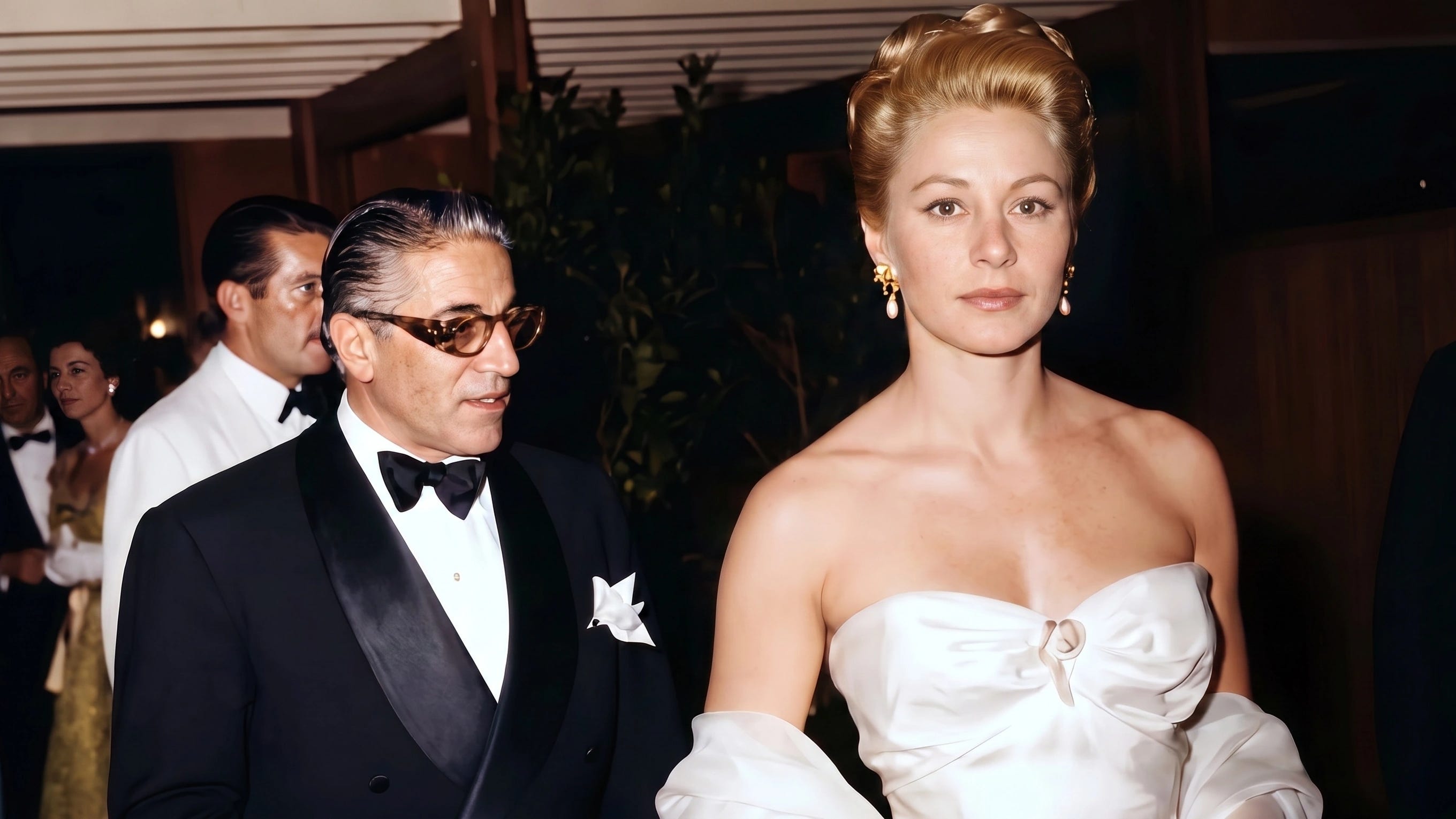
On the morning of October 10, 1974, a maid carried a breakfast tray into the bedroom of Tina Livanos at the Hotel de Chanaleilles, the Niarchos family’s Paris mansion, and found her dead.
She was 45 years old. Her husband, the shipping tycoon Stavros Niarchos, was reportedly asleep in a separate bedroom on the same floor.
Four years earlier, Tina’s older sister Eugenia had been found dead on Niarchos’s private Greek island of Spetsopoula, officially from a sleeping pill overdose, though the post-mortem revealed signs of physical abuse that were never satisfactorily explained.
Niarchos was cleared of wrongdoing both times.
Two Livanos sisters, both married to the same man, both dead under his roof within four years of each other, and no one was ever charged with anything.
Yet, before Niarchos, there was Aristotle Onassis, who’d married Tina when she was seventeen… and left her for Maria Callas on a yacht named after their daughter.
And it started, as it always did in those circles, with a father deciding what his daughters were worth.
The Shipowner’s Daughters

Greek shipping in the early twentieth century was a closed world of a few dozen families, mostly from the same Aegean islands, who'd built global fleets while keeping everything, the ships, the money, the marriages, inside the circle.
The girl the world would know as Tina was born Athina Mary Livanos on March 19, 1929, in Kensington, London, into the middle of that milieu.
Her father, Stavros G. Livanos, controlled one of the largest merchant fleets in the world and ranked among the most powerful shipowners of his generation. Her mother, Arietta Zafirakis, came from another prominent Greek shipping dynasty, cementing an alliance between two families whose combined tonnage dominated Mediterranean trade routes.
In these families, a wedding was a business deal that happened to involve a church.
Tina, her older sister Eugenia, and their brother George grew up shuttling between London and New York, a circuit of family estates and embassy dinners, attending schools like Heathfield and Miss Porter’s that catered to families for whom borders were more suggestion than boundary.
Summers revolved around whoever’s yacht or island was hosting that year. Winters followed the fleet’s business to wherever a deal needed a handshake.
But the Livanos daughters were raised inside this world with no expectation that they’d participate in its commerce. Their role, understood by everyone including their father, was matrimonial.
And within that closed world, Eugenia and Tina were considered the most consequential marital prizes in the history of the industry, a designation that said everything about the men circling them and almost nothing about the women themselves.
The first of those men was already paying attention.
Married at Seventeen
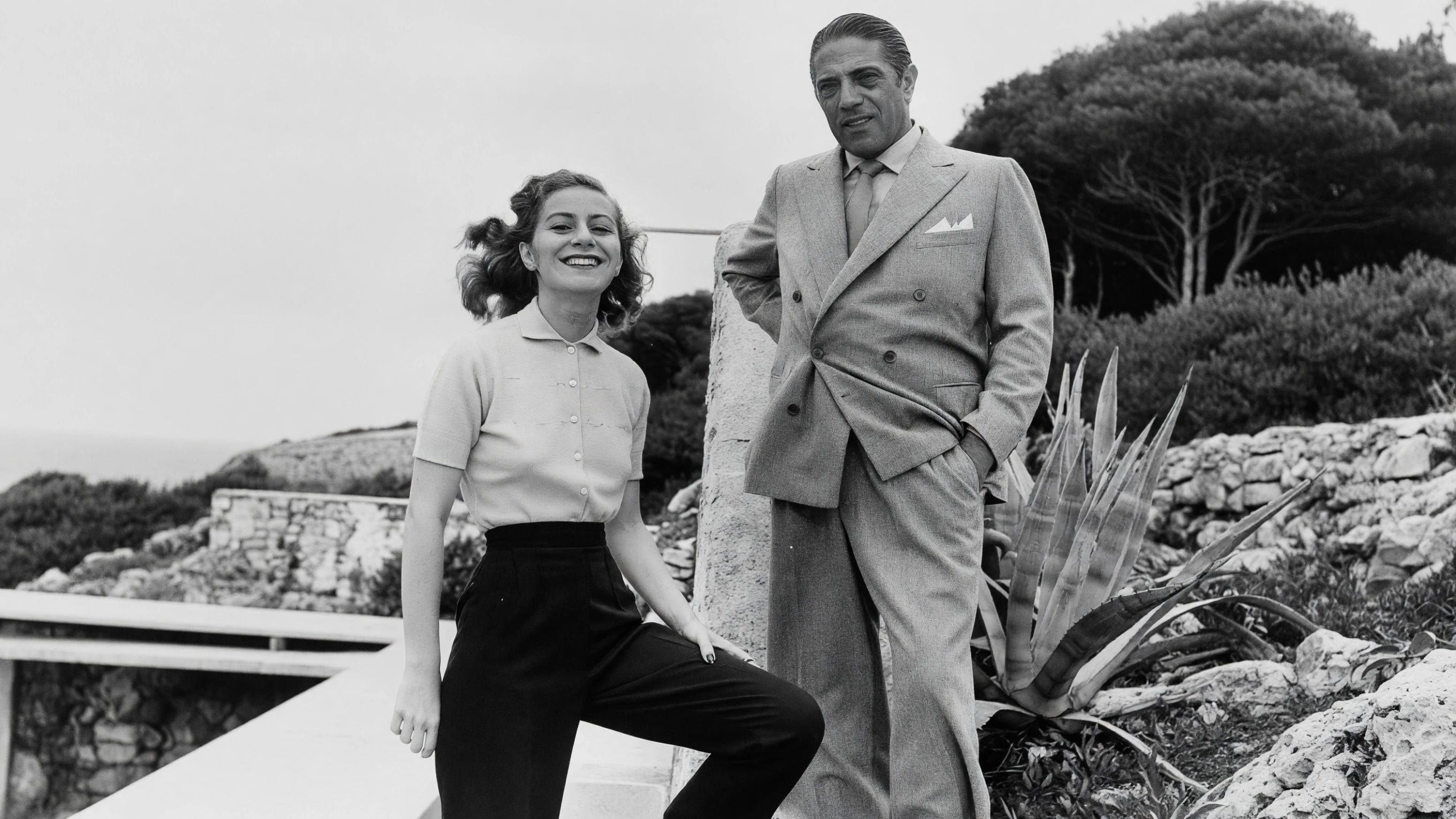
Tina first crossed paths with Aristotle Onassis on April 17, 1943, in her father's New York office. She was 13.
Onassis was 37, already building a serious shipping operation but not yet the figure the world's press would eventually orbit around.
Two years later he encountered her again, sunbathing at the family's Oyster Bay estate, and went directly to her father to ask for her hand. On December 28, 1946, they married.
Tina had just turned 17. Onassis was 40.
The marriage was less a romance between equals than a dynastic acquisition, the daughter of one great shipping family claimed by an outsider who understood that marrying into the Livanos name would buy him something his fortune alone couldn’t: legitimacy inside the tightly closed world of Greek shipowners.
The marriage produced two children who’d spend the rest of the century in tabloid headlines of their own: Alexander, born in 1948, and Christina, born in 1950.
And almost immediately, the rivalry that would define Tina’s life locked into place.
Shortly after Onassis married Tina, his fiercest competitor, Stavros Niarchos, responded by marrying her older sister Eugenia, binding the two rival tycoons together as brothers-in-law while they continued to compete ruthlessly in shipping, art collecting, yacht ownership, and social status.
The symmetry was deliberate, and everyone involved knew it.
Two Livanos daughters married to two competing Greek shipping magnates, each man measuring his standing against the other in fleets, in art, in the homes they kept across three continents.
Journalists would later describe the entire saga as a story of two billionaires who spent their lives trying to outdo each other through the women of a single family. The rivalry consumed everything it touched, functioning less as a business competition than as a decades-long personal war conducted partly through marriage.
For 14 years, the Onassis marriage held together under the weight of his ambition and her willingness to look away, and then, in the summer of 1959, he invited the wrong guest onto his yacht.
