
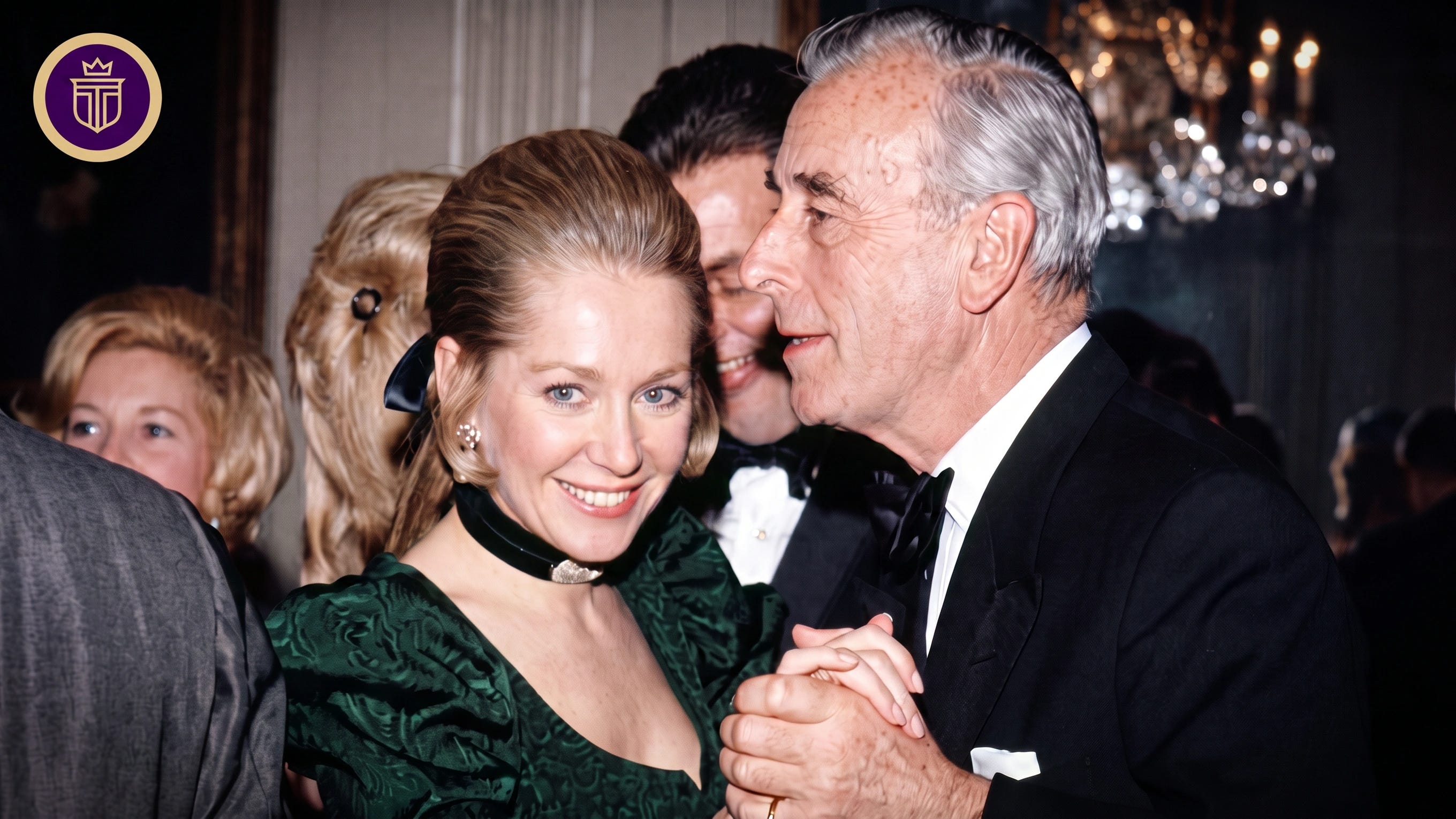
The surname on the passport was Rothschild, and by November 1980 it hadn’t legally belonged to her for nine years.
Jeannette Bishop had divorced Sir Evelyn de Rothschild in 1971 and had remarried four years later, and she was traveling that autumn as Mrs. Steven May, wife of a British department store executive.
What she’d kept, with her former husband’s polite permission, was the older name on the document she carried across borders and the hotel registers she signed. It was habit and convenience, and hers happened to be one of the most recognizable names on earth.
Within weeks that convenience would be treated by Italian investigators, tabloid journalists, and eventually a Roman photographer claiming Vatican connections, as the clue that explained everything. Her black Peugeot 104 was found seventeen days after she vanished, locked, parked neatly at the roadside, a woolen scarf folded on the passenger seat and snow shoes untouched on the back seat.
The bodies of Jeannette and her friend Gabriella Guerin wouldn’t turn up for another thirteen months, scattered across roughly two hundred square meters of forest floor five kilometers from the car.
Both women’s wristwatches had stopped, seven days apart, at exactly eight minutes to six.
For forty-four years Italy called it hypothermia. In November 2024 the Macerata prosecutor Fabrizio Narbone quietly reopened the police file as…
A double homicide.
From Sittingbourne To Ascott House
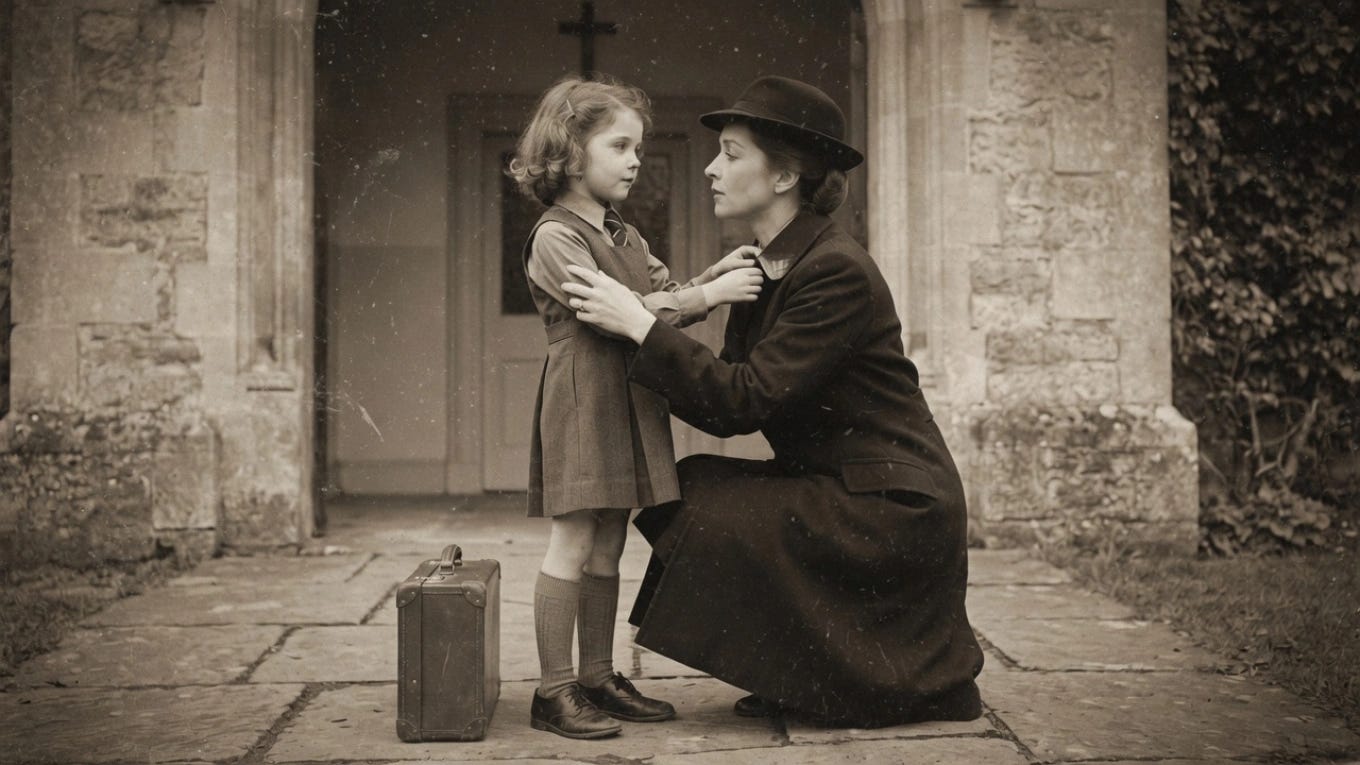
Ellen Dorothy Jeannette Bishop was born on January 3, 1940, on the Isle of Sheppey in Kent.
Her father Ernest was a Royal Air Force sergeant in bomb disposal, killed within months of her birth trying to defuse a German device. Her widowed mother Susan raised her alone on a hairdresser’s wage until the arithmetic collapsed, and by the age of four Jeannette had been sent to board at a Catholic convent school in Sittingbourne.
Now, a convent education in that era functioned as a severe kind of finishing school, teaching deportment, correct speech, and self-command to a fatherless girl whose mother could no longer keep her at home.
Yet, it was that trained composure, rather than her schooling, that would carry her out.
She left school at sixteen and bet her future on beauty and poise, moved through Vogue, television commercials, and a recurring hosting spot on the ITV game show Spot the Tune, and by 1961, in her early twenties, she had traded Sheppey for an address at Bryanston Square in Marylebone on her own earnings alone.
But the next pivot she made wasn’t toward a richer man. It was toward antiques, and it was in that trade that a Rothschild would walk into a room and find her already there.
Around this same time, on a trip to America, she crossed paths with Sir Evelyn de Rothschild, then one of Europe's most talked‑about bachelors.
Their worlds could not have been more different, yet acquaintances remembered how easily she moved in his, noting that her poise and humour cut through the stiffness of his set.
Friends who saw them together later said the appeal was obvious on both sides, and insisted it was not his fortune that held her; one of them would simply call the marriage "a love match."
On September 30, 1966, in Arlington, Virginia, Jeannette married Sir Evelyn, and a hairdresser’s daughter from Kent joined the family whose name had been a byword for European money for two centuries.
Evelyn, born in Westminster on August 29, 1931, was almost ten years her senior steeped in European high society for his entire life, having passed through Harrow and Trinity College Cambridge before joining the family bank at twenty-six.
The wedding placed her overnight inside a world of grand houses, chief among them Ascott House in Buckinghamshire, a Jacobean-revival mansion on roughly four hundred acres near the hamlet of Wing where Evelyn had grown up. His parents had given the property to the National Trust in 1949, though the family retained private use of parts of the estate.
Inside a household staffed by what one account called a virtual army of butlers, cooks, and domestic servants, Jeannette withdrew from the modeling career that had made her name.
Within five years she would deliberately climb back down from the height a Sheppey girl was told she couldn’t reach in the first place.
The Life Behind The Passport
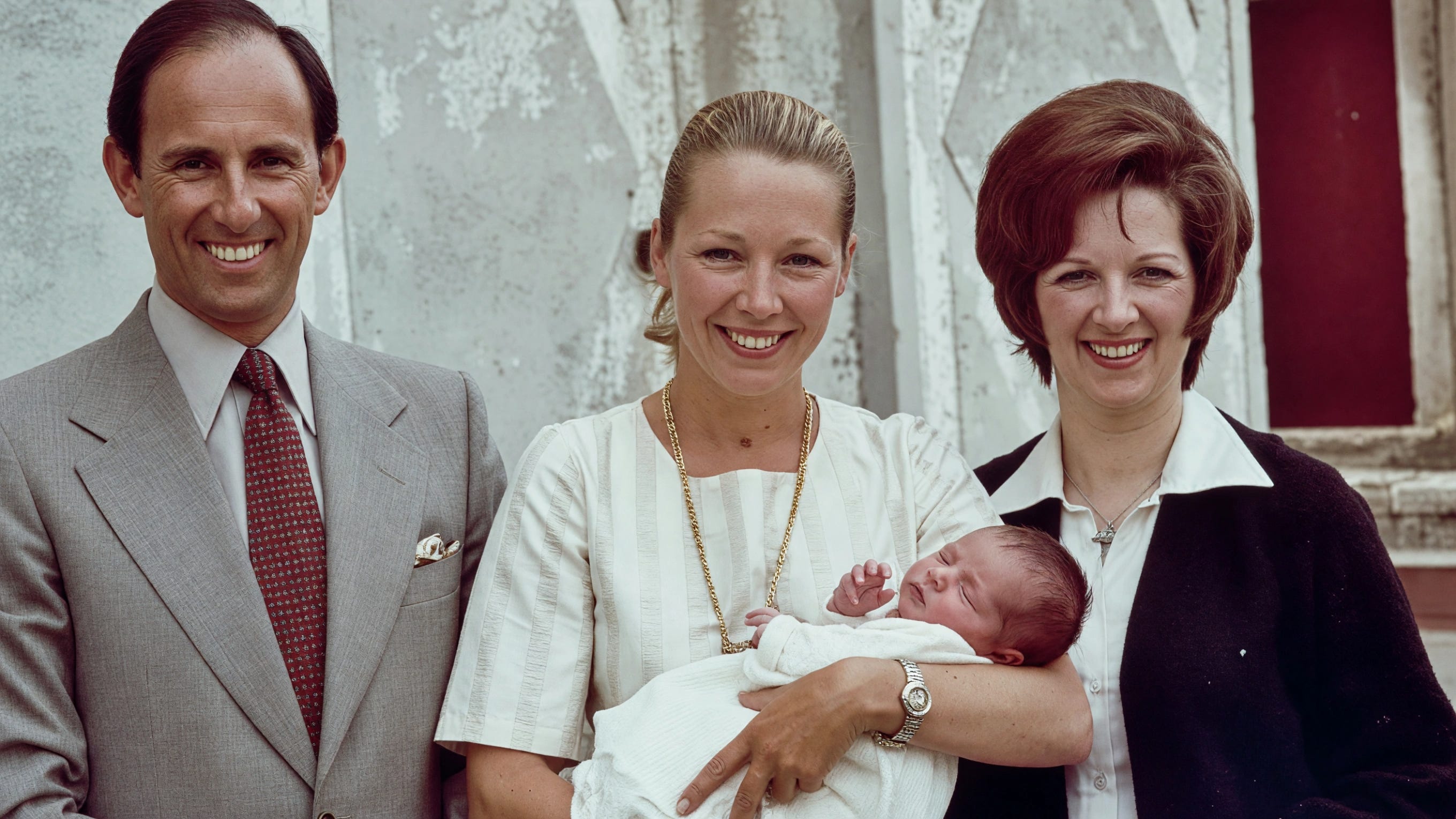
The marriage lasted roughly five years and ended in divorce in 1971, at which point a gold-digger version of Jeannette Bishop collapses entirely.
Any woman married to one of the richest men on earth had every legal instrument to punish him or secure herself for life, and Jeannette did the opposite.
The settlement she took was modest by her own insistence. Twenty-five thousand pounds, invested on her behalf by Evelyn himself, plus a Chelsea townhouse on Cheyne Row recorded as Evelyn’s address on their marriage license.
She walked away from a Rothschild fortune with something closer to a comfortable independence than a windfall.
Furthermore, Evelyn spoke well of her afterward and permitted her to keep using the name.
He remarried in 1973 to Victoria Lou Schott and had three children with her, and by 1980 he had been out of Jeannette’s life for nine years, worth remembering whenever a headline still calls her a Rothschild wife.
In 1975 she married Steven May, the personnel director of the John Lewis Partnership, neither a financier nor an aristocrat.
The name on her passport still belonged to the first marriage, and that gap between the document she carried and the life she was living would matter enormously five years later on a mountain road in the Marche.

Gabriella Guerin was born on September 27, 1941, in the small town of Ronchis in Friuli Venezia Giulia, and had entered the Rothschild orbit as a cook.
Over the years she became far more than kitchen staff to Jeannette, working as her secretary, interpreter, and the person who ran the practical machinery of a life lived partly in Italy, and the bond ran deep enough that Jeannette stood as godmother to both of Guerin’s children after Guerin returned to Italy, married, and started a family of her own.
After the divorce, Jeannette rebuilt her working life around antiques and interior decoration, buying in Italy and selling in England, and Guerin made that trade possible. She spoke the language Jeannette didn’t, negotiated with the dealers Jeannette couldn’t handle alone, and kept the operation running season after season.
Her identity wouldn’t be formally confirmed by DNA until 2006, through the work of Professor Franco Maria Vanzi at the University of Camerino, twenty-six years after she vanished.
On the afternoon of November 29, 1980, she climbed into the passenger seat of the black Peugeot, and neither woman was ever again seen alive by anyone who could later be identified.
The Last Afternoon In Sarnano
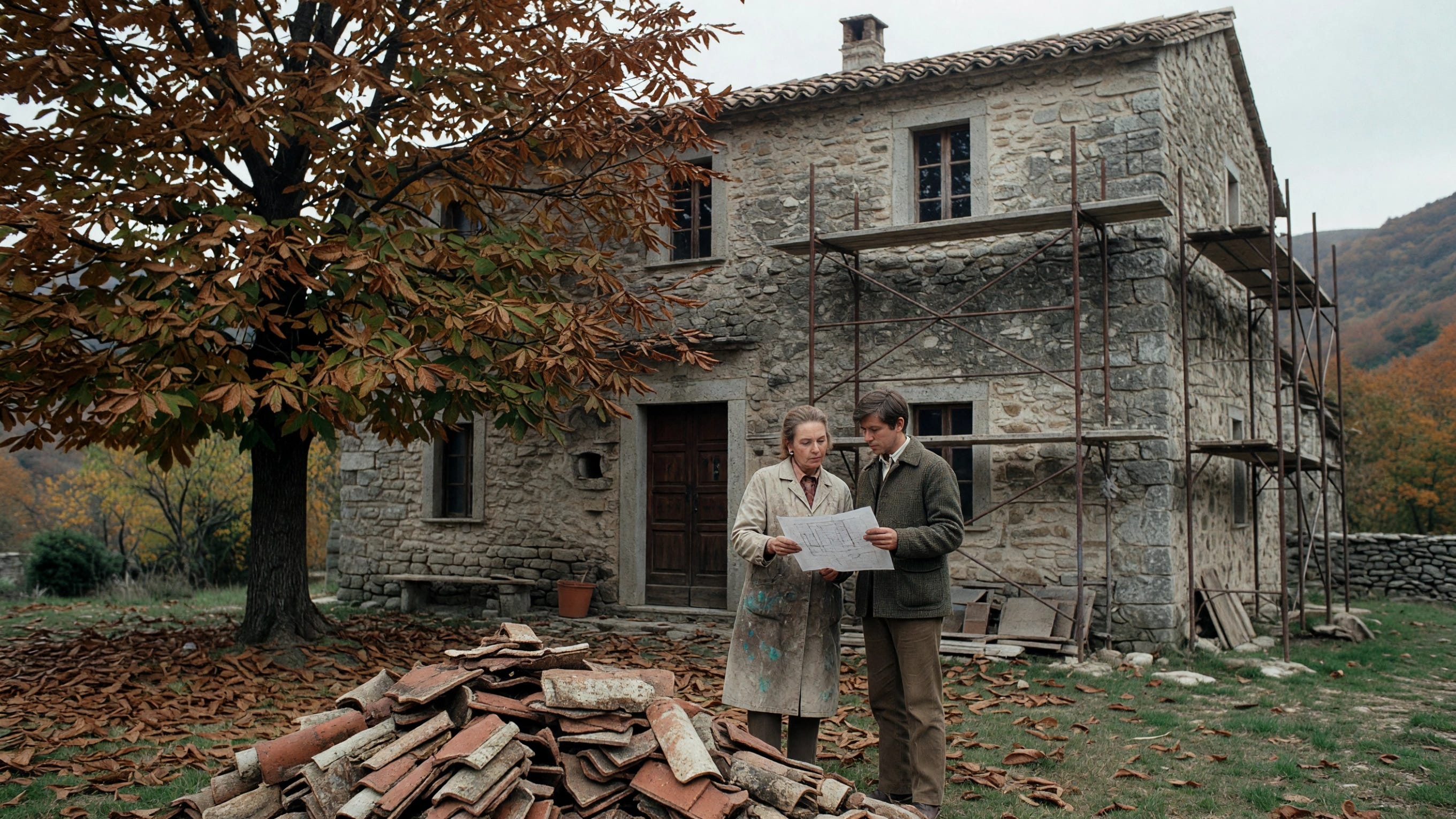
In the mid-1970s Jeannette and Steven had bought a farmhouse in the hamlet of Schito, near Sarnano in the Marche, roughly three hundred years old and set in the foothills of the Sibillini Mountains, and were pouring their energy into restoring it.
Jeannette hired a local geometra named Nazzareno Venanzi, a Sarnano native then in his early twenties whose Italian professional role blends the work of a surveyor and an architect.
Guerin translated between the English owner and the Italian workmen. The two women weren’t strangers to the mountain by that autumn, and their days there had settled into the ordinary rhythms of an English restoration project run out of an Italian village.
At one in the afternoon on November 29, Jeannette met Venanzi for an aperitivo to discuss the renovation. She showed him a wooden gate she liked for the cottage. Then, without explaining why, she invited him to join her and Guerin on a sightseeing drive into the Sibillini Mountains later that afternoon.
Venanzi declined, telling her plainly he was busy, that it was getting late, that snow was forecast for the evening, and that she shouldn’t go. She missed a two o’clock appointment with the farmhouse’s previous owner, a lapse witnesses called strikingly uncharacteristic of her usual punctuality.
Around four in the afternoon, she was inside a builder’s merchant on the outskirts of Sarnano when she received a telephone call.
She spoke in English throughout and appeared visibly agitated afterward. When she and Guerin left the shop, a worker there watched them stop near a red car outside, exchange words with its unidentified driver, and then follow that car toward the town center.
From here the timeline grows confused, with conflicting sightings never fully reconciled.
Some placed the two women near their hotel around five and again in the piazza around seven.
The owner of the Hotel Sibilla, higher up near the Sassotetto ski area, reported seeing them accompanied by a man as they drove up through heavy snowfall. Another motorist descending that same evening recalled passing a man in a distinctive white coat standing at the roadside, not far from the exact spot where the Peugeot would eventually be found.
The detail the headlines always forget is the seven o’clock sighting, because a woman seen descending toward town after dark, hours after setting out, is a woman who had by every appearance survived the mountain and was heading home.
The Locked Peugeot
The next morning Venanzi, uneasy after the previous day’s conversation, telephoned the hotel to check whether the two women had slept there and learned they hadn’t.
Overnight snowfall had blanketed the mountains under three meters of fresh snow, and the initial search turned up nothing.
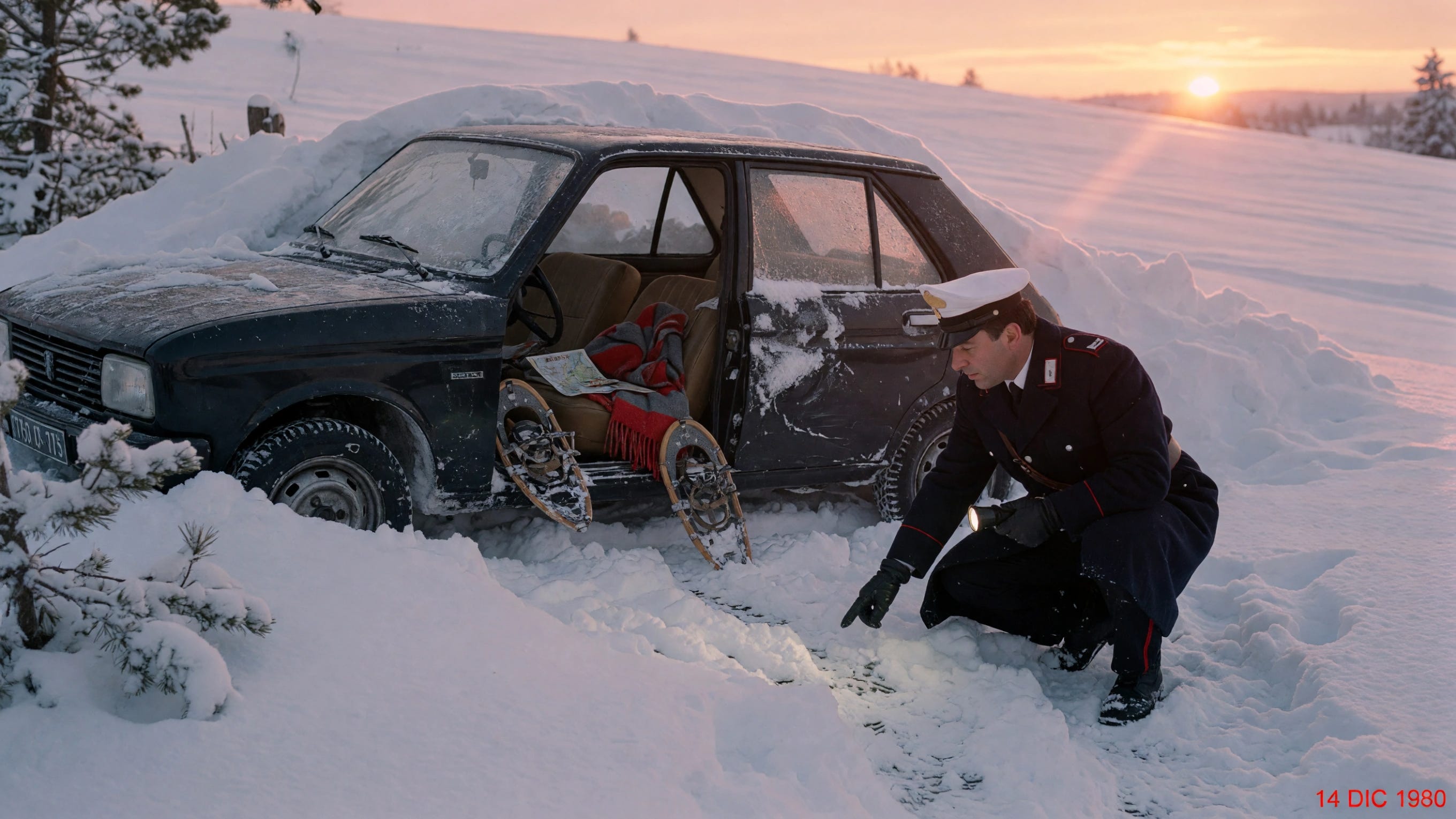
Seventeen days later, when the snow partially melted, a hiker’s walking pole struck the roof of the buried Peugeot at nine hundred meters altitude.
Everything about the car deepened the mystery. It had been locked from the outside, parked with unusual neatness at the roadside, and was in complete working order when the carabinieri reached it.
A woolen scarf lay folded on the passenger seat, deeply inconsistent with two women fleeing on foot into a blizzard, since any rational person would grab every scrap of warm clothing before stepping outside. The snow shoes were still on the back seat, meaning if the women left on foot, they left in ordinary driving shoes.
On December 20, sniffer dogs led searchers to an unoccupied stone cottage a short distance from the Peugeot. Inside they found the charred remains of a fire fed with broken pieces of the cottage’s own furniture and several dirty dishes, evidence the two women had at some point taken shelter and tried to survive.
That small, desperate image tells you more about their final days than any theory has managed.
A year later, fresh forensic examination of the Peugeot revealed something the original investigation had missed entirely.
Two Watches, One Time
Distinct traces of earth were still lodged beneath the Peugeot’s tires, fundamentally inconsistent with a car that had simply gotten stuck in deep snow, and the finding led the investigating magistrate Alessandro Iacoboni to conclude the car had been deliberately turned around and parked in a controlled position rather than skidded off in a panic.
A longtime Sarnano resident who spent years researching the case put it plainly, that no one in their right mind chooses to drive up into remote mountains after dark in worsening weather, and something else had brought the two women up that road.
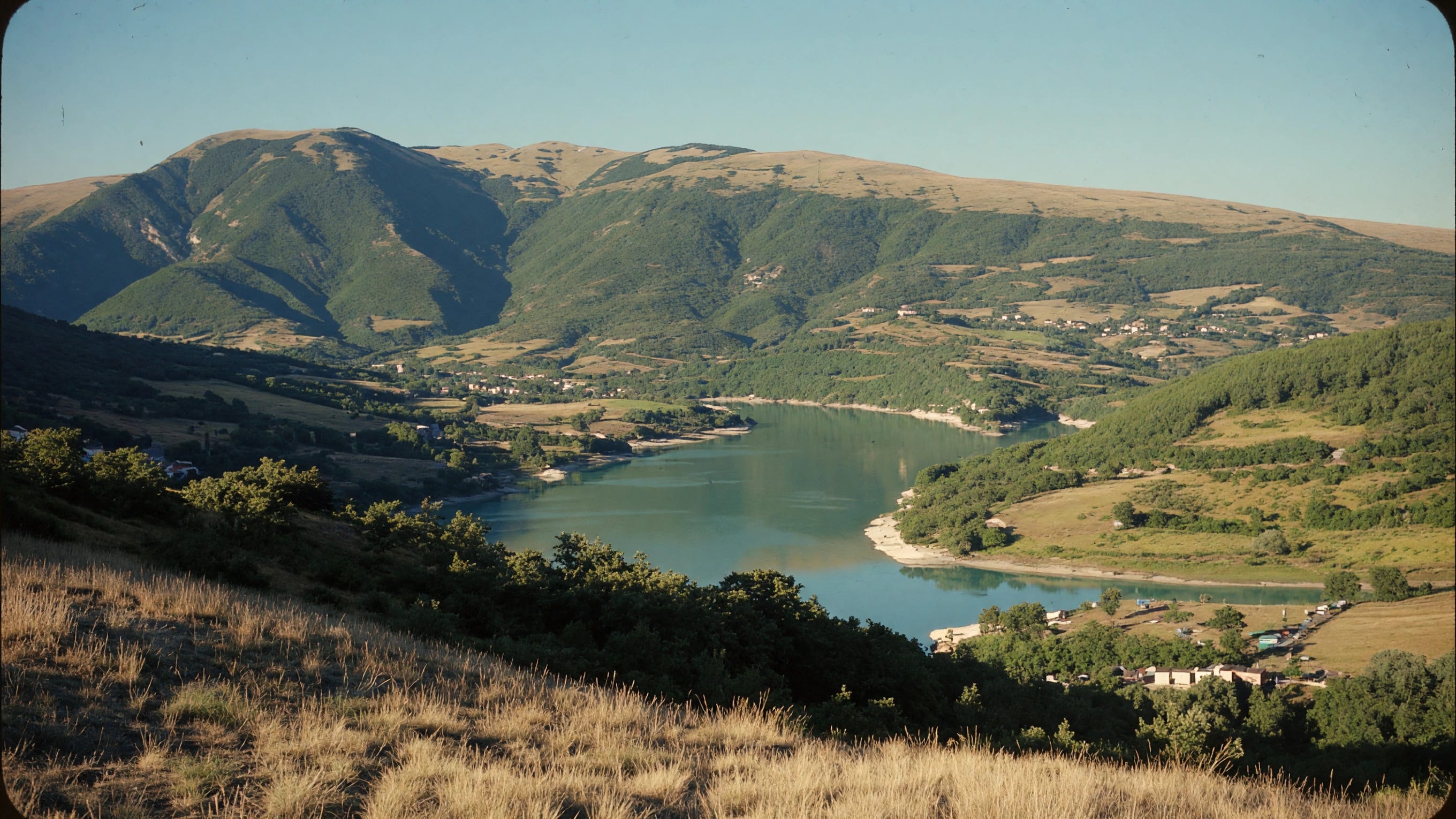
On January 27, 1982, hunters walking through woods near Podalla, close to Lake Fiastra and the Hermitage of San Liberato, stumbled upon the two women’s remains and scattered belongings spread across roughly two hundred square meters of ground.
The discovery site lay about five kilometers from where the Peugeot had been found, a distance investigators later calculated was effectively impossible for two women to cover on foot through three meters of snow, dressed in tights and ordinary shoes.
I hoped right up to the last minute that she would be found alive, Jeannette’s mother told reporters when the news reached her.
The autopsy determined both women had died at or near where their remains were found rather than closer to the car, and estimated they had likely perished roughly a month after the disappearance rather than during the November blizzard.
No definitive signs of violent death were detected, though the finding was inconclusive given how little skeletal material remained. Against that, the Carabinieri’s own scientific unit initially suggested the bodies had been moved after death, an inference drawn from the absence of the decomposition fluids one would expect where a body had lain from the start.
Then came the detail that has haunted the case more than any other.
Both watches had stopped on different days a full week apart, and yet both had frozen at precisely eight minutes to six. If they’d been kept wound by living hands, both women survived over a week after they vanished, and possibly longer, alone on the mountain in the depths of winter.
The theories arrived in a rush. Within a week of Steven May’s arrival in Italy, a telegram addressed to Jeannette turned up at her hotel containing five words.
The Machinery Of A Surname
I am waiting for you said the telegram addressed to Jeannette at the hotel.
Investigators traced it to a Rome address police had already linked to a robbery at the Christie’s auction house branch in Piazza Navona, a theft that occurred the day after the two women vanished.
Officials eventually ruled the telegram a hoax and the Christie’s connection a coincidence, but not before it had consumed months of investigative energy.
On November 7, 1982, the Sunday Times journalists Gitta Sereny and Dalbert Hallenstein published a twenty-page feature concluding the two women had been the victims of a commissioned kidnapping. They argued Jeannette had gone up the mountain to sell a valuable snuff box and had been seized by Sardinian bandits who still believed she was a Rothschild wife.
Evelyn de Rothschild stated flatly he’d never received any ransom demand for his former wife.
From that first theory the case spread into darker territory. The Rome antiques dealer Sergio Vaccari was found murdered in his Holland Park flat in September 1982, stabbed fifteen times, with Jeannette’s name reportedly in his diary, though a senior Scotland Yard detective later stated there wasn’t a shred of evidence Mrs. May had ever known him.
In 2013 the Roman photographer Marco Fassoni Accetti, already notorious for self-implicating claims in the 1983 disappearance of the Vatican teenager Emanuela Orlandi, alleged a shadowy network had considered recruiting Jeannette into a Vatican blackmail scheme, then wrote on his own blog that she had never in fact been contacted.
On September 25, 1989, the investigating magistrate formally overturned the hypothermia ruling and concluded the deaths constituted a double homicide by unknown perpetrators.
Months later a different magistrate reviewing the same file ruled that while homicide was plausible, murder couldn’t be proved to the standard required for charges. File 2736/1980 was consigned to the Italian cold case archive, and there it sat for thirty-five years.
“It Doesn’t Make Much Sense Now”
The case reopened in November 2024, when the Italian crime program Quarto Grado aired a segment titled Il Giallo della Baronessa and revealed that the Macerata prosecutor Fabrizio Narbone had begun reviewing the file.
Narbone arranged hearings for more than twenty witnesses, working against the calendar because most of the people who had touched the case in 1980 were now in their eighties or already gone. Nazzareno Venanzi, who had turned Jeannette down for that mountain drive forty-four years earlier, was called back in and told reporters she had been charming, a former model with refined manners, and that he’d only learned of her Rothschild connection after she was already dead.
Retired General Carlo Felice Corsetti, lead investigator on the original case, argued to reporters that several unclear investigative elements had never fit the hypothermia theory. A Sarnano resident told the Telegraph simply that nobody local had ever thought it an accident.
The Daily Mail’s Richard Kay visited Steven May at his home in England and found him approaching ninety, on his way out to a tennis lesson, and May declined to comment. Sources close to him called the decades of kidnapping and Vatican and mafia theories preposterous and nonsense.
None of it made much sense then, Kay wrote, and it doesn’t make much sense now.
The name that opened every door in Jeannette Bishop’s life has so far kept every door to the truth about her death firmly shut. Whatever brought her up that road on the last afternoon of November, and whoever locked the Peugeot and folded a scarf on its passenger seat, has been protected for forty-four years by the same six syllables that placed her at Ascott House on the arm of a Rothschild in 1966.
What a story! I’d never heard of this…and your telling of it reads like Vanity Fair back under Graydon Carter. LOVE IT.
Any link with the Rothschild family raises intrigue and suspicion.