
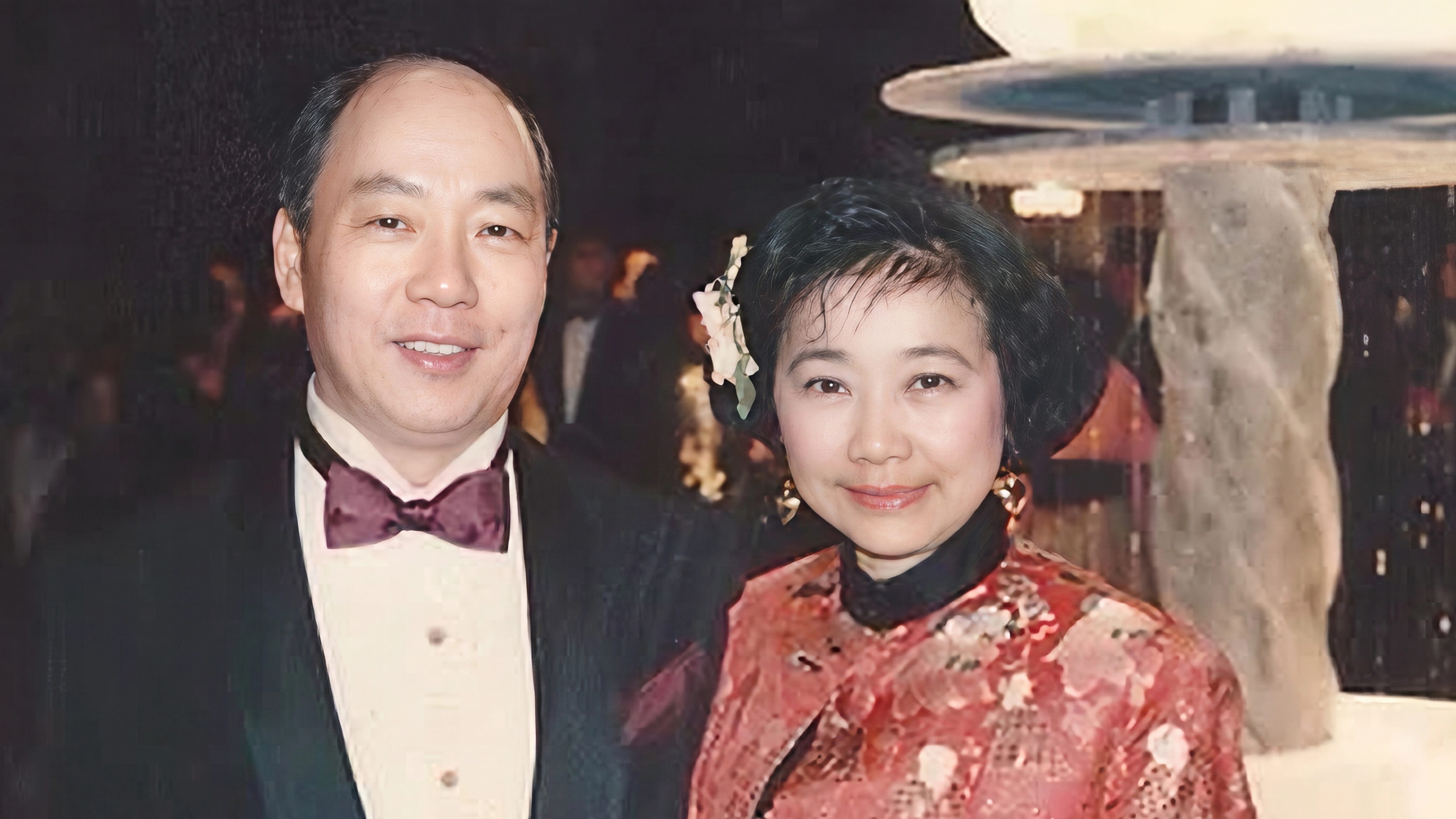
The first time Teddy Wang was kidnapped, in 1983, his wife Nina paid roughly 11 million U.S. dollars to get him back.
He was found chained inside a refrigerated storage unit in Kowloon. When he was untied, still shaking, he didn’t thank her. He scolded her for overpaying.
Seven years later, on the night of April 10, 1990, Teddy was taken again outside the Royal Hong Kong Jockey Club. The gang demanded $60 million. Nina wired $34 million in one installment and waited.
Two days later Teddy was thrown, hands bound, into the South China Sea in a weighted fishing net. His body has never been found.
Nina Wang was 33 when she married him and 53 when he vanished. She would spend the next 17 years turning Chinachem Group into a property empire that Forbes valued, at her death, at $4.2 billion USD, making her the richest woman in Asia. Court filings later put the real number closer to ten.
She ate at McDonald’s.
She wore plaid mini-skirts and pigtails into her sixties, and carried her leftovers home from banquets in Tupperware, on purpose, in front of photographers. In the last 15 years of her life she also paid a former bartender an estimated $256 million in cash and stones, so he would bury it in 80 holes across Hong Kong for luck.
Six months after she died of ovarian cancer in April 2007, that man produced a one-page will that left him everything.
THE FIRST RANSOM

Nina Wang was born Kung Yu Sum in Shanghai in September 1936, into a wealthy trading family that fled to Hong Kong after the war. She met Teddy when she was 11 and he was 15, and their fathers were friends. They married in 1955 and never had children.
Teddy inherited a small paint and chemical business from his father, Wang Din-shin, and renamed it Chinachem. Nina became his unpaid deputy, running the office while he ran the deals.
By the late 1970s the company had pivoted into pharmaceuticals and then into Hong Kong property, and by 1983 the Wangs sat among the 20 richest households in the colony.
Then Teddy got into the wrong Mercedes. The 1983 kidnapping was crude.
Four men in a stolen van rammed the Wangs’ car near the Peak, dragged both husband and wife out, and drove them to a flat in Kowloon.
Nina was released the next morning, blindfolded, to arrange payment, and emptied every account she could reach in three days. Sources at the time put the ransom at roughly HK$33 million, about US$4.3 million; later reporting pushed the figure closer to US$11 million once a second installment was counted in. Teddy was found after eight days, folded into a refrigerated lock-up, wrists bloody, glasses missing. His first sentence, once police brought him home, was that his wife should have negotiated harder.
That marriage told her everything she needed to know about what came next.
THE SECOND RANSOM
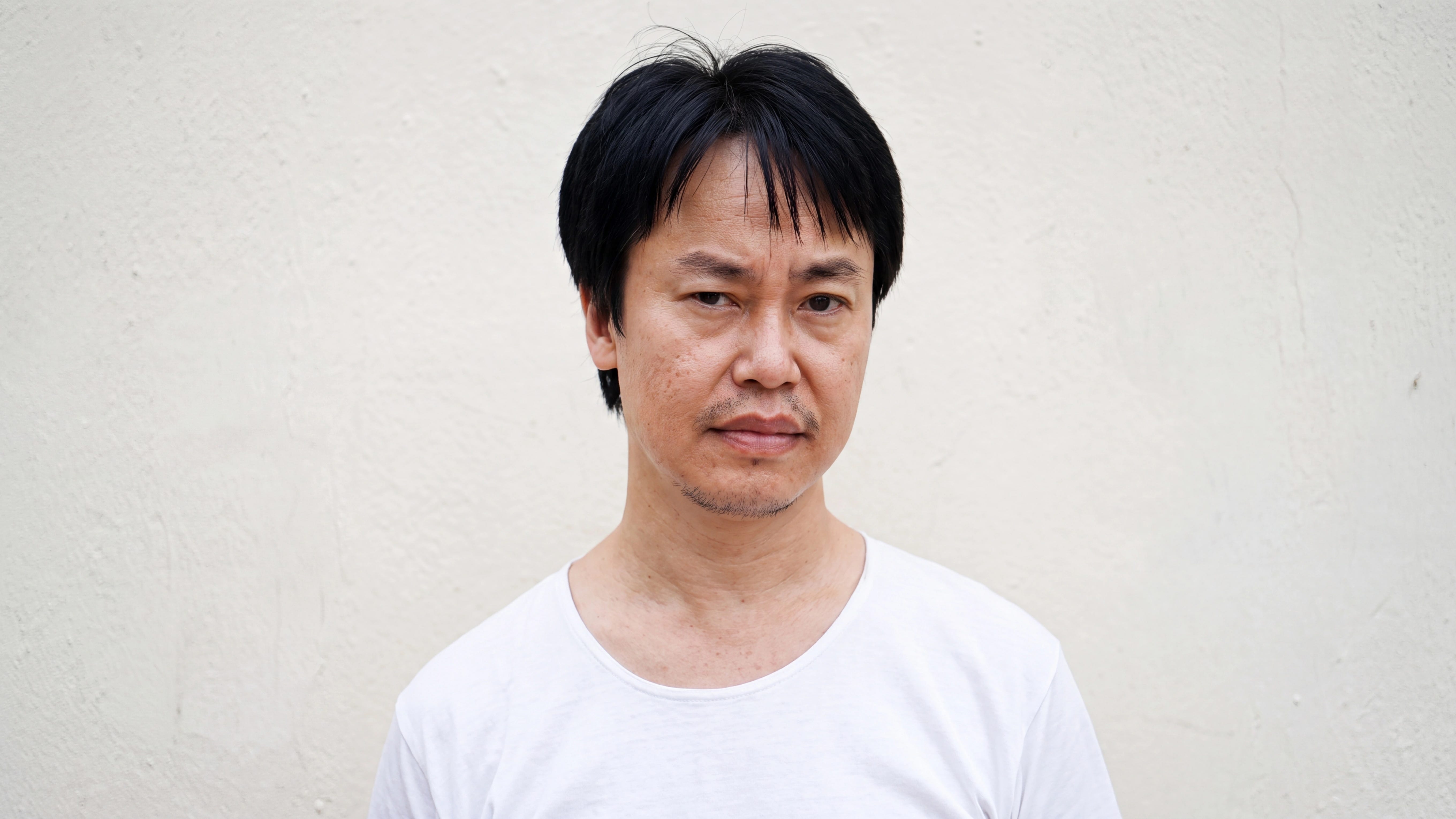
The second kidnapping was the work of a gang led by Cheung Tze-keung, later known across the Hong Kong press as Big Spender. Cheung had studied the first kidnapping and decided Teddy Wang had been undersold. He was going to correct the market.
Teddy was taken driving home from the Jockey Club.
The gang demanded $60 million.
Nina, according to court testimony and later reporting by the South China Morning Post, spent 48 hours in her office negotiating by telephone, sometimes screaming, mostly cold, before wiring $34 million in a single transfer and waiting for the drop.
There was no drop. On the evening of April 12, a Chinese naval patrol vessel appeared unexpectedly near the sampan carrying Teddy toward mainland waters. The gang panicked, bound him inside a heavy fishing net weighted with chain, and dropped him overboard somewhere south of Waglan Island.
One of the kidnappers, arrested years later on mainland China and executed in 1998, gave that account under interrogation. It has never been contradicted and it has never been confirmed by physical evidence.
And no body ever surfaced. Nina kept the disappearance quiet for months while she moved fast behind the scenes, taking over Chinachem within weeks, in fact if not on paper.
She replaced the executive team her husband had trusted, and centralized decision-making so tightly that staff joked, in Cantonese, that the company had one department and its name was Mrs. Wang.
She’d spent years watching her father-in-law dress rich, drive rich, and get shaken down for it by half the triads in Kowloon. Her own conclusion ran the opposite way: she would run one of the largest property portfolios in Asia while playing, in public, a slightly eccentric spinster aunt. The pigtails were never whimsy; they were camouflage.
She started sleeping in her office, and then she went to see a feng shui man.
LITTLE SWEETIE ALONE
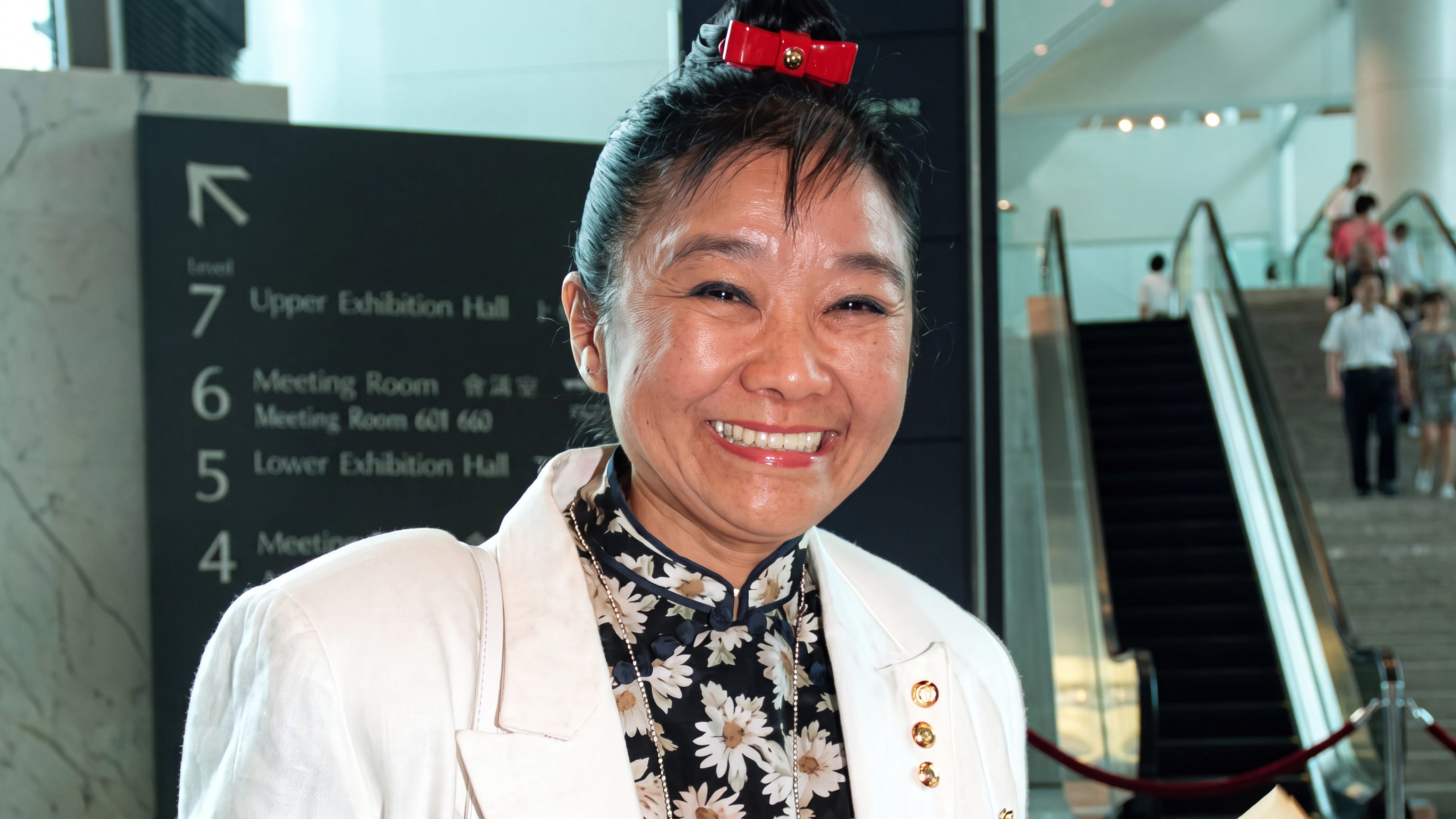
Teddy was declared legally dead in 1999, nine years after his disappearance. Nina had spent the intervening decade doing two things at once.
She built Chinachem into a genuine Hong Kong colossus, roughly a hundred million square feet of built-out and planned property, from mid-market flats in the New Territories to the Nina Tower complex in Tsuen Wan, one of the tallest buildings in the world when it was finished. And she prepared for a war with her father-in-law.
Wang Din-shin, then in his eighties, believed the empire was his to reallocate. He held an older will, dated 1968, naming him principal beneficiary if Teddy predeceased him without issue.
Nina held a handwritten will dated March 1990, signed roughly three weeks before the second kidnapping, naming her as sole heir.
The trial court believed Wang Din-shin. In November 2002 the judge ruled Nina’s 1990 will a forgery, a finding that made her a criminal suspect in her own inheritance case.
She was placed on HK$55 million bail, and the Court of Appeal upheld the finding in June 2004.
For two years Nina Wang ran one of the largest property companies in Asia while free on bail on forgery charges.
All of this happened when she was still wearing pigtails, still driving her own small Japanese car, still eating McDonald’s chicken nuggets in her office at midnight.
On September 16, 2005, the Hong Kong Court of Final Appeal, sitting five judges strong, unanimously overturned both lower rulings and declared the 1990 will valid. Wang Din-shin, then 91, refused to concede publicly. Nina Wang, 69, walked out of the courthouse in pigtails, smiled briefly for the cameras, and offered one sentence in Cantonese, which the interpreter rendered as: I have work to do.
She had 18 months left to live. She would spend most of them signing checks to a man named Tony Chan.
THE MAN WITH THE COMPASS
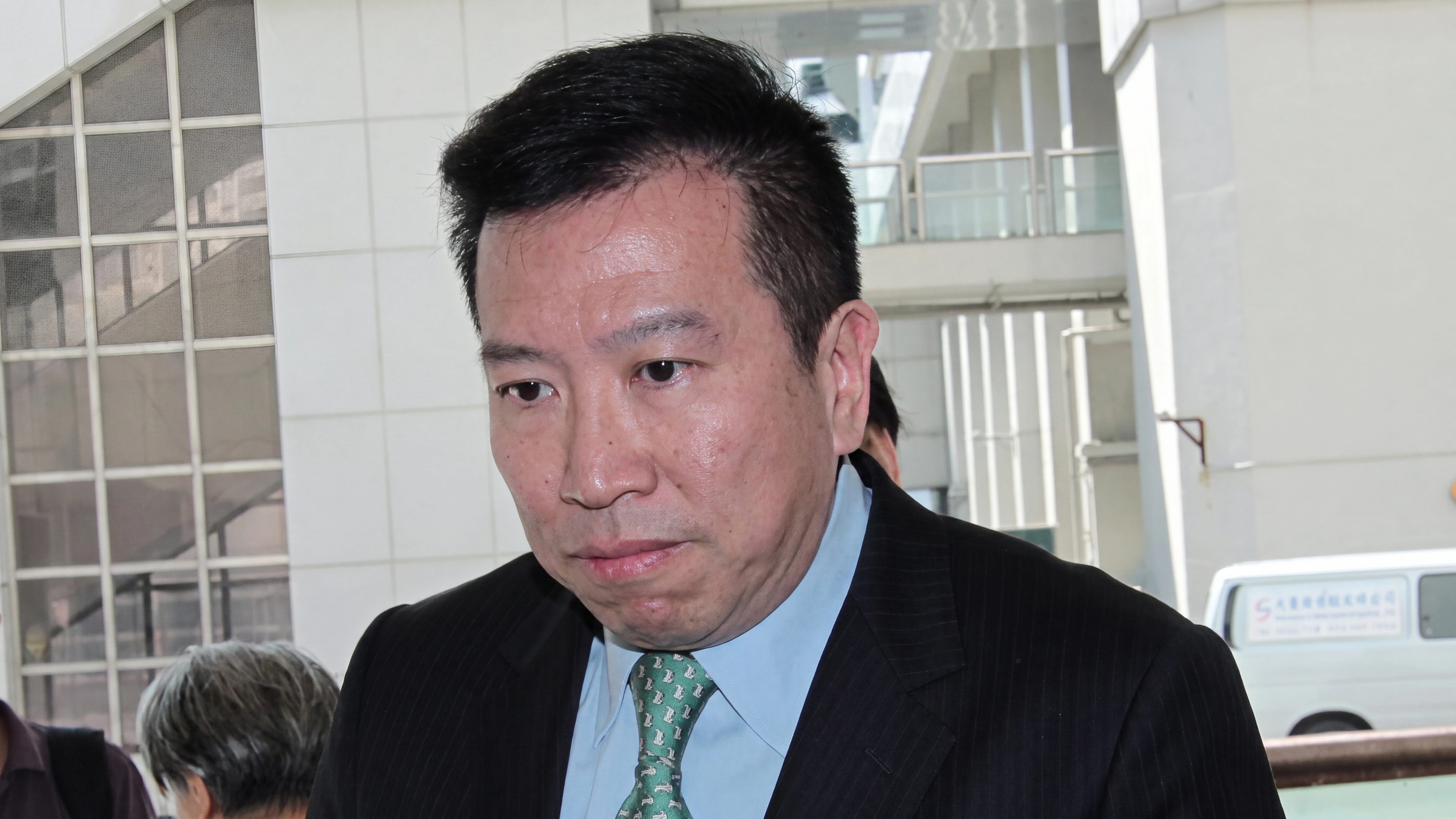
Tony Chan Chun-chuen was born in 1959 to a modest Hong Kong family.
Before feng shui he’d worked as a bartender, a machinery salesman, and a waiter, and by his own later admission in court he was entirely self-taught in geomancy. He had a wife, whom he married in 1992, and two children.
Nina Wang first consulted him on March 12, 1992, according to Chan’s own testimony.
Teddy had been missing almost two years, and Nina wanted to know whether her husband was alive and, if not, where his body might be found. Chan told her he could improve her fortunes and, in time, help clarify Teddy’s fate. She began paying him that same year.
Over the next 15 years the Hong Kong courts eventually placed her total payments to Chan at roughly HK$2 billion, about US$256 million. Some of it went by wire. Some of it, according to bank records introduced at trial, arrived at Chan’s home in armored trucks in single installments of HK$700 million.
He spent it on a fleet of luxury cars, a mansion on the Peak, and, most memorably, an ongoing feng shui ritual in which laborers dug approximately 80 holes across Hong Kong, some of them 30 feet deep, and buried cash, gold, and semi-precious stones on Nina’s behalf.
The theory, according to his own testimony, was that burial in specific geomantic locations would concentrate her chi and eventually cure her cancer.
Nina had been diagnosed with ovarian cancer in late 2004 or early 2005, right in the middle of the will fight with her father-in-law. She kept the diagnosis private even from her own siblings for almost a year. Chan, by contrast, knew immediately.
According to his own account, corroborated by hotel records, the two had been in a sexual relationship since 1993. In private notes later recovered from her Peak residence, she called him Hubby Pig, and sometimes Hubby Kin.
She died on April 3, 2007.
What happened next unfolded fast. Nina’s siblings, led by her brother Kung Yan-sum, produced her 2002 will, which left the entire fortune to the Chinachem Charitable Foundation, a family-controlled entity earmarked for poverty relief, education, and, in one specific clause, a Nobel-style prize administered jointly by the United Nations and the government of China.
Two weeks later, on October 17, 2007, Chan produced a different will: one page, handwritten in Chinese, dated October 2006, naming himself sole beneficiary of the entire estate.
The Hong Kong High Court took two years to hear the case. Judge Johnson Lam issued his ruling on February 2, 2010, in a 326-page judgment that reads, even by the standards of Hong Kong probate law, like a novel.
He found the 2006 will a forgery, a highly skilled simulation of Nina Wang’s signature executed by a hand that knew her style but not her spirit. He called Chan’s testimony improbable, self-serving, and in several places plainly false, and he ruled the 2002 will valid.
Chan appealed. In February 2011 the Court of Appeal called him thoroughly dishonest. By May, he was arrested and charged with forgery and using a false instrument.
A couple of years later, in July 2013, a jury convicted him, and he was sentenced to 12 years in prison. Before the criminal trial he’d converted to evangelical Christianity, publicly renounced feng shui as the work of evil, and asked to be called Peter Chan.
The 80 holes were never fully excavated. Some of the buried money came back by court order.
Most of it, according to the receivers the Hong Kong government eventually appointed, was either never buried at all or was quietly removed by Chan’s associates in the months between Nina’s death and the 2009 police raid on his properties.
THE RULE OF WEALTH

A great fortune is safest when its owner is boring, its heirs are set up to steward the next generation, and its will sits on file with three separate law firms in three separate jurisdictions.
Nina Wang followed the first rule of that sentence better than almost anyone in her generation.
The pigtails, the McDonald’s, the flat shoes, the Tupperware, the HK$400 monthly personal spending, the refusal to hire a driver: to strangers it all read as eccentricity. To the extractors who circle the Hong Kong economy, it read as a woman not worth stealing from.
The second and third rules were where she fell short. She had no children. She had a public feud with her own father-in-law. She kept a 14-year secret relationship with a man who turned out to be a professional confidence artist running a very slow con, close enough to the family that he came to know her signature by muscle memory.
The lesson the Hong Kong bar draws from Wang v. Chan is that eccentricity protects a fortune only up to the front door.
Once someone is inside, once someone is standing at the deathbed, the pigtails stop mattering.
Hollywood keeps asking why audiences don’t show up. Then they ignore stories like this. You couldn’t pitch this script because executives would say it’s too unbelievable. Reality is writing better screenplays than Hollywood. The money isn’t what fascinates me. It’s that after surviving kidnappings, building an empire, and fighting for fifteen years in court, the greatest threat allegedly came from someone she trusted. That’s a timeless story.
Wow, what a tale. All that wealth, and they could not, did not know how to enjoy life. And she trusted a shady guy.
Her husband's attitude even in the midst of the first kidnapping said it all about what was most important to him, too:
"His first sentence, once police brought him home, was that his wife should have negotiated harder."
So, he thought that she should've brought down the ransom amount even more! When she was negotiating for his life!
Reminds me of the joke by Jack Benny, who had the stage persona of a cheapskate:
//
In an episode that was broadcast March 28, 1948, Benny borrowed neighbor Ronald Colman's Oscar, and was returning home when he was accosted by a mugger (voiced by comedian Eddie Marr). After asking for a match to light a cigarette, the mugger demands, "Don't make a move, this is a stickup. Now, come on. Your money or your life." Benny paused, and the studio audience—knowing his skinflint character—laughed. The robber then repeated his demand: "Look, bud! I said your money or your life!" Benny snapped back, without a break, "I'm thinking it over!" This time, the audience laughed louder and longer than they had during the pause.//
Source: https://www.liquisearch.com/jack_benny/radio/your_money_or_your_life