
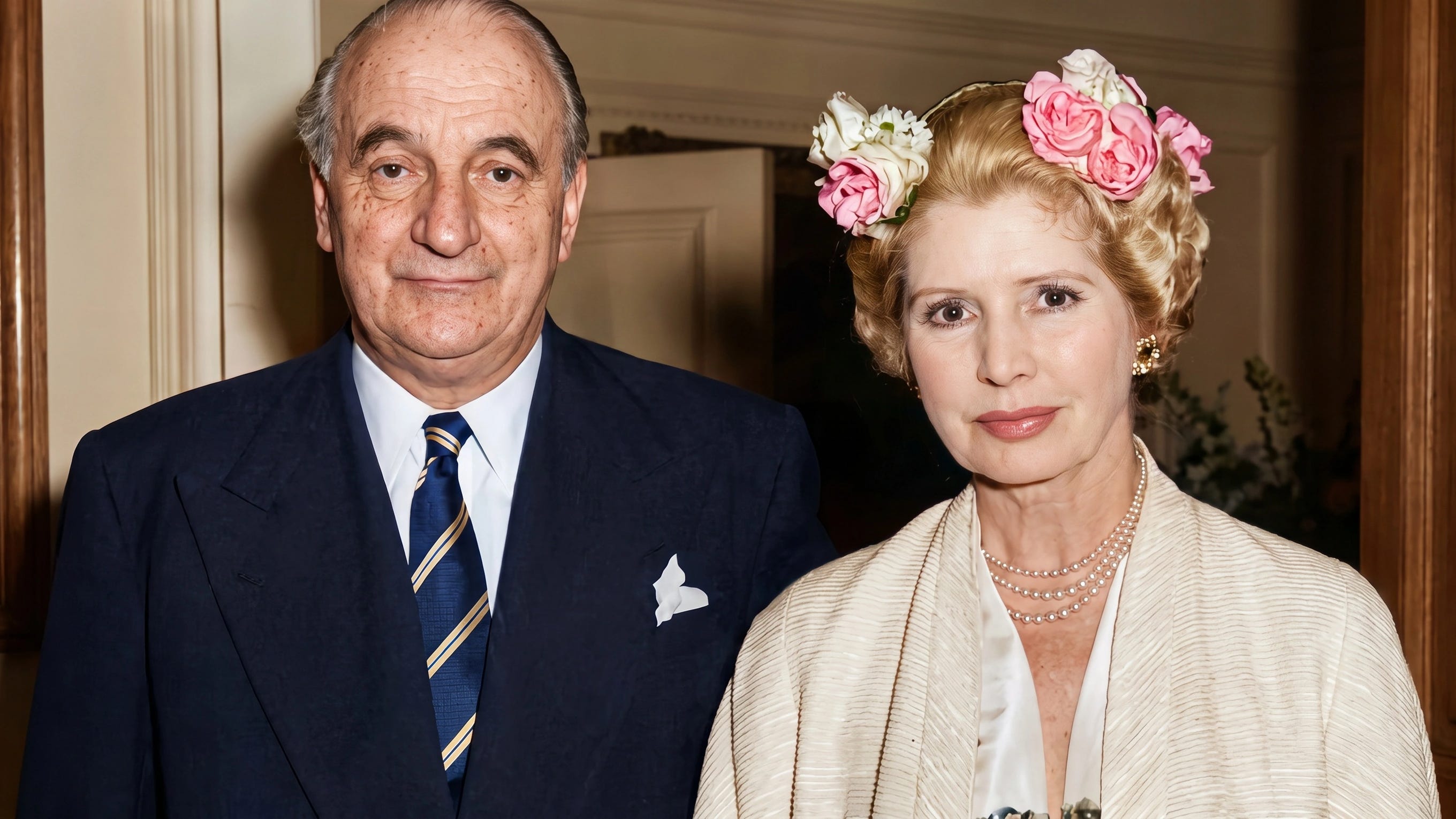
Norah Docker was found dead in her room at the Great Western Royal Hotel beside Paddington station on December 11, 1983.
She was 77 years old, and nearly everything was gone.
The 3,000-acre Hampshire estate, the 870-ton yacht, the five gold-plated Daimlers, the castle in Wales, the Riviera invitations, the husband whose company had paid for most of it.
All of it had disappeared across the previous three decades, sold or surrendered or repossessed in a long contraction that turned one of postwar Britain's most visible women into a widow in a railway hotel.
A bottle of pink champagne was reportedly among her last comforts, though the detail has never been confirmed beyond the obituaries that found it too perfect to check.
What can be confirmed is the arc.
She started as a girl from a working-class English town, lost her father to suicide at 16, moved to London with nothing, and danced for money at one of the city's most exclusive nightclubs.
She then married three increasingly wealthy men, commissioned gold-plated cars with zebra-skin seats, got herself banned from Monaco by a prince, and died almost penniless in a London hotel room.
Thus, the whole story turns on a single question that Norah answered differently from every other woman in her position:
What happens when you refuse to behave as though the money belongs to someone else?
The Butcher’s Granddaughter
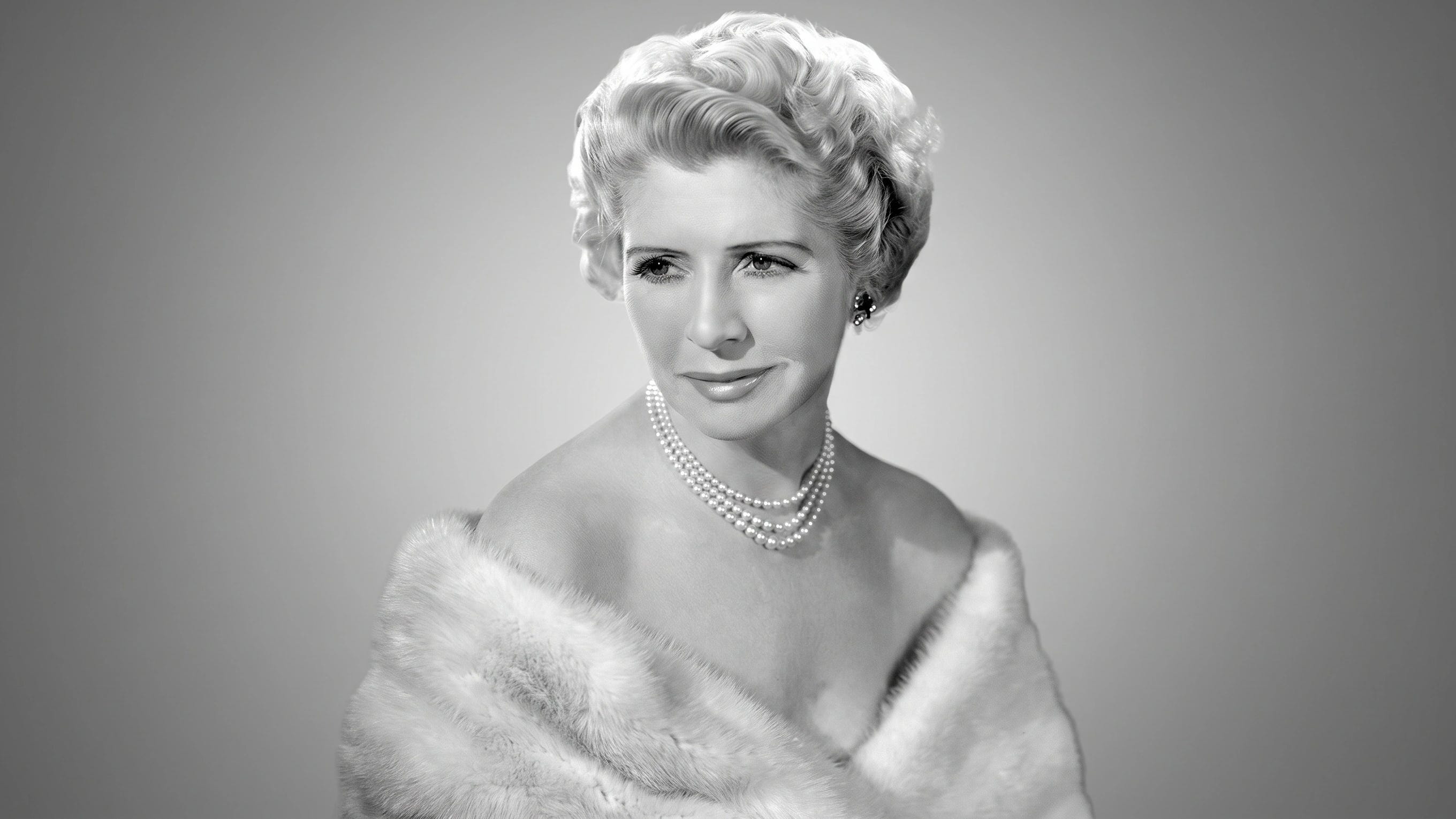
Norah Royce Turner was born in Derby, England, on June 23, 1906, the daughter of Sydney and Amy Turner and the granddaughter of a wheelwright.
The family home was above or behind a butcher’s shop, a detail the press would later deploy with relentless precision every time she appeared in mink or gold.
Soon, the family moved to Birmingham, where her father became involved in the motor trade, working variously as a car salesman, mechanical engineer, and part-owner of a dealership. And the connection to automobiles is worth noting given what her life would later become, though nobody standing in that Birmingham garage could have guessed it.
Then, when Norah was 16, her father suffered a nervous breakdown and took his own life.
According to the account in her later autobiography, he had returned from a convalescent home, and Norah was the last family member to see him alive. Other accounts place his death on a ferry between Holyhead and Dublin. The specific details vary, but the essential facts are consistent: his mental health collapsed, he killed himself, and the family was left without its primary provider.
Norah studied dance, moved to London at roughly 18, and found work as a dance hostess at the Cafe de Paris, one of the city’s most fashionable nightclubs.
Professional hostesses danced with paying patrons and moved through the same rooms as titled and wealthy men. The job carried no social standing, but it placed a girl from Derby inside the physical spaces where the elite spent their evenings, and Norah was a quick study.
The distance between a butcher’s shop in Derby and the dance floor of the Cafe de Paris was roughly 130 miles.
In social terms it was considerably further, and Norah covered it before she turned 20, which is when she met the first of three wealthy men who would change everything.
Three Husbands
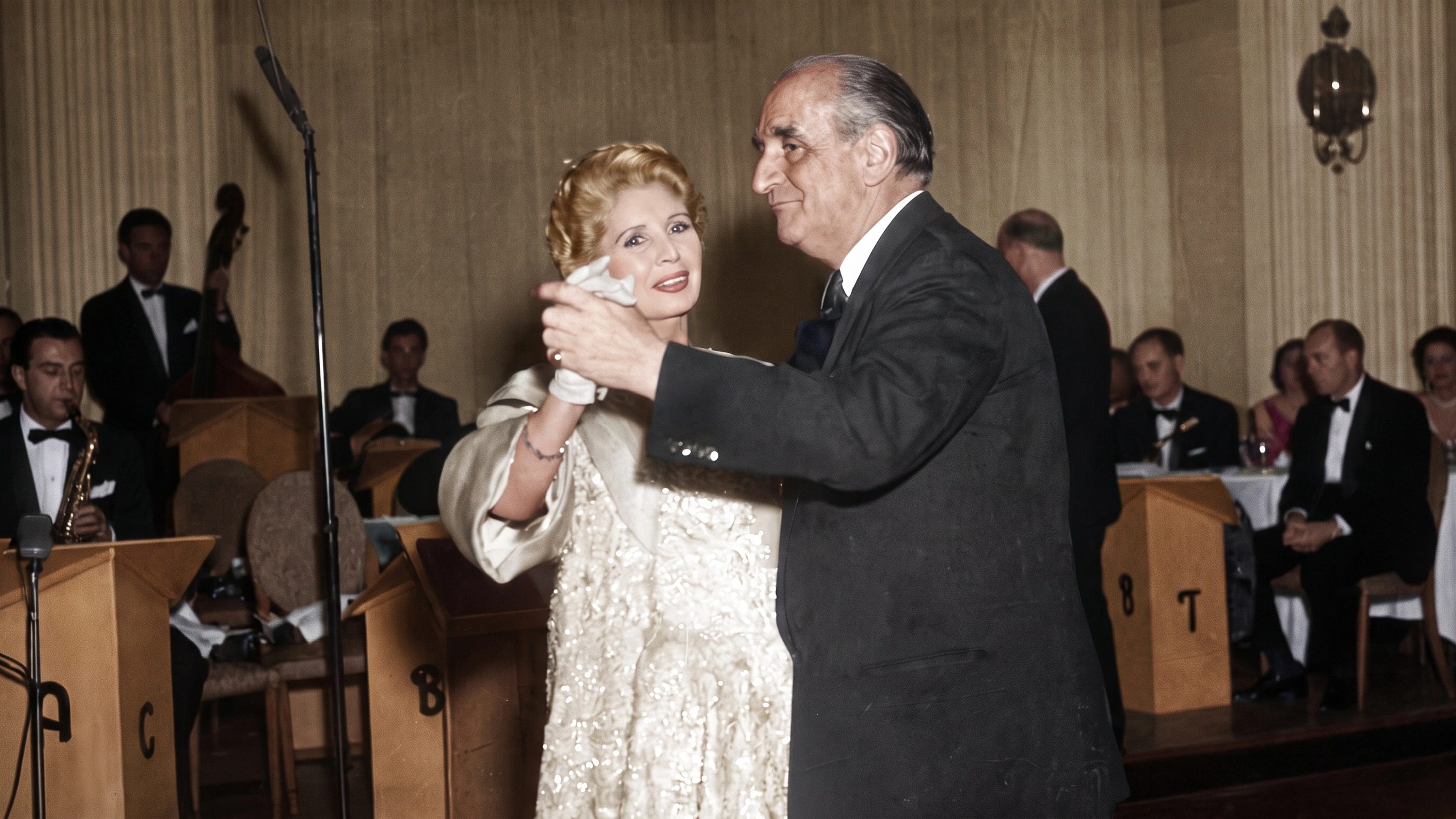
Norah’s route upward ran through marriage, and she followed it three times in 11 years.
Her first husband was Clement Callingham, head of Henekeys wine and spirit merchants.
According to a later retrospective in The Independent, Norah became pregnant during their relationship while Callingham was still married, underwent an abortion, and was named by his wife in divorce proceedings.
The couple married at Chelsea Register Office in 1938 after the divorce was finalized. By 1939, they were living at Baddow House near Maidenhead with their infant son, Lance, and several servants.
A daughter, Felicity, was born in 1943 and died at approximately nine months. Callingham himself died in July 1945 after illness.
Norah was left extremely wealthy with an inheritance of £1.5 million, equal to roughly £46 million today.
In 1946, roughly a year after Callingham’s death, she married Sir William Collins, president of Fortnum & Mason, a man considerably older than she was.
Norah later reportedly admitted that she had married Collins for his money.
That alleged clairvoyance paid off when he died in 1948, leaving Norah widowed for the second time in three years and wealthier still, with reports at the time placing her personal fortune at the equivalent of £90 million in today's money.
By then, Norah no longer needed to marry a rich man to become wealthy.
What her third husband would deliver was something much more dangerous: fame.
