
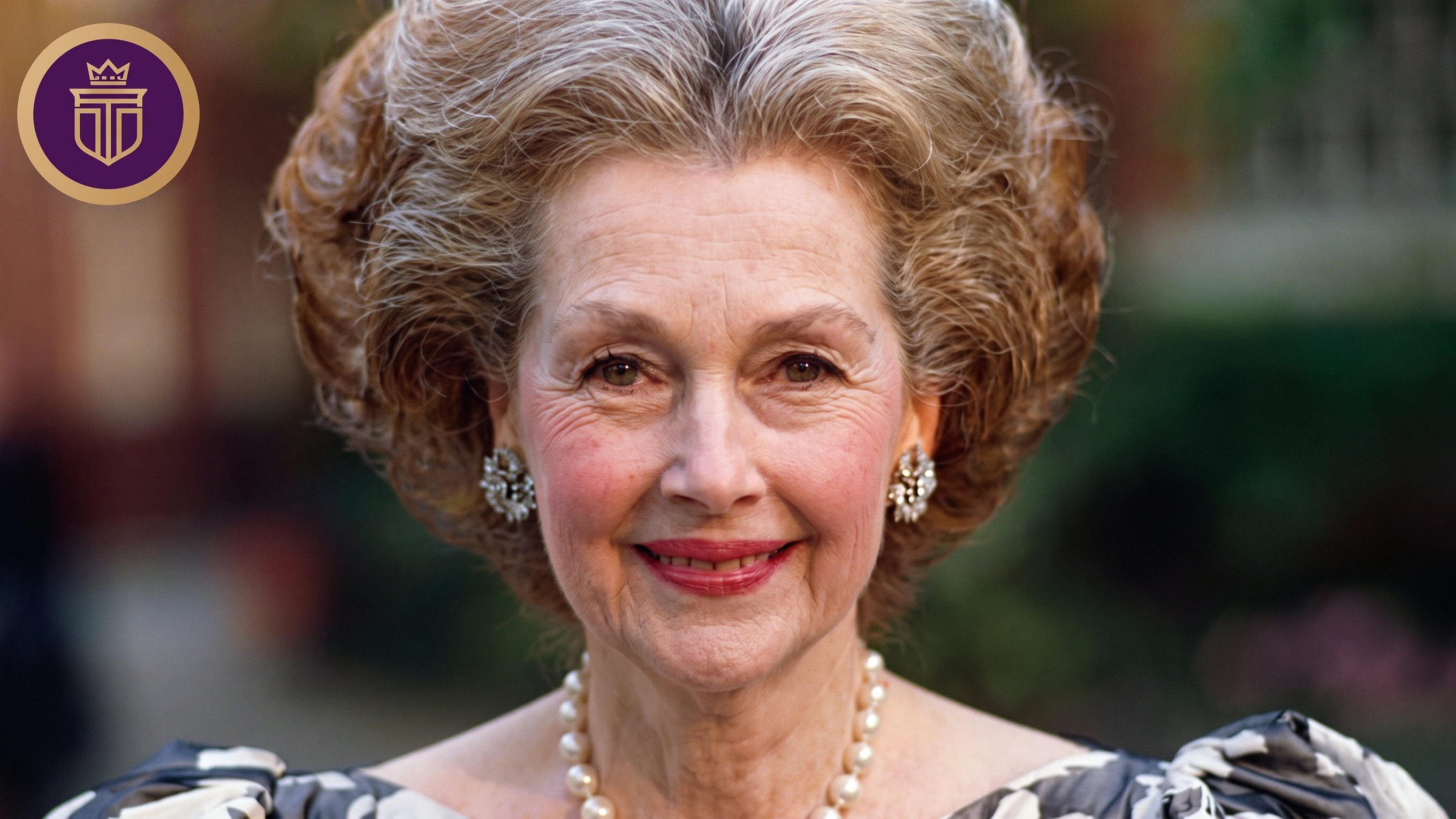
Two days after Diana's father died, his widow was given 48 hours to leave the family estate his will had granted her six months to vacate.
A maid knelt folding the woman's wardrobe into Louis Vuitton suitcases while Diana, Princess of Wales, stood over her at the bedroom door, supervising the removal the way a warden supervises an inmate's discharge.
When Diana spotted the embossed S on the suitcase locks, she claimed the luggage as Spencer property and had the clothes transferred into black plastic bin liners. Diana's brother Charles kicked the sacks down the grand saloon staircase, the same staircase where Diana had shoved this woman three years earlier and watched her fall.
Her name was Raine Spencer, and before she married Diana’s father she’d been Raine McCorquodale, the only daughter of the romance novelist Barbara Cartland. But the Spencer children had called her “Acid Rain” since the day she married their father.
For 17 years they'd wanted her gone, and on this morning they got their wish. What none of them knew yet was how much the wish would cost.
The Mother’s Project
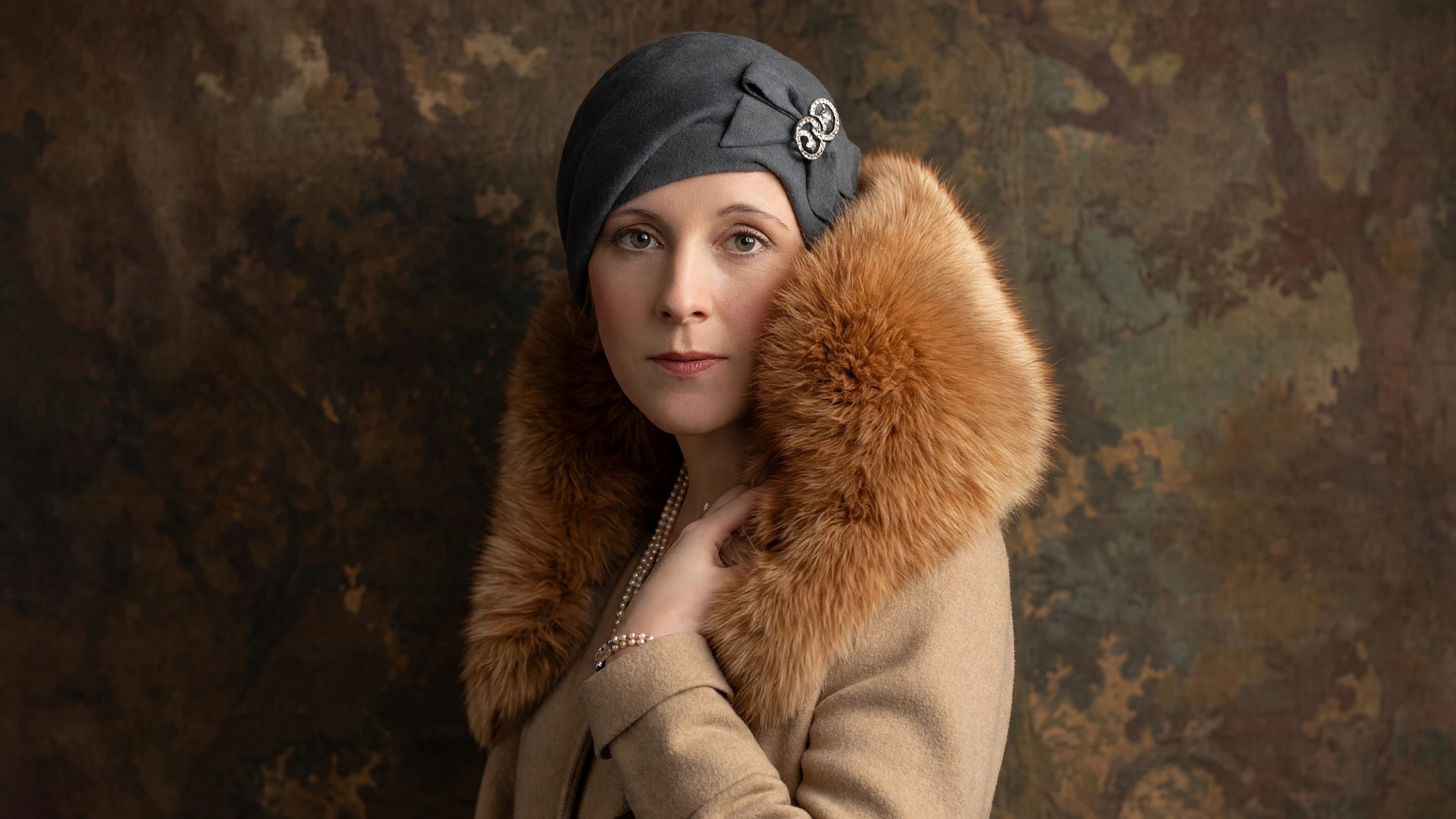
Before she became the woman Diana Spencer hated more than anyone alive, before the nickname Acid Rain and the staircase and the bin bags, Raine McCorquodale was her mother’s greatest production.
She was born on September 9, 1929, at Culross Street in Mayfair, the only child of Alexander McCorquodale, heir to a printing fortune, and Barbara Cartland, who’d married him in 1927 after, by her own telling, declining 49 previous proposals.
The marriage collapsed when Raine was small, and by seven she was already the subject of a scandal she hadn’t caused.
Cartland married Alexander’s own first cousin, then turned her formidable attention to the daughter she’d once wished had been a son.
She told the BBC in 1991 that she’d been disappointed to have a daughter and would rather have had a dozen boys, adding that she didn’t much like women and thought men were marvelous because they were the heroes of her books.
The daughter she got, she decided to build. Cartland would eventually publish 723 novels, dictating them at a rate that once reached 23 books in a single year. She moved through the world in flamingo pink silk, false eyelashes coated in shoe polish so the mascara wouldn’t run, and a white Rolls-Royce with a pink mohair rug, and she treated Raine’s upbringing as another manuscript to be revised until it was perfect.
In a later interview she admitted to a biographer that she’d resolved to produce her daughter as a beauty, that she used to bully her and become furious with her, and that the bullying worked. When young Raine came home having topped her class, her mother’s response was the observation that there was a gravy stain on her shirt.
In 1947, at 18, Raine was presented at the court of King George VI and named Debutante of the Year.
The following year she married Gerald Legge at St. Margaret’s Church, Westminster, with 16 bridesmaids and a reception at Londonderry House. Legge would eventually inherit his father’s title, and Raine had four children over 20 years and collected titles across her life the way other women collected jewelry.
But beneath the presentation was a woman with ambitions a decorative marriage couldn’t contain. In 1954 she became the youngest member elected to Westminster City Council, campaigning in her furs and jewelry and telling reporters she deliberately dressed up because everyone knew she had them anyway.
She spent 17 years in local government, and her most durable achievement came chairing the Covent Garden Development Committee in the early 1970s, where she fought the demolition plans that would have flattened one of London’s oldest quarters.
The district that draws millions of visitors today exists partly because a conservative councillor in furs refused to let the planners flatten it. Prince Philip reportedly summed her up in a single line: if you wanted to get anything organized, you sent for Raine.
She’d been made into a beauty by a mother who didn’t like women. What she wanted was to be listened to, and the tension between those two impulses drove everything that came next.
The Unhappiest Man
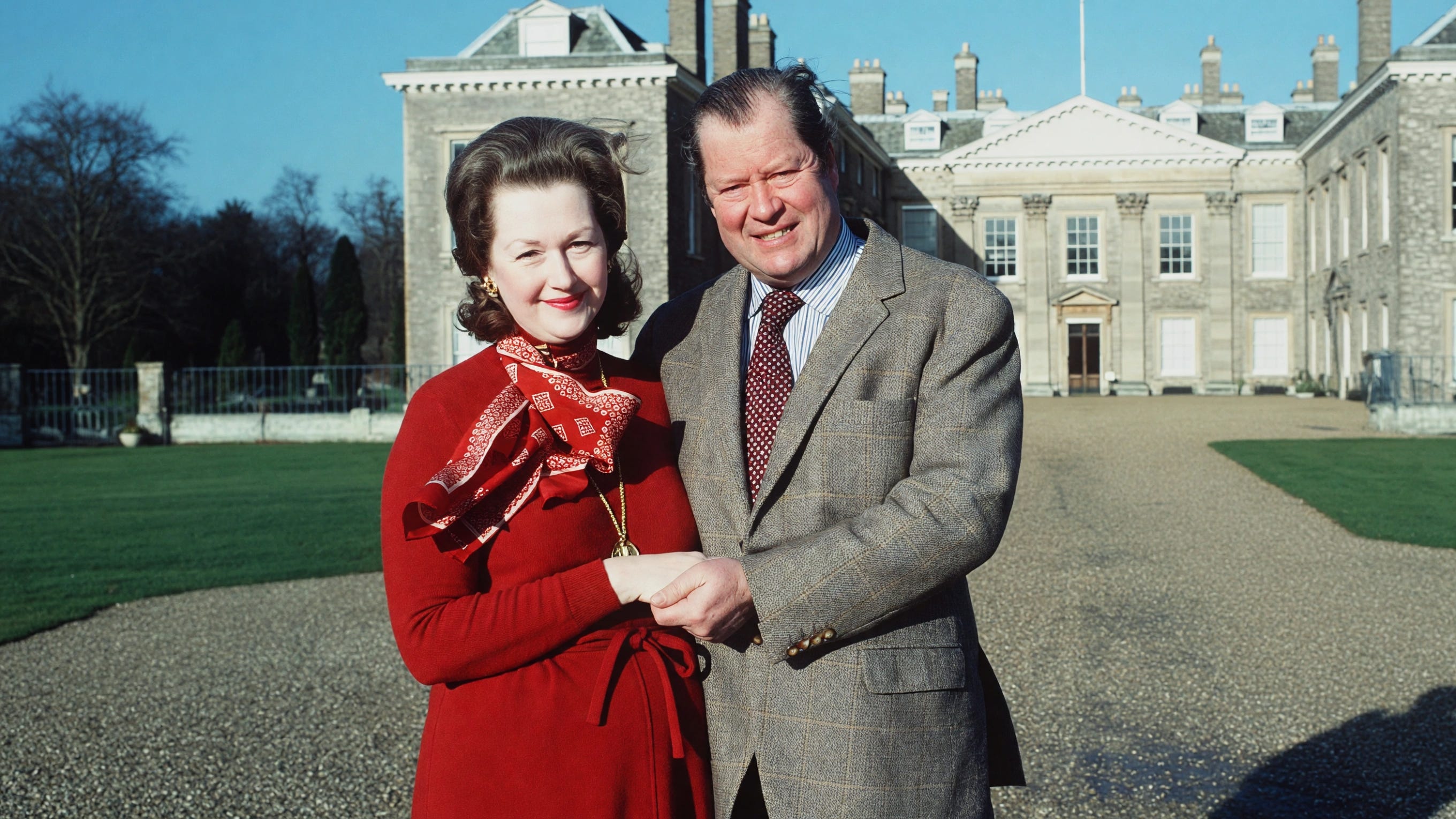
In 1973, on an architectural heritage committee, Raine met Johnny Spencer, then still using his courtesy title and described by people who knew him as the unhappiest man in London.
And his unhappiness had a history. His first wife, Frances Roche, had fallen in love with Peter Shand Kydd in 1966, and the divorce that followed was one of the ugliest in the English aristocracy. Frances sued for custody in 1968 and lost, partly because her own mother testified against her.
The children who lived through that divorce were the same children Raine would inherit, and their formation matters to everything that came after. Diana, the youngest daughter, later told Andrew Morton that her mother’s departure was the biggest disruption of her childhood. She carried a memory of watching her father slap her mother across the face while she hid behind a door.
These were children who would never welcome a glamorous replacement, and they would certainly never forgive one for arriving in furs.
Raine’s brother later said he didn’t think she’d ever intended to fall in love with Johnny.
Furthermore, he claimed it’d simply happened, that it was real love, and that their mother had been bemused by the whole thing.
Johnny inherited the Spencer title and estate on June 9, 1975, and with it came Althorp, a 500-year-old house in Northamptonshire that was less a prize than a standing debt, magnificent and cold and ruinously expensive to keep.
On July 14, 1976, Raine married Johnny in a civil ceremony at Caxton Hall in London, conducted with a secrecy so complete that it functioned as a declaration of war.
Johnny’s children weren’t told in advance and learned their father had remarried from the newspapers. Diana was 15. She later said she’d slapped her father across the face and told him it was from all of them.
The children called her Acid Rain and sang “Raine, Raine, go away” and deliberately never finishing the line about coming back another day.
What they couldn’t know yet was that the woman they wanted gone was about to save the house they’d grow up fighting over.
Gloomsville
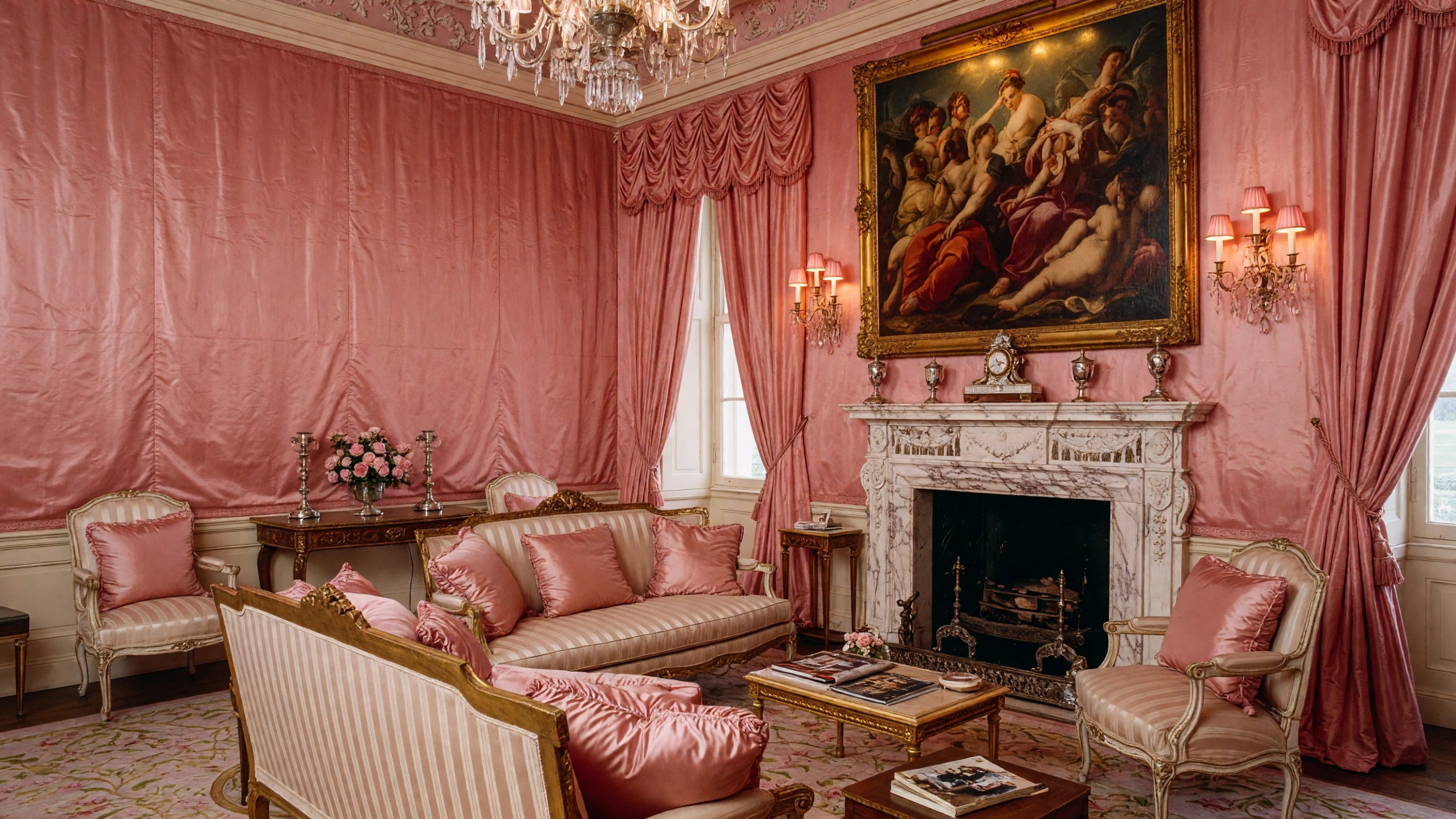
Raine arrived at Althorp and reportedly took one look at its genteel gloom and nicknamed it Gloomsville.
She set about a total transformation, covering shabby furniture in bright new fabric, replacing old Victorian lampshades with pink ones, and spending by one estimate around two million pounds remaking the interiors.
Her defense was uncomplicated: she said she believed she’d done a wonderful job, that there were bright sofas to sit on and you could still look at the Rubens on the walls. Charles Spencer wrote the most quoted verdict, describing the South Drawing Room as “a cacophony of clashing pinks” with “the wedding cake vulgarity of a five-star hotel in Monaco.”
The redecoration was expensive, and part of how it was paid for became the single most damaging fact of Raine’s life.
Between 1976 and 1992, more than 200 works of art left Althorp through Bond Street dealers rather than the open auction rooms, for a total Charles put at more than £15 million. 11 Van Dycks, one to the Getty Museum. A Stubbs. A Guercino that went to Kansas City.
Charles said the works were sent to London dealers in laundry baskets from the back door to guarantee anonymity, and he came to believe that his father and stepmother had simply been taken to the cleaners by the trade.
The Salvator Rosa became his exhibit A. It was sold in 1982 to a Bond Street gallery for £87,500. Two years later that gallery sold it to the National Gallery for £612,500, seven times what the family had received.
To Charles, that was the whole scandal in one canvas. Raine’s defense was that she made none of these decisions, that she got her orders from Johnny and did what he told her. That was very likely true yet it did her no good at all:
The family needed a villain with a face.
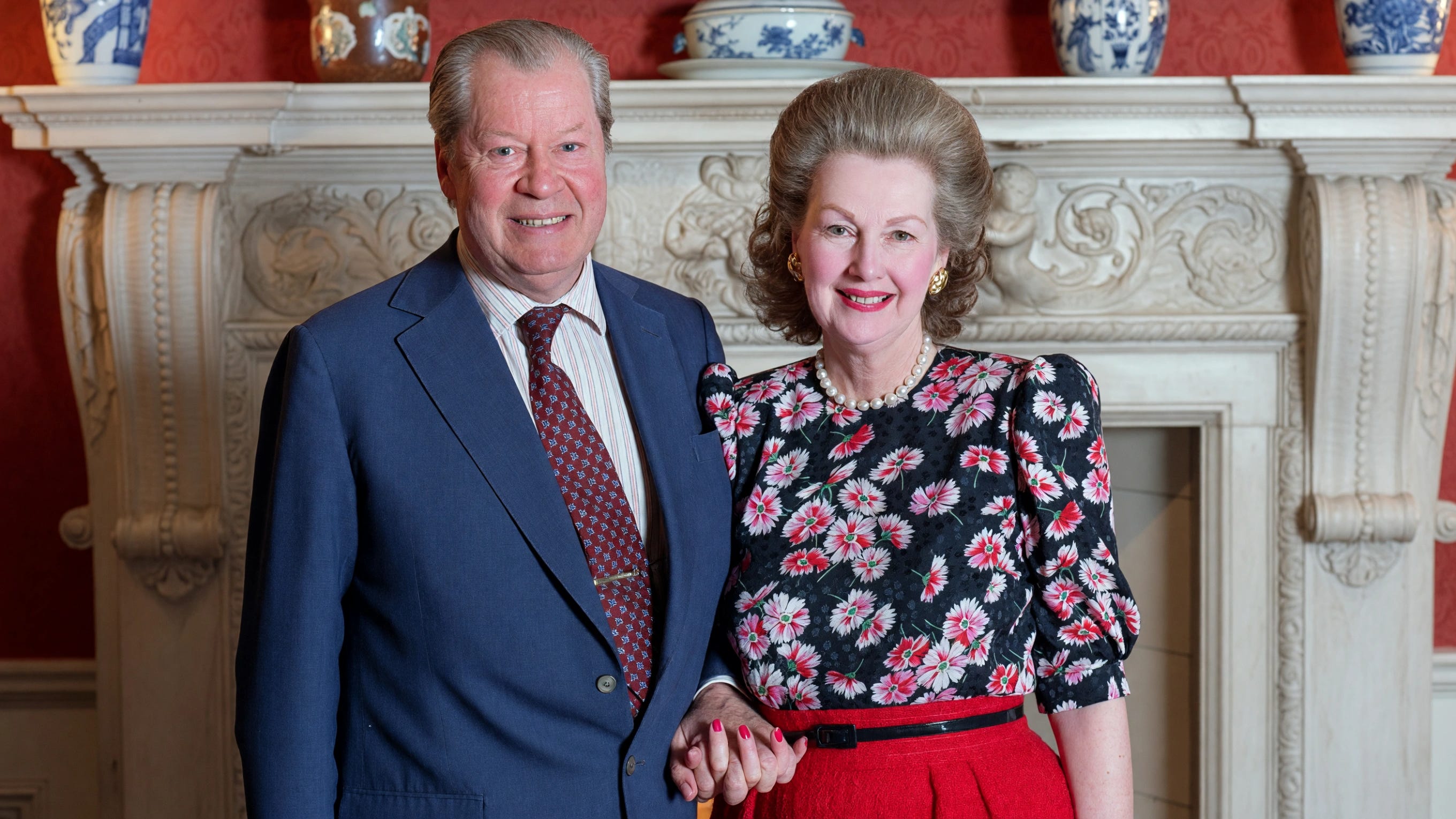
Johnny was their father, so he wasn’t an option. Thus, the paintings that left in laundry baskets became her legend, not his.
There is a reading of the redecoration the family never allowed: it was necessary. Aristocratic houses of this scale don’t run on air, and Raine understood that keeping the show going meant earning close to half a million pounds a year.
She cut staff, opened the house to paying visitors, and filled the calendar with car launches, open days, and dinner dances. Johnny fully endorsed all of it.
The family hated the solution because it changed the house they remembered into something that took coach parties and sold tickets, but the coach parties she invited in were the same coach parties that would one day pay to see Diana’s grave on the island in the lake.
In 1978, only two years into the marriage, Johnny collapsed with a massive cerebral hemorrhage. The doctors gave him as little as a 10% chance of survival.
Raine set up a vigil at his bedside, ferociously territorial about his care, and reportedly sourced an experimental drug from Germany that hadn’t been licensed in the UK.
Against the odds, Johnny recovered. He was never the same, but he was alive and stayed alive for another 14 years. Even his most hostile children conceded that Raine’s care was the reason.
The truce held until the family gathered at Althorp for a wedding, and the cold war turned physical.
The Staircase
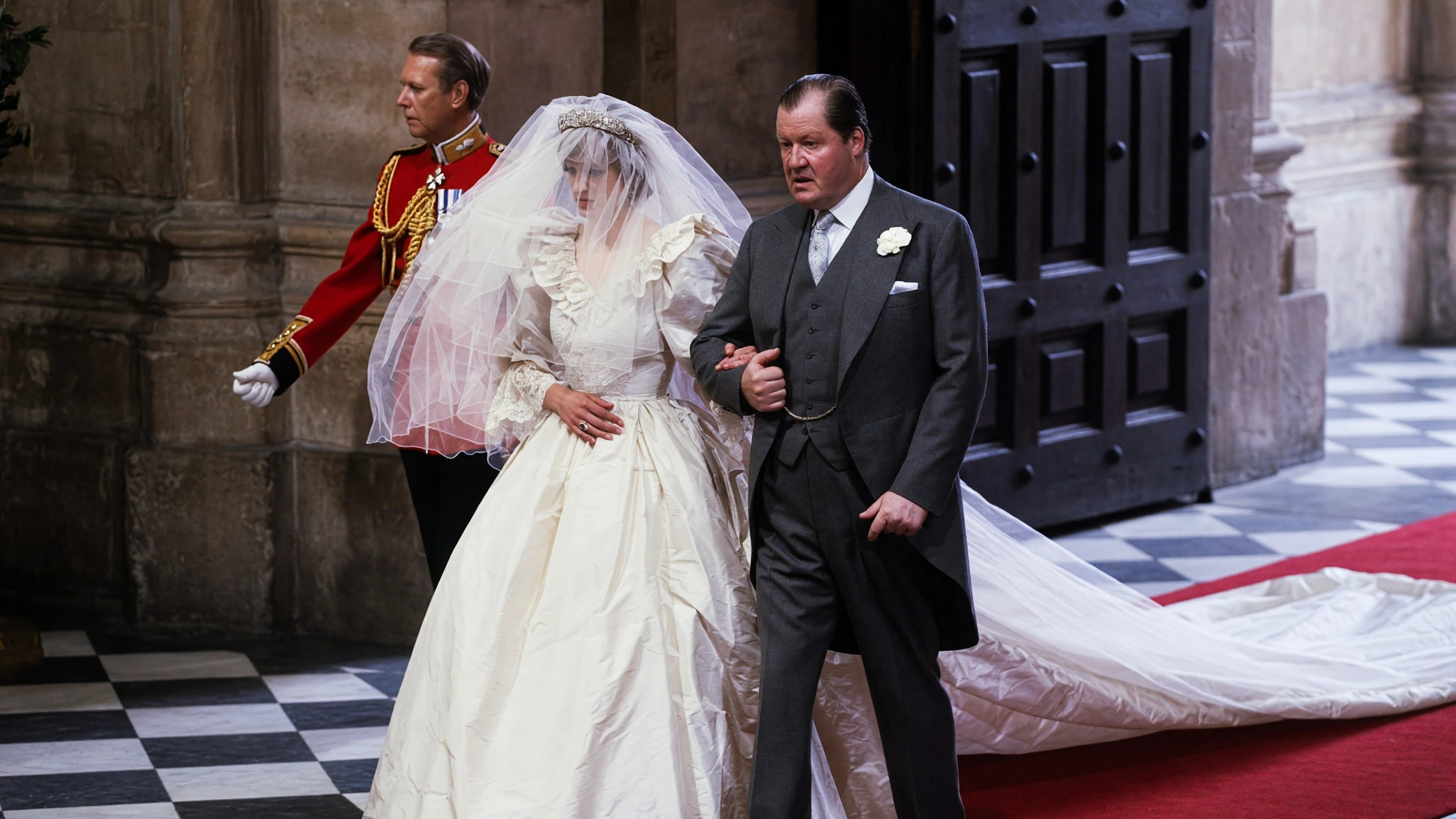
On July 29, 1981, Johnny Spencer, still unsteady from the stroke Raine had nursed him through, walked Diana down the aisle of St. Paul’s Cathedral.
The seating told the family’s story without a word. Raine attended but was placed in the congregation rather than with her husband. She was absent from the balcony of Buckingham Palace.
The most photographed moment in Spencer history took place with the Countess deliberately cut from the frame.
In September 1989, the family gathered again at Althorp for the wedding of Charles Spencer to Victoria Lockwood.
Diana became convinced Raine wasn’t showing her mother Frances enough attention in what had once been Frances’s home. Raine’s personal assistant, Sue Howe, described what happened: Diana had a furious row with Raine, pushed her, and Raine fell down the stairs. She was badly bruised and dreadfully upset, and Howe called it a cruel, heartless thing to do.
Diana never expressed regret.
In a recorded conversation with her voice coach in 1992, she said she’d pushed Raine down the stairs and it had given her enormous satisfaction. In the Morton tapes she said she’d told Raine she hated her, that they all hated her for what she’d done.
When Raine answered that Diana had no idea how much pain her mother had put her father through, Diana had gone, in her own phrase, “for her gullet.”
Johnny Spencer died on March 29, 1992, of a heart attack at the Wellington Hospital, aged 68. He’d left instructions asking his children to give Raine six months at Althorp. They gave her 48 hours instead.
Diana stood guard in the bedroom. The clothes went into bin liners, and Charles kicked them down the same staircase where Diana had pushed Raine three years before.
Johnny’s will had asked for six months and a measure of dignity for his widow, and his children overrode him within two days of his last breath, which tells you the war had never really been about paintings or sofas at all.
The Reversal
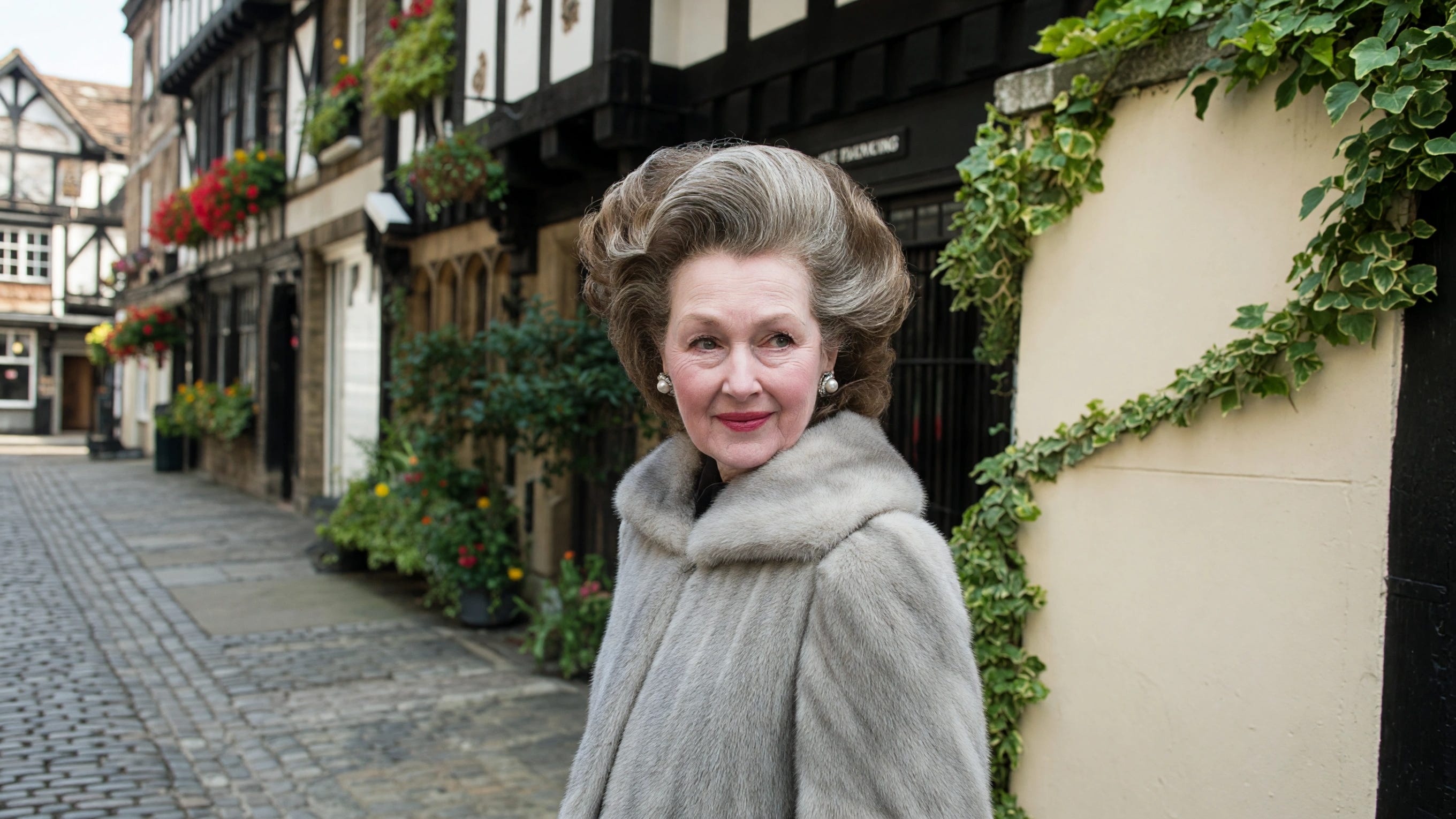
What makes the ending of this story so strange is that the hatred didn’t hold.
Around 1993, as Diana’s own marriage collapsed into public ruin, she made the first move and invited Raine to a tearful reconciliation, telling her she knew Raine had loved her father deeply.
The two women who’d fought over Johnny’s house wept and embraced, and from then on they met regularly for lunch at the Connaught Grill and spoke on the telephone almost daily.
Diana’s butler, Paul Burrell, put the logic of it best: in the end, Diana was an outcast, and Raine was an outcast too, and so they became great friends.
Diana’s relationship with Frances had curdled by then, the two not speaking in the months before the crash after Frances gave a paid magazine interview criticizing her daughter’s choices. Into that vacancy stepped the very woman Diana had once tried to throttle.
Ingrid Seward recorded Diana’s own words: that she would rather speak to Raine than to her own mother, that Raine was the mother she never had.
It was the most complete reversal imaginable, spoken by the child who’d coined the name Acid Rain.
On August 31, 1997, Diana was killed in the Paris crash. Three years later, on May 21, 2000, Barbara Cartland died in her sleep at 98, and the mother who’d built Raine from the outside in was gone too.
Raine joined the board of Harrods after Mohamed Al-Fayed appointed her a director, traveling to 16 countries for the business and putting in night shifts at the distribution center in a packer’s apron into her eighties.
She testified at the 2007 inquest into Diana’s death, telling the coroner that Diana had always said she had no hidden agenda, that so many people wanted something from a woman that famous, and that it’d been a very draining life.
Charles Spencer never publicly apologized.
In a 2010 Vanity Fair essay he granted that his stepmother had been formidable and even in her way effective, but stopped short of contrition.
Raine died on October 21, 2016, aged 87, in her Belgravia flat, of a cancer she kept private to the end.
She’d hosted a farewell dinner for 30 friends weeks before and let none of them know it was goodbye. She left an estate of around £5.8 million, a quiet rebuttal to a family myth that had cast her as a woman who bled the Spencers. She left nothing to any Spencer.
No member of the family came to her funeral. The child who’d learned to call her mother was already gone, and the ones who remained had never learned it at all.
What a sad story. How gracious of Raine to befriend Diana. But so sad because Diana could have used a friend all along. Excellent article!
Very interesting article! I never paid attention to most of the backstory of Charles and Diana. Pretty horrible stuff! Pushing someone down stairs is unthinkable.