
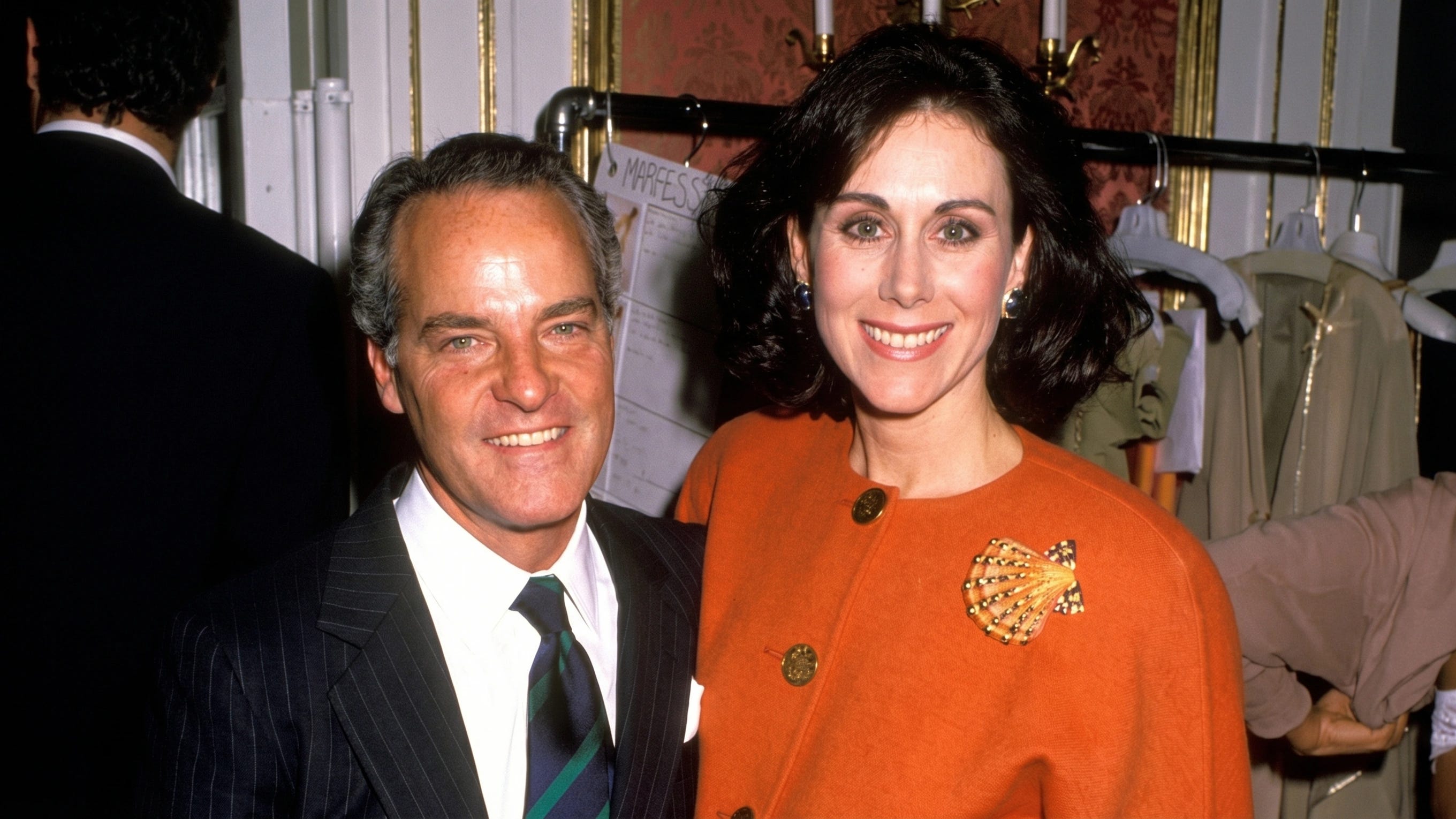
In November 1985, inside a 16-room Park Avenue apartment, a rabbi from Tulsa, Oklahoma married a fashion designer to a financier in front of 101 guests.
The bride was tall, willowy, and extraordinarily driven. The groom was short, balding, and extraordinarily rich.
Within four years, Carolyne Roehm and Henry Kravis would become the most powerful couple in New York.
She ran her own fashion house. He ran Kohlberg Kravis Roberts, the firm behind the $25 billion RJR Nabisco takeover — the largest leveraged buyout in American history. Their names appeared on every invitation list that mattered. Their apartment became shorthand for the kind of wealth that didn’t just buy beautiful things but dictated what beautiful meant.
By 1993, it was over.
Kravis moved on. Roehm moved out.
Their story is usually told as a tabloid fairy tale gone wrong, but it is something far more interesting.
It is a case study in “old money”, high society, and what happens when a woman builds her identity entirely within the architecture of her husband's fortune, only to discover what it costs when that architecture is taken away.
The Making of Lady Carolyne

Carolyne Jane Smith grew up in Kirksville, Missouri — population 15,000. Her father was a high school principal. Nothing about her childhood predicted what she would become. But she had two qualities that would prove decisive: relentless discipline and an almost preternatural sense of taste.
She studied fine arts at Washington University in St. Louis, then landed a job with Oscar de la Renta — one of the most coveted positions in American fashion. She worked under him for years, absorbing everything about how the wealthy actually dressed versus how they said they dressed.
In 1981, she met Henry Kravis at a pre-Christmas party. He was emerging from a messy divorce. She had recently returned from a brief marriage to a German businessman named Axel Roehm. They were, as the press would repeat endlessly, “just friends” for a very long time.
But by 1985, Kravis had established her in her own fashion house, backed by his millions. He personally advised her on her debut collection. At her first runway show, he sat in the front row with tears in his eyes as she floated down the runway and the crowd erupted.
Women’s Wear Daily crowned her “Lady Carolyne” after that first show. Nancy Reagan, Mary Tyler Moore, and Aretha Franklin wore her designs.
She became president of the Council of Fashion Designers of America. She organized the first Seventh on Sale fundraiser, raising $4.7 million for AIDS research when much of the fashion industry was still pretending the crisis wasn’t happening.
She was not merely decorative. She was genuinely accomplished. And that is what makes what happened next so instructive.
The Cracks Begin To Show
The first crack was invisible to everyone except the two people inside the marriage.
Kravis had invested more than $20 million in his wife’s fashion house since 1985. The collections were beautiful. The sales were not. The business suffered from management shuffles and underwhelming revenue. For a man who orchestrated billion-dollar deals, the financial drain was not the issue. The issue was that the business was supposed to prove something (that their partnership was productive, not just ornamental) and it was failing at that.
Then, in July 1991, Kravis’s 19-year-old son Harrison from his first marriage was killed in a car accident in Colorado. The death devastated Kravis.
Friends say it briefly pulled the couple closer. Roehm saw how he handled the tragedy and fell in love with him again. But it also forced a reckoning.
Roehm shut down her fashion house. She told the press it was to focus on her marriage. Those closer to the situation saw it differently: she was trying to save the one thing that sustained everything else.
As one former associate put it, she simply decided to cut her losses. She wasn’t getting pleasure out of what she was doing. And she knew that without Kravis, the fashion house would never have existed in the first place.
But it was too late. Rumors swirled that both were seeing other people. By 1993, they had separated. The divorce was finalized quietly… “on friendly terms,” as the press delicately reported.
Kravis remarried. His new wife was a Canadian economist named Marie-Josée Drouin, who was everything Roehm was not: understated, academic, and (crucially) possessed of her own independent identity that did not depend on Kravis’s fortune for its existence.
This is where Roehm’s story diverges from the standard wealthy-wife-replaced narrative.
She didn’t disappear. She didn’t become a cautionary tabloid footnote. She left New York, bought a property in Connecticut, and systematically rebuilt her life around things that belonged entirely to her.
She wrote books (seven of them) on gardening, entertaining, and design. She lectured at botanical gardens and women’s organizations across the country. Bill Blass called her “the ultimate tastemaker.” She was inducted into the International Best Dressed List Hall of Fame. She became a fixture in Charleston’s design community, championing artisan causes and mentoring younger designers.
None of it required a billionaire husband’s funding. None of it could be taken away in a divorce settlement.

Own Her Own Terms
The woman who once needed Kravis’s checkbook to exist in fashion now exists entirely on her own terms. She is 74 years old and has been part of American design culture for over four decades. Her career has spanned fashion, gardening, entertaining, publishing, and the decorative arts. She doesn’t give interviews about Kravis. She doesn’t need to.
Roehm’s story is not unique. In the world of extreme wealth, there is an entire category of women (brilliant, accomplished, often more interesting than the men they married) who built their public identities within the framework of their husband’s money. When the marriage ends, the framework collapses, and the question becomes: what did you build that was actually yours?
The “old money” families we study in this brand understand this instinctively. It is why dynastic marriages have always included provisions that go far beyond prenuptial agreements: trust structures, board seats, philanthropic positions, and social networks that belong to the individual, not the couple. The architecture of belonging, in old money, is never built on one person’s foundation.
Roehm learned this the hard way. But she learned it. And what she built after… quietly, stubbornly, on her own terms… is arguably more impressive than anything she created while married to one of the richest men in America.
“None of it required a billionaire husband’s funding” It sounds like it all did. How much did she get in the divorce?
I’m a firm believer in building your own castle regardless of how small.