
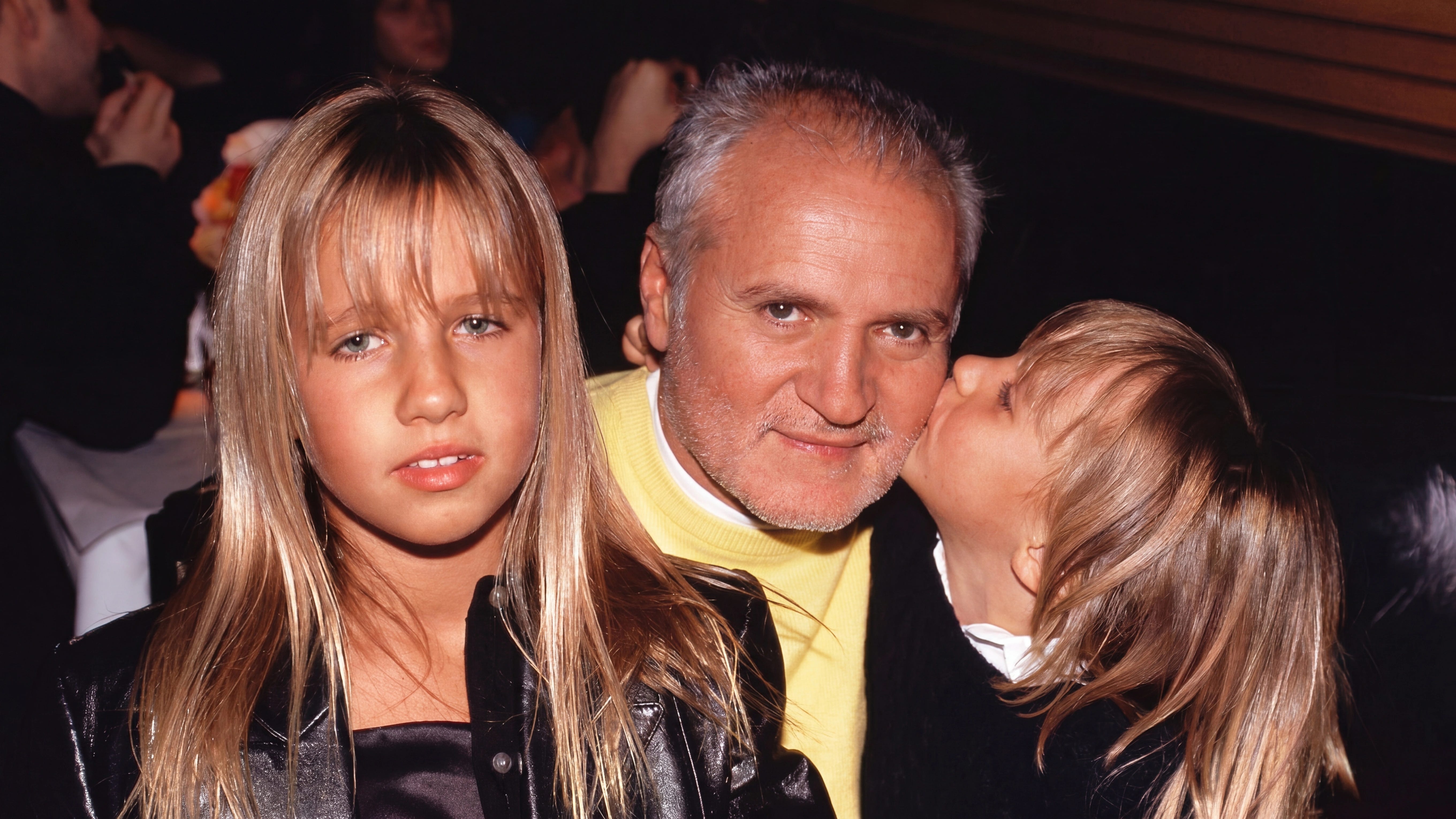
In the rarified world of high fashion, few names carry the charge of Versace.
For thirty years the name has meant a particular kind of Italian glamour: the gold Medusa above the boutique door, the safety-pin dress, supermodels paid in multiples of anyone else’s rate.
It’s loud, theatrical, and completely sure of itself… a very far cry from its reclusive heiress.
She is 39 years old and lives quietly in Milan. She gives no interviews and attends no front rows. For most of the past two decades, the controlling shareholder of one of the most photographed brands on earth was a person almost nobody could photograph.
Her name is Allegra Versace Beck.
On June 30, 2004, her eighteenth birthday, she took legal possession of half the Versace empire, a stake worth roughly $800 million. It came to her in the will of her murdered uncle Gianni, read when she was 11 years old.
The will passed over both of the adults who actually ran the company. Donatella, her mother, who would carry the house creatively for the next 28 years, received 20 percent. Santo, her uncle, who managed the business side, received 30.
The child got control.
The tabloids told this story for years as a melodrama about a shy heiress and her glamorous mother… but the real story is colder and far more useful.
It’s a case study in what happens when a founder writes a succession plan around love instead of appetite, and what an institution does, across three decades and two foreign owners, to work around the absence at its own center.
The Brother and Sister Who Built the House
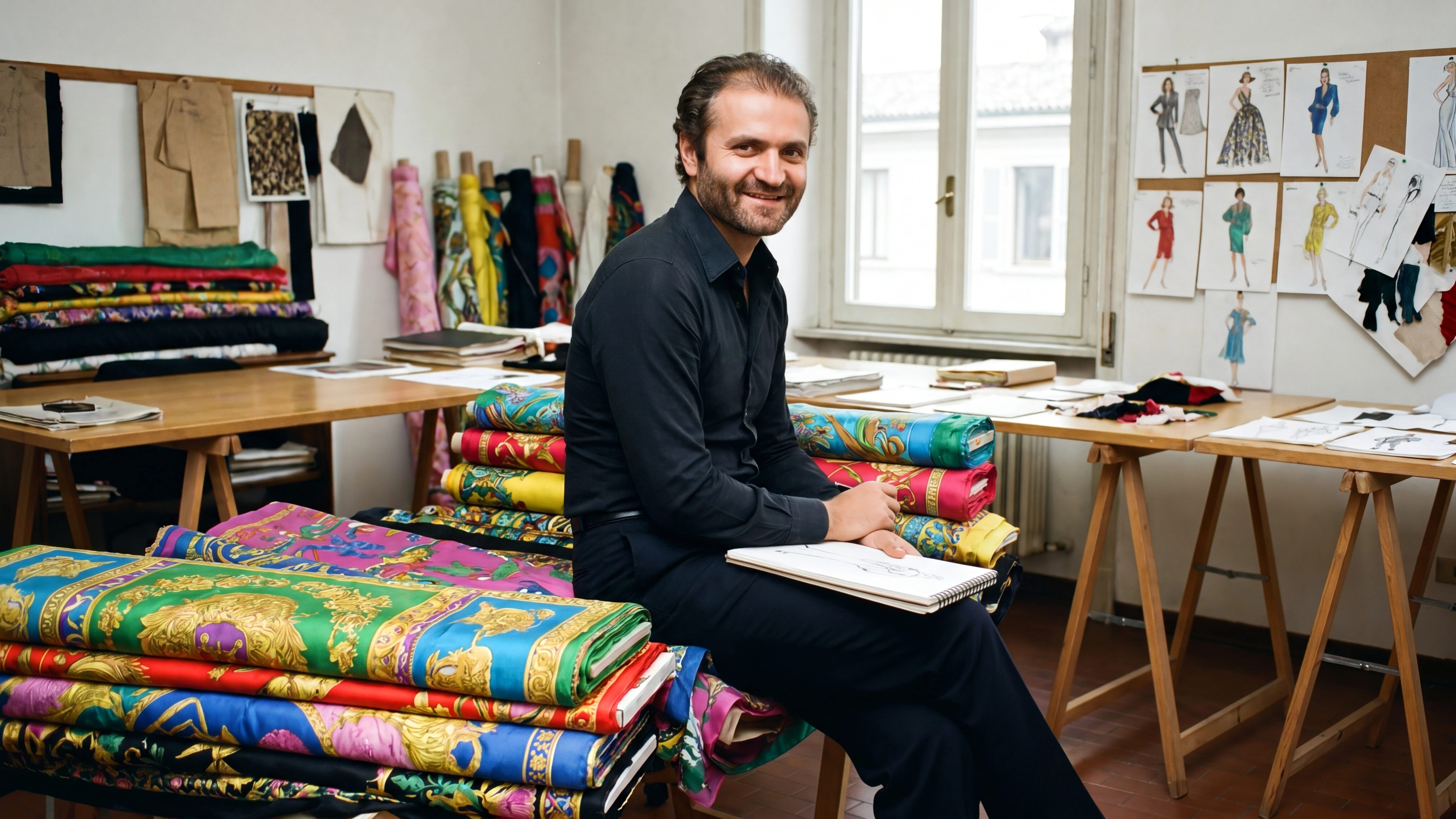
Every dynasty begins somewhere unglamorous, and the Versace empire began in a dressmaker’s workshop in Reggio Calabria, the sun-bleached capital at the toe of the “Italian boot,” about as far from the salons of Milan as one can stand and still be in Italy.
Gianni Versace was born there in December 1946. His mother Francesca made dresses for the local bourgeoisie, and her son grew up at her elbow, in the perfume of fabric and chalk, learning that beauty was not a gift from heaven but a trade, with prices and clients and deadlines.
The South gave him something else he never lost: a taste for the operatic. Where Northern fashion prized restraint, the boy from Calabria built a career on the conviction that restraint was simply fear wearing good manners.
His sister Donatella arrived nine years later, and from the start the two of them formed a closed circuit inside the family. He dressed her like a doll, and she liked to say she had been the best-dressed little girl in the city because of it.
When she was barely a teenager he smuggled her out to the discos at night, to their mother’s despair, and there is the whole partnership in miniature: the older brother creating the spectacle, the younger sister wearing it, both complicit against the respectable world.
Gianni went north to Milan in 1972, launched his own label in 1978, and over two decades the closed circuit conquered fashion.
The clothes were loud, vivid prints, leather, metal mesh, and the shows were louder, with Madonna and Princess Diana in the front row and the runway turned into theater. Donatella followed him north and became the one voice he trusted when every other voice in the building told him what he wanted to hear.
By the early 1990s she had a kingdom of her own inside his, running the younger Versus line. He even arranged her court, quietly orchestrating her 1983 marriage to Paul Beck, an American model who had worked for the house; Milan whispered for years about what Gianni’s own interest in the handsome American had been, Beck denied the whispers, and the family folded the rumor neatly into the legend.
And they had the architecture to match. By the middle of the decade, Gianni ruled from houses that were themselves declarations: Villa Fontanelle on Lake Como, and Casa Casuarina, the Mediterranean-revival palace he had gilded on Ocean Drive in Miami Beach.
Inside this loud, gossiping world there was one quiet child the emperor loved beyond anyone. His sister’s daughter, Allegra.
The Will

On the morning of July 15, 1997, Gianni Versace did what he did most mornings in Miami. He walked to the News Café on Ocean Drive, bought his magazines, and walked back toward the gates of Casa Casuarina in the early heat.
He never made it through them. On his own front steps he was shot by Andrew Cunanan, a 27-year-old who had been killing his way across America for months and who would take his own life on a houseboat eight days later, leaving no explanation behind. Gianni was 50.
The murder had the quality of a curse out of an older kind of story: the king cut down at the threshold of his own palace, at the height of his powers, by a stranger with no motive anyone could name. The palace he had built as a monument to everything he had won became, in one morning, a monument to how he lost it.
Then the family gathered, and the will was read, and the will was its own kind of shock.
Gianni left half the house, the controlling interest, to his 11-year-old niece. Santo, the elder brother who had managed the money since the beginning, received 30 percent. Donatella, his muse and conscience for forty years, who now had to walk into her dead brother’s studio and finish his work while raising the child in question, received 20.
He had loved them both. He had crowned neither.
Read sentimentally, the bequest was the purest thing Gianni ever did: the emperor leaving the empire to the one person in his world who had never asked him for anything.
Read structurally, it was a tragedy in three clauses:
It made a schoolgirl the largest shareholder of a global luxury house. It placed her mother in command of an empire whose control belonged to her own daughter. And it postponed the entire question of succession for seven years, until the day that schoolgirl turned 18.
Those seven years would prove harder on the family than anyone outside it knew.
The Heiress Who Walked Away

Allegra’s adolescence ran on two tracks that never met. On one she was a student, first at the British School of Milan, then at Brown University and UCLA, where she studied French, art history, and theater, and where the people who crossed her path describe someone serious, private, and deliberately ordinary.
On the other she was, from her eighteenth birthday onward, one of the wealthiest young women alive, with the fashion press waiting at the gates for her to come and claim the throne.
She went back to class instead.
Those were also the family’s darkest years, and the record is public only because the family chose to make it so. Donatella had developed a cocaine addiction after her brother’s death, and in 2004 she entered rehabilitation following an intervention arranged by her friend Elton John.
Three years later, the family confirmed that Allegra was being treated for anorexia, a disclosure made to end years of press speculation. Both women recovered on their own timelines, and neither has offered the subject up for publicity since.
The house limped through the 2000s on thin margins while an open question sat at the top of its shareholder register: what did the woman who controlled it actually want?
In 2011, at 24, she gave what looked like an answer, formally accepting her inheritance and taking a seat on the board of Gianni Versace S.p.A.
It looked like an arrival. It turned out to be the first step of the exit.
In 2014 the family sold a 20 percent stake to the private equity firm Blackstone, in a deal valuing the house at €1 billion, capital for flagship stores and the repurchase of licenses that had been quietly diluting the brand for years.
In 2018 they sold outright, to Michael Kors Holdings, soon renamed Capri Holdings, for roughly $2.12 billion. Donatella stayed on as creative director, which let the press report continuity even as the substance changed entirely.
The control Gianni had vested in his niece was gone, and her stake had finally become what she had perhaps always wanted it to be: money rather than obligation.
Then came the unwinding. The brand eroded under its American owner. In March 2025, Donatella stepped down after 28 years, taking the ceremonial title of Chief Brand Ambassador while Dario Vitale of Miu Miu took over the studio, and one month later Prada Group announced it was buying Versace from Capri for €1.25 billion, a steep markdown on what Capri had paid only seven years earlier. The deal closed on December 2, 2025.
The house Gianni built is Italian again, but it belongs to another family now, and that family is the most instructive part of the story.
Prada spent two decades solving the precise problem Versace never solved: Miuccia Prada and Patrizio Bertelli brought their son Lorenzo into the group in 2017, gave him real operating roles, and tested him in the open as the designated successor. The institution confirmed him because he wanted the job.
Versace, controlled for years by an heiress who demonstrably wanted the opposite, is now an asset on that family’s balance sheet.
The Princess Who Never Took the Throne
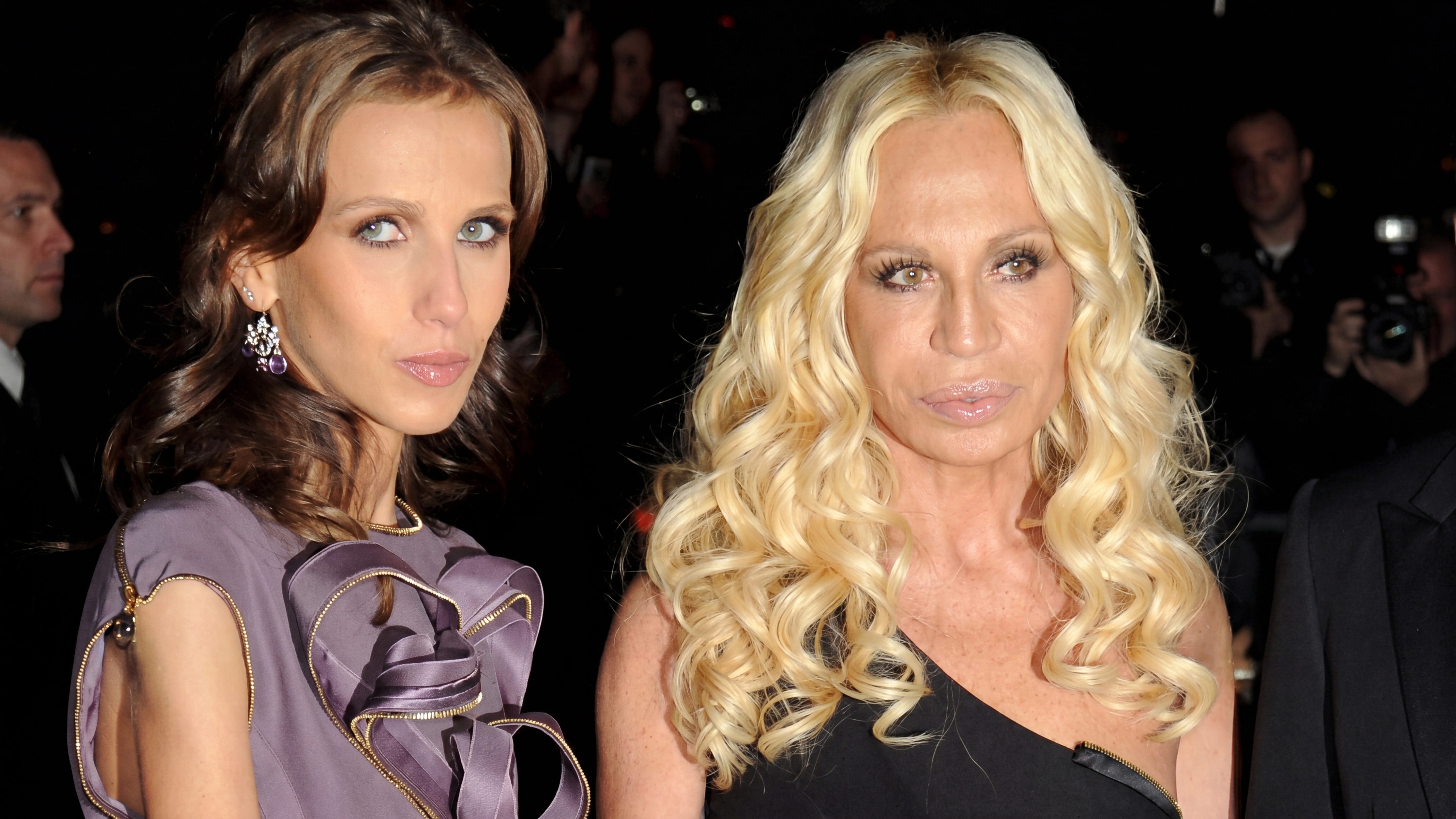
The rule the Versace case makes visible is one of the oldest in dynastic succession, and one of the most routinely ignored.
An inheritance can transfer ownership in a single day. The desire to own has to already be there, and no document on earth can put it there.
Gianni’s bequest was an act of love, and everyone who knew the family understood it that way. As a succession instrument, it was the weakest kind a founder can write, because it assigned control by sentiment rather than appetite, to the person he loved most rather than a person prepared to carry the weight. The result was a 28-year interregnum in which the operating family bore the burden without the control, and the resolution was a sale, then another sale, then a markdown.
Versace handed a kingdom to a girl of 11 and called it a plan.
Allegra Versace Beck is 39 now. She converted the stake, kept her privacy, and built a life that is, by every available indication, precisely the one she chose. By the only measure that was ever truly hers to control, she won.
The empire that carried her name simply had to learn to live without her. In the end, it learned by ceasing to be hers at all.
No question. I’d leave it the one I loved most BUT with what/who was needed to help her run things. I have the feeling that maybe Gianni didn’t figure he’d die as early as he did and so assumed Allegra would be older when she inherited.
It depends what 'fortune' means. If it were like in the case of Versace I would leave the controlling interest to Donatella, 20% to her daughter with the right to cash it in if she wished but with the condition of selling it to the approved prospective shareholder, and the rest I would leave to the elder brother. Love should be expressed in such a way that does not kill the business and makes happy the person who is bestowed with such a grand gift.