
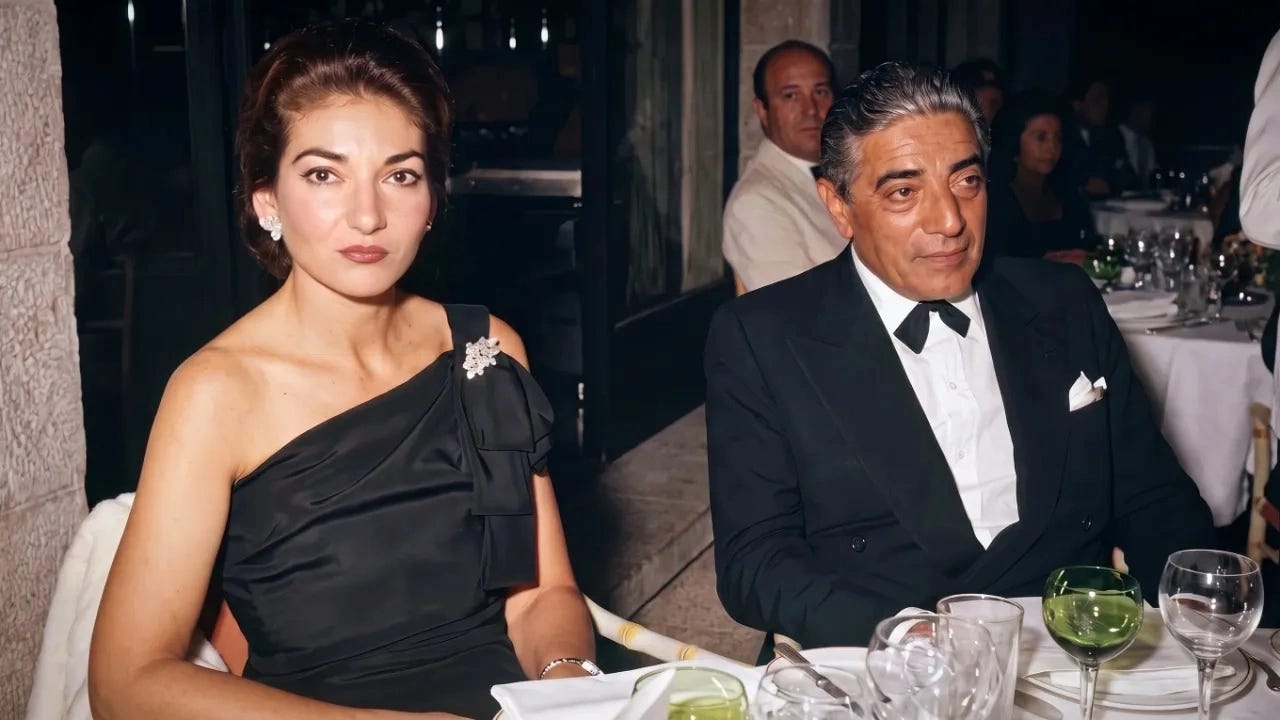
One surviving letter places a telephone at the center of Maria Callas’s decade with Aristotle Onassis.
Writing to her secretary, in correspondence later published from her estate, she named her own dread of him directly:
“I wouldn’t want him to phone me and start again torturing me.”
No date survives with the letter, and this account does not invent one. The line stands alone, in Callas’s own words, as the clearest evidence of how she felt about hearing from him.
Onassis was the shipping magnate she met on his yacht Christina in the summer of 1959, and left her husband for within months.
What followed has been told for decades as a love story with a tragic ending, and that framing isn’t wrong so much as incomplete.
The Waiting Arrangement
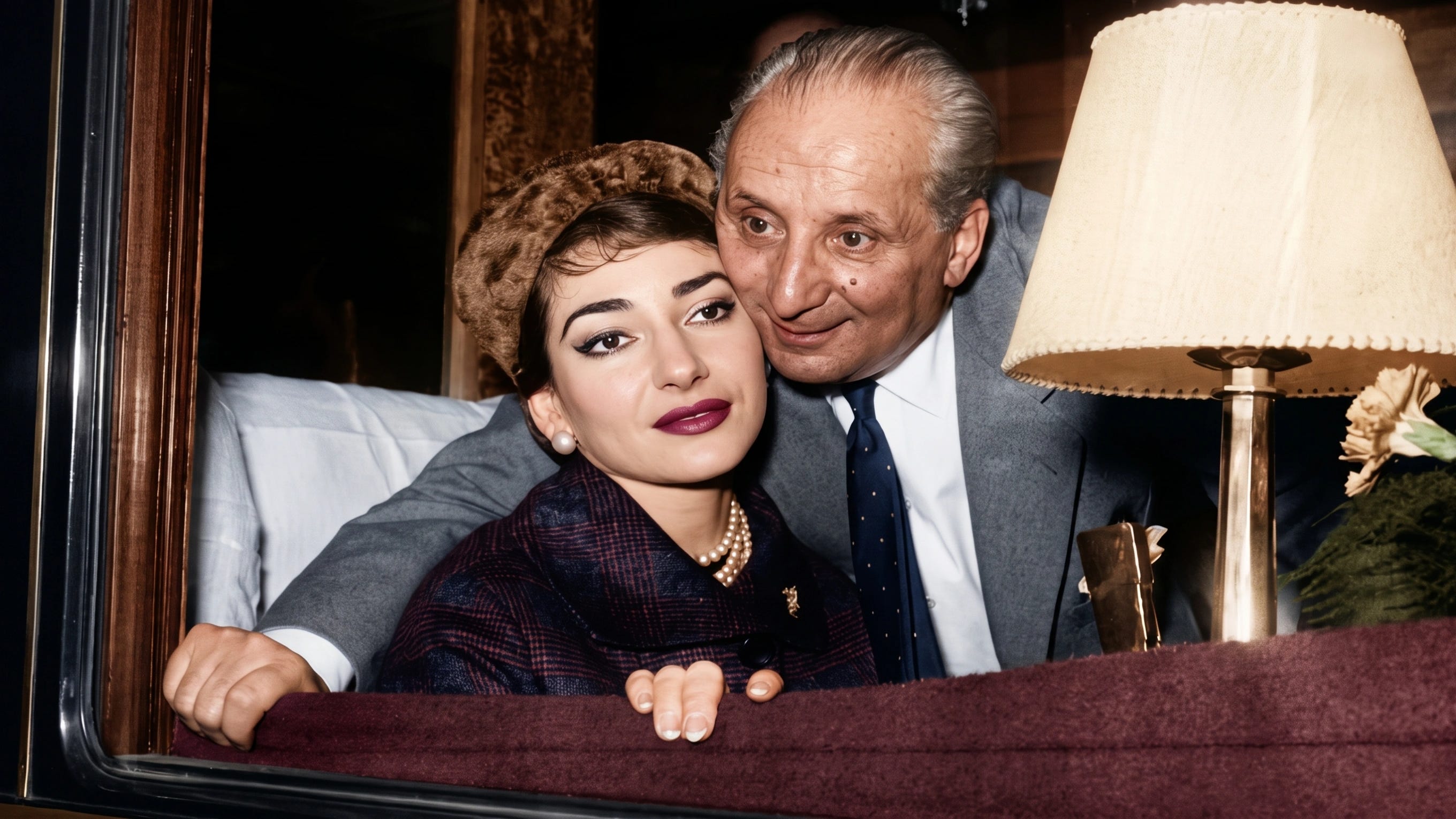
Maria Callas was born on December 2, 1923, in Manhattan, to Greek immigrants who could not agree on much, least of all her.
Her mother, Evangelia, had wanted a son, but what she got was Maria: plump, nearsighted, and already, by five, being made to sing.
In 1937, Evangelia took her daughters back to Athens. There, Maria studied under Elvira de Hidalgo at the Conservatoire, devoured the bel canto repertoire with a ferocity that alarmed her fellow students, and made her professional debut in 1941 in wartime poverty.
Four years and fifty-six performances later, she headed to Verona, Italy, for a wealthy industrialist named Giovanni Battista Meneghini who was thirty years her senior but willing to pay for everything she needed.
When they married in 1949, she was age 25 and still not the woman Aristotle Onassis would one day decide he wanted.
But Callas’s marriage to Meneghini didn’t end cleanly or quickly.
She left him in November 1959, and a Brescia court later handled their legal separation, with a Milan court ruling in 1965 that both spouses shared fault, according to the Sotheby’s auction catalog reproducing the Italian court record.
In 1966 she renounced her American citizenship and took Greek nationality, a move biographers describe as an attempt to have the Catholic marriage treated as void, since Greek Orthodox authorities had never recognized it. A full civil divorce under Italian law didn’t arrive until 1971, once new legislation let her petition a court directly.
Onassis’s own marriage moved on a different clock.
His wife, Tina Livanos, was granted a divorce in Alabama in June 1960, citing his affair with Callas among her grounds.
He had been free to remarry since that summer. Callas wouldn’t be free of Meneghini, on paper, for another 11 years.
Callas reportedly spent much of the decade hoping Onassis would eventually marry her.
Onassis’s driver, Yaikinto Rossa, later gave a gentler reading, telling a reporter the two considered themselves bound in every sense but the legal one.
“She was his true wife, though they never married,” Rossa said, adding that they kept meeting regularly until his death in 1975.
An unmarried decade cost Callas something concrete beyond hope. For as long as her own divorce remained unresolved and Onassis remained free to remarry without her, the relationship had no legal claim she could point to and no wedding date she could plan around.
A decade spent waiting on a marriage he never delivered ended, instead, with a wedding to someone else.
The News She Received Last
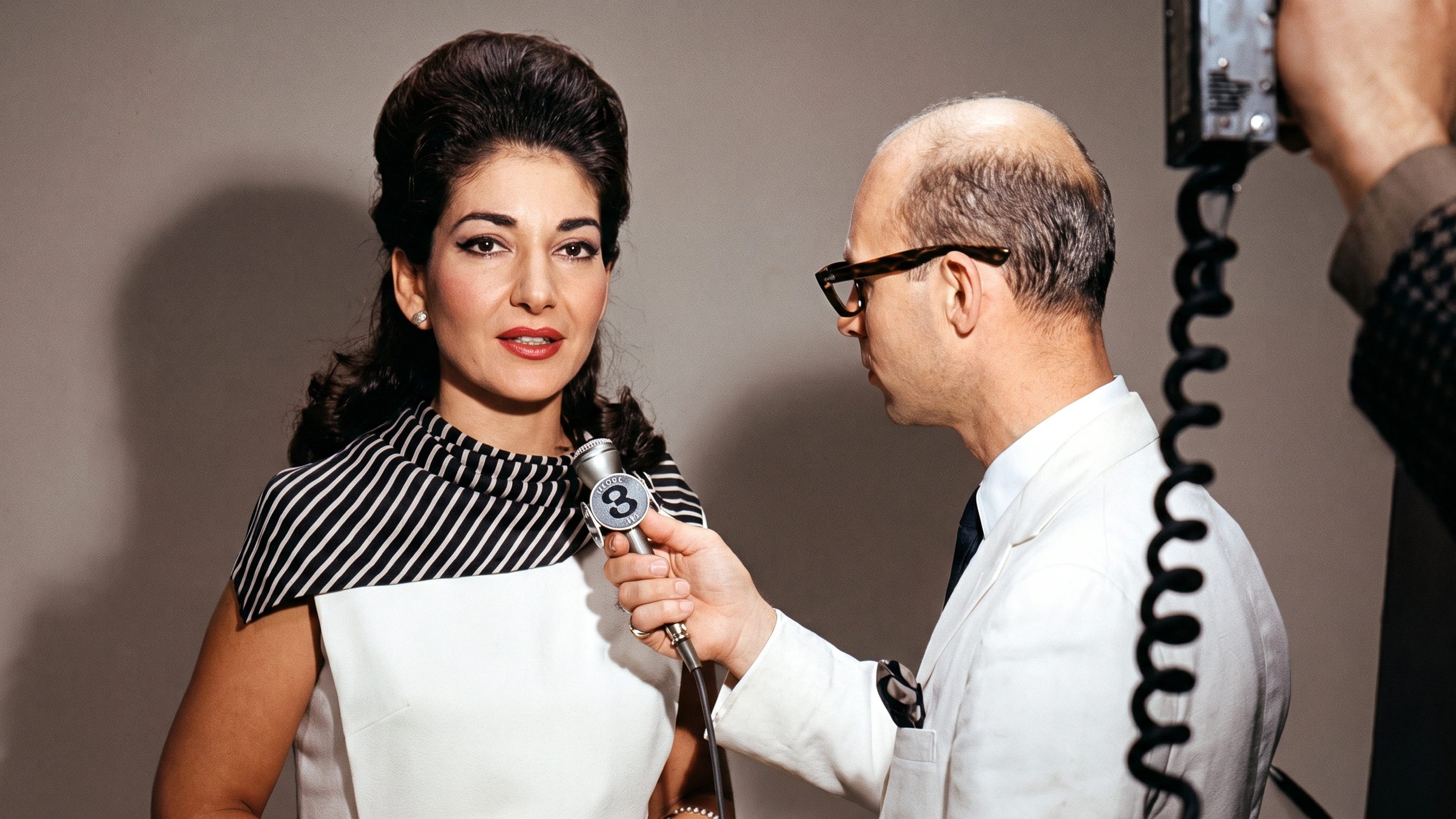
Onassis married Jacqueline Kennedy on Skorpios on October 20, 1968.
According to writer Daisy Goodwin, drawing on Callas’s biographers, Callas learned of the engagement only weeks before the ceremony, catching up with a story the rest of the world would read in the same headlines. It was a decision she had no part in reaching, nor one she was given real time to absorb before it became public.
Yet, she didn’t (by Goodwin’s account) spend the wedding night in seclusion. She went to the theatre in Paris with Elizabeth Taylor and Richard Burton, then on to Maxim’s, where she was photographed smiling through the evening.
What several retrospective accounts agree on is what came next. Biographer Arianna Stassinopoulos, who interviewed people close to Onassis for her own study of Callas, described him showing up at Callas’s Paris doorstep within weeks of the wedding, “shouting, whistling for Madame to let him in.”
He’d married someone else and still expected the door to open on his terms.
According to Onassis’s personal secretary, what came after that doorstep scene was coordinated inside his own household.
Kiki Feroudi Moutsatsos, Onassis’s personal secretary and later the co-author of a memoir about the household, has given the most detailed account of how contact with Callas was managed after the wedding.
She tracked the travel schedules of both Christina Onassis and Jackie so that Callas could visit without any fear of the two women crossing paths, telling People she informed Callas of the correct days only once she had confirmed where each woman was and when she was due back.
Moutsatsos has separately said staff throughout the household knew Onassis kept visiting Callas after the wedding, and that Jackie was aware of it despite behaving otherwise.
Onassis’s sister Artemis, by this account, advised Jackie directly: “Just ignore it,” she reportedly said, adding that confronting Onassis wouldn’t have changed his behavior anyway. She was right that nothing would, and the behavior went further than infidelity.
The Toxic Allegations
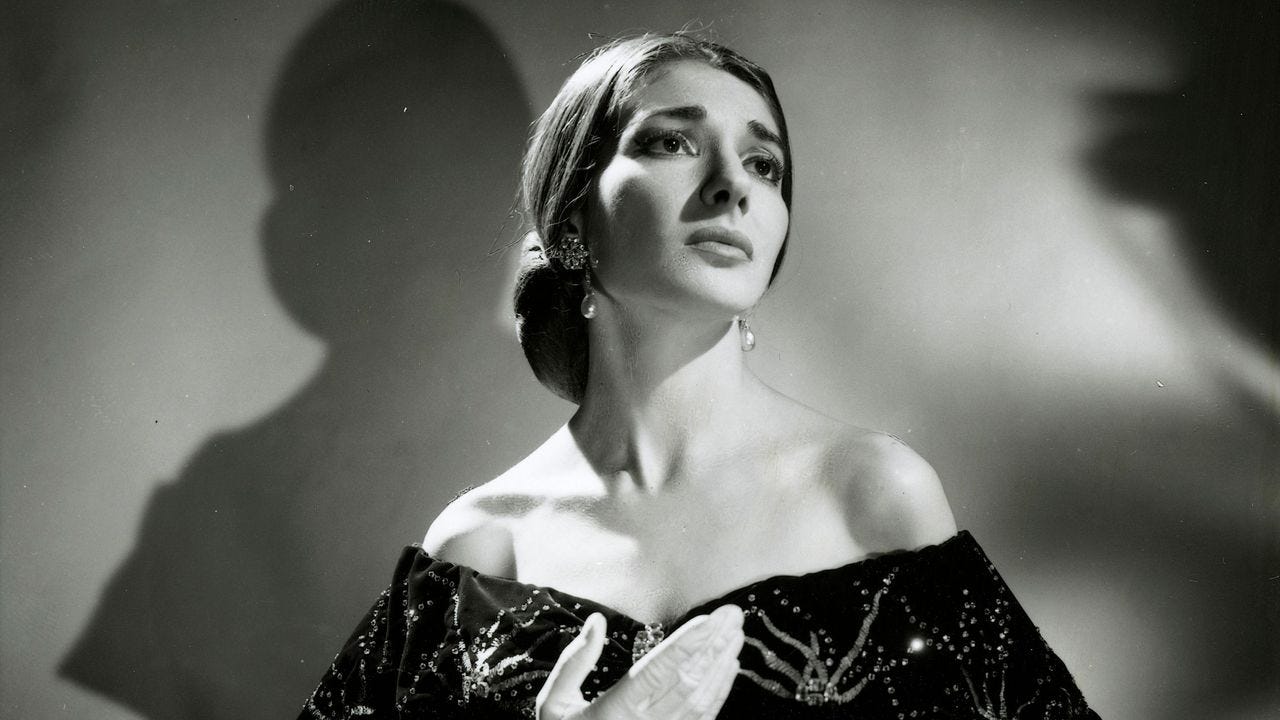
Callas reportedly had no more say over what happened in those carefully scheduled visits than she did over when they occurred.
Here, the most serious allegations concern Callas’s body directly.
They come from two biographies, working from different sources, that arrive at overlapping conclusions.
Lyndsy Spence’s Cast a Diva, drawing on a diary kept by one of Callas’s close friends, alleges that Onassis at times drugged her for sexual purposes, conduct Spence describes as date r*pe by contemporary standards. She reportedly became pregnant in early 1960; he pressed her to end the pregnancy, and she miscarried.
A second miscarriage followed in 1963, and a third pregnancy, in 1966, ended in an abortion at his request, according to Arianna Stassinopoulos’s separate biography.
A more dramatic version of events circulated for years alongside these accounts.
Nicholas Gage’s Greek Fire claimed Callas had secretly given birth to a living son in 1960, but that story collapsed when researchers found the birth and death certificates Gage relied on had been filed in 1998, two decades after her death. That claim is excluded here.
What the two credible biographies agree on, despite their different sources, is narrower and more consistent: pregnancies that came and ended without a child, and a man both accounts describe as pressing the outcome.
Spence’s research also credits Onassis with first introducing Callas to Mandrax, the sedative she would come to rely on in her final years, obtained through her sister and a companion.
Her own letter about dreading the phone was written somewhere inside that same decade, by a woman who had already lived through pressure over her body and had reason not to trust what a call from him might bring next.
The Public Record of Humiliation
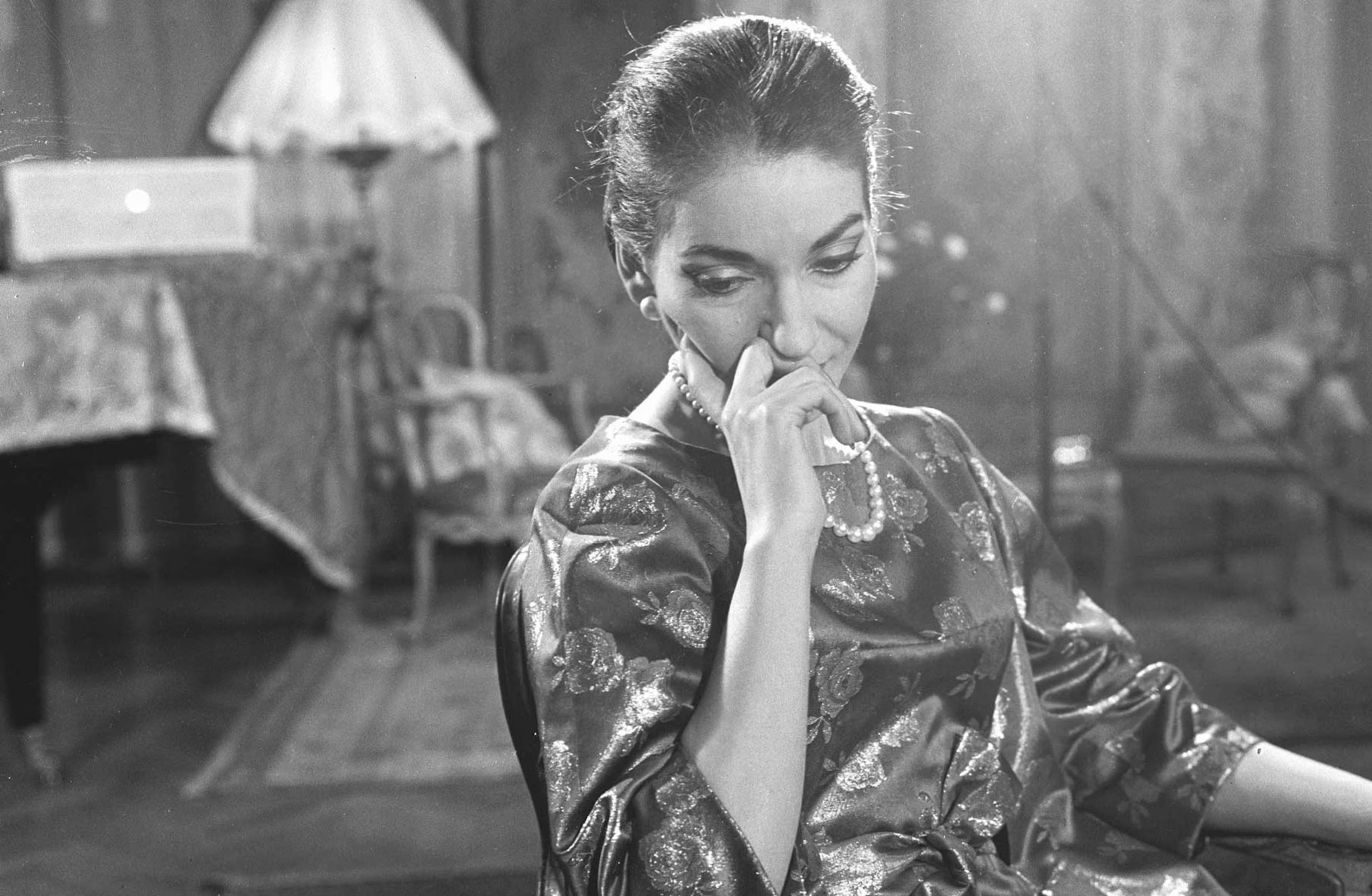
Whatever happened in private, the public humiliation is better documented, because it happened in front of witnesses with notebooks.
Literary critic Gabriele Annan, reviewing Callas biographies for the London Review of Books, wrote that as the relationship wore on…
Onassis was sneering at her and humiliating her in public while already courting Jackie Kennedy…
And that Callas, in Annan’s phrase, hung on helplessly.
One taunt, reported by Spence, was aimed directly at Callas’s declining voice: that she was left with “the whistle in your throat that no longer works.”
If accurate, the remark targets the one asset Callas had built her identity around before she ever met him.
She wasn’t, on the surviving record, a passive figure in her relationships generally. Meneghini’s own memoir recalls her threatening to kill him during their separation.
What changed with Onassis was scale: Meneghini’s marriage produced private fights, while Onassis’s humiliations landed in front of the society whose approval Callas had spent a career pursuing.
The friends, patrons, and critics who filled those rooms were the same people whose opinion had built her career and could just as easily unmake it.
What held her there through seven years of documented humiliation is a question money goes some way toward answering.
The Last Appointment
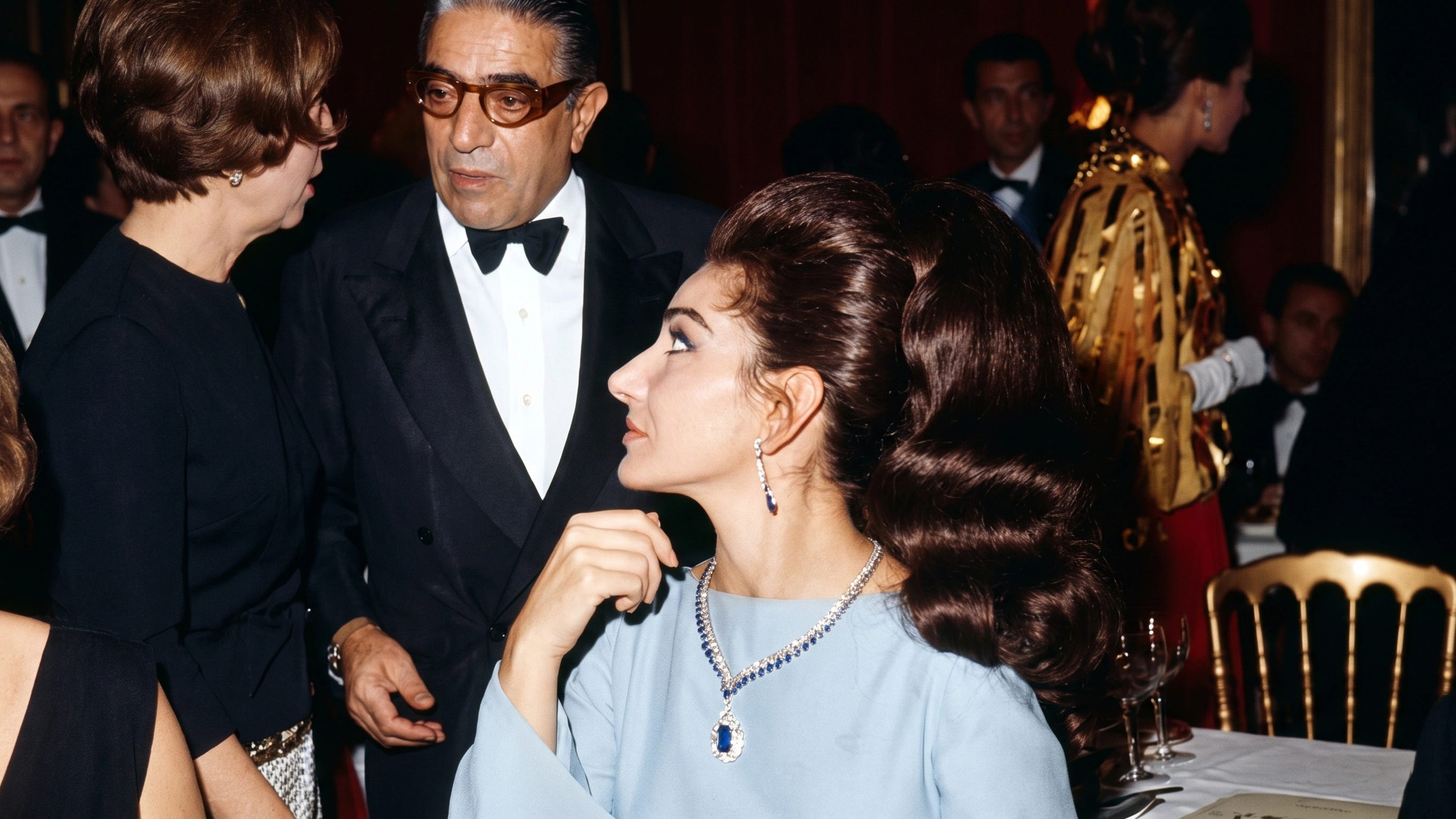
Onassis’s wealth moved through the relationship in specific, documented ways.
He kept a Paris apartment on Avenue Foch, a short distance from where Callas eventually settled at 36 Avenue Georges Mandel, and Moutsatsos has described the two households as close enough that visits were easy to arrange.
Some accounts claim Onassis paid for that apartment, but what is better documented is Callas’s resistance to financial dependence.
By Daisy Goodwin’s account she was scrupulous about paying her own way, buying her own tickets even on Olympic Airways, the carrier Onassis owned.
Money could buy proximity and it could buy a household’s cooperation… but it didn’t buy Callas’s compliance.
Her career gave that guard weight. Callas had commanded some of the highest fees in opera through the 1950s, well before she ever boarded Onassis’s yacht.
Her performing schedule thinned considerably after 1959, but she entered the relationship already established as one of the highest-paid singers in the world, not a woman starting from nothing.
Access to Onassis, by the fullest account available, ran through Moutsatsos’s calendar: a secretary tracking two other women’s travel and telling Callas when it was safe to appear.
The pattern held to the end.
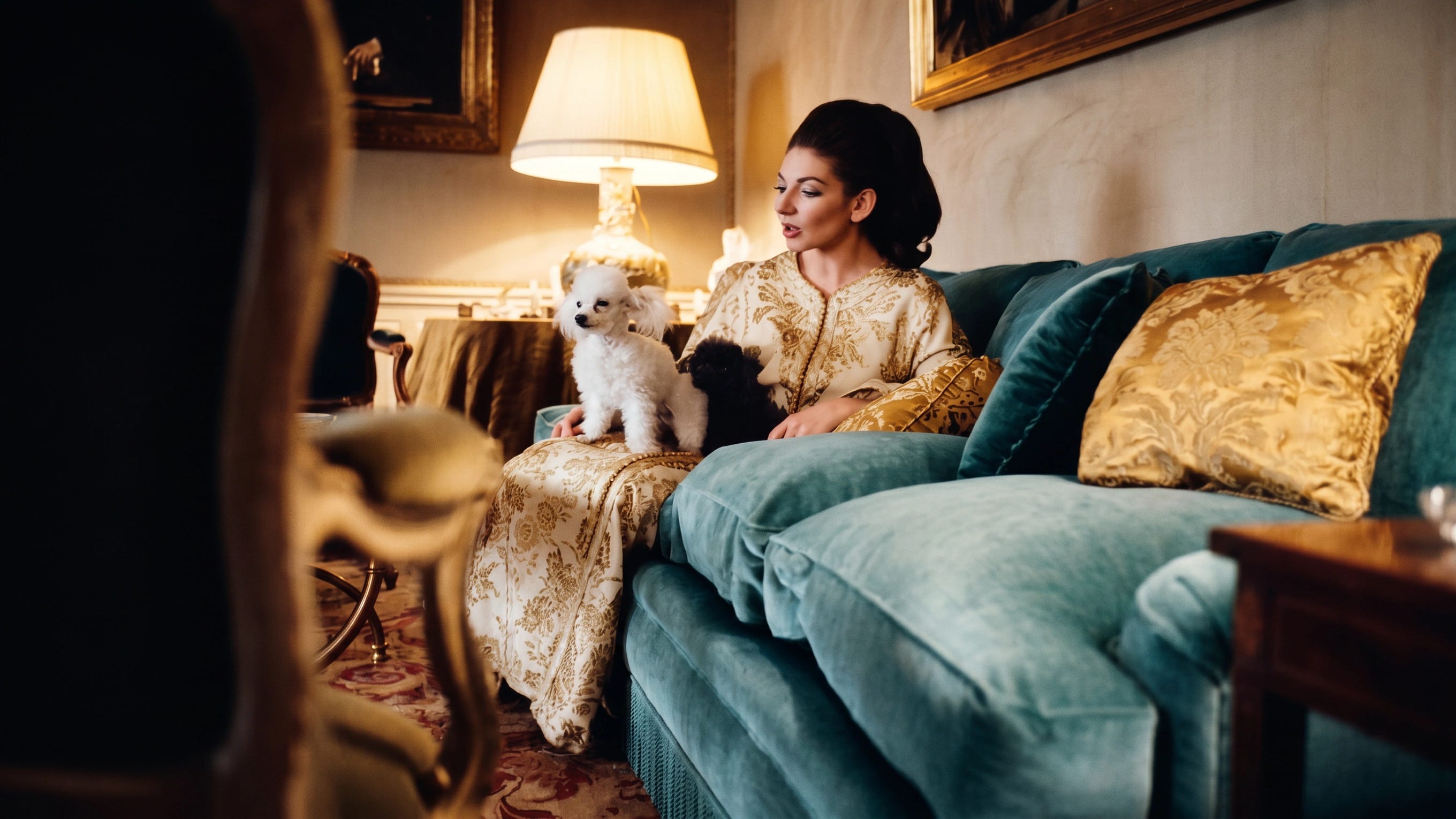
Not long before Onassis’s death on March 15, 1975, Moutsatsos arranged one final visit, timing it so that Christina Onassis and Jackie were both away, and brought Callas to his room at the American Hospital in Paris.
“She knew because she had spoken to the doctor that there was no hope, that he was almost dead, finished,” Moutsatsos later told People, “and Maria had no hope that they would ever be together again.”
The last visit, like so many before it, was arranged and timed for the specific window when Jackie and Christina were both away.
Callas withdrew sharply after Onassis died.
By Moutsatsos’s account she stopped eating, stopped going out, stopped returning calls. She died two and a half years later, in September 1977, in her Paris apartment.
No wedding had ever arrived, and in the end, neither had the future she had spent years believing was still possible.
“Led” not “lead.”
Sorry.
There's a wonderful exhibit in Athens currently of her gowns, life, and singing. I cant remember the Museo but it's across from the National Gardens.