
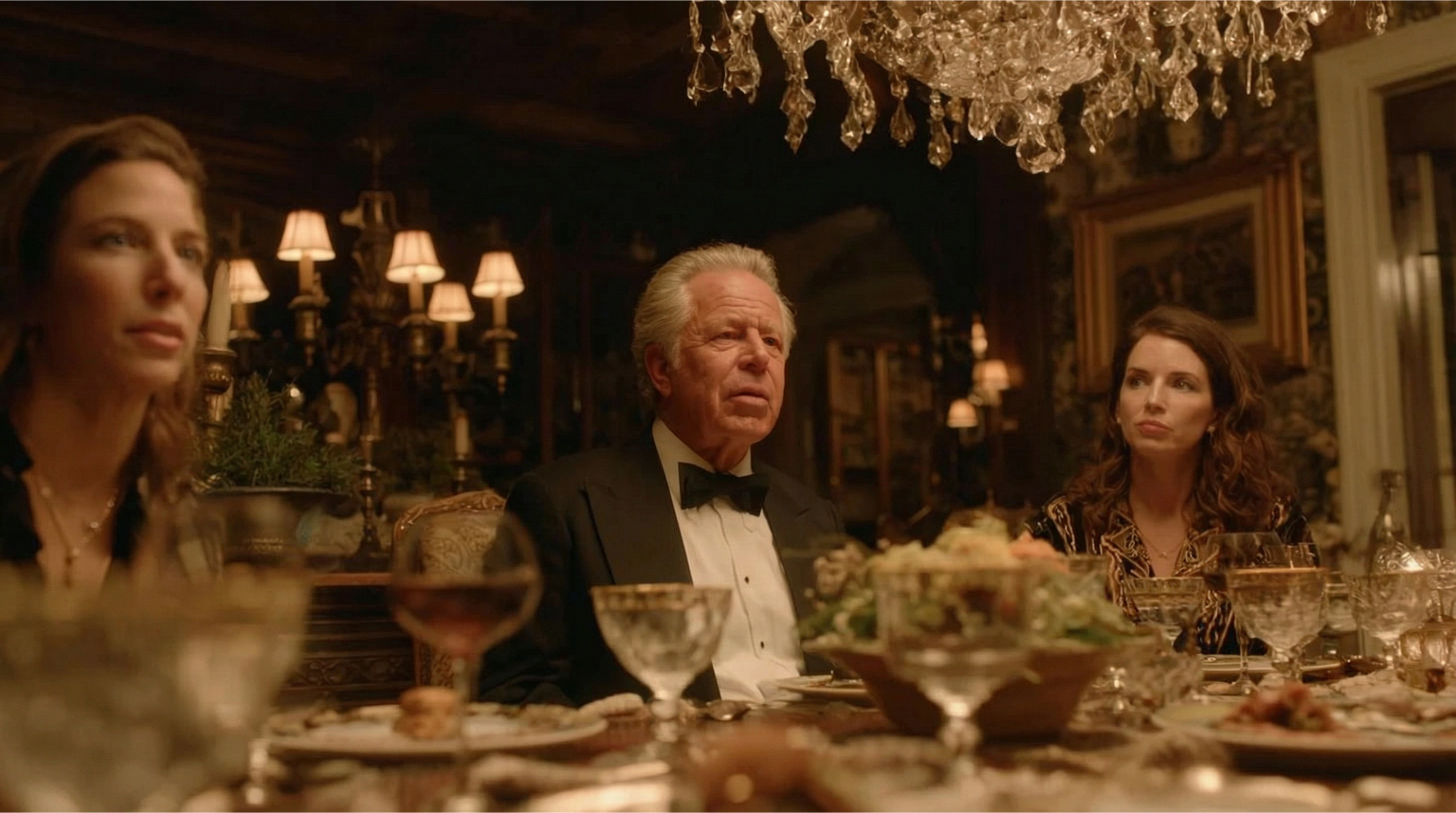
We’ve spent years researching dynasties… hundreds of families across centuries, from the Medicis to the Murdochs, the Rothschilds to the Rockefellers.
And we’ve noticed something strange.
The families that collapse rarely do so because of the obvious things like bad investments or even the tabloid scandals that make headlines.
They collapse because of what was never said.
Somewhere in the family history, there’s a conversation that should have happened but didn’t. A question nobody asked. A topic everyone understood, without ever discussing it, to be off-limits.
We’ve started calling these The Four Silences.
They’re the four conversations wealthy families avoid. And, after mapping them across dozens of dynasties, we’ve found they explain almost every great family collapse better than any financial analysis ever could.
The Four Silences
“We Don’t Talk About Money”
“We Don’t Talk About Her”
“We Don’t Talk About the Business”
“We Don’t Talk About What Happens Next”
Most families have at least one. Many have two or three.
The dynasties that collapsed fastest usually had all four.
SILENCE 1: “We Don’t Talk About Money”
Heirs have no idea what they’re worth. Wealth is abstract until someone dies.

This silence disguises itself as good manners.
You see, many wealthy families, discussing money is vulgar. The children grow up knowing Mommy and Daddy have money. They see the houses, the staff, the travel.
But they have no idea what the numbers look like.
How much is the family worth?
How are the trusts structured?
What will we inherit, and when?
Wealth becomes a vibe rather than a fact.
Sometimes this works. The Mars family has maintained extreme secrecy for over a century and they’re worth $117 billion today.
No interviews, no photographs, and employees forbidden from discussing the family.
Thus, for the Mars, silence became strategy. Total opacity protected them from competitors, journalists, and the public scrutiny that destroys other dynasties.
But silence has costs even when the money survives, and the Kamprads of IKEA fame show what those costs look like.
Patriarch Ingvar Kamprad structured IKEA through Dutch foundations and Liechtenstein trusts so complex that European tax authorities have spent forty years failing to untangle them.
The opacity was intentional. The problem is that opacity cuts both ways.
When Kamprad died controlling an estimated $58.7 billion, his heirs received approximately $10 billion. The rest vanished into structures so layered that even the family may not fully understand where the money went.
Nearly $50 billion, inaccessible to the people it was supposedly meant to protect.
The silence kept money from ever being “vulgar.” It also meant heirs inherited a fortune they couldn’t fully access, structured by a patriarch who never explained his architecture.
But at least they knew their relatives existed.
SILENCE 2: “We Don’t Talk About Her”
The relative who was erased. The marriage that wasn’t approved.
Every family has difficult members. People who struggle. People who embarrass.
Most families accommodate them and they adjust expectations. They love imperfectly but still love.
Wealthy families sometimes take a different approach. They erase.
This serves the family brand. It protects the image. It also teaches every other family member a lesson: step out of line, become inconvenient, and you too can disappear.
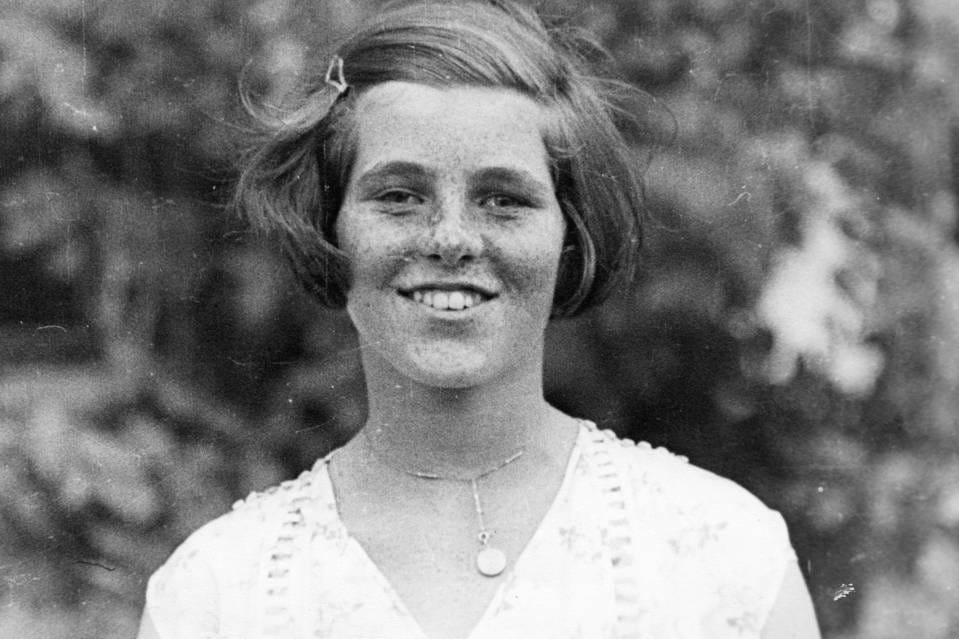
The Kennedys demonstrated this at its most brutal.
Rosemary Kennedy was the third of nine children. Beautiful, vivacious, fond of dancing.
She also had learning difficulties. In an era when the Kennedys were positioning themselves as American royalty, a daughter who struggled was a liability.
In 1941, Joseph Kennedy authorized a prefrontal lobotomy. The procedure was experimental, and he didn’t tell his wife until it was done.
The surgery destroyed her. Rosemary emerged unable to walk or speak coherently.
Joseph Kennedy’s response: institutionalization and silence.
For decades, Rosemary didn’t exist publicly. Her siblings were told she was “teaching in the Midwest” or learned not to ask. Through JFK’s political rise, his presidency, his assassination, Rosemary remained hidden.
This was a family so committed to its image that a daughter could be lobotomized and erased for decades.
The silence protected the Kennedy brand. It also taught every Kennedy child what happened to family members who became problems.
Some families erase people. Others erase history.
SILENCE 3: “We Don’t Talk About the Business”
Heirs shielded from how the fortune was made. Dirty history that doesn’t age well.

Some fortunes have origin stories the family would rather forget.
The heirs enjoy the wealth. They serve on philanthropic boards. Their names grace museums and concert halls.
But they don’t examine too closely how the money was made.
This silence protects the family from history.
The problem is that history doesn’t stay buried: Journalists dig. Scholars research. Additionally, of course, the internet makes obscure information suddenly searchable.
And heirs who’ve never been told the truth have no defense when questions come. They inherit wealth they cannot explain.
The Astors built one of America’s great fortunes on a product their descendants never mention: opium.
John Jacob Astor arrived in New York in 1784. The official story is furs. But furs weren’t what made him the richest man in America…
That was the China trade. Turkish opium smuggled into Canton at profit margins exceeding 500%.
For decades, Astor’s ships carried opium east and tea west, building capital he then invested in Manhattan real estate. By his death in 1848, he owned vast swaths of what would become Times Square, Greenwich Village, and the Upper West Side.
His descendants became the definition of “old money”. The Waldorf-Astoria. Mrs. Astor’s Four Hundred. American aristocracy.
But the plaques on the buildings don’t mention opium. The family histories glide past those years. The Astor name means elegance and philanthropy.
But the foundation is drug trafficking, and that truth never fully disappeared.
Indeed, tirty history can be laundered through generations. But the real danger is having no plan for what comes after.
SILENCE 4: “We Don’t Talk About What Happens Next”
No estate planning. No family meetings. “Figure it out when I’m gone.”

The final silence is the most common, and often the most devastating.
The patriarch built the empire. He knows every detail. The business runs because he runs it. The family functions because he holds it together.
He assumes the children will figure things out when he’s gone.
But they won’t.
This silence isn’t about shame. It’s about avoidance. Planning for succession means contemplating death. It means admitting mortality.
Easier to just... not.
The children learn not to raise the subject. Asking about the will feels morbid. Asking about succession feels like pushing Dad toward the grave. So everyone pretends the current arrangement will continue forever.
Then the patriarch dies and there’s no plan, no structure, no roadmap. Just a fortune and heirs who’ve never discussed how to manage it together.
For instance, the Cartier brothers built the most prestigious jewelry house in the world. Louis, Pierre, and Jacques established boutiques in Paris, London, and New York that served royalty and billionaires.
But they never established succession protocols. No plan for how the next generation would take over.
By the fourth generation, heirs had what one historian noted was “zero interest in the daily grind.” They wanted the lifestyle, not the work.
So they sold. Paris in 1972. London in 1974. The rest soon after.
No Cartier has owned Cartier since. The family received a fraction of what the brand would eventually be worth.
Which Silence Is Yours?
Most families don’t have all four silences. But nearly every family with significant wealth has at least one.
The silence around money that makes heirs financially illiterate. The erased relative whose absence disciplines everyone else. The origin story that can’t withstand scrutiny. The succession plan that doesn’t exist.
These silences feel protective in the moment. They keep dinners peaceful. They maintain comfortable fictions.
But silence compounds, and what isn’t discussed in one generation becomes undiscussable in the next. The family drifts on inherited assumptions until something breaks.
Therefore, the families that survive aren’t the ones with the fewest problems.
They’re the ones who learned to talk about them.