
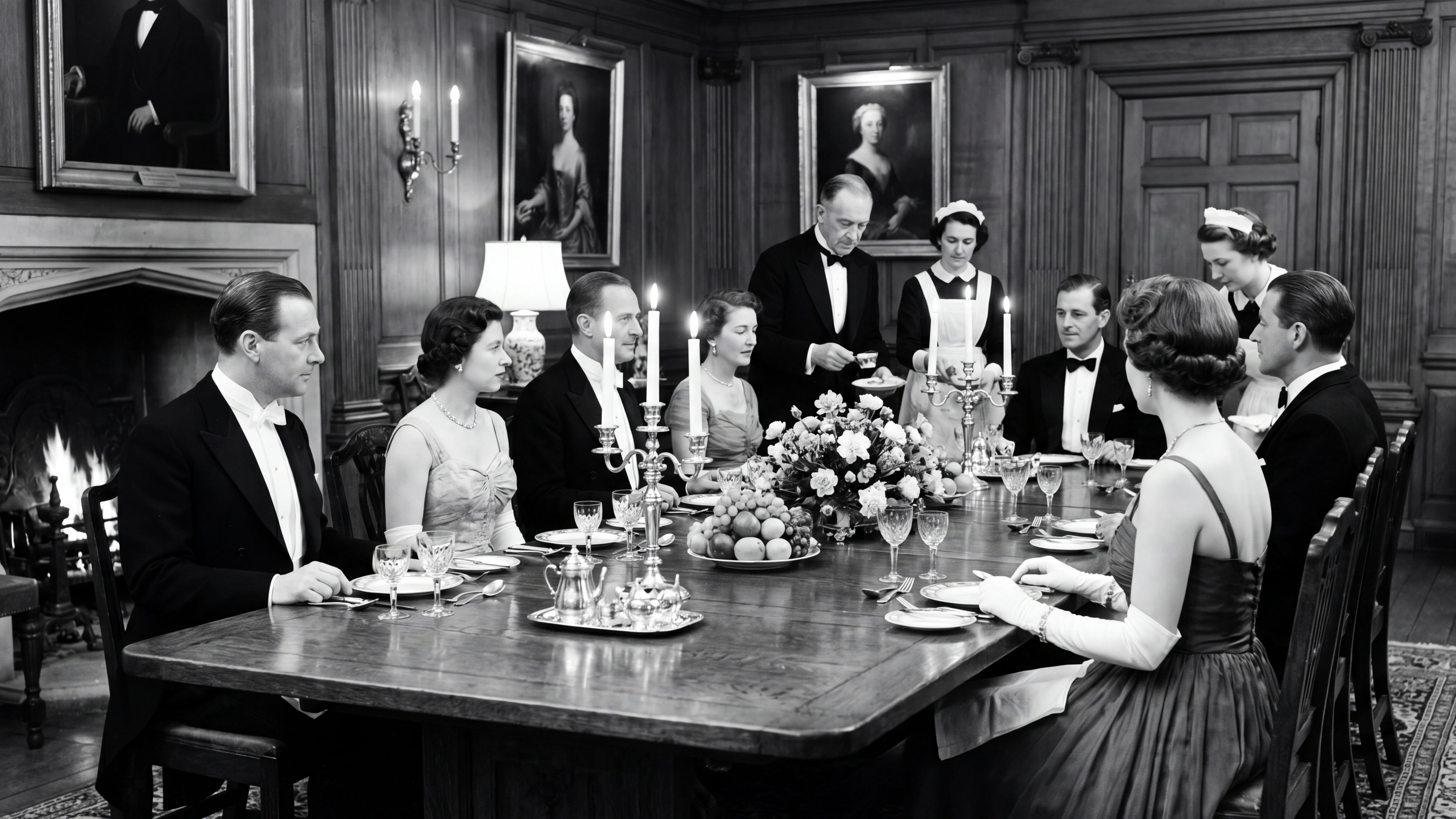
Most people assume “new money” exposes itself through the stuff, which is exactly why most people never catch it.
But the stuff is the easy part.
A good stylist and a year of paying attention will fix the watch, the suit, and the shoes. What doesn’t get fixed, sometimes for a generation, is vocabulary.
Because here is the strange rule that governs how the rich talk, and it runs exactly backward from what you’d expect: the fancy word marks you down, not up.
With that said, here are 5 phrases that expose someone as “new money” the moment they leave the mouth, and what the secure version sounds like instead.
1. “He’s a high net worth individual…”

“Old money” would never say “high net worth individual,” or “ultra-wealthy,” or “affluent,” or any of the internet’s growing catalogue of in-crowd words for the moneyed class.
If the subject comes up at all, and in those circles it rarely does, the language runs in the opposite direction… downward.
A family with nine figures is “comfortable.” A fortune is “some money,” as in “his grandfather left him some money.” A catastrophic year in the markets “wasn’t ideal.”
The rule underneath this is the strange one that governs everything on this list, and it runs exactly backward from instinct: the elevated word marks you down, not up.
This was actually documented, believe it or not.
In the 1950s the novelist Nancy Mitford published a word list, sorted into upper-class usage and aspirant usage, that scandalized England, because half the country discovered it had been giving itself away for years.
The pattern across every pair on her list was the same: the upper class used the plain, blunt word, and the climber reached for the dressed-up version. “Scent,” not “perfume.” “Napkin,” not “serviette.” “Rich,” not “wealthy.” A house was a house, never “a lovely home.”
The aspirant upgrades because the upgrade feels refined.
But the upgrade is a performance of refinement, and the performance is the tell.
The secure speaker has nothing to manage, so the language stays plain, direct, and slightly understated, the verbal equivalent of the twenty-year-old car in the driveway.
You can hear the modern climbing vocabulary at any gallery opening. “High-end” instead of expensive. “A vintage timepiece” instead of an old watch. “Luxury” attached to anything at all (including our own brand ;)… a word “old money” would not use to describe its own life under interrogation.
Plain words for money. And once you start listening for the upgrade, you’ll notice what else new money can’t stop announcing: the price.
2. “It’s worth about ten grand…”

Stand in any living room and listen to how the owner talks about the things in it.
New money tells you the number.
“It cost me eight hundred.” “It’s worth about ten thousand now.” “Honestly, it was a steal.”
Each version is its own little confession: the purchase price means they still experience the object as a transaction, the current value means they’re running resale math on their own furniture, and “a steal” packs three layers of price-consciousness into two words, knowing the going rate, beating it, and needing you to know they beat it.
Old money tells you the story.
“It was my grandmother’s.” “We’ve had that table since the house was built.” “My grandfather brought it back from Florence.” No numbers anywhere, because the only valuation system applied to the object is time and family.
Emily Post made this an explicit rule back in 1922, that discussing what things cost is a breach in any company, and the families who live by it have held the line ever since.
Writers on inherited wealth have noted the money taboo runs so deep in old families that, like certain other taboos, it never even has to be said out loud.
Two phrases deserve special mention. “It’s the limited edition” fails twice in four words, announcing market value and competitive shopping at once; old money owns originals, things that predate the entire concept of the drop.
And “investment piece” is the perfect specimen, the upgraded vocabulary and the price-framing fused into a single phrase.
The rule travels well beyond furniture, though. It also decides how people talk about the most prestige-soaked subject in any conversation.
3. “When I was in Harvard…”
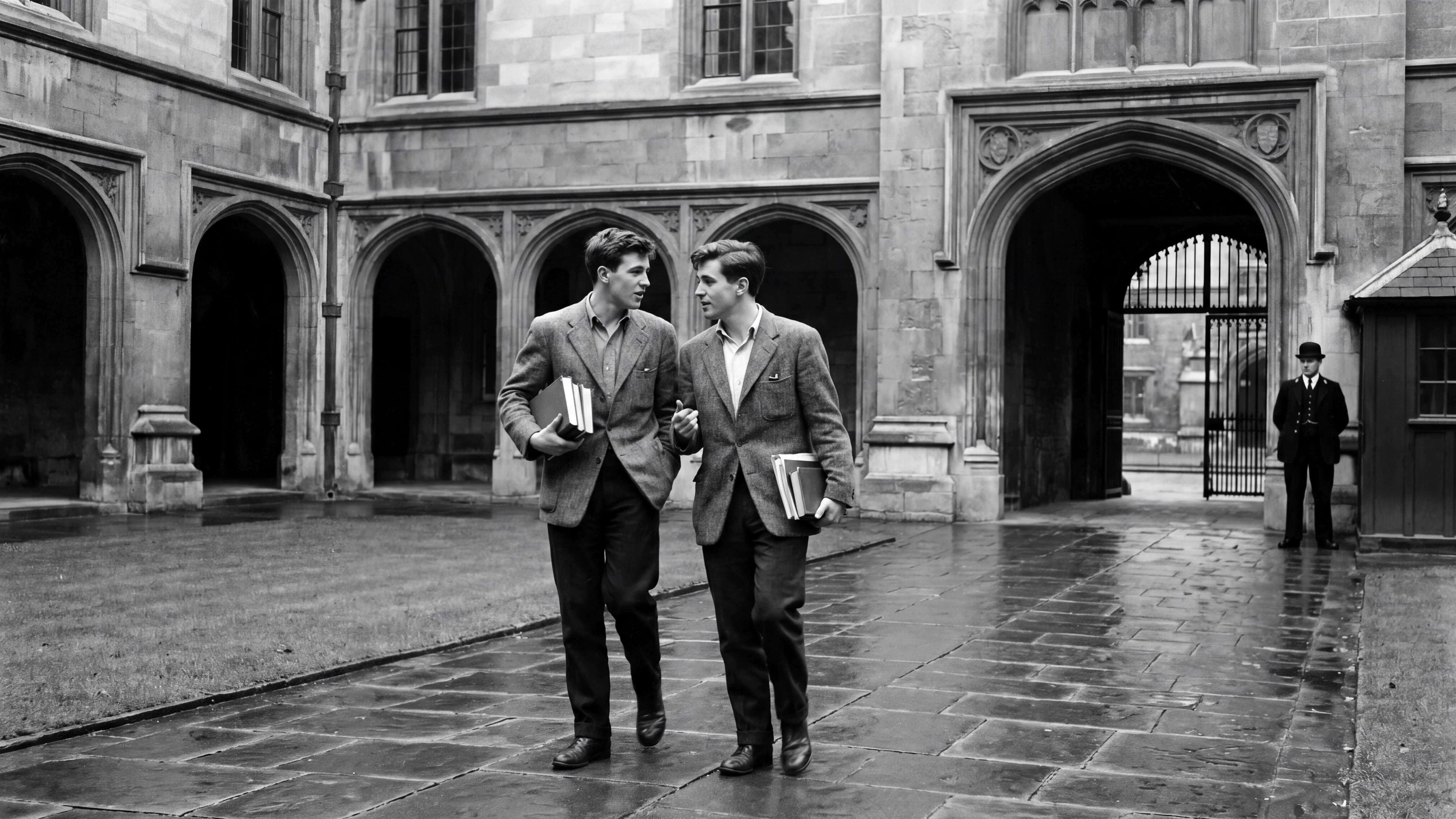
Ask someone where they went to school and listen carefully to the shape of the answer.
New money names the institution, and quickly.
“I went to Harvard.” “I have an MBA from Wharton.” “I’m Stanford-trained,” as if the university were a manufacturer and the speaker the product. The peak form is “I’m from the Ivy League,” an entire consortium worn as a personality.
Old money deflects.
The Harvard graduate says “When I went to college in Massachusetts…” or “in the Boston area.”
The Dartmouth man went to school “in New Hampshire.” The Princeton woman studied “in New Jersey,” delivered so casually you’d think she meant a community college off the Turnpike.
The deflection is not modesty, or not only modesty. It’s a filter.
The right listener hears “a small school in New Hampshire” and knows instantly; the wrong listener doesn’t, and the speaker has lost nothing, because impressing the wrong listener was never the goal.
Naming the school outright is what you do when you need the listener to know and can’t risk them failing to guess. The Official Preppy Handbook caught this from inside that world back in 1980: the genuinely old families don’t say which school, because everyone who matters already knows.
When “old money” does volunteer something, it’s the subject rather than the brand. “I’ve always been drawn to Byzantine history.”
The critic Paul Fussell, who spent a whole book cataloguing American class tells, noticed that the people who talk about their education constantly are the ones it carried upward; for families already at the top, the right schools are assumed and therefore boring.
There’s even a quiet snobbery of subjects: classics, history, and philosophy carry the most prestige precisely because they’re useless, proof of a family that never needed the degree to eat. The named MBA exposes twice in one breath, a practical credential and a brand-drop to carry it.
Schools, of course, are just one possession among many. The same instinct governs how people talk about all the rest.
4. “We just got back from St. Barths…”

Here is a sentence you have heard at every networking event of the past five years: “We just got back from St. Barths.”
The destination is the entire point of the sentence. That’s the tell.
“Old money” says “we were away last weekend.” Where is irrelevant, because the destination was never the point; the company was, or the weather, or the sailing. “We were in France” passes. “We stayed at the Hôtel du Cap” does not.
And then there is the deeper habit, the one that may be the most reliable single pattern in this whole field: old money under-names everything it owns.
The 70-foot ketch is “the boat,” never “the yacht.”
It’s “the house,” not “the estate,” and the Gilded Age families who built 40-room mansions in Newport genuinely called them “cottages.”
It’s “the car,” not “the Rolls,” and “a painting we have,” not “our Rembrandt.” Naming the category, yacht, estate, car, reveals that you know exactly what the thing signals, and knowing is the anxiety.
The British landed families take it to the logical extreme and drop the category noun entirely. Chatsworth. Blenheim. One proper name, offered with no explanation, and if you need the explanation, you were never the audience.
One verb contains the entire mechanism: summer. Old money summers, “we summer on the Vineyard,” the trip so routine it became grammar. New money is going to Martha’s Vineyard for two weeks, and tells you so.
Money, possessions, schools, holidays. The fifth domain is the one nobody expects, and it cuts the deepest.
5. “She passed away…”

Of all the tells ever documented, the harshet one is about death.
Old money says: “He died.”
The middle says: “He passed away.”
And further down the ladder: “He is in a better place.”
Fussell considered this the single clearest class diagnostic in spoken English, and Mitford’s original 1950s list had recorded the same entry decades earlier, “die” on the upper side, “pass on” on the climbing side. Two countries, fifty years apart, one mechanism.
Listen to the full vocabulary of avoidance and you’ll hear how much work it’s doing. “We lost him,” as if the family were still searching. “She’s no longer with us,” five words to dodge one syllable. “He left us.” “Gone too soon.” “In a better place.” Every softening is a flinch, and the flinch is the tell.
The person who says “my grandfather died” isn’t being cold. They’re demonstrating that they don’t need your reassurance that the sentence landed correctly. The word is accurate. There is nothing to manage.
The One Rule Under All Five
Notice where this list started and where it ended.
It opened with money and closed with death, the two things polite society is least supposed to name directly, and old money names both without blinking. “Rich.” “Died.” The plain word, both times.
That’s the whole system. Security uses the plain word. Anxiety reaches for the upgrade, because the upgrade performs a refinement the speaker isn’t yet sure of, and that performance is the one thing that doesn’t transfer at closing.
You can buy the house, the boat, and the education in a single good year. Calling them “the house,” “the boat,” and nothing at all takes a generation or two longer.
The vocabulary is the last thing money learns. Which is why it’s the first thing to listen for.
My grandmother, who was in service at an old-money house, had absorbed these rules. "New money knows the price of everything and the value of nothing", she used to say.
“Old Money” sounds like a hoot to hang out with.