
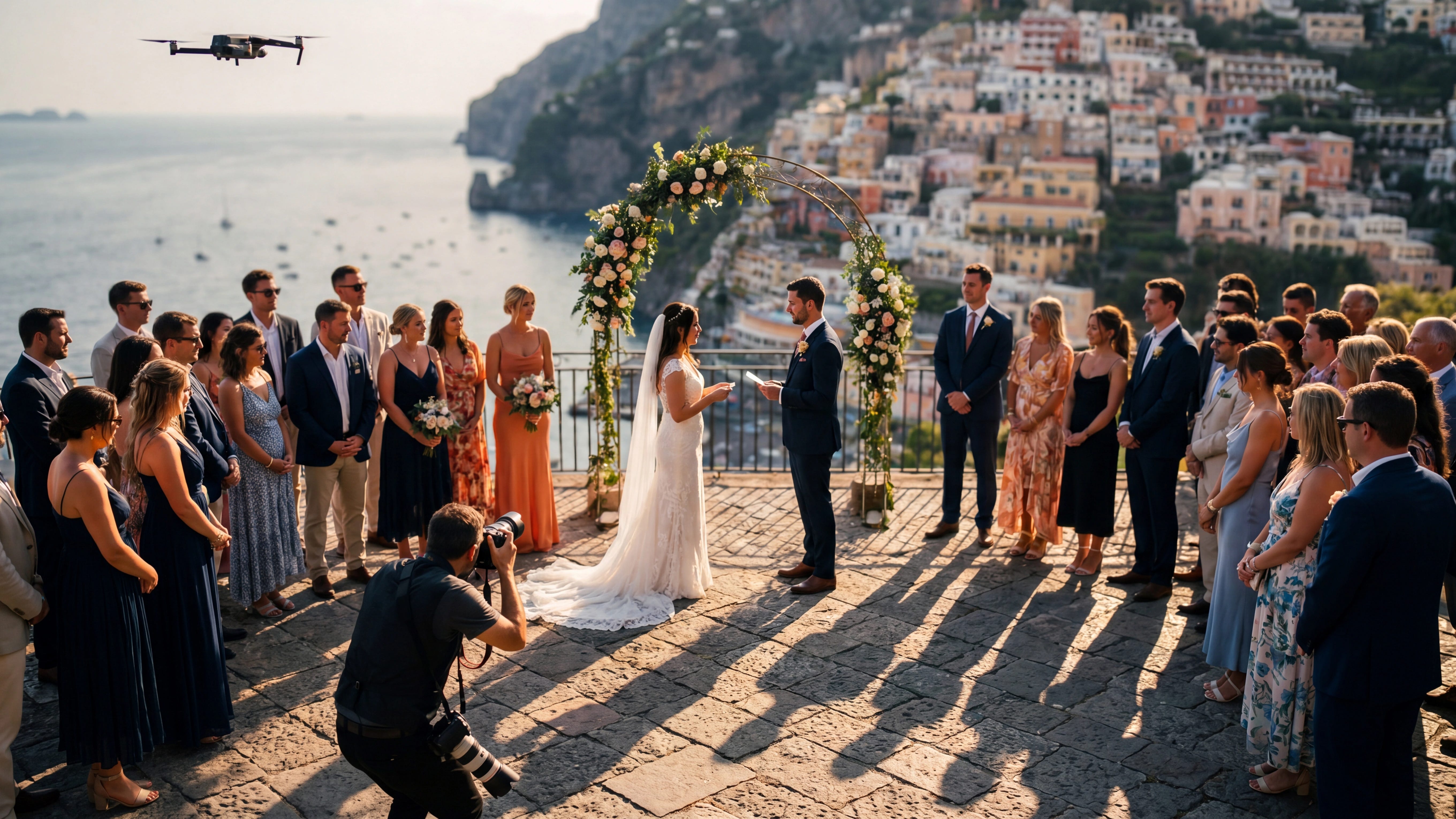
Most people assume a bigger wedding means an older family. More guests, more flowers, a guest list printed on heavier card.
The logic feels sound, because surely a family with deep roots has more people to invite and more cause to celebrate at full volume…
But the logic runs exactly backward.
Families that have held money across two or three generations don’t scale their weddings up; they actually pull them in. They marry at the family church, in the parents’ garden, on a small island with forty people and no press, and they do it because they have nothing left to announce.
“New money” has a great deal to announce. The wedding arrives at the precise moment a family’s self-image is most exposed, the first formal occasion it has to present itself at full scale, and the announcement tends to get loud. Five choices show up at these weddings often enough that they’ve stopped being coincidence.
They’re tells. The first one is geography, and it’s the most expensive mistake on the list.
1. The Destination Wedding
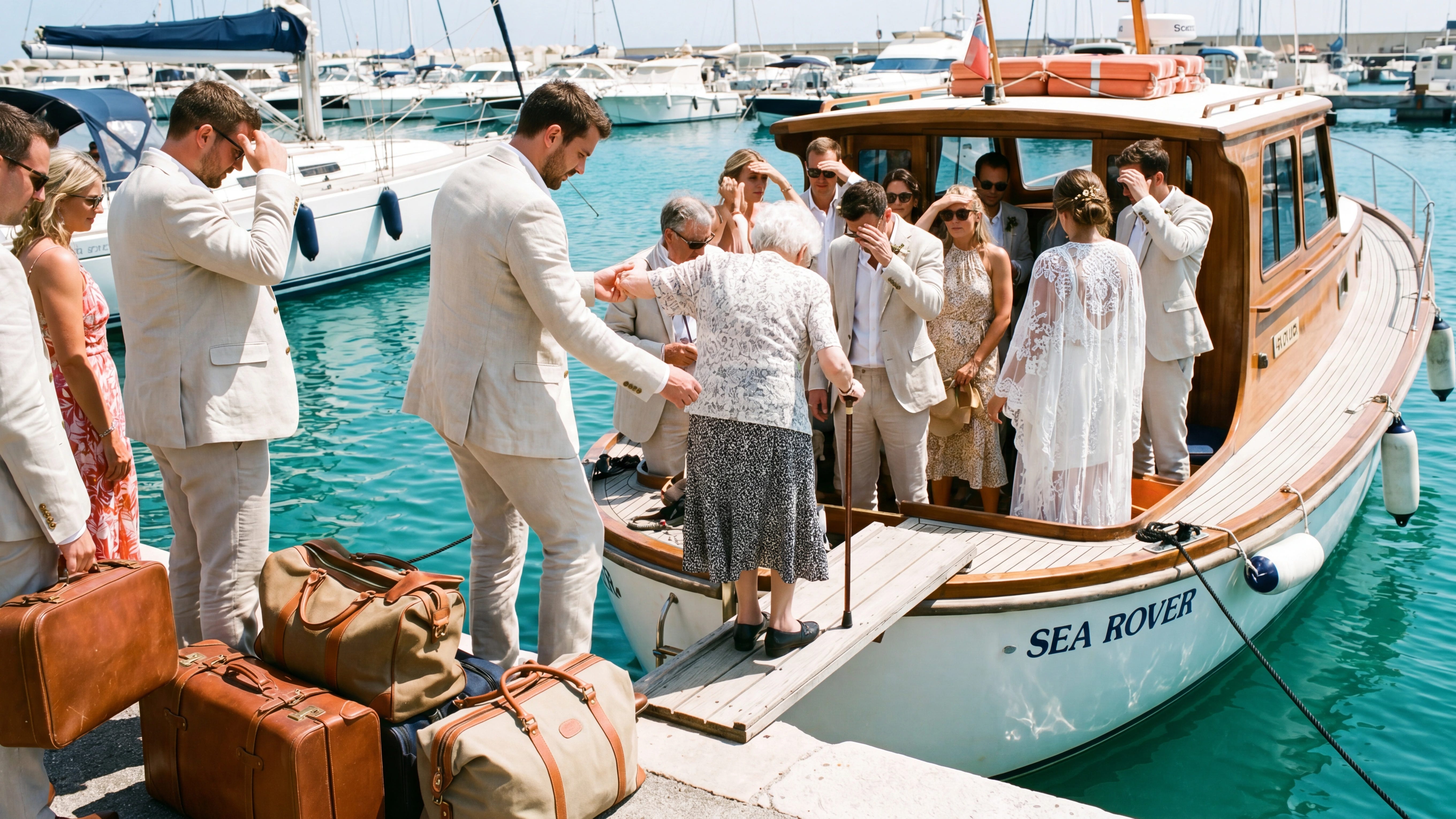
The destination wedding is the most legible tell here, because its logic is purely economic.
Flying a hundred and fifty people to Tulum or Positano or the Amalfi Coast runs to a few thousand dollars a head in flights and rooms before a single flower is ordered, and the spend buys a backdrop rather than a tradition.
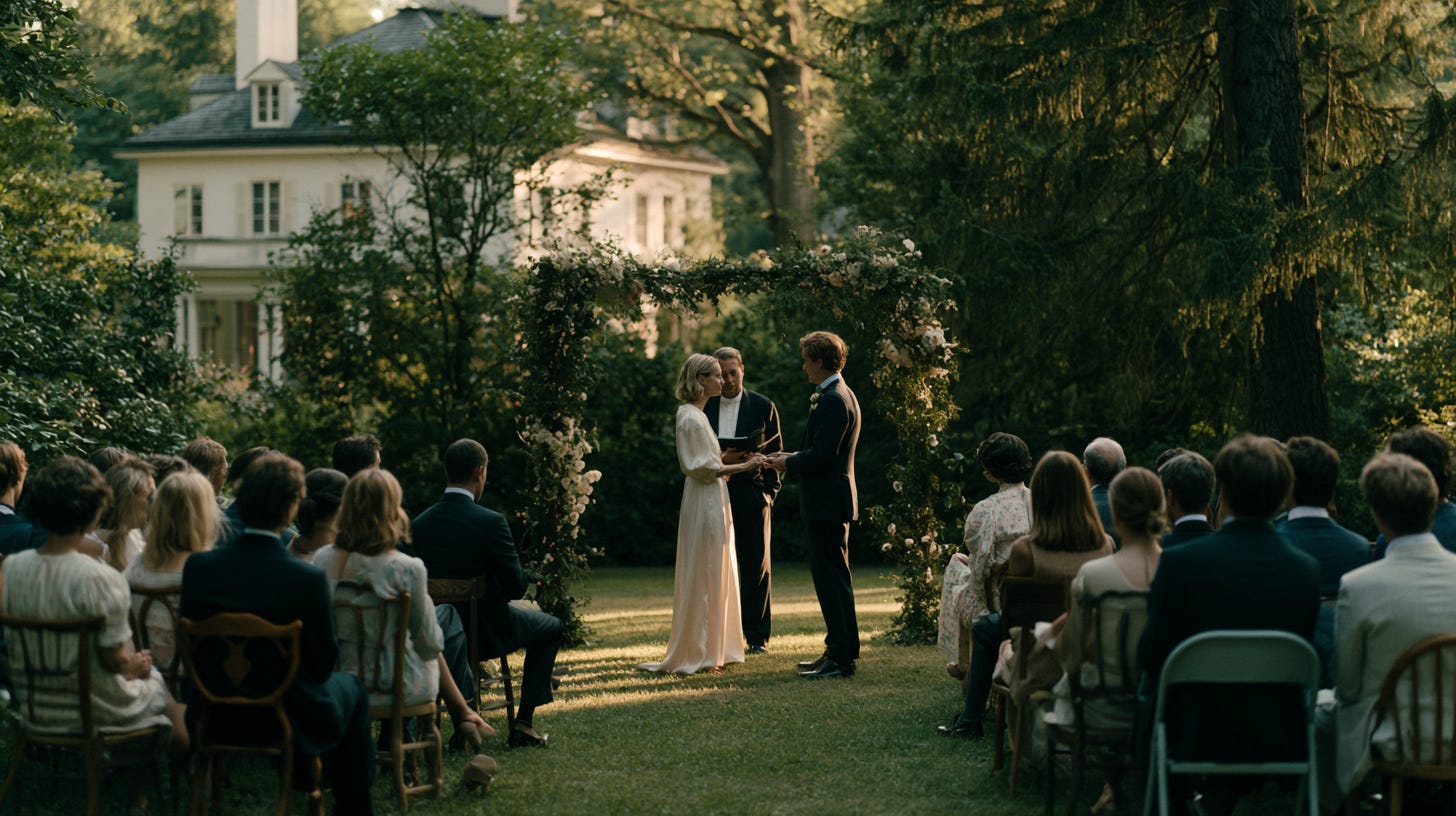
“Old money” families usually don’t fly their guests anywhere. They marry at the family church, in the garden of the house they grew up in, or in the chapel on the grounds that has carried three generations of weddings before this one, because the venue isn’t a decision. It’s a given.
When Carolyn Bessette married John F. Kennedy Jr. in 1996, they did it in a one-room church on Cumberland Island, off the coast of Georgia, in front of roughly forty guests with no press anywhere near.
The point of the place was its silence, not its scenery. They wanted the smallest, most invisible wedding two famous people could engineer, and that instinct, smallness as the flex, is the old-money instinct exactly.
The destination wedding signals the reverse. It says the family has no generational seat to host at, no ancestral property, no church in the county, no garden maintained long enough to carry the weight, so the resort in Capri stands in for the thing that isn’t there. “Old money” marries at home… because home exists.
There’s a second signal underneath the first. A family that asks a hundred and fifty people to spend a week’s wages on flights and rooms is, without meaning to, running a test of how much its circle will pay to attend, and the turnout becomes a kind of receipt. Old money never runs that test, because it has never once wondered whether the right people would come.
Geography is the most expensive tell. The next one costs almost nothing, which is part of why it spread so fast.
2. The Hashtag
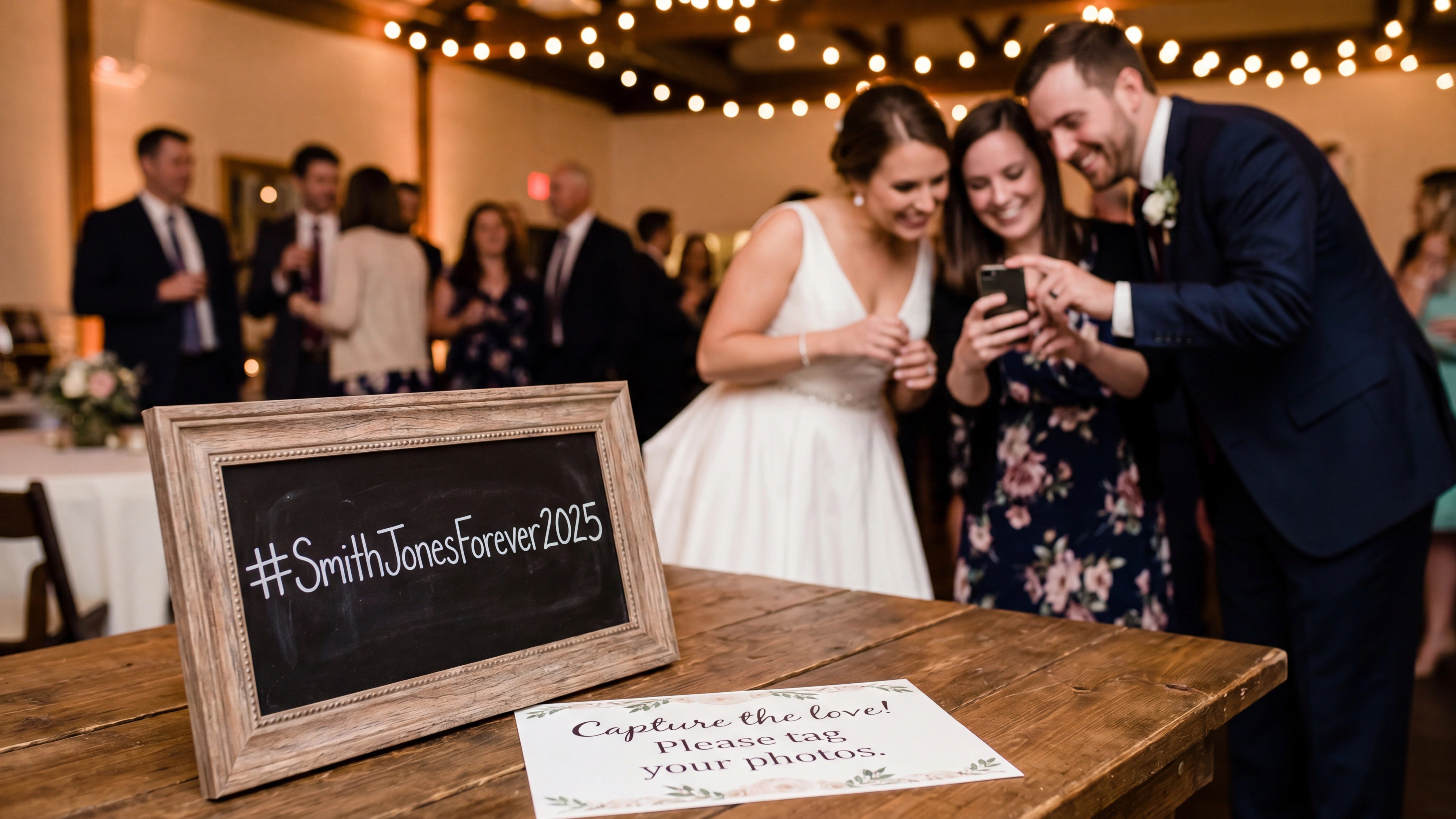
The wedding hashtag is a brand-marketing device, and that isn’t an insult.
It does what a brand tag does, aggregating content, building a searchable archive, telling everyone present that the event is worth cataloguing in public.
By the middle of the last decade the practice had grown elaborate enough that couples were paying handlers to manage the tag across a weekend and hotels were folding the service into their packages. The wedding had quietly become a thing to be followed.
“Old money” doesn’t do public events. It does private ones, and the distinction has nothing to do with technology. A family with a settled position doesn’t need its wedding to travel, because the right people already know and the wrong people never got the invitation, let alone the tag.
A private ceremony has no use for a searchable archive. The archive exists for the people who weren’t in the room, which means the couple has already decided the wedding is a thing to be watched rather than attended.
Notice where the grammar comes from. The custom tag, the branded weekend, the printed card asking everyone to post and share, all of it is the language of a product launch borrowed wholesale and pointed at a marriage. A family secure in its own name has no reason to speak in the dialect of a company trying to get noticed, because it isn’t trying to get noticed at all.
The hashtag turns the wedding into something searchable. The next tell turns it into something worth filming.
3. The Drone Footage and Cinematic Film
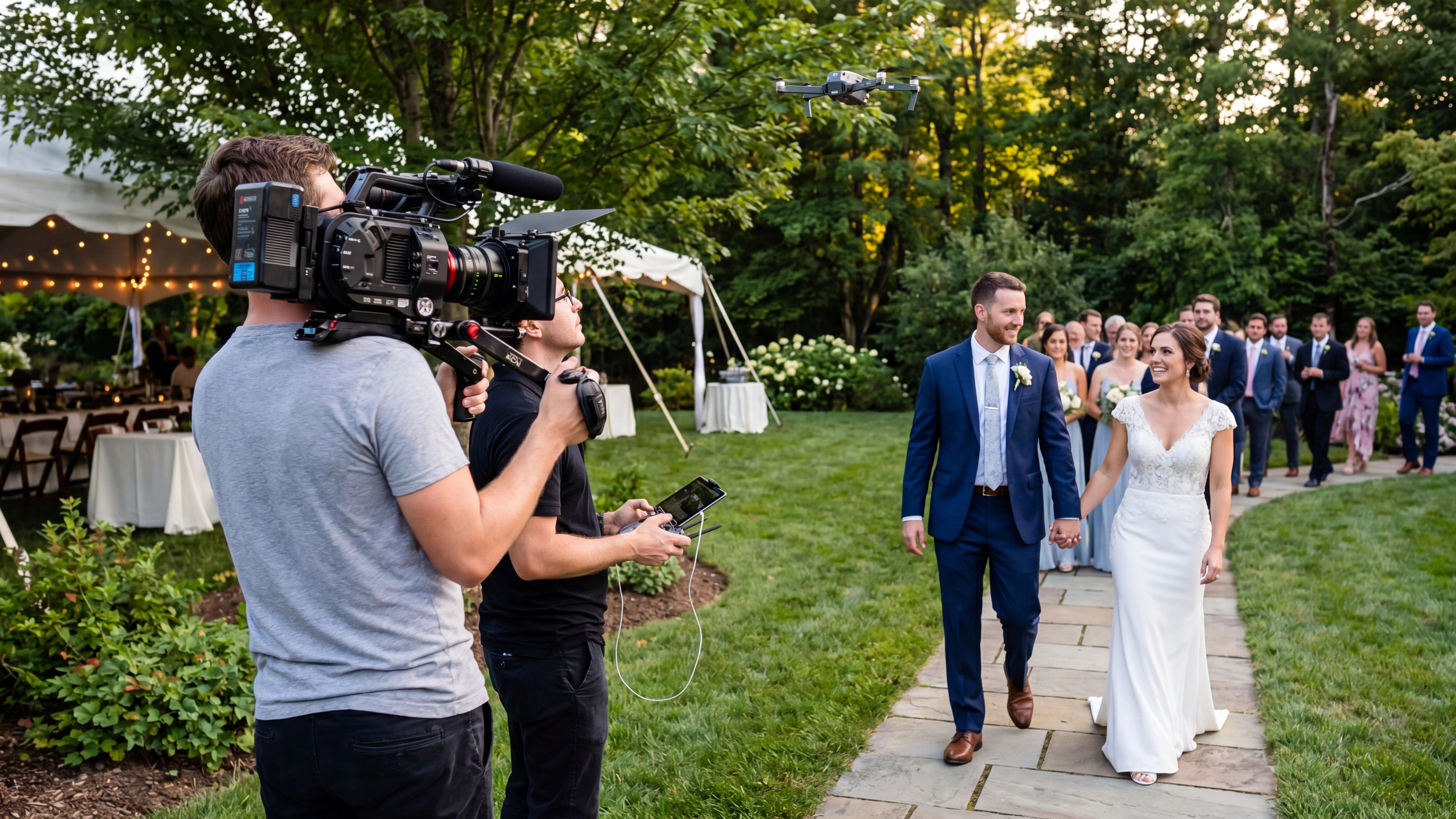
“The drone package” has a name now, the cinematic wedding film. It runs six to ten minutes, carries a licensed indie-folk track underneath, cuts between aerial establishing shots and slow-motion first looks and the rings on a velvet tray, and lands online for about four days.
The film is a product, and the couple who commissions it is the audience. That’s the whole tell. “Old money” doesn’t commission a product to watch itself.
A landed family has a photographer, often one it has used for twenty years, who shoots on film, delivers sixty or eighty prints in a leather album six months later, and produces no video at all. The album goes on a shelf in the library, and nobody outside the family ever opens it.
There’s a practical edge to it too. A four-person crew with a drone operator, permits, and insurance runs comfortably into five figures before anyone sits down to edit, and the footage, by simple probability, goes unwatched after the first week.
The deeper tell is what the camera does to the day itself.
Once a crew is staging first looks and reshooting the walk for better light, the wedding stops being an event that happened and becomes footage that was produced, with the couple performing the most private hours of their lives for an audience that was never in the room. A photograph remembers a day. A film stages one.
4. The Bridal Party of Twelve
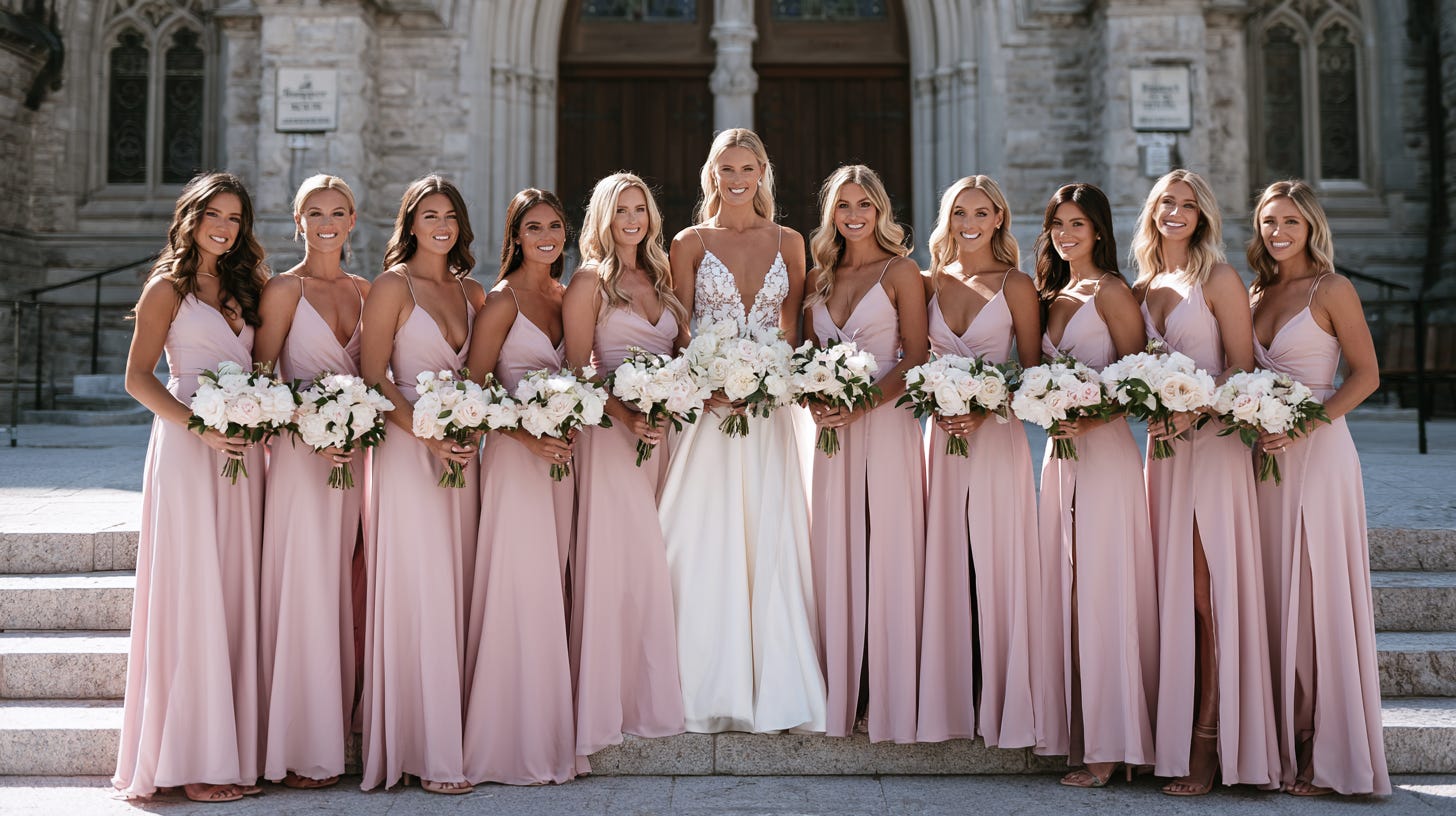
The twelve-bridesmaid wedding is a logistics operation. It needs color coordination across twelve people, dresses size-matched and ordered months out, a seating chart built around attendant tables, a processional that takes three minutes to clear, and a hair-and-makeup call that starts before dawn.
“Old money” has two attendants, sometimes one. The sibling, if they’re close, or the oldest friend if the sibling can’t.
No matching dresses, no agreed palette, no swatch in the mail, and the maid of honor wears whatever she already owns in a reasonable shade.
A party of twelve says look how many people we’re close enough to include. It’s a credential display, the social version of name-dropping, and a production on that scale needs a cast because it’s performing something.
Two attendants say the opposite. The wedding isn’t a credential, and the people standing up there already know exactly what they are to each other.
The party of twelve also imports a cost the couple rarely counts. Twelve people of different incomes and schedules are asked to buy a dress they’ll wear once, clear a weekend, and stand in matched satin for a stranger’s camera, and the request arrives as an obligation dressed up as an honor. Old money reduces what it asks of the people around it, because it has nothing left to prove by crowding the altar.
A large party fills the aisle with people. The last tell fills the room with initials.
5. The Custom Monogram on Every Surface
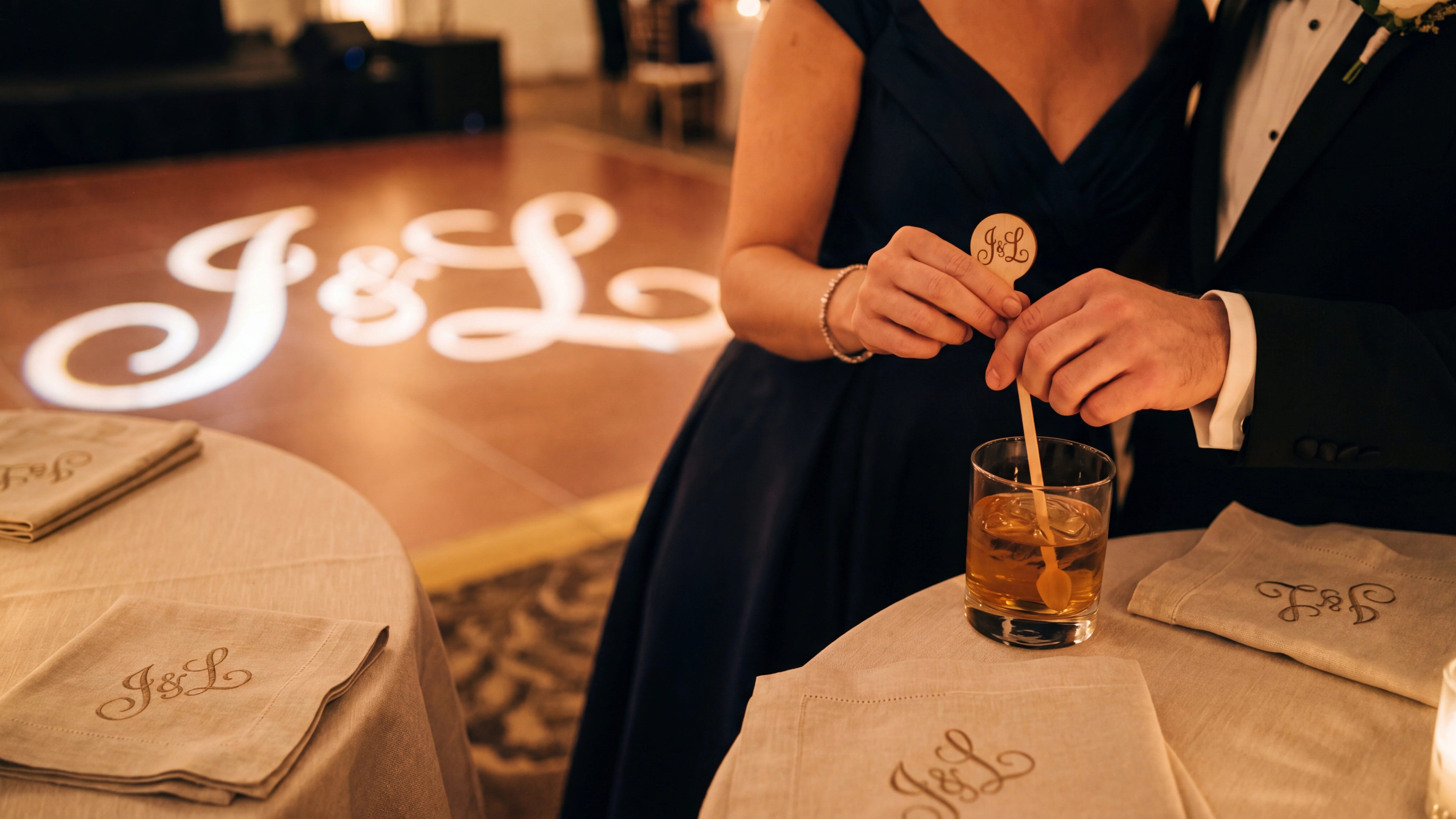
The monogrammed wedding now runs to eight or ten surfaces. The dance-floor projection, the napkins, the cocktail stirrers, the welcome-bag ribbon, the cake, the chair backs, the program cover, the photo-booth frame, the neon sign over the bar, all of it carrying the same two initials and a year.
Old money’s monogram appears once. On the church program, in a single line of engraved type, or on the writing paper if the family still keeps any. Never on a napkin, never on the floor, because the monogram is a private mark of ownership and it goes on the things you keep, not the things you throw away.
The surface-covering version is doing work the engraved one never has to do. It’s asserting an identity across every object in the room, and that assertion only becomes necessary when the identity is new.
There’s a tell inside the tell, and it’s where the initials end up. The monogram on the napkin, the stirrer, the projected dance floor is printed on things built to be used once and thrown away, so the name is being broadcast on surfaces that won’t survive the night. A family used to permanence puts its mark on what it means to keep, the silver, the linen, the program pressed into a book, and never on what the caterer sweeps up at midnight.
When the name has stood in the same county for a century, attended by the same families, it doesn’t need spelling out on a cocktail stirrer. Everyone already knows whose afternoon this is. Engraved initials on a card say we have a name. Monogrammed everything says we’d like you to know we have one.
The One Rule Under All Five
Every one of these tells is a form of “announcement”:
The destination says we can afford to send you somewhere. The hashtag says this is worth following. The film says this moment deserved a production. The party of twelve says look how many people know us. The monogram says this is our name, on everything.
“Old money” doesn’t announce. It assumes. It assumes the people who need to know already know, that the family’s standing is settled enough that no single afternoon has to settle it, and that the wedding’s job is to join two families rather than to perform two incomes.
This is why the tells cluster the way they do. Each one substitutes spectacle for the thing spectacle can’t buy, which is time, and time is the only currency old money holds more of than anyone else. You can book the cliff above Positano by Friday. You cannot manufacture the century that would have made the cliff unnecessary.
I suppose the latest most ostentatious, with the flashiest guests in the hundreds, garnished in garments so vulagr Grace Kelly would probably have a second stroke, were she alive, is the Bezos Venice spectacle. I seem to recall some kind of bubble dance in bikinis on the boat at some point. Plus the massive publicity, The Who is there and Who isn’t game all carefully calculated by a bevy of planners. The impression was not of fun or happiness, but a dogged hunt for greater fame, greater vulgarity, greater money- enough to let us all know, we don’t count. At least in their minds.
Old money is quiet money. So is new money held by people with depth.