
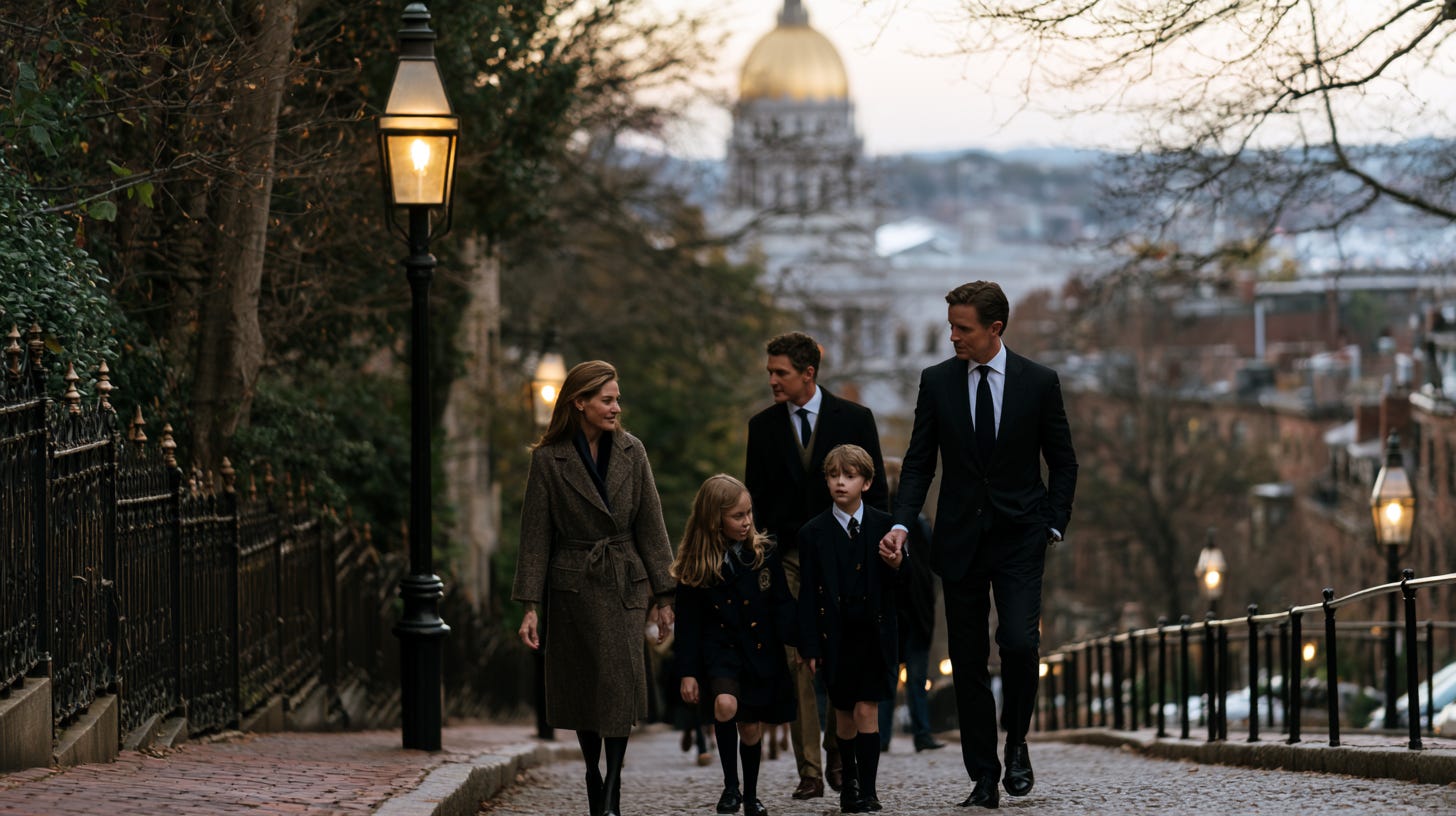
There’s a version of “old money” that lives on a moodboard. Beige linen, grosgrain ribbon, a Range Rover, and anyone whose trust cleared sometime after 2019. Then there’s the version with a map, and the map is far smaller and far older than the aesthetic lets on.
It runs as a thin corridor down the northeastern seaboard, from the brick sidewalks of Beacon Hill to the gray-shingled porches of Nantucket.
Every address on it was settled, named, and socially organized before the federal income tax existed. The families didn’t arrive because the zip code was fashionable. The zip code is fashionable because they arrived.
So this is a ranking, and the order is the argument.
We’re counting down by one measure only: how much of the original life is still being lived, rather than preserved behind a velvet rope.
Age helps. Grandeur doesn’t. Which is why the most famous name on the list lands closer to the bottom than anyone expects, and a quiet hill in Boston takes the top.
7. Long Island’s North Shore Gold Coast
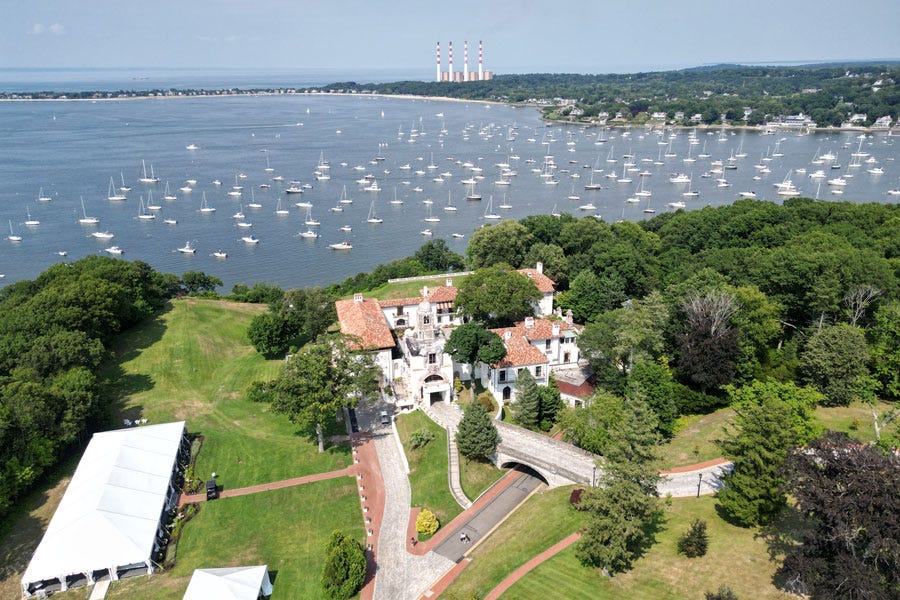
We start at the place that proves this list isn’t sentimental, because the Gold Coast is the one address here that mostly didn’t survive.
Fitzgerald didn’t invent it for The Great Gatsby in 1925; he copied it down. West Egg was Sands Point, East Egg was Old Westbury and Lattingtown, and every reader that year knew exactly which bay he meant.
The families were the Whitneys, the Phipps, the Pratts, the Guests, and the Mackays, spread across Oyster Bay and Locust Valley in self-contained estates with their own stables, gardens, and private water.
Oyster Bay still holds Theodore Roosevelt’s Sagamore Hill, kept whole while most of the Gilded Age compounds around it were carved into subdivisions.
That carving is the whole point. On the North Shore the grandest surviving estate can sit less than a mile from a cul-de-sac of new construction, and old money and new money breathe the same air in a way they never had to in Boston or Newport. The continuity here is real but thin, which is why it opens the countdown instead of closing it.
Everything above this line kept more of itself.
6. Newport, Rhode Island
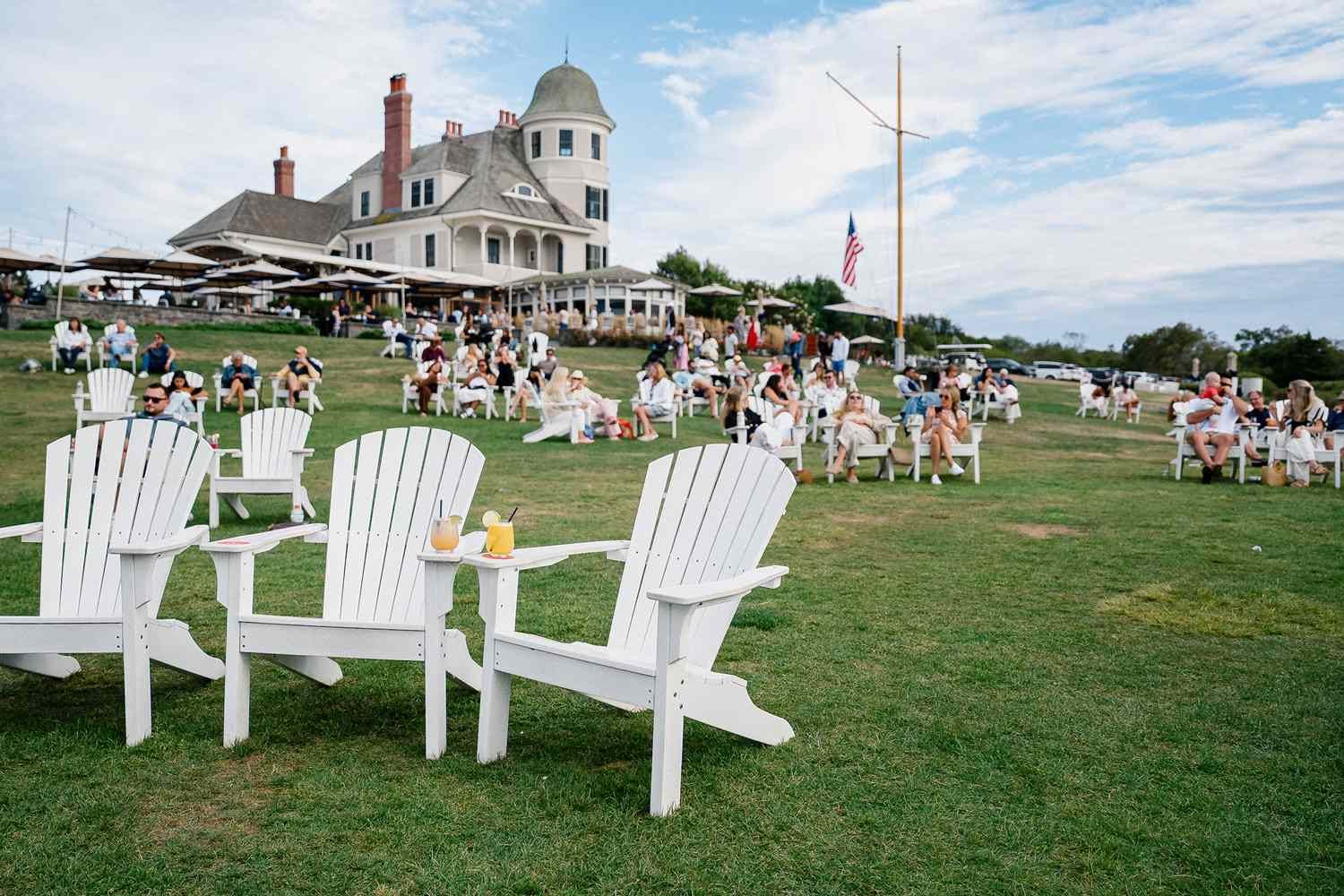
For Gilded Age fans, this is perhaps the most famous one… and here is why fame and meaning aren’t the same thing.
Newport is where the American aristocracy built its summer monuments before the income tax arrived to make that kind of display awkward.
The Bellevue Avenue cottages, the Breakers, Marble House, Rosecliff, Belcourt, were called cottages by the people who built them, which tells you precisely which register they were performing in.
For one long generation the gate to American society ran straight through Caroline Astor’s Newport season.
Her guest list decided who counted, and the town was where that decision happened in public, under chandeliers, on a fixed schedule. The yacht clubs that anchor it now, the New York Yacht Club’s station on Harbour Court among them, were never really about sailing. They were about who was on the lawn.
The trouble is what Newport became. Most of the great cottages are museums today, ticketed and roped off, and the living colony shrank to a handful of families still holding private ground on Bellevue and Ocean Drive. The colony didn’t end. It contracted into a smaller, quieter, more beautiful version of itself, much of it now behind glass.
And the newest money has been quietly buying the vacancy.
The Blackstone founder Stephen Schwarzman took Miramar on Bellevue along with the house beside it, with word that Miramar will pass into use as a private museum after his death, a cottage raised by the old families turned into a monument by a man they would once have kept on the far side of the gate.
The places that rank higher kept their doors shut instead of charging admission.
5. Cape Cod, Martha’s Vineyard, and Nantucket
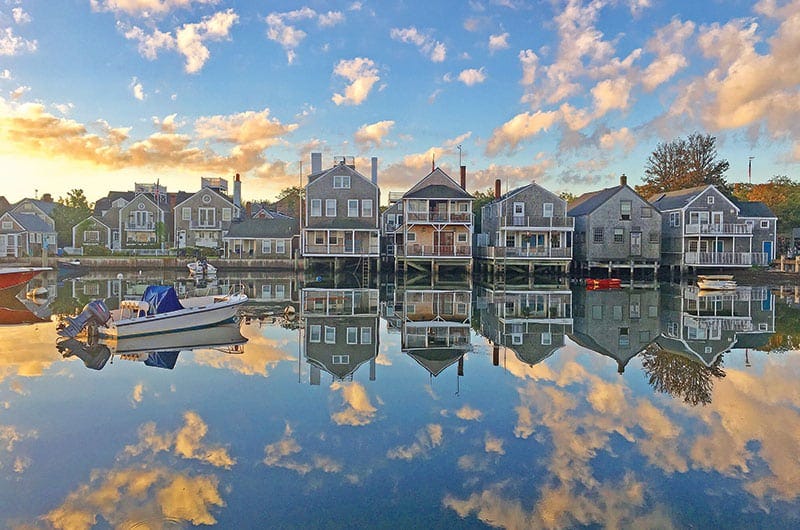
The summer triad is three addresses, Hyannis Port, Edgartown, and Sconset, that together set the template for what upper-class New England is supposed to look like in July. It also forces the most useful argument on the list, and it forces it through the Kennedys.
Hyannis Port raises the question and the honest answer disappoints people. The Kennedy fortune, made in the early twentieth century through stock-market speculation, Hollywood, and real estate, is old by American reckoning and still not Brahmin.
A great American family is not the same thing as a Cabot or a Forbes, and flattening the two erases a real difference in how long the money has had to go quiet. The Kennedys are a boundary case, which is its own kind of tell.
The families who anchor the cluster without an asterisk sit a little out of frame. The Forbes line has held Naushon Island, an entire island in the Elizabeth chain, since 1842. The old Nantucket families settled Sconset on the island’s eastern edge in the 1890s, and Edgartown remains the Vineyard’s old address while the newer money gathered at Oak Bluffs and Chilmark.
What keeps this triad from ranking higher is the calendar. It lives hard for ten weeks and then empties out, and a place that means something only in summer means a little less than one that means it in February.
4. The Main Line, Philadelphia
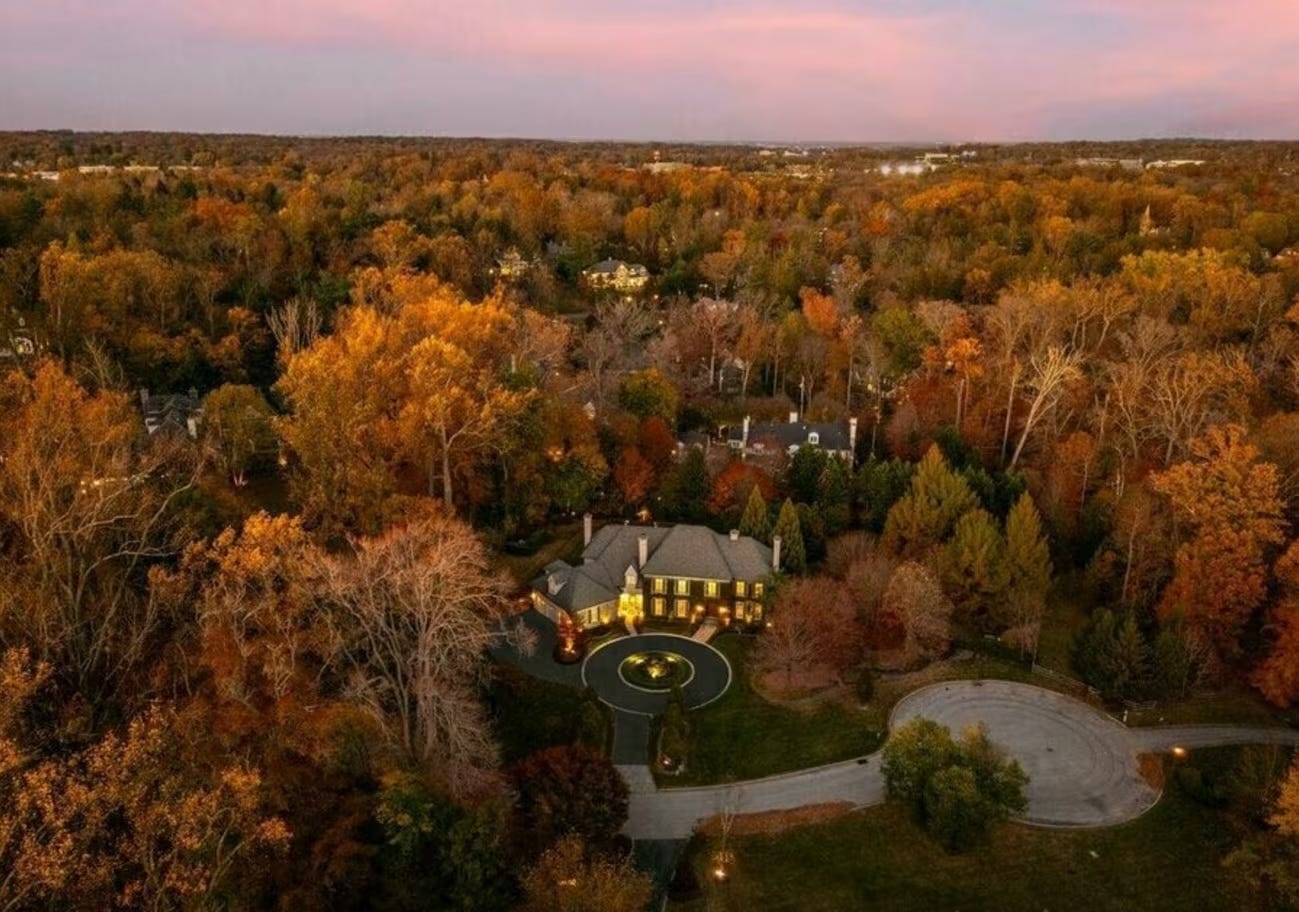
Now we cross into year-round country, and into older money than anything on the coast.
The Main Line took its name from the Pennsylvania Railroad’s main line of public works, the route that ran west out of the city through Bryn Mawr, Haverford, Villanova, Radnor, and Gladwyne. By 1880 the Biddles, Cadwaladers, Ingersolls, Morrises, and Peppers had built their country houses along it, and the corridor already had its own weather.
Its emblem is Ardrossan in Villanova, the estate of Helen Hope Montgomery Scott, who happened to be the living model for Tracy Lord, the part Katharine Hepburn played in The Philadelphia Story.
The film survives as the sharpest portrait of American old-money manners ever put on screen, and it could only have been set here, because the manners it captured were Montgomery and Scott manners, and that money ran back before the Revolution.
Even Ardrossan hasn’t been spared the century. Parcels of the original estate have been sold off and built over with new construction in recent years, and the house that stands for Main Line permanence has watched pieces of its own grounds carved away and marketed as something brand new.
Philadelphia keeps a calibration outsiders miss. The question is never how much, it’s how long, and a family Quaker and prosperous since William Penn’s charter sits in a category no fortune assembled in this century can reach.
What pulls the Main Line to the middle is dilution by comfort. Much of it has softened into ordinary upper-class suburb, and the old families now share the road with everyone who simply did well.
Above this point, the communities stopped softening.
3. Greenwich, Connecticut
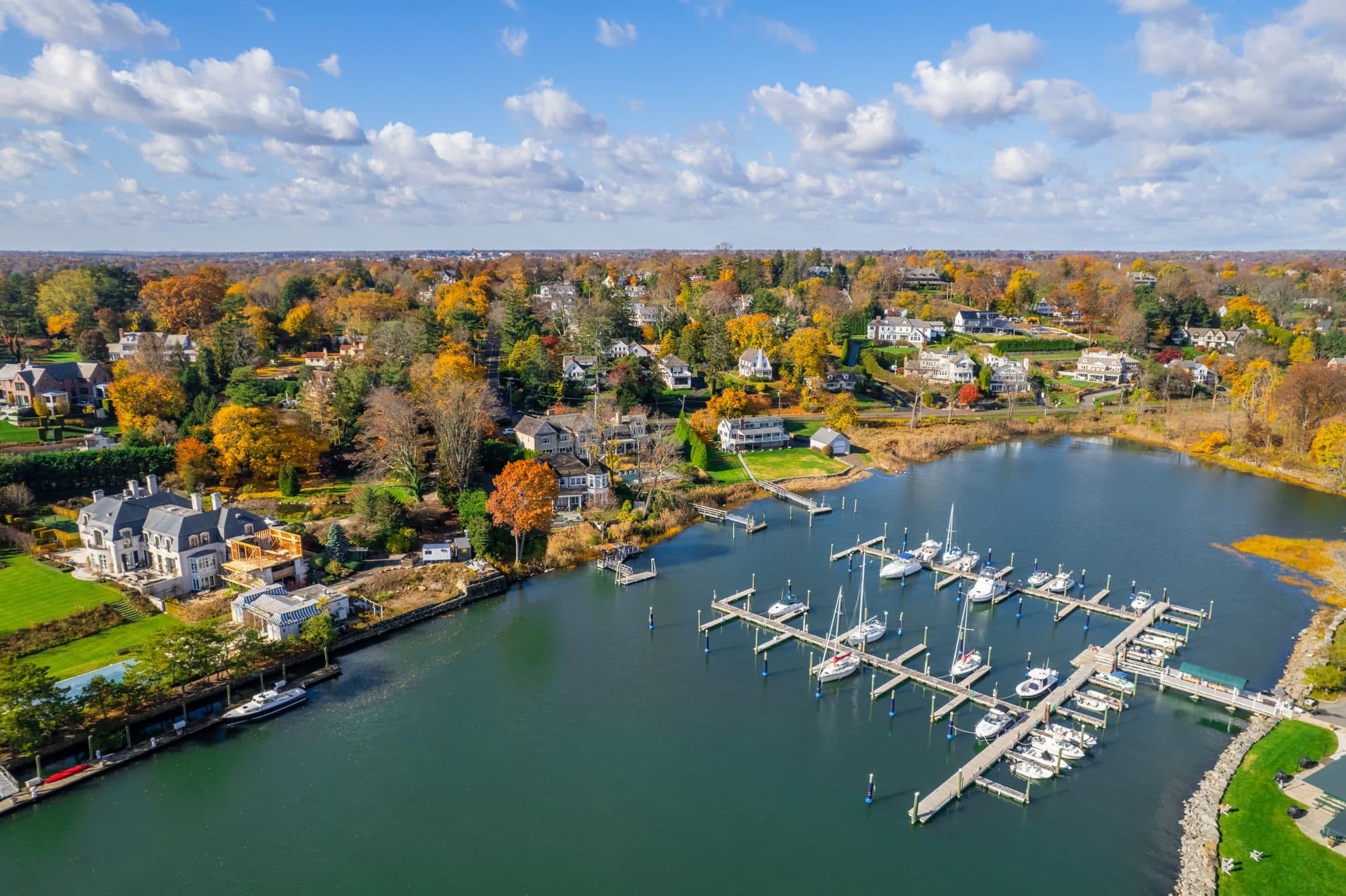
Greenwich is where old New York money went when Manhattan got loud, and it ranks this high for a reason the last three entries set up.
It absorbed more new money than any address on the list, hedge fund fortunes by the dozen, and its old social infrastructure outlasted the flood anyway.
The addresses are Round Hill Road and Belle Haven, and the anchor is the Greenwich Country Club, founded in 1892, where membership has never once been available simply by asking. The families here tend to be the Connecticut branch of the Manhattan clubs, holding their Knickerbocker or Union cards in the city and keeping the county for weekends, children, and a quiet that Fifth Avenue can’t sell them.
One correction the locals insist on, and they happen to be right. Old Greenwich is a small shoreline village with real charm and some real money, but it is not a synonym for Greenwich. The credentials, Belle Haven, the Country Club, the estates on North Street and Round Hill, sit in Greenwich proper, and anyone who grew up in Fairfield County never confuses the two.
That a town this saturated with recent wealth still runs on hundred-year-old institutions is the entire case for third place. The money turned over and the gate held. The new arrivals bought the houses, and the same committees went on deciding what the houses meant.
2. The Upper East Side, Manhattan
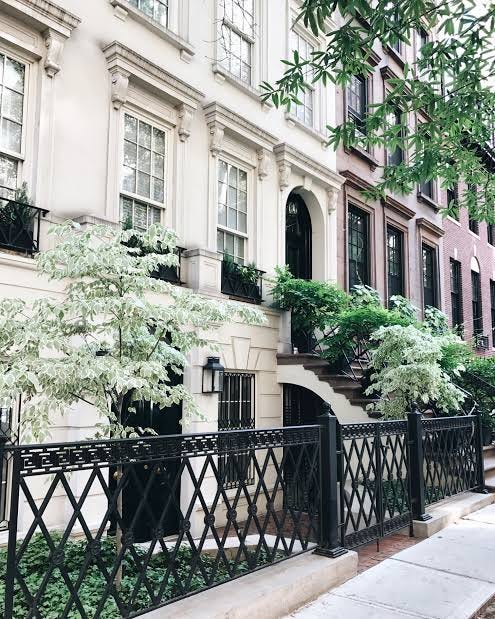
Between Sixtieth and Ninety-sixth, east of Fifth Avenue, New York’s oldest families held their ground through every reinvention the city threw at them.
There are no estates to point at. The architecture is townhouses and prewar co-ops on Fifth, Park, and Madison, apartments handed down a bloodline at a time, governed by boards that interview applicants with a thoroughness that has nothing to do with what’s in the bank.
The clubs are the real infrastructure, and their origin stories are a short course in how these institutions behave. The Union Club, founded in 1836, is the oldest social club in the country still doing the thing it was built to do. The Knickerbocker broke away from it in 1871, because a faction decided the Union had gone soft on admissions. The Metropolitan was founded in 1891 by Morgan himself, after a friend of his was blackballed and Morgan resolved to build a club that couldn’t tell him no.
The Roosevelts, the Astors, the Belmonts, and the Whitneys all kept addresses in these blocks, and some version of their descendants still does. What separates this from the top spot is churn. Manhattan rewrites itself faster than any city in America, and even the most fortified families have had to defend their position against constant pressure rather than simply inherit it undisturbed.
1. Beacon Hill and Back Bay, Boston
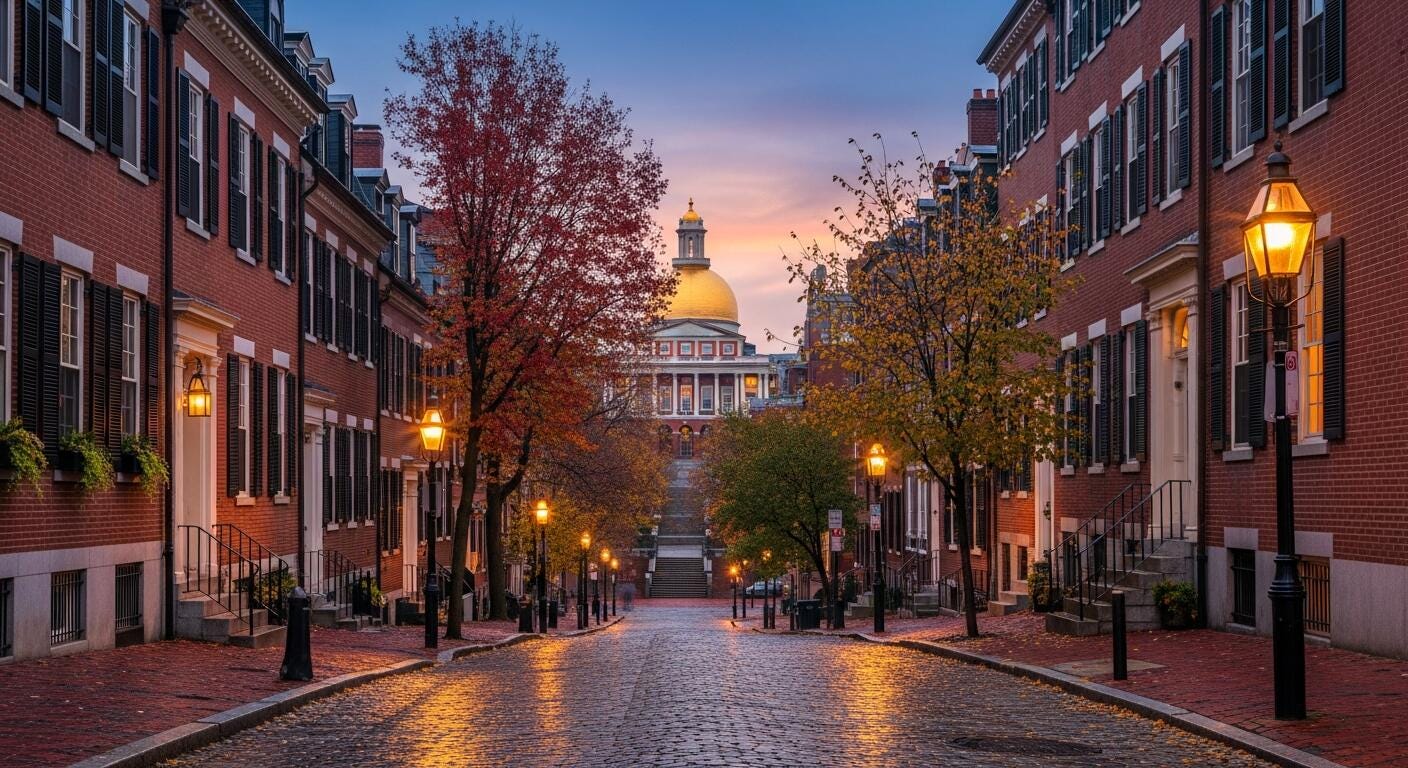
The top of the list is the oldest address in the whole story, and the one that changed least.
Charles Bulfinch laid out the Beacon Hill rowhouses in the early nineteenth century, and the Cabots, Lowells, Lodges, Saltonstalls, and Forbes families were already settled behind their brick fronts before the Civil War. Most of them never meaningfully left.
It was a Bostonian, Oliver Wendell Holmes, who named the type in 1861, calling it a harmless, inoffensive, untitled aristocracy of good schools, moderate fortunes, and very long memories. Brahmin money never piled up the way the Vanderbilt or Carnegie money did. It compounded in the background, through law firms and banks and Harvard chairs and the occasional Senate seat, and it learned to find visible accumulation faintly embarrassing.
The social order here still answers to a dinner toast from 1910, delivered about these families rather than by them, the one where the Lowells talk only to the Cabots and the Cabots talk only to God. That dinner was well over a century ago. The families are still on Louisburg Square, and Back Bay sits beside it drawing from the same pool through a different run of brownstones.
This is why it ranks first. Nothing here had to be defended, rebought, or reopened to ticket holders. It was simply kept, generation after generation, by people who treat the keeping of it as the least interesting thing about themselves.
The Ones That Just Missed
A few addresses sat right at the cut.
Princeton carries old money through its university families and the estates around the borough, Drumthwacket among them, now the New Jersey governor’s residence.
The Hudson Valley corridor from Rhinebeck down through Hyde Park holds the Roosevelt, Livingston, and Astor names and some of the oldest continuously occupied estates in the country.
Potomac is the Washington entry, where old government and old professional money, a different animal from political money, has gathered since the postwar years.
You hit it right on Beacon Hill. I grew up on Brimmer Street, off the hill, overlooking the Charles River. Going to the private school Dexter, (1970’s) the guys who actually lived on the hill, never failed to tease me that I actually lived on the “flats”, not the Hill. Ah yes, those were the days!
You forgot to mention that Kennedy started as a bootlegger.