
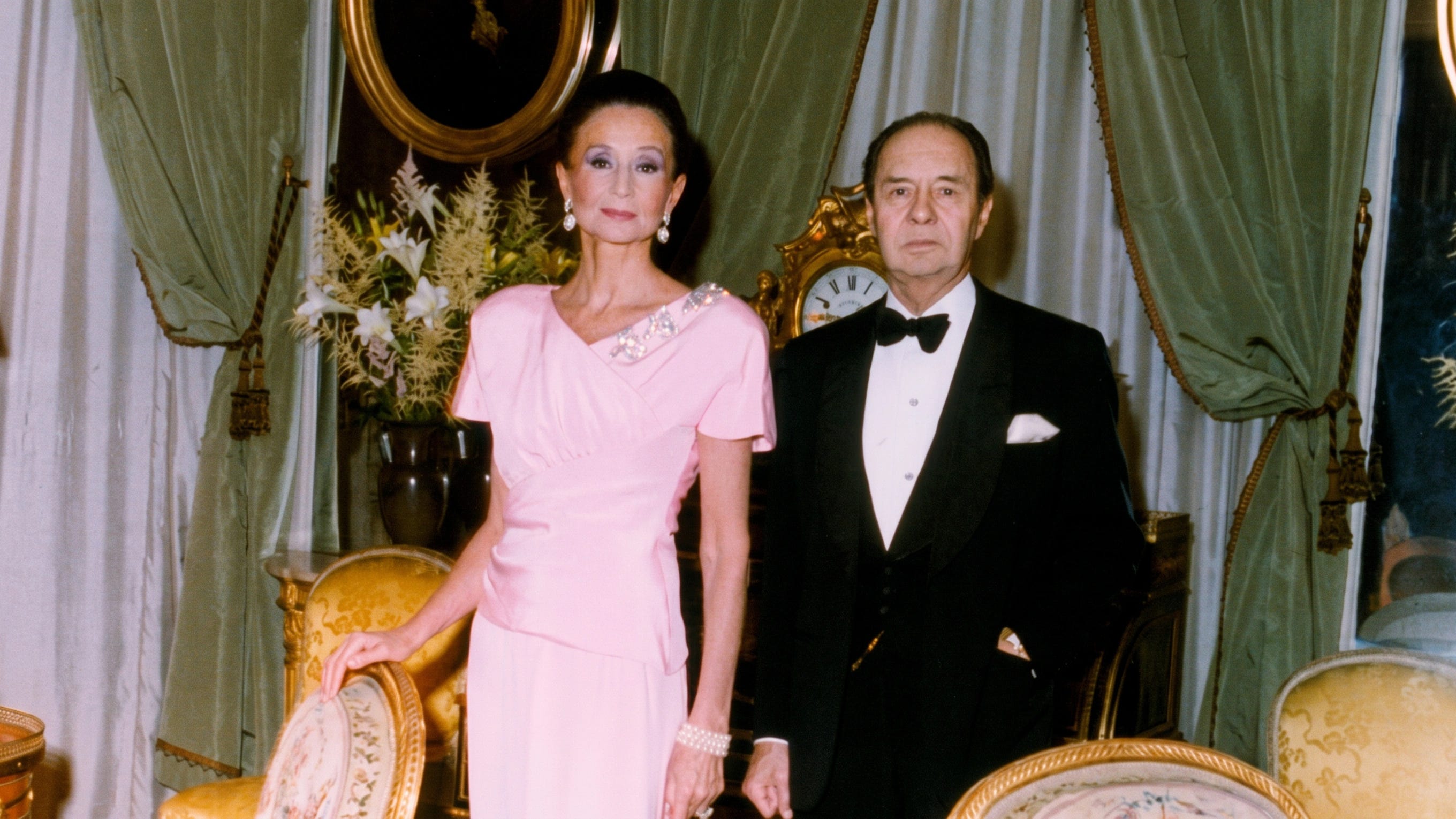
In the early 1950s, in the attic above her in-laws’ Paris townhouse, a young countess knelt on bare floorboards and pinned muslin onto a dressmaker’s form.
She could cut a dress pattern by hand, but silk was out of the budget and she couldn’t draw a presentation sketch. Instead, she hired a young Italian named Valentino Garavani, fresh out of one of the most respected couture studios in Paris, to illustrate the designs she’d already shaped upstairs.
Valentino climbed the stairs once or twice a week for about a year, turning her pinned fabric into the polished drawings a manufacturer needed to produce the clothes.
He always wanted to add a bow, a frill, a flower. She never let him.
Decades later, after building a fashion house that dressed Jackie Kennedy and Sophia Loren, Valentino called Jacqueline de Ribes the last queen of Paris. By then she came through his fitting rooms as a client, pulling up in a convertible, buying gowns. She once paid him to draw her ideas. Now she paid him for his.
The fashion world called her a muse for four decades.
Town & Country named her the most stylish woman in the world in 1983. She made Eleanor Lambert’s International Best-Dressed List in 1956 and entered its Hall of Fame by 1962. Yves Saint Laurent compared her to the Duchess of Guermantes from Proust.
What made the praise unusual was how little of her wardrobe actually came from established couturiers. When she first appeared on Lambert’s list, the Met later observed:
She owned only a small number of couture dresses. Most of what she wore she designed herself.
Behind the reputation for elegance was a woman already doing the work of a designer before anyone allowed her the title.
By then, secrecy around ambition was already familiar to her.
Childhood had taught her how quickly privilege could become confinement, and how suddenly the people shaping your life could disappear.
The Rivaud Fortune
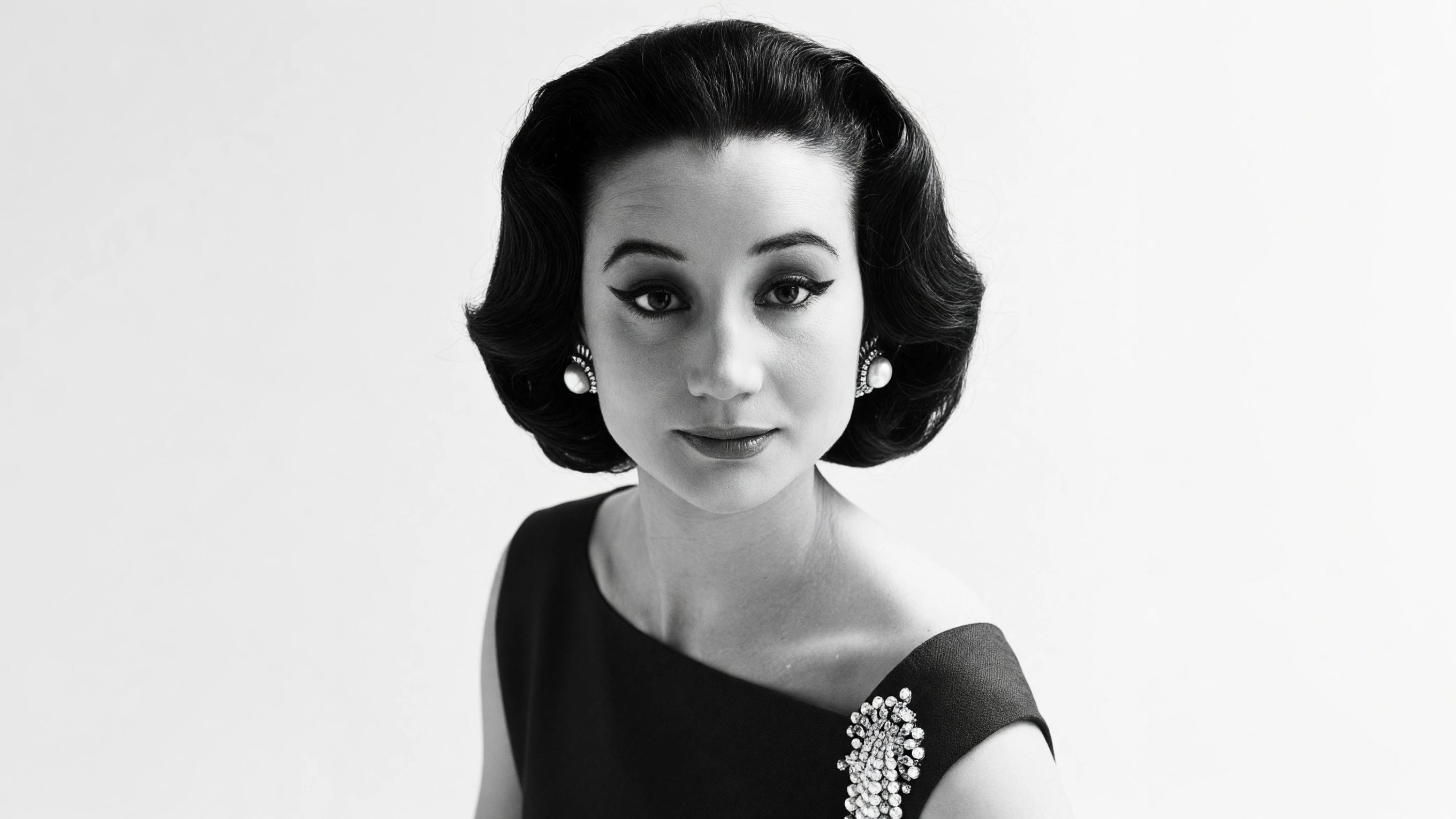
The date on her birth certificate came with a family irony built in.
Jacqueline Bonnin de La Bonninière de Beaumont was born in Paris on July 14, 1929, Bastille Day, the anniversary of the uprising that cost some of her ancestors their heads.
Her father, Count Jean de Beaumont, came from an old French noble house with records reaching back to the 1400s, a line that gave France generals, a vice-admiral, a bishop and a page to Marie Antoinette.
Jean carried the name into the modern age as an Olympic marksman, a fighter pilot and a member of parliament, and his daughter remembered him as “a seducer, a charmer, with a fantastic body.”
The Beaumont name supplied the rank, and her mother supplied the money. Paule de Rivaud de la Raffinière was the only daughter of Olivier de Rivaud, a banker whose family’s Rivaud Group grew rubber, bananas and palm oil on plantations across Africa and Asia.
That fortune paid for a Paris childhood the Beaumonts treated as the natural order of things.
The money came easily, but by Jacqueline’s own account the affection rarely did.
She described her mother as emotionally distant, and the warmth came from her grandfather, a flamboyant host with a house on the avenue Foch and a stable of racehorses, the person she felt truly loved her.
She lost him shortly before the war, and the German occupation then separated her from her parents, the start of what one profile later called a cruel wartime childhood.
She came back to Paris after the war as a teenager with the run of the couture houses her mother’s fortune could pay for, an incoming claim to the family inheritance money, and an eye for clothes that the family filed under good taste.
The summer of 1947 brought a young war veteran into her life, and seven months later she was his wife.
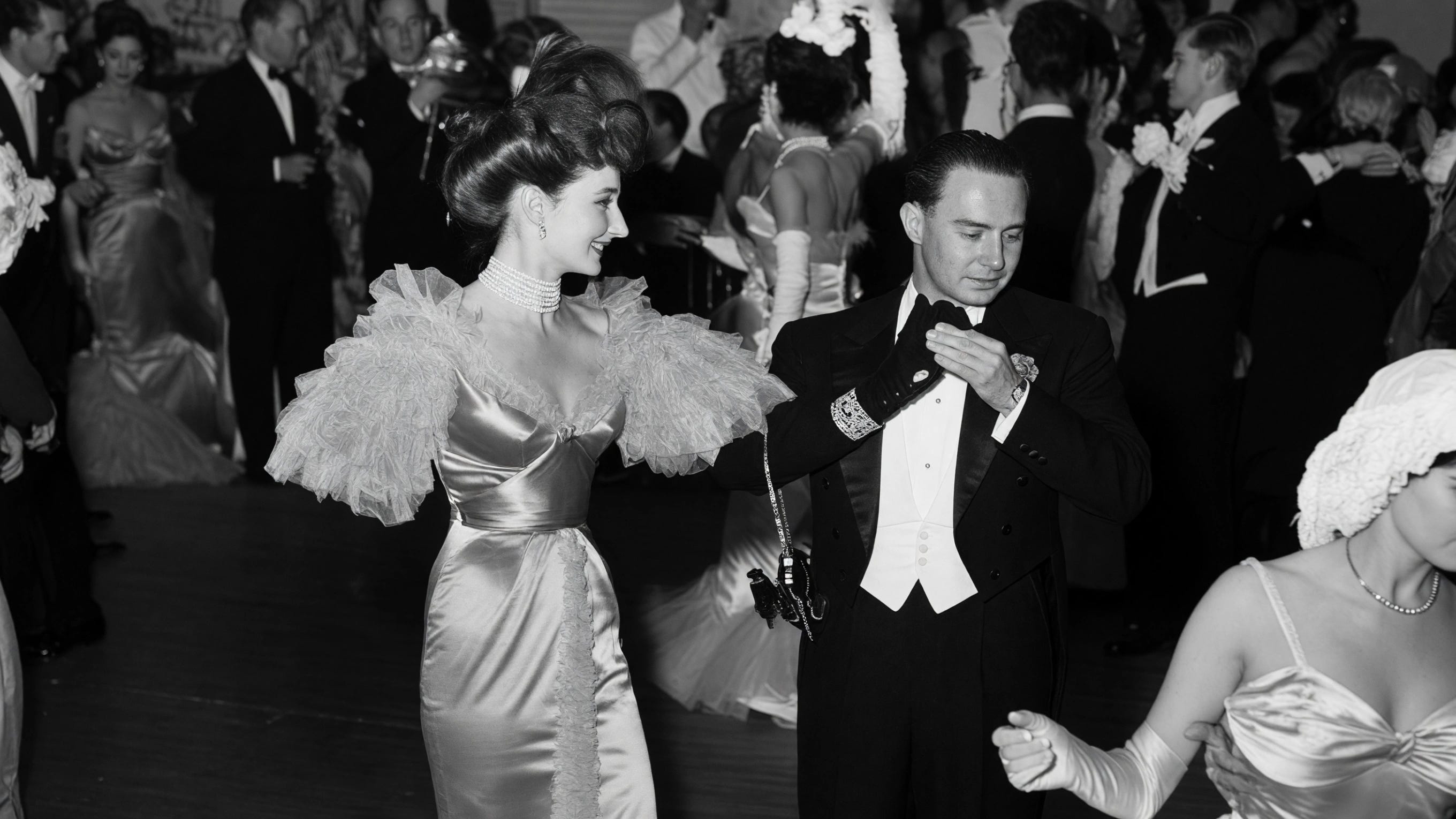
Édouard de Ribes was a vicomte from another family of financiers.
“We met in July and were married the following February,” she recalled, and he put it even more simply: “I saw this gazelle and immediately fell in love.”
Jacqueline was 18 when they married in the winter of 1948, and the wedding moved her from one grand Paris house into a far stricter one.
According to her authorized biographer, Dominique Bona, the de Ribes family vetted brides for Jewish ancestry and for the side their ancestors took in the French Revolution.
Jacqueline passed, Bastille Day birthday and all, and Bona writes that her in-laws loved her.
Their affection left the house rules in place: black-tie dinners, a household run on ceremony, and traditions that, in the Met’s words, ruled out a career for the women who married in.
The couple settled into a wing of his parents’ mansion near the Plaine Monceau and raised their two children there, Elisabeth and Jean. Édouard went on to run the Rivaud Group, her mother’s family firm, and in the early 1980s he succeeded to the title of count.
“I didn’t want to be the typical Countess de Ribes, taking care of the house and all that,” she said years later. “It never interested me.”
Édouard liked to joke that she owned “two dresses” when they met and that “life improved a little for her, because she now has 200.”
The magazine writer who heard him tell it put the real number at 400 or more.
His parents raised their eyebrows even at her evenings at ballet rehearsals, so a career in plain view was out of the question.
Up in the attic of that same house, she would design every dress herself, and every box left Paris for New York with another man’s name on it.
