
When you walk through London as a tourist, the imagination fills in the postcard images, the Tower, the Eye, Belgravia at dusk, and almost none of what is actually beneath your feet.
What the imagination doesn’t fill in is the freehold.
Across most of Mayfair, three hundred contiguous acres of Belgravia, and a long sweep of Pimlico, the ground beneath the visitor’s feet has been owned by one English family since they came over with William the Conqueror, and in 2026 they are still there, sitting on roughly £9.7 billion, with a thirty-five-year-old duke at the head of the house.
This is the story of the Grosvenors, the family that built modern London’s most expensive postcodes one generation at a time, and what their nine-hundred-and-sixty-year hold on the same patch of ground reveals about how old money actually survives.
A Norman Knight, a Cheshire Crest, and a Laughing Dog
The Grosvenors arrived in England in 1066, in the household of William the Conqueror, and they have, by one accounting or another, been there ever since.
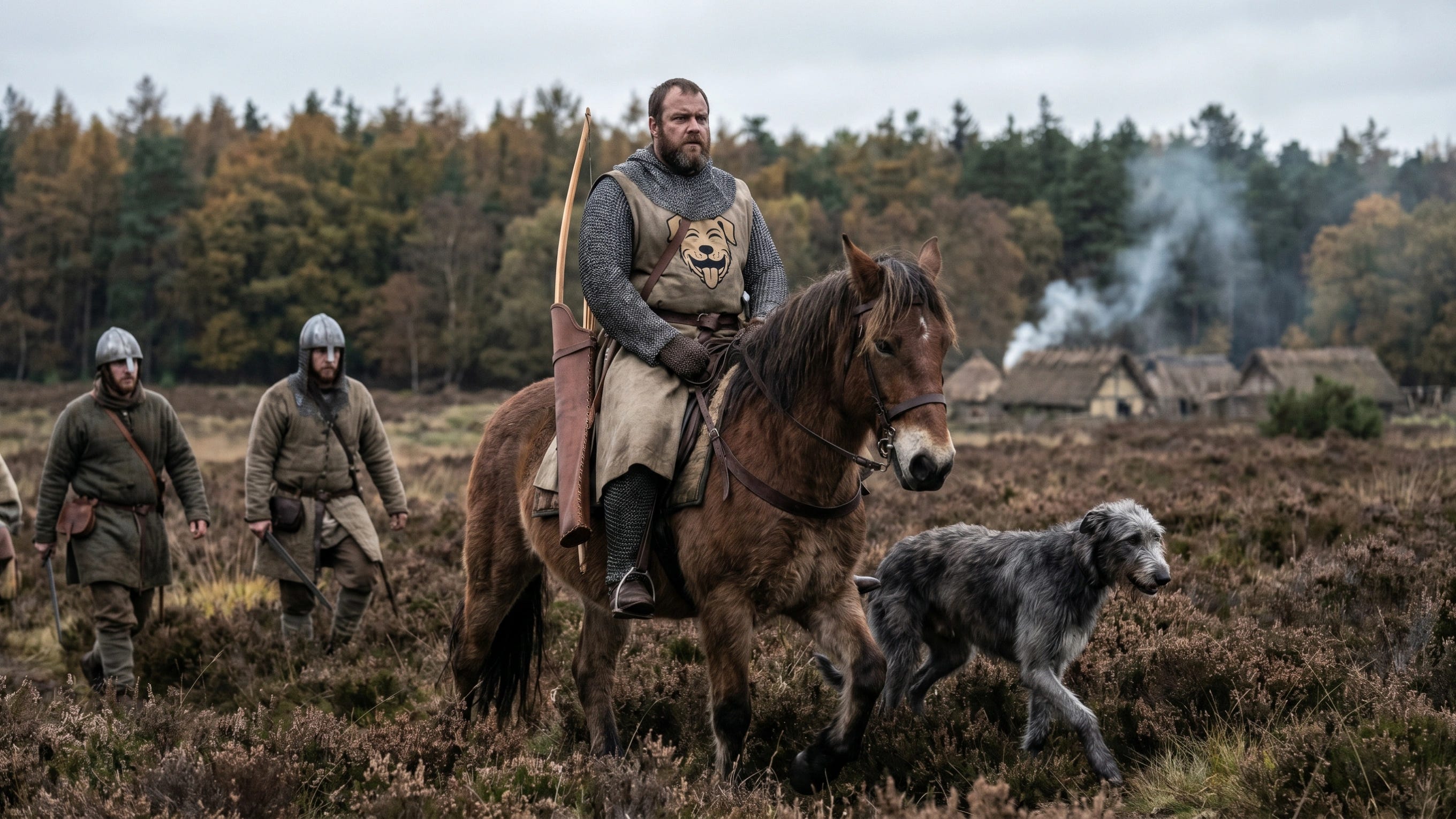
The founder, Hugh Lupus, was the Conqueror’s nephew and chief huntsman, and when the Norman settlement of England was carved up he was handed the county of Cheshire as his personal demesne, in the chronicler’s phrase, for holding it against the Welsh.
The Latin nickname Lupus meant wolf; the family’s later affectionate nickname for the same ancestor was Fat Hugh; his coat of arms carried a laughing dog whose image, eight centuries later, would become the visual model for Lewis Carroll’s Cheshire Cat.
For the next six hundred years the Grosvenors did precisely what most provincial gentry did in that period, which is to say they held the same county, kept the same baronial seat at Eaton Hall, married locally, and produced one Member of Parliament per generation without ever quite becoming spectacular.
Sir Richard Grosvenor, the first baronet, was born on a January morning in 1585 in Cheshire, knighted by King James I in 1617 on the lawns of Vale Royal in the same year the King James Bible was being prepared for the printers and one year after the death of Shakespeare; he served as High Sheriff, sat for Cheshire in the House of Commons in 1621, and kept a diary that historians still read as one of the cleanest surviving records of how an early-Stuart gentleman ordered his estate.
His son, the second baronet of the same name, was a royalist who fought at Edgehill and joined Sir George Booth’s failed 1659 uprising against the Cromwellian regime, and the family did, for a generation, the usual cycle of confiscation, restoration, and quiet recovery that any Cavalier line did in those years.
The third baronet, Sir Thomas Grosvenor, did something none of his predecessors had done.
In 1677 he married a twelve-year-old heiress named Mary Davies.
Mary’s dowry was approximately five hundred acres of marshy Thames-side meadow lying immediately west of the City of London, then far enough outside the city walls that the deeds described it as country; the parcel contained a stream called the Tyburn, a notorious gallows, and a pasture used for goose-grazing, and it also contained, although the dowry instrument did not anticipate this, the future neighbourhoods of Mayfair, Belgravia, and Pimlico.
The Grosvenor family, after six centuries of competent Cheshire gentry, had just been handed the patch of ground on which London was about to expand.
The First Duke, the Marshes, and the Building Lease
The Grosvenors did nothing visible with the marsh for forty years.
In 1721 Sir Richard Grosvenor, the fourth baronet, began the first phase of construction on what would become the Mayfair estate, and the instrument he chose for that construction, more than the architecture or the names of the squares, is what makes the entire dynasty legible across the following three centuries.
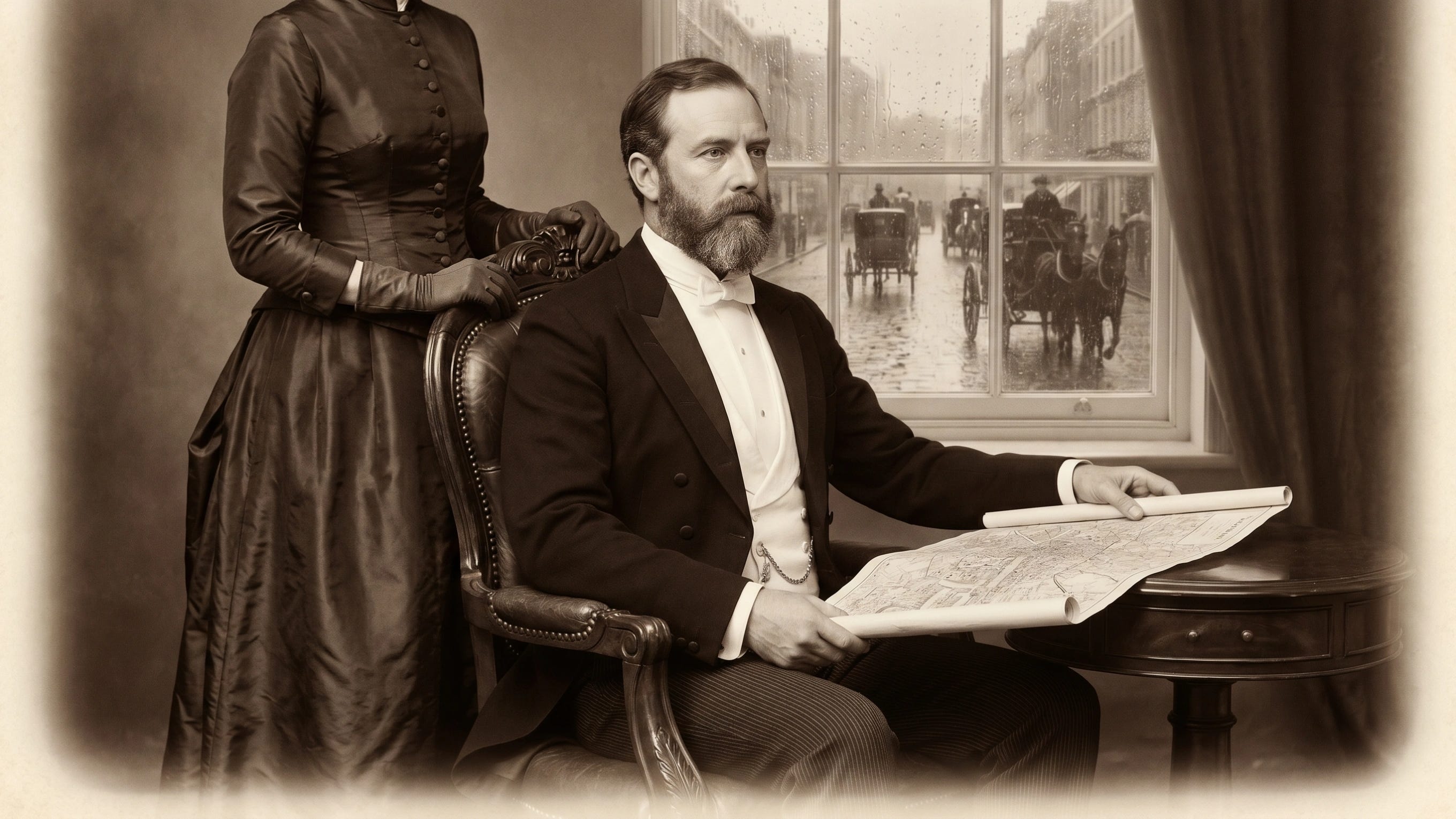
The instrument was the building lease. The family would never sell the freehold; they would lease to a builder the right to construct a house on Grosvenor land for ninety-nine years, collect ground rent for the term, and take back both building and land at the expiry, after which they would issue a new lease and begin again.
By the 1820s, under the second Marquess of Westminster, the building-lease model was applied to the southern marshes that became Belgravia, and the architectural uniformity that anyone walking through Eaton Square or Belgrave Square today still notices, the white stucco fronts, the wrought-iron railings, the matching glossy black doors, was not the work of the individual builders but the standing instruction of the estate’s surveyor’s office, which enforced tenant covenants on materials, height, and use as a matter of contract.
The man who turned this slow compounding into a national title was Hugh Lupus Grosvenor, the first Duke of Westminster, named for the eleventh-century founder.
He was a Victorian of unusual capacity, a racehorse owner who won the Derby four times, a Liberal MP, and a landowner who, in 1852, married his cousin Lady Constance Sutherland-Leveson-Gower at St James’s Palace with Queen Victoria and Prince Albert in the congregation, which placed the family inside the inner court circle of the British monarchy and kept it there.
In 1874, recognising the role the family had played in turning a marsh into the most expensive square mile in London, Queen Victoria created Hugh the first Duke of Westminster; it was the last non-royal dukedom Britain has ever issued.
By the close of the nineteenth century the Grosvenors had compounded a twelve-year-old’s dowry, across two and a half centuries, into the largest privately held freehold position in central London, and the rest of British high society had quietly understood that the family was no longer minor Cheshire gentry. They were the people the city itself rented from.
The Sixth Duke, the Sunday Times, and the Quiet Empire
The Grosvenor family moved into the modern economy without changing the underlying mechanism in any meaningful way.
By the mid-twentieth century the family business had been reorganised as the Grosvenor Group, a private property company with a London freehold core and an expanding international development arm, and the operative point of the reorganisation is that the freeholds did not move; everything else, the leasehold terms, the surveyors, the overseas offices, the asset classes, was free to rearrange itself around the central position that did not.
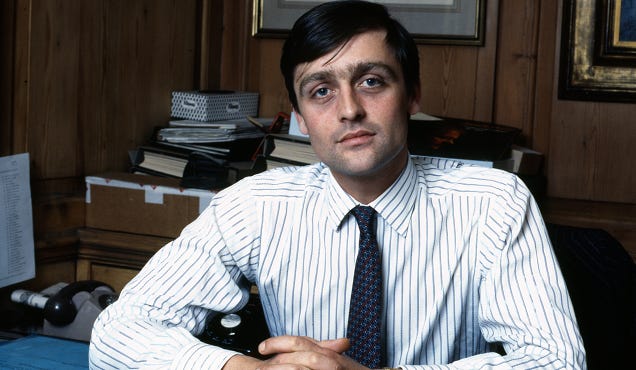
The man who ran the modern Grosvenor empire for thirty-seven years was Gerald Cavendish Grosvenor, the sixth Duke of Westminster, who inherited the dukedom in 1979 at the age of twenty-seven and chaired the family company for the rest of his life.
In 1989, when the Sunday Times published the first edition of its now-famous Rich List, Gerald was placed second in the United Kingdom, behind only Queen Elizabeth II, with a fortune of £3.2 billion, which adjusted for inflation runs to roughly £8.5 billion in 2026 money.
Under his tenure the Grosvenor Group moved into Washington, Vancouver, Hong Kong, Madrid, Paris, and Tokyo, built a food and agricultural-technology investment arm, and managed eleven thousand acres of Cheshire farmland and a rural estate in Lancashire, all of it diversifying, in the careful phrasing of its annual reports, without ever selling the central London freehold position that produced the cash flow that funded everything else.
The strategy was almost ostentatiously old-fashioned: hold the ground, lease the buildings, spend the ground rent, repeat.
The Shadows in the File
But the family file isn’t spotless.
In 2008, British and American newspapers reported that Gerald, the sixth Duke, had been associated with the so-called Emperors Club VIP, the high-end escort service whose exposure also ended Eliot Spitzer’s governorship of New York; the reports were unflattering and were never the subject of British legal action, and the duke did not address them publicly.
In 2017 the Paradise Papers leak named two small offshore vehicles, Vesta Limited in Bermuda and Nakar Holding SA in Panama, as having historically held an interest in Grosvenor International Holdings, and the family’s response was that the vehicles had been set up more than fifty years earlier, had held less than one per cent of the firm’s total assets, and had already been bought out for £40 million and dissolved in 2007. No regulatory action followed.
In 2019 the company faced a public controversy over the proposed redevelopment of Walden House in Belgravia, a former council block housing approximately forty long-tenancy families; a petition opposing the eviction attracted more than 180,000 signatures, and Westminster City Council ultimately secured a commitment to rehouse all former tenants on the redeveloped site, which is now known as the Cundy Street Quarter and is being carried forward in phases, with Phase 1 sold to the developer Lodha UK in 2023 while the rehousing commitment remains in the approved 2025 planning consents.
None of these episodes moved the freehold position, because the freehold position is what the family owns, and the rest is weather.
The Seventh Duke, the Wedding, and a Daughter
Gerald Cavendish Grosvenor died of a heart attack at the family’s Lancashire shooting estate on the ninth of August, 2016, at the age of sixty-four.
His only son Hugh Richard Louis Grosvenor, then twenty-five and a recent geography graduate of Newcastle University, became the seventh Duke of Westminster that afternoon.
The inheritance was not transferred to him personally; it was held inside the family’s long-running trust structure, and Hugh became its principal beneficiary rather than its sole owner, which is the part of the story British inheritance commentary tends to misread: the trust holds the assets, the dukedom holds the title, and the Grosvenor Group continues to run the operating business under the same Executive Trustee, Mark Preston.
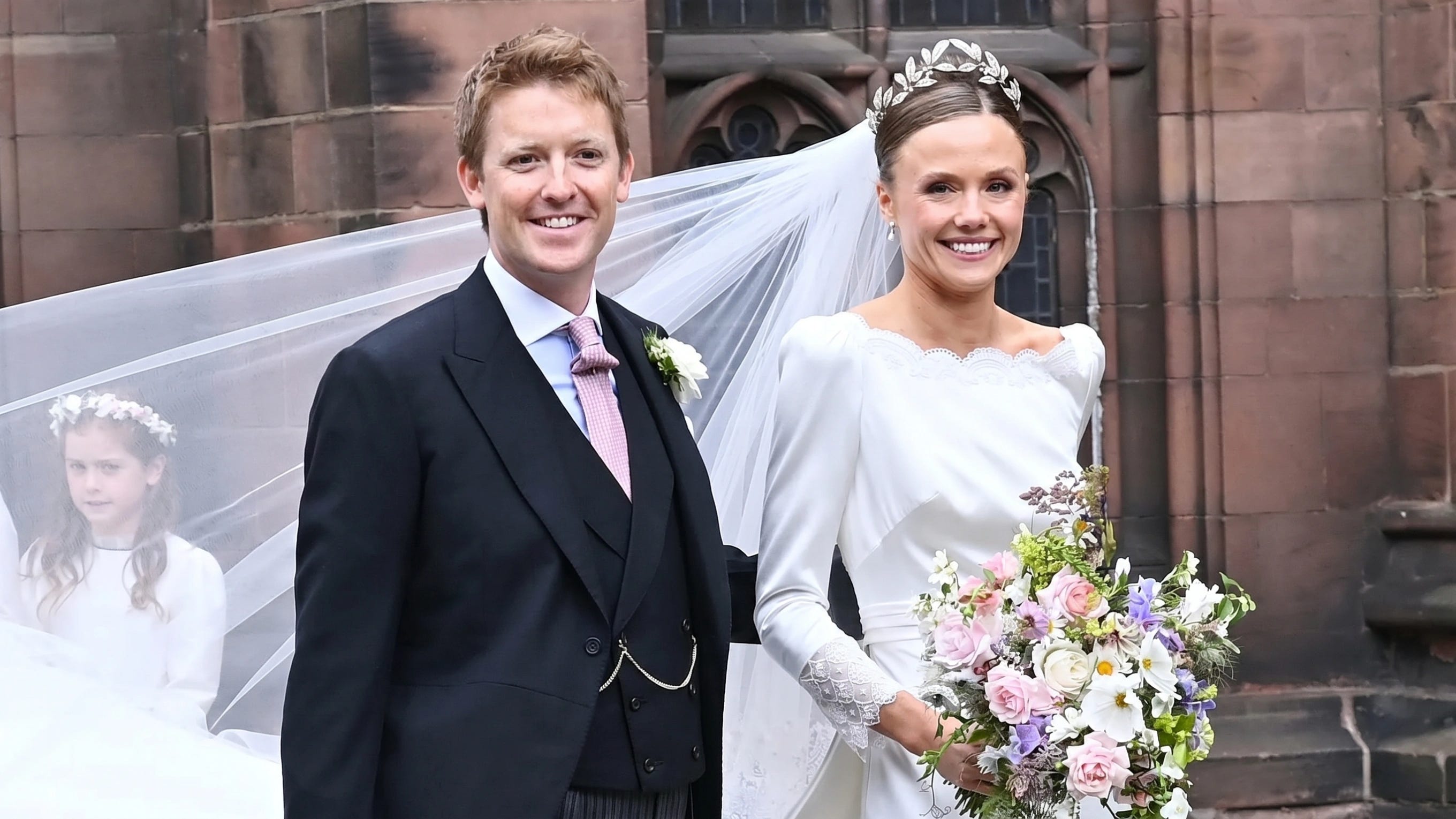
In June 2024, Hugh married Olivia Henson at Chester Cathedral with the Dean of Chester officiating, the bride wearing a Fabergé tiara first set on the head of a Grosvenor bride in 1906, and approximately four hundred guests in attendance; Prince William served as an usher, Princess Eugenie was in the congregation, and Prince Harry was not.
On the twenty-seventh of July, 2025, the couple’s first child was born in London and named Lady Cosima Florence Grosvenor, with Prince William as her godfather; the seventh Duke himself is godfather to Prince George, godfather to Prince Archie, and a godson of King Charles III.
The lineage has not, as the family lawyers would put it, lapsed.
The seventh Duke’s personal interests are unfashionably “old money,” in that he is a Territorial Army officer in the tradition of his father, an Olympic skeet shooter for Team GB at overseas international fixtures.
He’s man who keeps an unusually low public profile for someone whose net worth on the 2026 Sunday Times Rich List is £9.677 billion, placing him eighteenth in the United Kingdom this year, down from fourteenth in 2025 as larger tech and finance fortunes overtook landed property.
His sister, Lady Edwina Grosvenor, runs the prison-reform charity One Small Thing and was a founding investor in The Clink, the restaurant network that trains prisoners for catering careers.
The family’s 2025 financial results were a study in the limits of even the best freehold position: the UK estate produced a record £88.8 million in operating profit, while the North American development arm produced a £108.3 million loss on Vancouver writedowns and weak US tenant demand.
In May 2026, the company announced that it would, over three to five years, sell approximately £700 million of direct US property in Los Angeles, San Francisco, Washington DC, and Seattle, pivoting to an indirect investment model on the other side of the Atlantic; the first asset, 394 Pacific Avenue in San Francisco, had already been sold to the Swiss insurer Zurich.
The American chapter is being scaled back. The London chapter is not.
In 2024 the company sold a £1.2 billion partial stake in part of its Mayfair portfolio to Norges Bank Investment Management, the manager of Norway’s sovereign wealth fund, in a transaction that did not transfer freeholds, only a beneficial interest in a holding vehicle, with Grosvenor continuing as operating partner; it was the family’s first significant London position to change hands in seventy-two years, and even then, what changed hands was an interest, not the ground.
The Mayfair and Belgravia ground rent continues to flow.
The Pattern
The Grosvenor case makes one rule of “old money” unusually legible, because the family has been executing the rule for longer than any other private family in the western world, and the rule itself, once stated plainly, sounds almost too simple to be the answer.
The rule is that ownership of ground beats ownership of cash.
A bank balance can be inflated away, taxed, divorced, gambled, lent, defrauded, or expropriated; a trading business can be disintermediated by a new technology or hollowed out by a younger competitor; a title can be revoked, ridiculed, or quietly ignored by the people one most wants to impress.
None of these things has happened to the Grosvenors, because the Grosvenors have never been a money family or a trading family or a courtier family in the way that those other families were. They have been a freehold family.
Across nineteen generations, with great deliberation, the family has refused to sell the ground.
That is the entire mechanism.
The titles, the racehorses, the royal godfatherships, the Sunday Times rankings, the North American development arm, the food and agricultural-technology fund, the Cheshire shooting estate, the Fabergé tiara worn by the duchess at Chester Cathedral, the prison-reform charity, the daughter christened in 2025 whose godfather is the heir to the British throne…
All of it sits on top of one continuously held English freehold whose original deed was signed by a Norman knight in 1066 and renewed, with quiet competence, in every generation since.
Re: your question - my spouse and I purchased our current home for a ridiculous price from the bank, which didn’t want it on their books, early in our marriage. The building had been vacant for several years, had been used as a squat, and was in a blighted urban neighborhood. The fact that we owned the property outright outweighed any considerations to move to a safer area, and once again be subject to a monthly mortgage. Fast forward to today: our neighborhood has stabilized, partly due to our influence, and has become attractive to transplants moving to our city. Property values reflect the changes. The house itself has proven to be remarkably adaptable to the changes we have experienced over our lifetime. We are currently renovating it into its final form for our tenure, which will enable us to age in place. It is my intention to leave it to our heirs, to dispose of as they see fit.
Lol @"The Clink"