
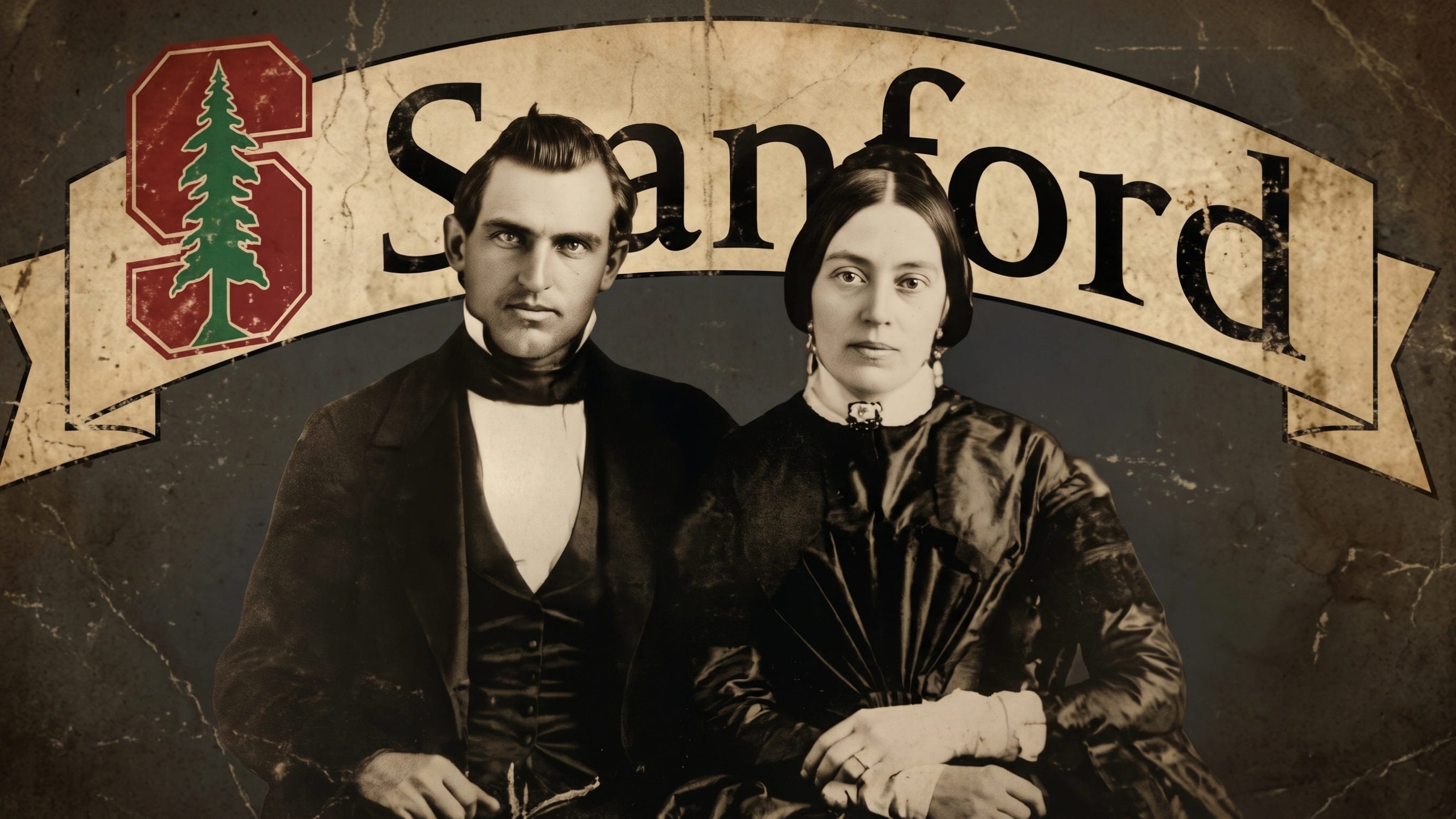
On February 28, 1905, in a suite at Honolulu’s Moana Hotel, Jane Stanford (yes, that Stanford) stirred a teaspoon of bicarbonate of soda into a glass of water before bed.
At the time, the mixture was a household cure for an upset stomach, a remedy so ordinary that nobody thought to fear it.
She was 76 and the sole owner of one of America’s most prestigious universities, a school named for her only son.
Minutes later, her screams cut through the sweltering night. “I have no control of my body,” she told her secretary. “I think I have been poisoned again.”
Her limbs began to lock as her secretary called for help.
Dr. Francis Howard Humphris, a physician living at the hotel, was summoned to her suite. When he arrived, her jaws were stiffening and violent muscle spasms were overtaking her body.
At 11:30 p.m., Jane shuddered one last time and died.
Someone wanted her dead, and the reasons reached back nearly three decades, to a multimillion-dollar mansion on a San Francisco hilltop.
Body of Thieves
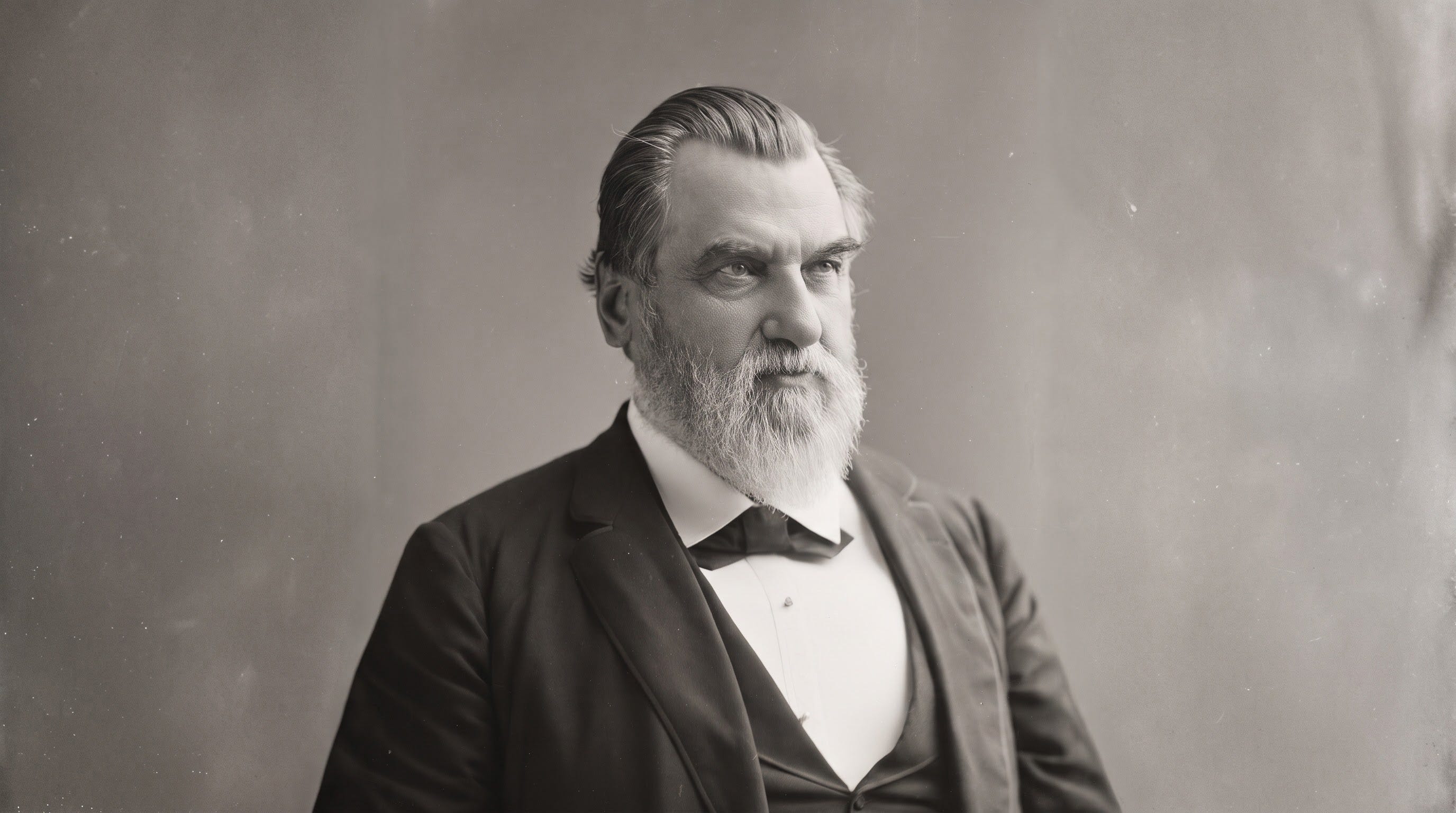
In 1876, one of history’s most audacious robberies had a street address: a mansion on San Francisco’s Nob Hill.
It belonged to one Leland Stanford, president of the Central Pacific Railroad, the company that built the western half of America’s first coast-to-coast rail line.
Gold rush money filled California with new millionaires. Yet the grandest fortunes in San Francisco came from a railroad built largely with public money.
Stanford sat on both sides of the table. As governor of California, he lobbied the state’s lawmakers for funds to build the Central Pacific, his own company.
The scheme was simple.
Stanford and his partners owned a construction company that billed the Central Pacific for laying track at inflated prices. The railroad paid each padded invoice with the bonds and land grants it collected from the government for building the line itself.
Follow the paperwork for a single mile of track and you’d see the trick. One desk wrote the bill, and another paid it. Both answered to the same four men.
In all, the partners turned more than $100 million, equal to over $30 billion today, in public subsidies into private wealth.
Stanford’s cut came to $13 million, and his fortune eventually reached at least $30 million, at a time when California’s entire state budget was just $6 million.
Critics of the day called Stanford and his partners “the most accomplished body of thieves America has ever known.”
Stanford turned his $13 million cut into land and stone across Northern California.
Closest to home stood the ostentatious mansion atop Nob Hill, in full view of the public whose money helped finance his railroad.
South of the city, Leland’s Palo Alto stock farm sprawled across 8,000 acres.
On its track, a horse thundered past a row of cameras, each shutter firing as the animal ran by. Stanford paid the photographer Eadweard Muybridge to answer one question: whether all four hooves of a galloping horse ever left the ground at once.
They did, and Muybridge’s now iconic photographs helped pioneer motion photography.
In Tehama County, his Vina Ranch covered 55,000 acres and made more wine than any other vineyard in the world.
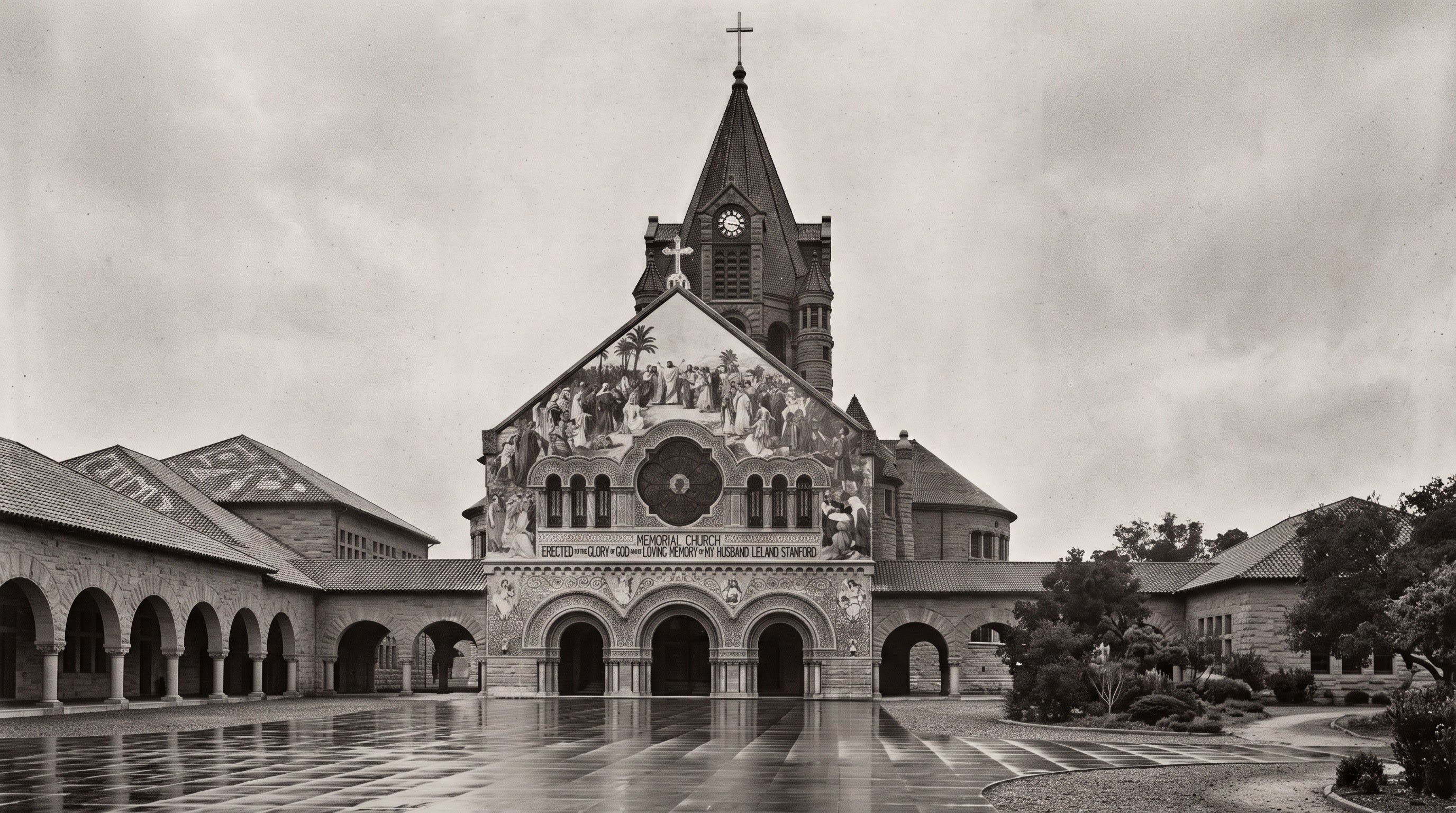
Then there was the university, founded with a $20 million endowment that dwarfed the resources of most American colleges combined.
Its main quad, with Romanesque sandstone colonnades under red tile roofs, made its ambitions plain in stone.
Jane Stanford later added Memorial Church, with Byzantine mosaics and Venetian-inspired stained glass, as a tribute to her son and her spiritualist beliefs.
The 1906 earthquake wrecked much of the original campus, but the church facade, carved with 28 inscriptions from Jane’s spiritual writings, survived largely intact.
But the money behind all that stone carried a stain Jane spent her final years trying to wash clean.
Someone in her inner circle tried to kill her twice, and the question of who did it haunted Northern California. It took 117 years for a Stanford historian to name her killer.
“The Dregs of Asia”
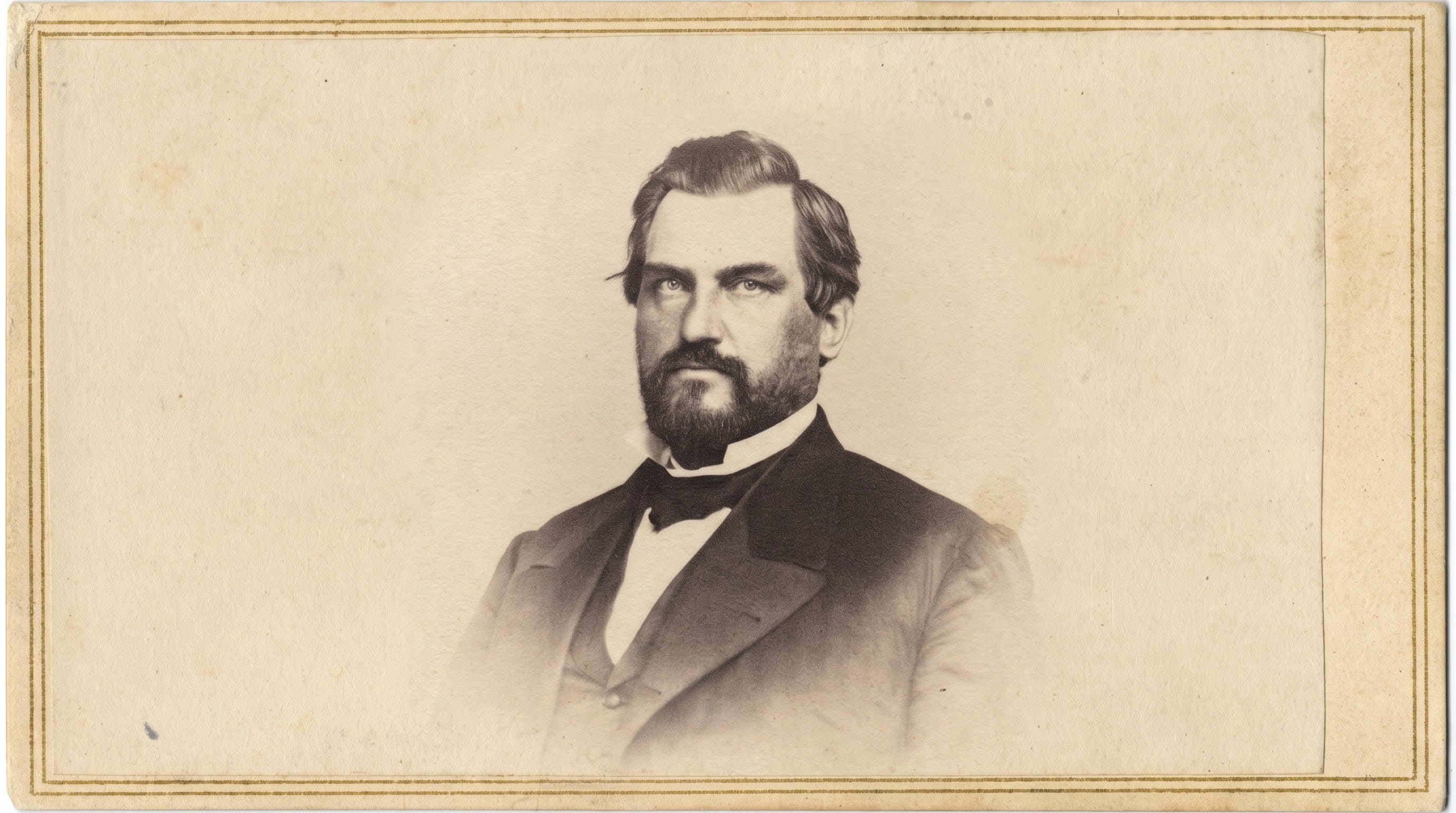
Amasa Leland Stanford was born in 1824 in Watervliet, New York, one of eight children in a family of innkeepers and farmers, far from any hilltop.
He studied law and joined the bar in 1848, but the practice he opened in Port Washington, Wisconsin, failed to thrive.
When a fire destroyed his law library, Stanford took it as a sign.
His five brothers were already in California for the gold rush, and in 1852 he followed them west.
From the start, Stanford had an eye for the spot where other men’s fortunes had to pass through his hands.
He left the digging to others and made his first money behind a Sacramento shop counter, selling picks, shovels and supplies to miners at marked-up prices.
And the merchants who outfitted the prospectors often grew richer than the men they supplied. Within a decade, Stanford found a far richer customer than any miner: the government of California itself.
In 1861, he orchestrated his election as governor of California, and that same year he became president of the Central Pacific Railroad.
Governor Leland Stanford lobbied California’s lawmakers for money to build his own railroad.
From the capitol in Sacramento, Stanford lobbied the state legislature for bonds and subsidies to fund the Central Pacific. “The governor” asked for the money, and “the railroad president” (the same man) took it.
It was truly “one hand washing the other.”
He and his three partners, Collis Huntington, Mark Hopkins and Charles Crocker, were known as the Big Four, and their profits were mighty big indeed.

Leland Stanford’s railroad ran on Chinese workers he once called the “dregs of Asia.”
In his 1862 inaugural address, Stanford promised to protect California from the “dregs of Asia.”
Five years later, more than 90% of the Central Pacific’s workforce, between 10,000 and 15,000 men at any given time, came from China.
They earned around $28 a month, while Irish crews took home $35. European workers received board, and the Chinese paid for their own food, tools and sometimes lodging.
In 1868, the Chinese crews struck for wages equal to the Europeans’. Crocker and Stanford cut off food to the mountain camps, and within a week the strikers returned to the tunnels.
This was the money that would build Stanford University.
The same year as the strike, Jane Stanford gave birth to the couple’s only child, Leland Stanford Jr.
For the next 16 years, the family looked untouchable, with every dollar of the railroad fortune waiting for one heir.
In 1884, Leland and Jane took the 15-year-old on a grand tour of Europe, the months-long trip wealthy American families used to polish a child’s education.
However, the boy’s lessons came to a halt among the ruins of the ancient world.
In Athens, Leland Jr. caught typhoid fever, and his desperate parents rushed him from Naples to Rome to Florence in search of treatment.
On March 13, 1884, the boy died.
The Children of California
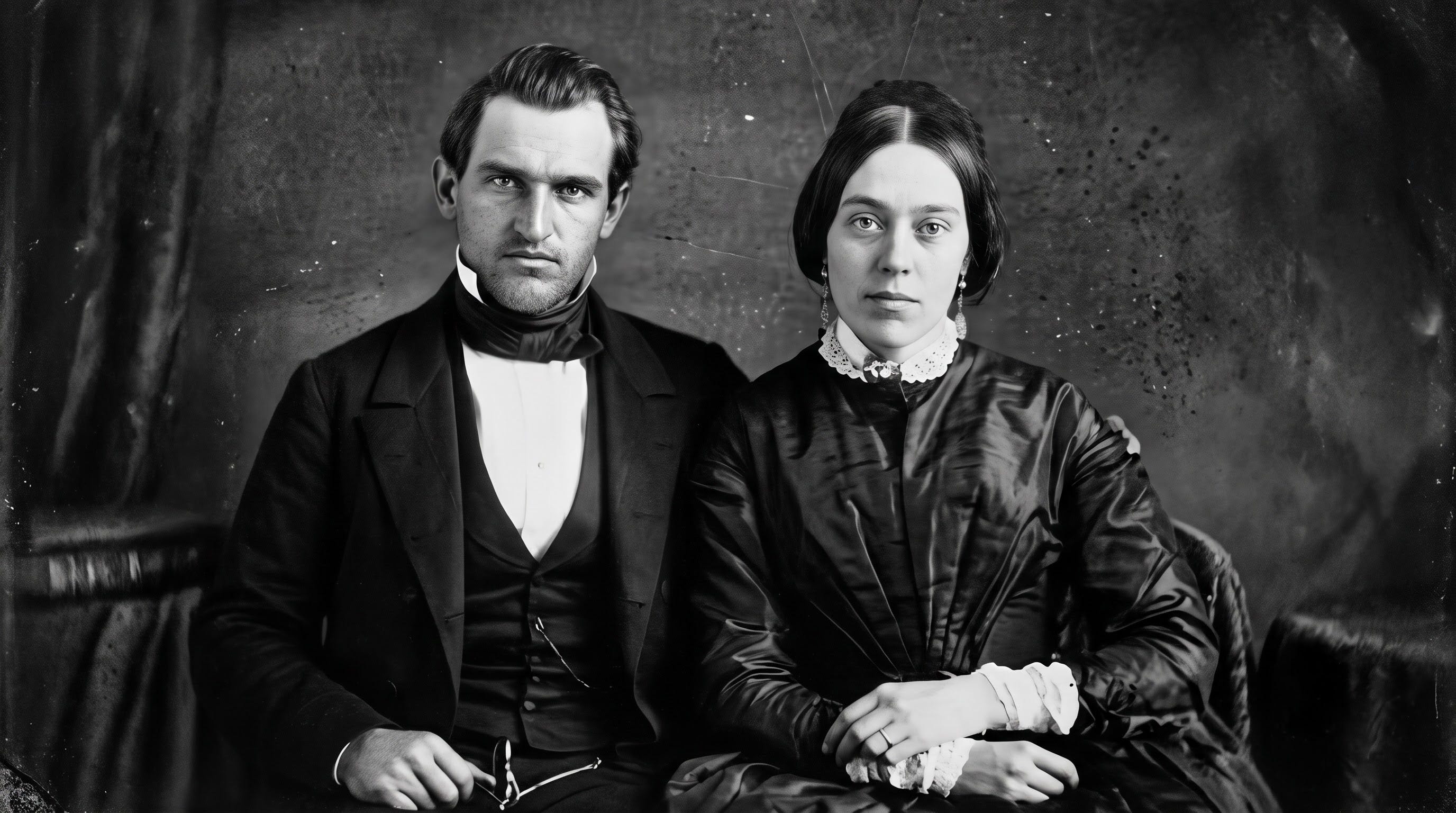
In March 1884, Leland Jr.’s death left Jane and Leland Stanford with a railroad fortune and no heir to receive it.
The grief shattered them both. Jane, already drawn to spiritualism, a Victorian belief that the living could speak with the dead, began holding séances to reach her son.
After one of those sessions, according to family lore, Leland told his wife what their money would do next.
“The children of California shall be our children.”
In 1885, the Stanfords founded Leland Stanford Jr. University as a memorial to the boy, conveying roughly $20 million, equal to $695 million today, to build it.
The doors opened in October 1891 on a campus that was coeducational and ecumenical, welcoming students of any faith, a vision unusual for its time.
To run it, Leland hired David Starr Jordan, a 40-year-old ichthyologist, or fish scientist, from Indiana University.
By its second academic year, enrollment had grown to 764 students, the faculty had expanded, and Jordan was preparing to establish a law department.
Leland was still a U.S. senator and railroad magnate, but at 69, his health started to fail him.
On June 20, 1893, apparently in good spirits, Leland took his customary carriage ride around the Palo Alto estate and stopped to visit neighbors before returning home late that afternoon.
As darkness settled over the house, Leland retired for the evening.
That night, Jane heard him struggling in his bedroom. She called out to him, but he could no longer answer.
Within minutes, Leland Stanford was dead, apparently from a stroke, at 69.
Jane stood alone at the head of a university and a fortune under siege.
The Journey of Jane
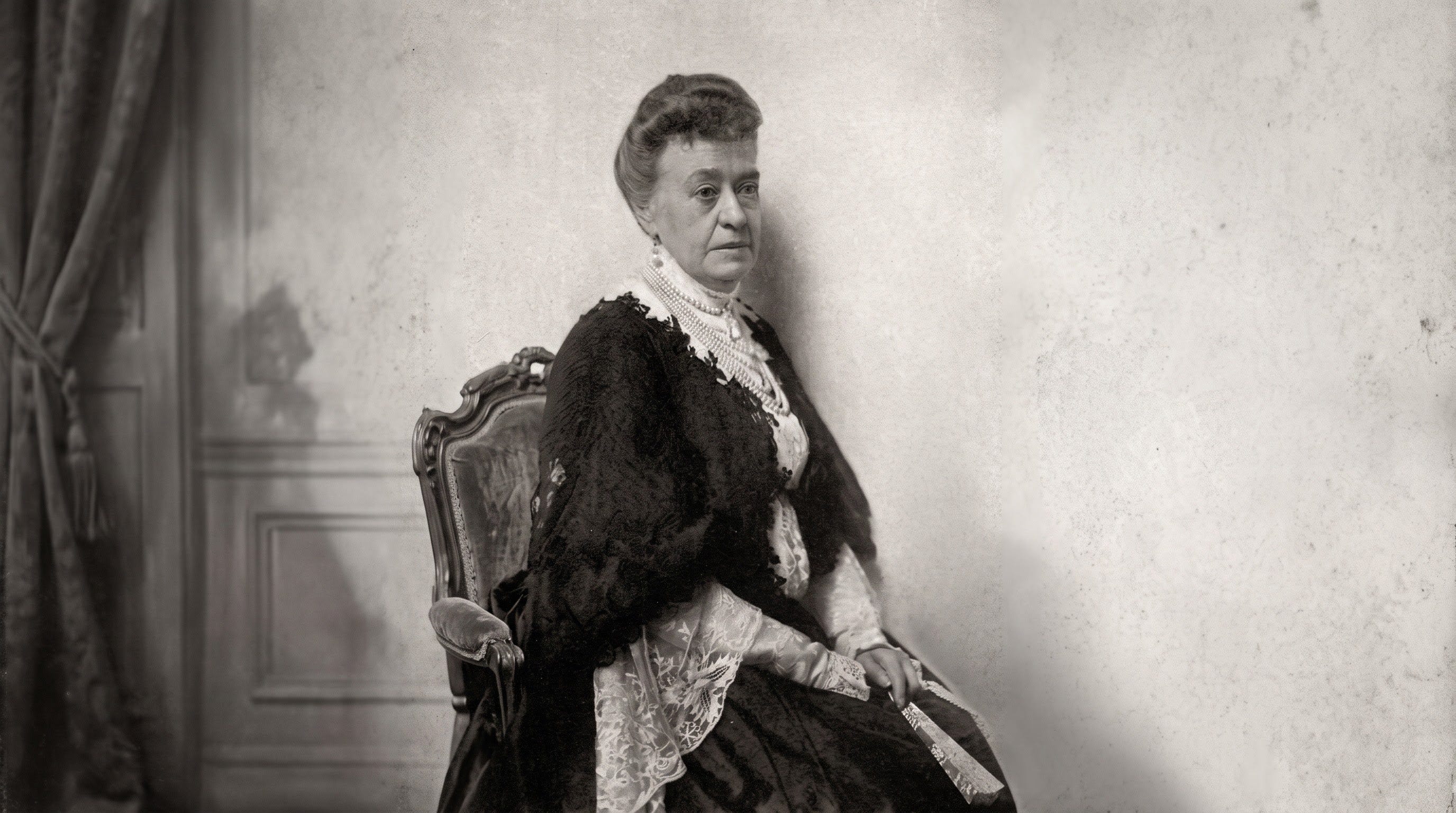
Jane Stanford inherited her husband’s fortune, and his enemies came with it.
The money meant for her son’s university was suddenly a target, and the federal government sued the Stanford estate for $15 million, claiming unpaid debts from the railroad’s construction.
For six years, Jane fought the case while running the campus herself and paying faculty salaries out of her household budget. She sold jewelry and mortgaged properties, and the university stayed afloat.
Yet Jane wanted more than survival. She planned an ambitious building campaign, a traditional liberal arts curriculum and moral and spiritual instruction at the center of it all.
The heart of that vision was Stanford Memorial Church, dedicated in January 1903, a Romanesque building with Byzantine details inspired by the cathedrals of Venice. Mosaics and stained glass filled it, and 28 sayings from Jane’s own spiritualist writings went into its sandstone walls.
“While my whole heart is in the university,” she once said, “my soul is in that church.”
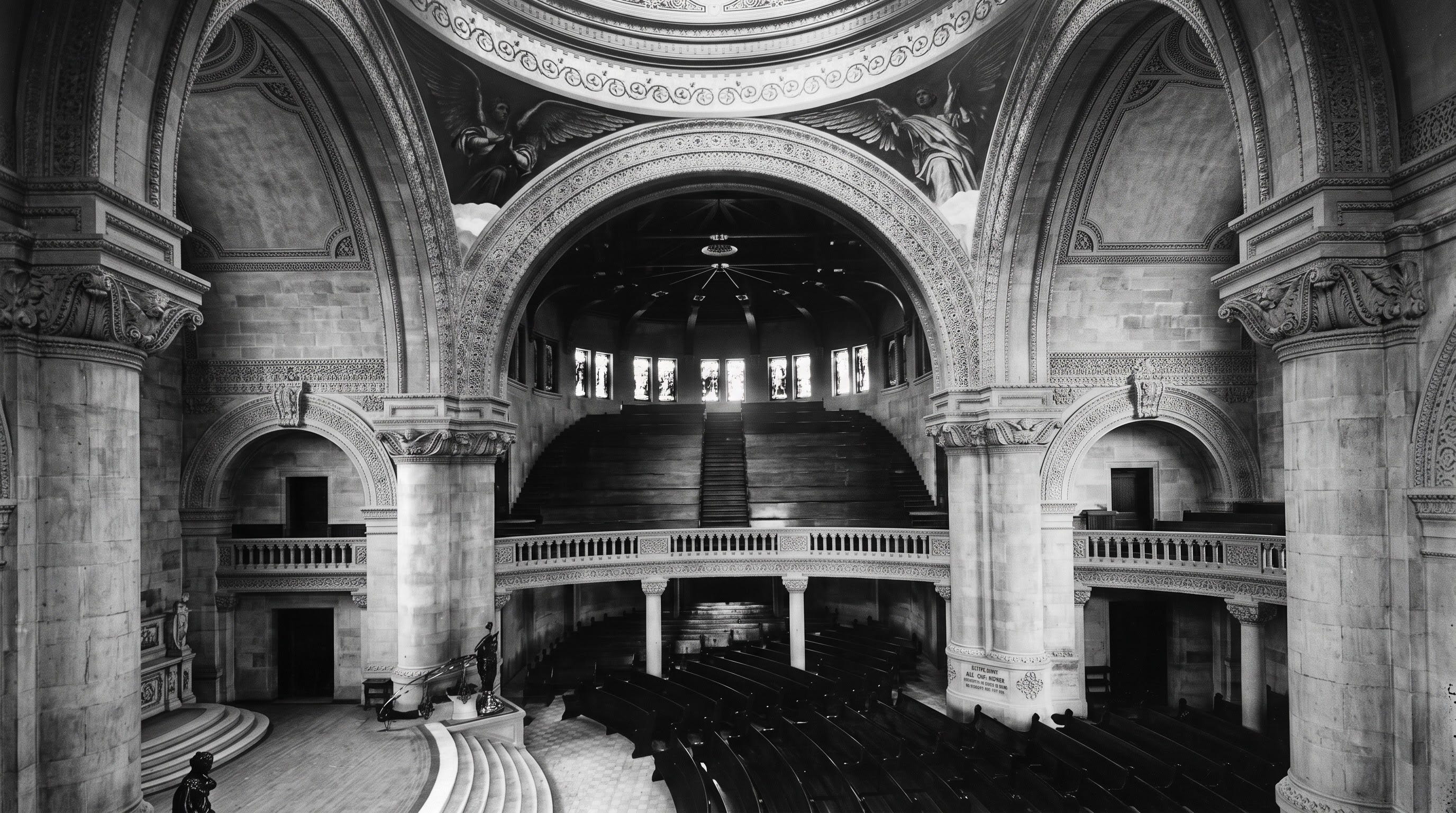
But her president pictured a different school.
Jordan wanted a modern research university built on science and practical training, while Jane saw a memorial to her son, grounded in moral teaching.
David Starr Jordan fired a professor for Jane Stanford, and seven more walked out.
The break came in 1900 over Edward Alsworth Ross, an outspoken economics professor who advocated public ownership of city utilities, including street railways. His attacks on corporate monopolies struck uncomfortably close to the source of the Stanford fortune.
When Ross delivered a speech calling for restrictions on Asian immigration, Jane was furious.
His rhetoric reminded her of Denis Kearney, the labor leader whose anti-Chinese speeches had helped incite violence in San Francisco decades earlier. Jane remembered the unrest vividly: she’d once hired an armed guard to protect her home.
She wrote to Jordan: “He ought not to be retained at Stanford University.”
Jordan feared that firing a respected professor for expressing political opinions would destroy Stanford’s academic credibility. If scholars believed their jobs depended on pleasing the university’s wealthy founder, the best minds would think twice before accepting appointments there.
Harvard president Charles William Eliot warned Jordan that allowing a donor’s wishes to determine a professor’s fate would be a calamity for Stanford’s reputation.
But the money was Jane’s, and Jordan fired Ross.
The faculty answered first. Stanford history chair George Howard predicted “the deepest grief and profoundest indignation” from every friend of intellectual freedom in the country.
Seven professors resigned.
Then the economists weighed in. A panel of Ross’s fellow economists, drawn from Columbia, Yale and Brown, found no evidence of “moral defect,” incompetence or unfaithfulness.
Ross lost his job, the panel concluded, for his opinions alone.
Their verdict soon traveled far beyond the Stanford campus. The firing became a national cause, and it helped spark the founding of the American Association of University Professors to protect academic freedom.
Jane won her fight over Ross, and within five years someone in her inner circle would want her dead.
Persons Unknown
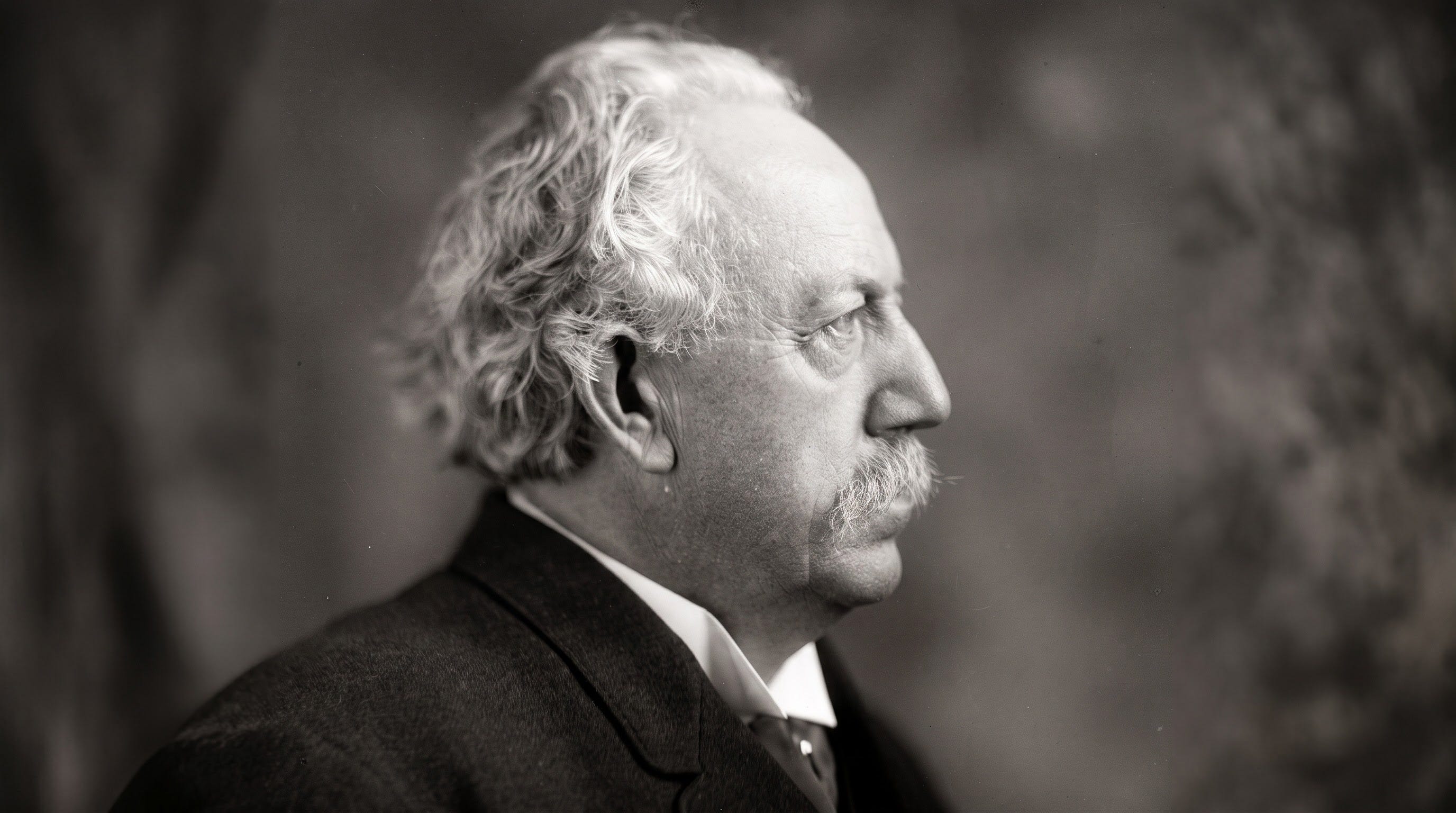
Few people in Jane’s inner circle owed her as much as David Starr Jordan, Stanford University’s first president. Jordan fired the economics professor Ross for her, and seven more professors walked out.
However, Jordan shared much of Ross’s thinking about race and heredity, and he said so in print.
In 1898, two years before the Ross firing, Jordan himself had published The Blood of a Nation: A Study of the Decay of Races Through the Survival of the Unfit, a book arguing that human traits ran in families and that society should stop the “unfit” from having children.
And he lent his name to the cause. Jordan chaired the eugenics section of the American Breeders Association and joined the Human Betterment Foundation.
His advocacy contributed directly to forced sterilization laws, and in 2020, Stanford stripped his name from its campus buildings because of it.
Jane, meanwhile, had her own plans for him.
Jane Stanford told friends she’d fire David Starr Jordan once she came home.
In late 1904, she resolved to dismiss him after a long trip abroad, and she shared that decision with several confidants. Everything Jordan held rested on her goodwill: his salary, his prestige and the platform he used to promote eugenics.
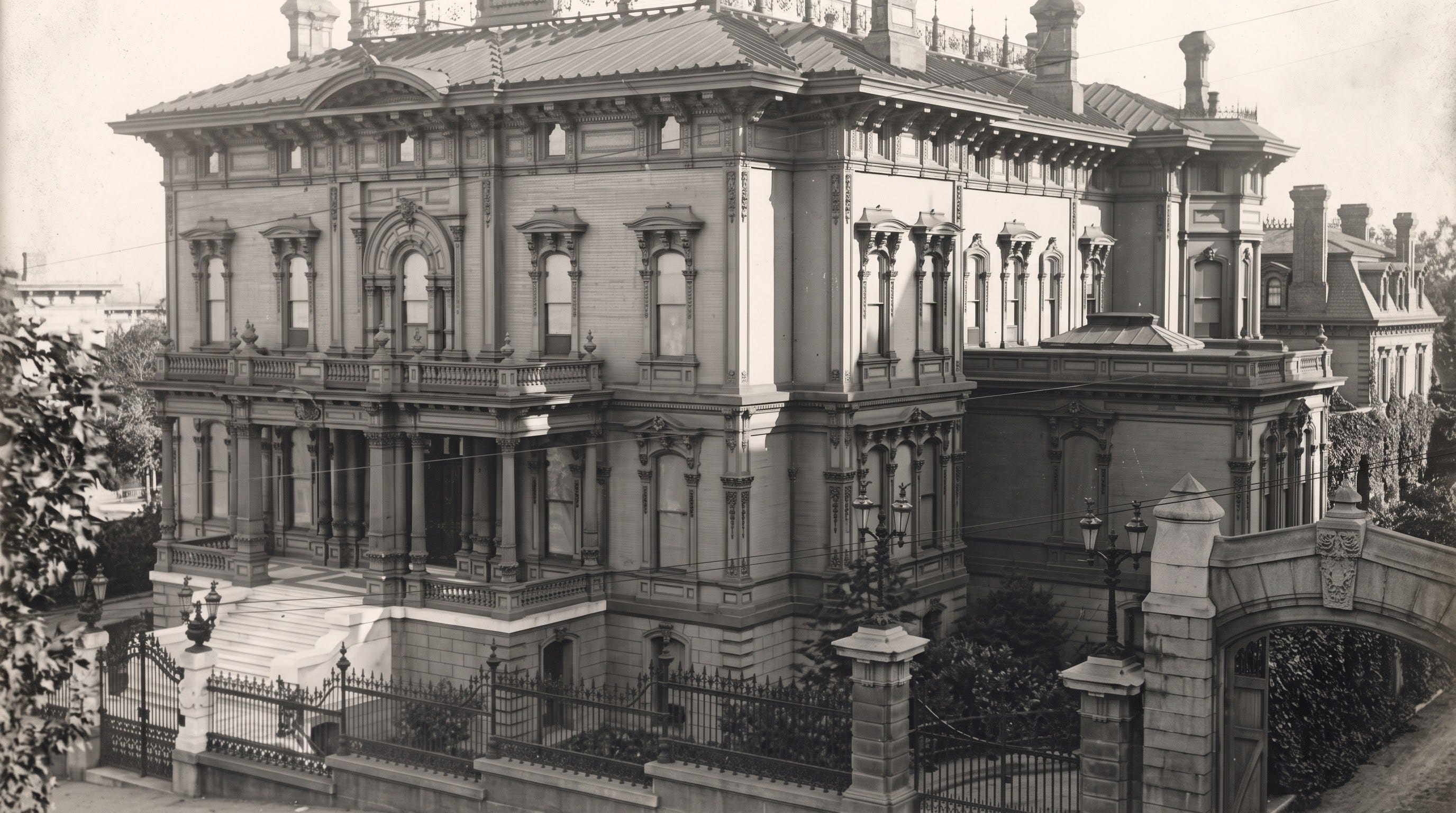
Jane Stanford’s maid brought her a bedtime bottle of water laced with strychnine.
On the night of January 4, 1905, Jane was at her Nob Hill mansion in San Francisco when her maid, Elizabeth Richmond, set a bottle of Poland Spring mineral water by her bed, as she did every night.
Jane took a sip and tasted something intensely bitter. She pushed her fingers down her throat and made herself vomit.
Richmond tried the water and spat it out, choking. Bertha Berner, Jane’s personal secretary and a fixture in the Stanford household since 1884, confirmed the strange taste.
The next morning, Richmond and Berner carried the bottle to Wakelee’s drugstore.
The chemist found enough strychnine in it to kill an elephant. Someone inside Jane’s own house wanted her dead.
Shaken, she fled to Hawaii, leaving San Francisco four days before news of the poisoning broke. Jordan told reporters she sailed on her physician’s advice, to recover from pneumonia in a warmer climate. “She did not think for a minute that any attempt was being made to poison her,” he said.
The pneumonia story was false.
Jane left because she feared for her life.
On February 28, she enjoyed a picnic and a stroll along a Honolulu pier, then retired to her room at the Moana Hotel around 9 p.m.
The local physician found her in full-body spasms, with every sound or touch setting off another wave. Someone fetched a stomach pump, but it came too late. Jane stayed conscious through every contraction until the end.
At 4 a.m. on March 1, Honolulu’s deputy sheriff gathered a coroner’s jury of six men in the Moana’s private dining room to view the body. Dr. C.B. Wood then performed the autopsy and testified that the locked jaw, rigid limbs and purple discoloration all pointed to strychnine.
Chemists confirmed the poison in Jane’s organs. They found it again in the cascara laxative capsules in her room.
On March 9, 1905, after three days of hearings, the jury returned its unanimous verdict: Jane Lathrop Stanford died of strychnine poisoning “administered with felonious intent by some person or persons unknown.”
Honolulu’s Pacific Commercial Advertiser put it in four words:
“Mrs. Stanford Was Murdered.”
Meanwhile, David Starr Jordan was already at sea, sailing for Honolulu with a very different story about how she died.
“Natural Causes”
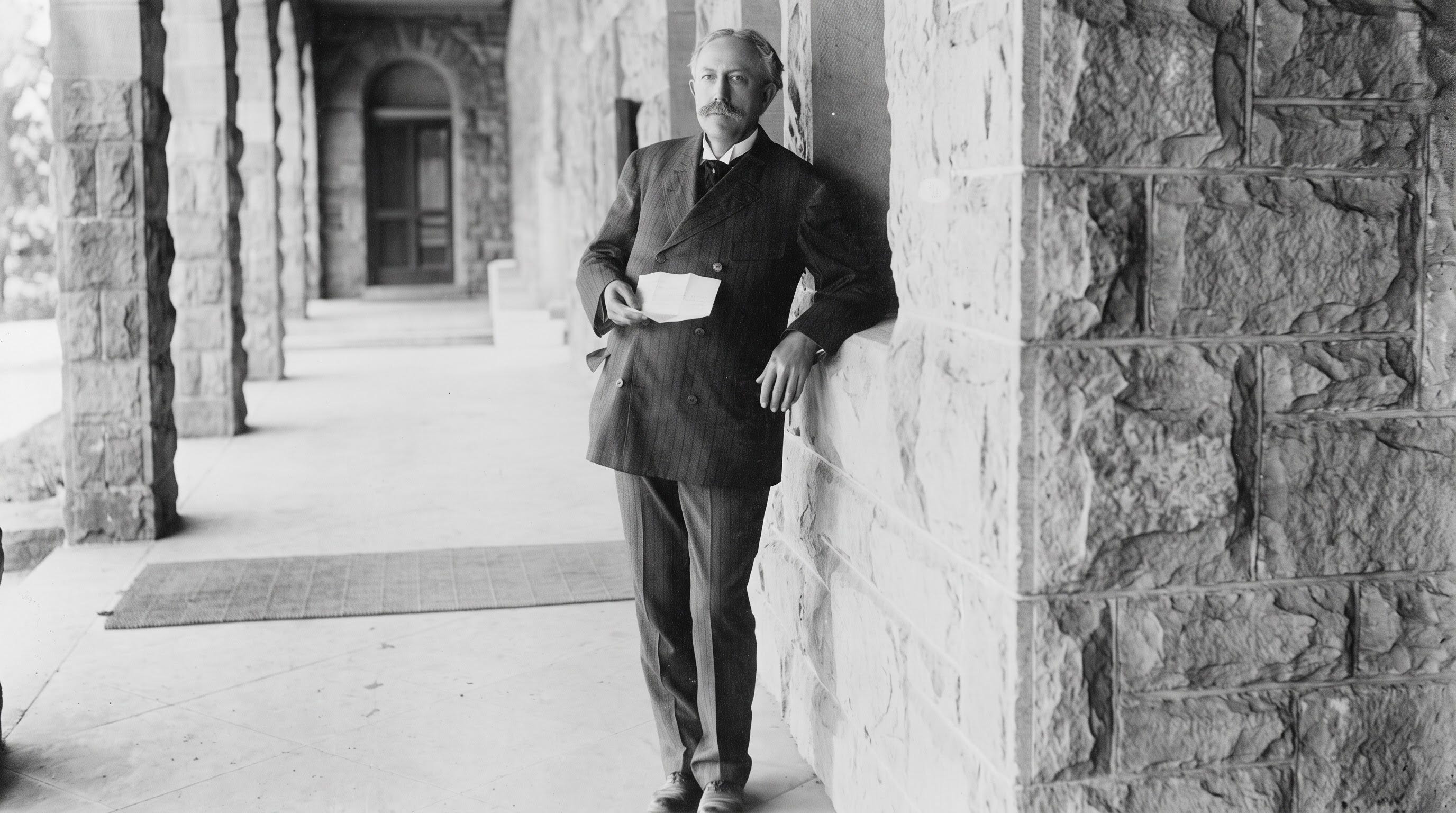
Jordan’s steamship left San Francisco on March 4, 1905, soon after word of the death reached the city and five days before the Honolulu jury ruled.
Officially, the university president was traveling to Hawaii to collect Jane’s remains.
Unofficially, there was money at stake. A murder verdict, or a ruling that she took her own life, could invalidate her bequests to Stanford.
The school barely scraped through the money crisis after Leland’s death, and losing Jane’s endowment would finish it.
David Starr Jordan told reporters Jane Stanford died of natural causes.
In Honolulu, Jordan challenged the coroner’s findings in the press. He suggested the local physicians added strychnine to the bicarbonate of soda after her death, hoping to extort extra fees from the estate.
The doctors, respected men in their community, were furious at the slander. Still, one physician recanted his diagnosis. He later left for Ceylon, the British colony now called Sri Lanka, in relative disgrace.
Jordan also used the newspapers back home to vouch for the secretary Bertha Berner, proclaiming her innocence and praising her character.
Jordan’s version of events held up only as long as the detectives back home failed to produce a poisoner.
In San Francisco, the police investigation fell apart. An unrelated scandal shook the department’s leadership, and the murder got lost in the confusion.
Detectives focused on three servants with access to Jane’s belongings before both poisonings. Elizabeth Richmond, the British maid who delivered the poisoned Poland Spring water, was cleared.
Alfred Beverly, the former butler, was skimming from Jane through a kickback scheme. The scheme gave him motive and opportunity, yet investigators cleared him too.
Wing, the household’s Chinese cook, had no apparent motive, yet anti-Chinese officers singled him out for harsh treatment.
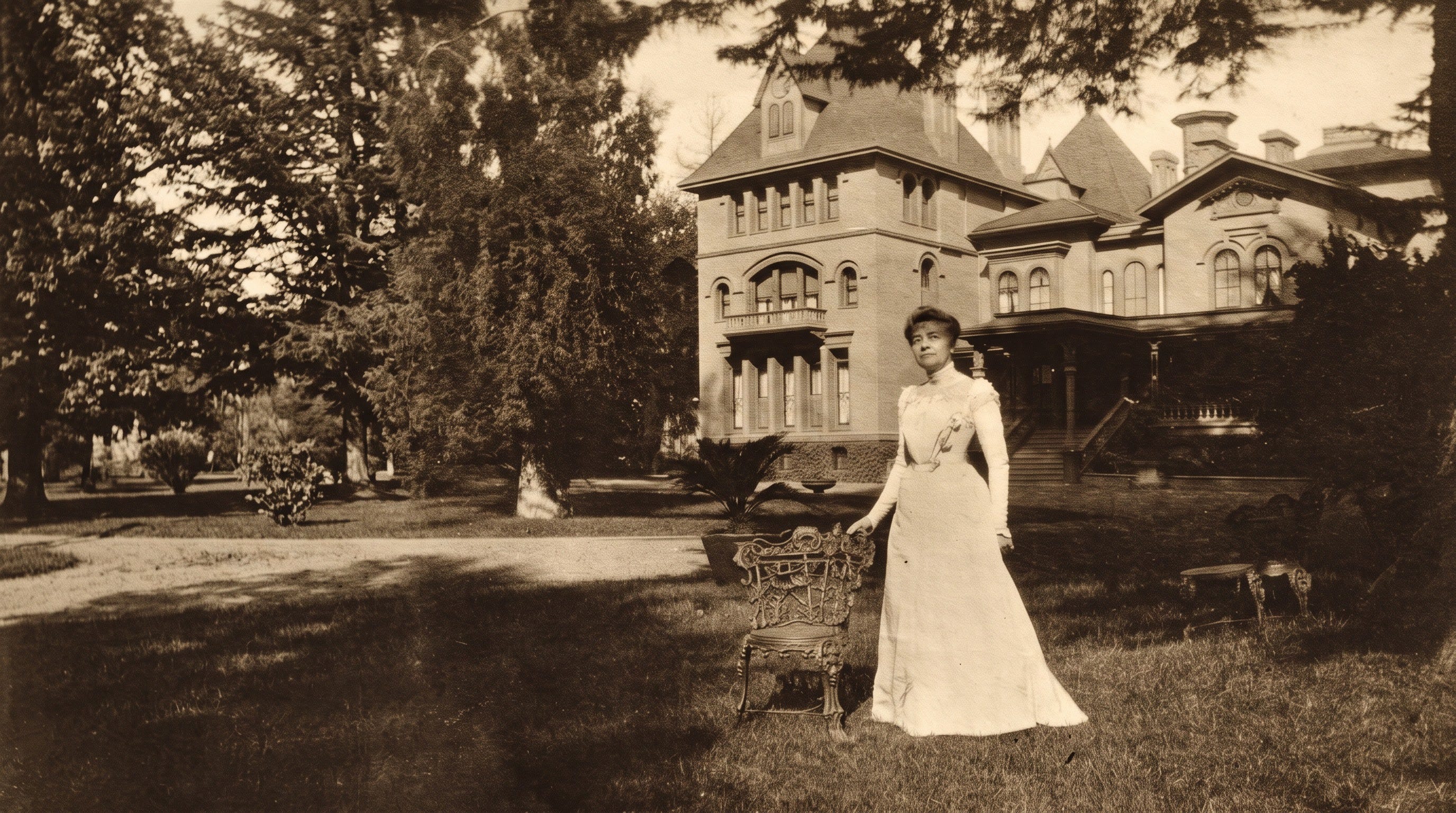
The detectives’ short list left off Jane’s secretary.
Bertha Berner was the only person present at both poisonings.
She was there on Nob Hill in January and at the Moana in February. She bought the bicarbonate of soda in San Francisco before they sailed, then prepared the final dose in Honolulu.
And Jane’s will left her $15,000, nearly $400,000 today.
On paper, the two women were close. The same document described Berner as Jane’s secretary and devoted friend through years of trial and sorrow.
According to court documents, that devoted friend thought about quitting several times. Berner clashed with her employer over personal matters, including a social life Jane considered too active for a young woman. She also appeared to be romantically involved with Beverly, the dismissed butler.
In his 2022 book, Who Killed Jane Stanford?, Richard White, the Stanford historian we met at the start of this story, names Berner as the killer. He points to the inheritance, a fear that Jane would uncover Berner’s money schemes, or plain exhaustion after 21 years of service.
“I think she was a murderer…”
White writes. “But right up to the moment of murder, I can’t help sympathizing with her.”
You’ll find the Stanford name across California today.
Jane’s bequests reached the school after all, and it grew into one of the most prestigious universities in the world. Her murder remains officially unsolved.
Jordan stayed president until 1913 and chancellor until 1916. He died in 1931, and no one ever publicly acknowledged his role in the alleged cover-up.
Bertha Berner collected her $15,000 and lived out her days in relative comfort.
Whatever she knew about that last teaspoon of bicarbonate of soda, she took to her grave.
Fantastic and all new to me.
The Stanford’s are practically royalty in CA. I knew some of this story, but not this much detail.