
For the billionaire class, New Year’s Eve operates on different logic than every other holiday.
See, most of the year, the ultra-wealthy optimize for privacy—remote compounds, unlisted properties, staff who’ve signed NDAs with six-figure penalty clauses. But on December 31st, the objective reverses entirely.
But “NYE” is about visibility within a peer-selected safe zone.
It’s a strategic migration toward density, and the one night where billionaires actually want to be seen, but only by each other.
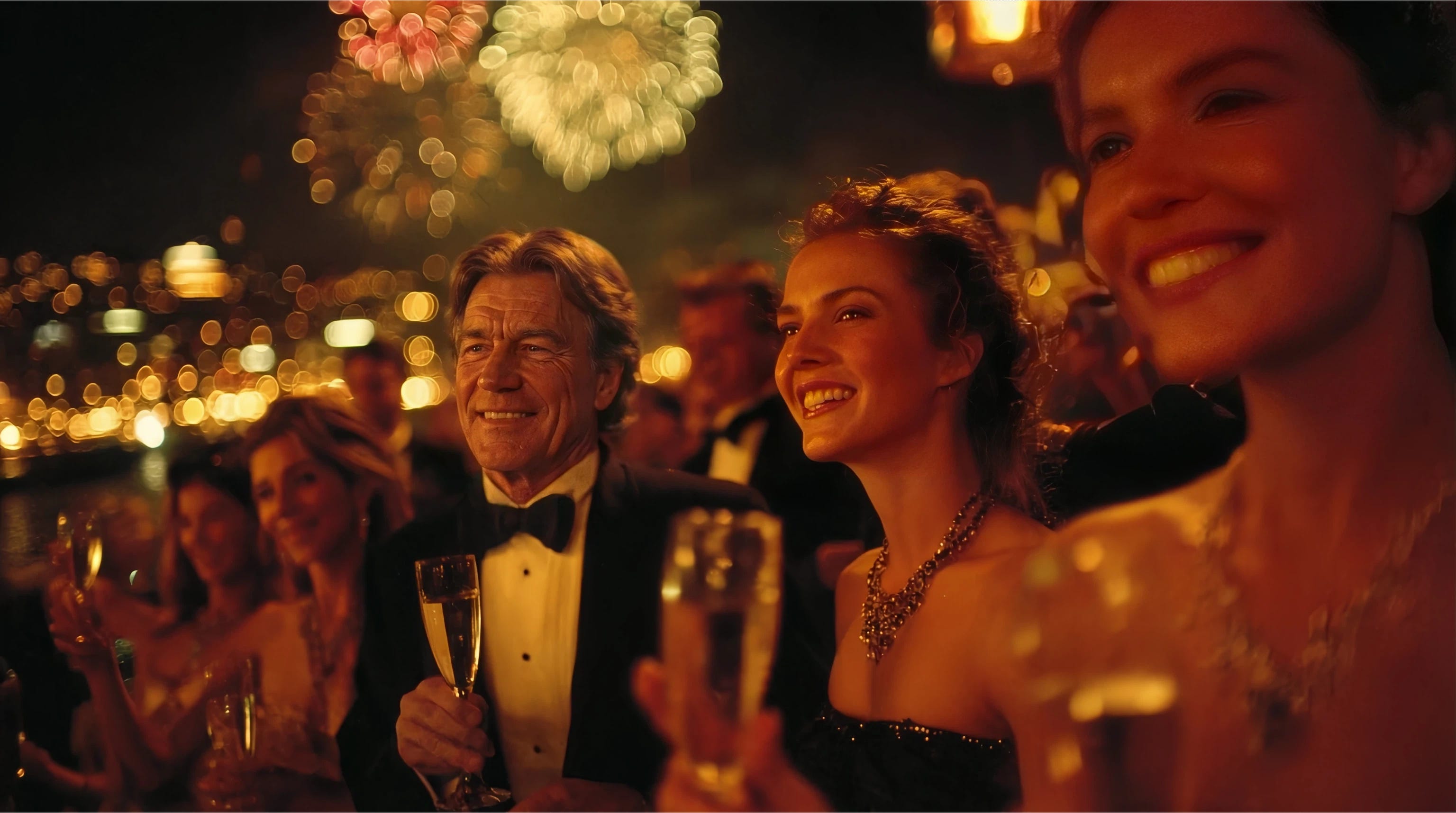
Now, the 2024/2025 consensus anchor remains St. Barts, specifically the tiny harbor at Gustavia—the only place in the world where billionaire density per square foot exceeds Davos, yet operates with a deceptive openness that is arguably an illusion.
What follows is how this world actually operates: the logistics, the hierarchies, and the hidden costs that separate the billionaire tier from everyone looking up at them.
Why They’re Really There (Yes, Taxes Are Involved)
The parties get the press coverage and the yachts get the Instagram posts, but the underlying reason for the annual migration to St. Barts has less to do with celebration than with fiscal strategy.
See, St. Barts operates as an Overseas Collectivity of France, which grants it a tax status that reads like a wealth preservation fantasy. The island levies zero income tax, zero wealth tax, zero capital gains tax, and zero inheritance tax. For families managing generational fortunes, this combination represents something close to a financial holy grail.
But qualifying for these benefits requires more than just showing up with a helicopter and a black card.
To access St. Barts’ tax advantages, an individual must prove official residency for five consecutive years. During this vesting period, they remain subject to full French taxation—income rates up to 45% plus wealth surcharges that can push the effective rate even higher. The process demands documented presence on the island, which transforms certain calendar dates into mandatory appearances.
Consequently, spending New Year’s Eve in Gustavia often serves as one of these presence days, a way to maintain the paper trail required for tax residency certification.
So, while the champagne flows and the fireworks explode over the harbor, a meaningful percentage of the crowd is simultaneously fulfilling an obligation that has nothing to do with fun and everything to do with long-term wealth preservation.
The trend this season (2025-2026) points toward what insiders call “quiet luxury” venues—secluded estates like Hotel Le Toiny where established wealth can celebrate without rubbing shoulders with what they diplomatically refer to as the “new money crowds” flooding the main strips.
The social sorting has become increasingly precise: where you stay, which parties you attend, and whether you’re docked in the harbor or anchored outside all communicate something specific about your position in the hierarchy.
The Hierarchy of the Harbor
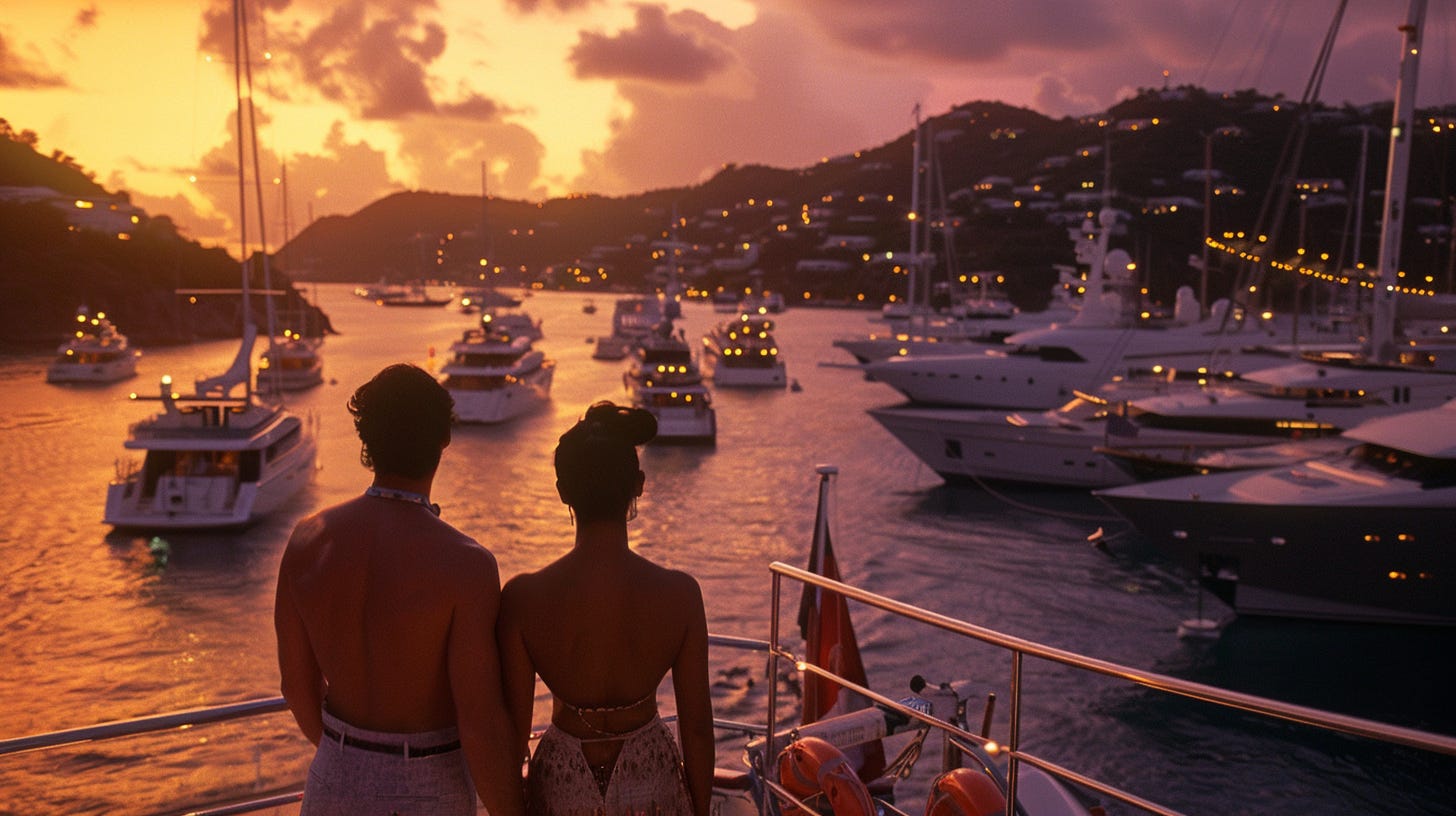
The Port of Gustavia is geographically tiny, and this forced scarcity drives prices and status competition above even Monaco.
There’s a hard insurance limit that shapes everything: no vessels over 60 meters are permitted to dock on the inner quay. A rare exception exists for boats up to 65 meters at the commercial “warehouse dock,” but only two spots are available. This creates a counterintuitive dynamic where the wealthiest individuals—the ones with the largest yachts—find themselves physically excluded from the most desirable real estate in the harbor.
Jeff Bezos provides the most visible example of this paradox.
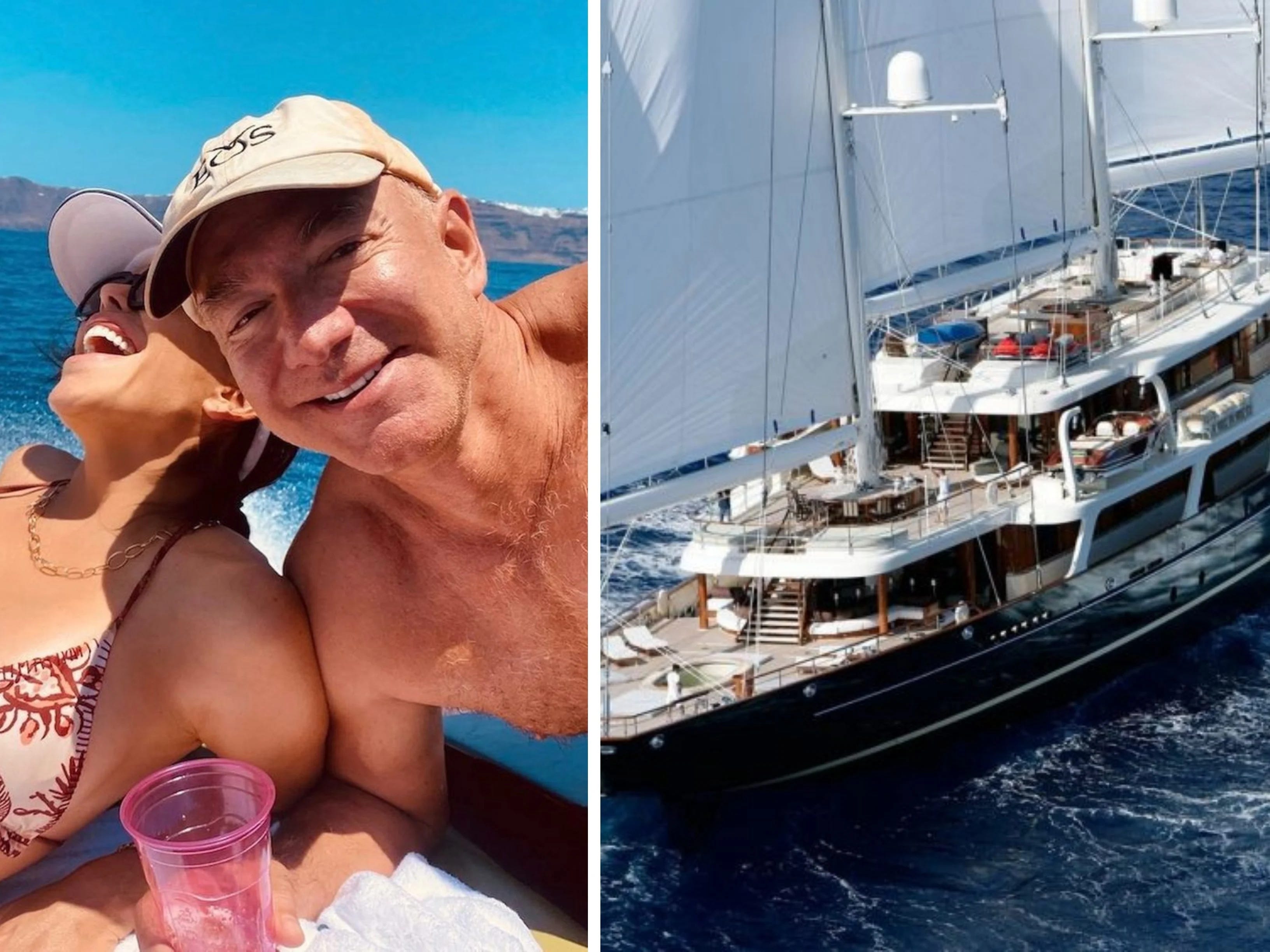
His 127-meter Koru is far too large for the harbor, which forces him to anchor in the outer anchorage and tender in via smaller boat. It’s an ironic disadvantage compared to billionaires with more modestly sized vessels who managed to secure a slip on the Quai du Général-de-Gaulle, the inner quay where stern-to docking in Mediterranean style represents the ultimate status symbol.
But the most powerful man on the island in December turns out not to be a billionaire at all.
Ernest Brin, the Port Director, controls access to those coveted inner quay spots through a system that operates entirely on relationships rather than formal reservations. Securing a position requires faxing or emailing your vessel’s dimensions to his office twelve or more months in advance, but there’s no official booking system, no waitlist you can join, no price you can pay to jump the queue. It’s pure relationship arbitrage—you either have the connections or you don’t.
At midnight, the density of yachts in the outer anchorage reaches levels that create genuine navigational hazards. Hull-to-hull collisions become a real threat as 300-plus vessels swing unpredictably on their anchor chains when the wind shifts direction. Experienced captains deploy extra fender teams along the rubbing strakes, essentially padding the sides of their vessels to absorb impacts that would otherwise damage paint and fiberglass worth hundreds of thousands of dollars.
The security apparatus matches the concentration of assets.
Yachts like Eclipse and Koru utilize military-grade electronic systems designed to detect incoming drones and blind their camera sensors, creating a localized dead zone over the fleet where aerial photography becomes impossible. The technology reportedly includes laser systems that can disable camera equipment without destroying the drone itself—a legal grey area that wealthy owners navigate through careful positioning in international waters.
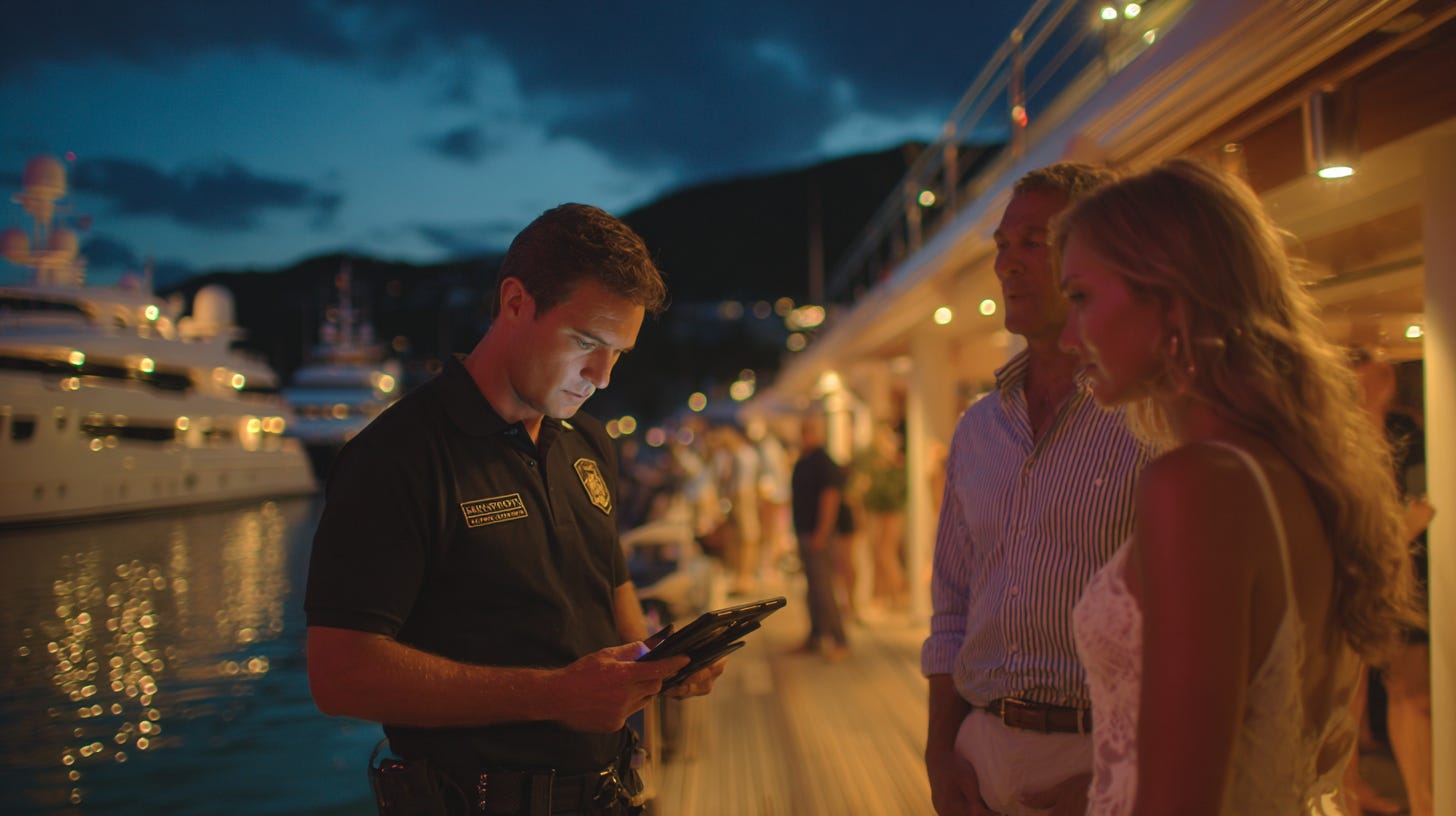
On the gangways themselves, private security teams control access with the precision of nightclub bouncers but the training of special forces operators. Many are ex-French Foreign Legion or British SAS, hired specifically for their ability to handle high-pressure situations with minimal drama. If your name isn’t on the iPad manifest, you don’t pass the tender filter at the public dock, and no amount of explanation or credential-dropping will change that.
Therefore, the social hierarchy of the harbor expresses itself through these small moments of access granted or denied.
Getting There Is Half the Battle
One of the most closely guarded logistical secrets of billionaire New Year’s Eve is that you cannot actually fly a private jet directly to the party.
Gustaf III Airport in St. Barts has a runway of just 2,100 feet that terminates directly into the ocean, making it one of the most dramatic—and limiting—approaches in private aviation.
The strip simply cannot handle the long-range heavy jets that billionaires typically favor for intercontinental travel. No Gulfstream G650s touching down here, no Bombardier Global 7500s making the final approach.
The workaround has become so standardized that insiders have a name for it: the St. Maarten Shuffle.
The billionaire fleet lands at Princess Juliana Airport in neighboring Sint Maarten, a Dutch territory with a proper runway capable of handling any aircraft. From there, passengers must transfer to smaller planes for the final fifteen-minute hop to St. Barts. Commercial charter options via carriers like Winair or St Barth Commuter are considered the standard approach—perfectly serviceable but lacking exclusivity.
The true billionaire option involves private charter via West Indies Helicopters or a Pilatus PC-12, a turboprop aircraft small enough to handle the St. Barts runway. During normal times, this ten-minute flight might cost $200. During NYE week, prices spike to $3,000 per seat or $15,000 or more for a private helicopter transfer. The premium reflects pure demand compression—too many wealthy people trying to reach the same small island during the same narrow window.
Another complication emerges as the sun goes down. The St. Barts airport closes strictly at sunset, approximately 5:45 PM, due to its lack of instrument landing systems.
There are no exceptions, no matter how important the passenger or how generous the offered gratuity.
Billionaires whose jets land in St. Maarten after dark face an unappealing choice: spend the night on the Dutch side and miss the early evening parties, or take a private night-boat transfer across open water.
The crossing takes roughly 45 minutes and can get rough depending on conditions. More than a few guests have arrived at New Year’s Eve celebrations looking green rather than glamorous, their seasickness undermining whatever entrance they’d planned to make. The boat operators—companies like St Barth R Way and MasterSki Pilou—charge premium rates for the after-dark service, knowing their clients have no alternative.
Aspen presents its own distinctive logistics nightmare for the portion of the billionaire class that prefers mountains to beaches.
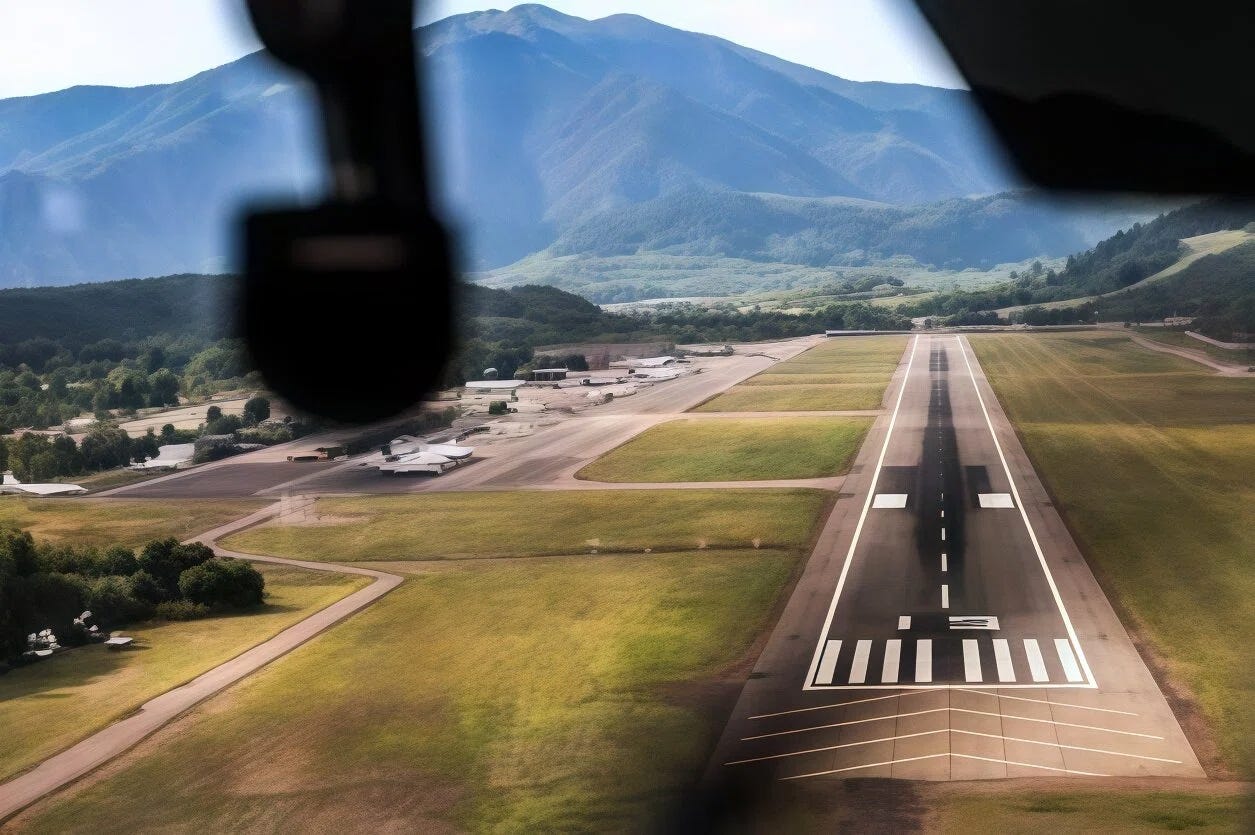
The FAA strictly limits landings at Aspen/Pitkin County Airport, and during high-demand periods like NYE, landing slots become a tradeable commodity. A reservation worth perhaps $100 under normal circumstances can be brokered for thousands of dollars through relationships with fixed-base operators who control access.
Even securing a slot doesn’t solve the parking problem, because parking essentially doesn’t exist. Pilots perform what’s known as a “drop-and-go”—landing, quickly deplaning their passengers on the tarmac, and immediately taking off again to park the aircraft at Rifle or Grand Junction, smaller airports an hour or more away by car.
This approach doubles the flight cycle costs through additional landing fees, fuel, and crew time, but it remains the only viable option for anyone unwilling to make the four-hour drive from Denver.
Inside the Parties
The “party” is not a singular event but rather a carefully calibrated ecosystem of exclusion, where food, location, and guest lists function as successive filters for wealth and status.
On a superyacht, even the menu becomes a logistical feat that requires weeks of advance planning and coordination across multiple countries.
Local St. Barts markets simply cannot support the volume of billionaires descending on the island simultaneously—there isn’t enough high-end produce, protein, or specialty ingredients to go around. So provisioning agents arrange to fly perishables from Rungis Market in Paris or specialty suppliers in Miami via private cargo planes to St. Maarten, then ferry the goods across to St. Barts on smaller vessels.
Private chefs who work these events confirm that guests rarely eat full meals during NYE parties.
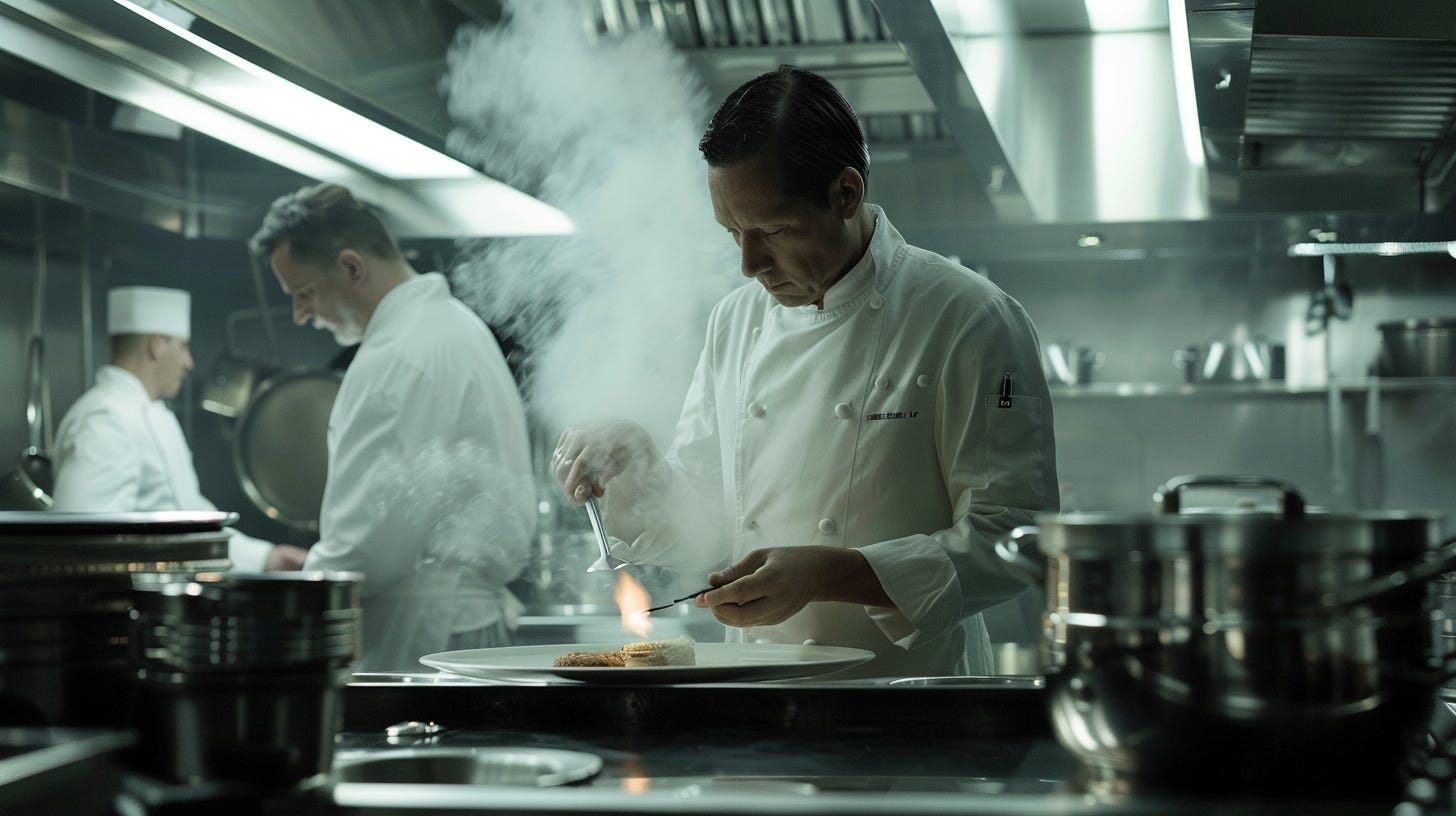
The food must be “stand-up friendly”—easy to consume while holding a champagne glass and making conversation—yet astronomically expensive in a way that signals the host’s resources and taste.
One standard request is the Caviar Kaspia baked potato, a deceptively simple dish: an ordinary potato loaded with 30 to 50 grams of Imperial Baeri or Almas caviar, sometimes worth more than a thousand dollars per serving. The concept communicates something specific: peasant food reimagined for kings, simplicity elevated through sheer ingredient cost.
Chefs competing to impress guests who have genuinely seen everything deploy increasingly theatrical techniques. Liquid nitrogen freezes alcohol-infused desserts tableside, creating dramatic clouds of vapor as spheres dissolve instantly on the tongue. Gold leaf has become standard garnish, almost expected at this level.
Some hosts request 24-karat gold-dusted Wagyu “lollipops” specifically designed to prevent greasy fingers—the meat is served on small sticks so guests can eat without risking their evening wear or needing to wash their hands.
Storage creates hidden friction that guests never see. A 70-meter yacht sounds enormous, but refrigerator and freezer space remains limited relative to the volume of provisions required for a major party.
During NYE week, wealthy yacht owners deploy “chase boats”—smaller 40 to 60-foot support vessels that travel alongside the main yacht—solely as floating refrigerators to store the hundred-plus cases of vintage champagne required to keep the celebration going through midnight and beyond. Dom Pérignon Luminous, the brand’s bottle designed for nightclub presentation with an illuminated label, has become the standard pour.
When the main deck parties get too crowded or too public, the ultra-tier retreats to secondary venues with financial barriers so high they function as physical walls.
The Caribou Club in Aspen represents the heart of that town’s old money social scene, a members-only establishment where locals pay around $4,000 for initiation. But the club has learned to monetize NYE demand through what might be called a tourist tax. Transient billionaires—those without permanent membership—must pay approximately $2,000 for a one-week pass or $3,000 for two weeks. The fee covers two people and includes absolutely nothing beyond access: no food, no drinks, no coat check. It’s the price of walking through the door and being seen in a room where being seen matters.
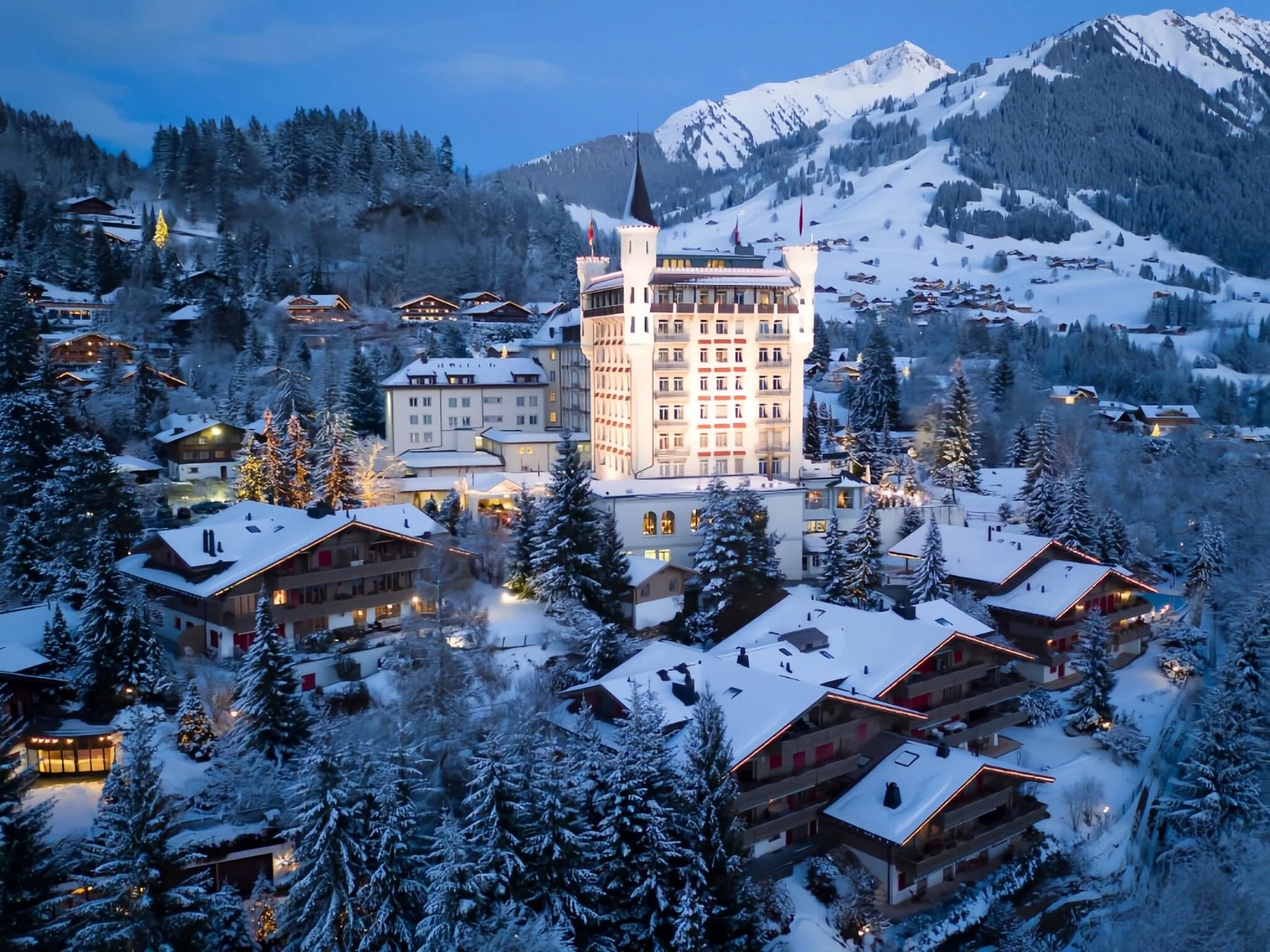
At the Gstaad Palace in Switzerland, which functions as the epicenter of European dynastic wealth, the annual New Year’s Eve Gala runs 1,450 Swiss francs—roughly $1,650—per person for non-hotel guests. That covers dinner only; drinks carry separate charges. The dress code at the hotel’s famous GreenGo nightclub is strictly black tie, and security enforces it without exception or apology.
Staff have been known to turn away billionaires attempting to enter in “new money” streetwear labels like Balenciaga, regardless of the price tags involved. The code communicates something specific: money alone doesn’t grant access here. You must demonstrate familiarity with the rules.
The highest financial barrier belongs to Eden Rock’s “Gala One” charity dinner in St. Barts. Individual tickets run £16,000—approximately $20,000—for a “Philanthropist” seat. A prime “Benefactor Table” for ten guests costs £150,000, or roughly $190,000. This single check often exceeds the cost of an entire luxury vacation for a family comfortably in the top one percent of wealth distribution.
For the people writing these checks, the expense functions less as payment than as filtration: anyone who hesitates at the price doesn’t belong in the room.
The Morning After
The newest status symbol in billionaire NYE culture isn’t how late you stayed up or how extravagant your party was. It’s how impeccably you recover—how quickly and completely you erase any evidence of the previous night’s excess.
In St. Barts, the ultimate flex on January 1st is an appearance at Colombier Beach, and the timing matters as much as the location. This particular beach has no road access whatsoever. You either hike a rocky 30-minute goat path down from the parking area above, or you arrive by boat and swim to shore through the surf.
Being spotted at Colombier at 9:00 AM on New Year’s Day signals several things simultaneously: physical fitness, personal discipline, and a constitution that’s somehow “above” the hangover afflicting everyone else. It distinguishes old money families, who tend to value longevity and health as markers of breeding, from new money, who are presumably still unconscious in their villas sleeping off whatever substances they consumed the night before.
For those who either can’t manage the hike or simply prefer a more technological approach to recovery, the process gets outsourced to mobile medical teams who’ve built entire businesses around servicing this exact clientele during this exact week.
Companies like Drip Hydration or local concierge physicians offer in-villa IV service beginning at dawn on January 1st.
The most popular options carry names like “NAD+ Boost” or “Royal Flush”—proprietary blends of saline, vitamins, antioxidants, and in some cases prescription anti-nausea medication delivered directly into the bloodstream.
Pricing runs between €550 and €1,000 per person, depending on the specific formulation and the premium charged for house calls.
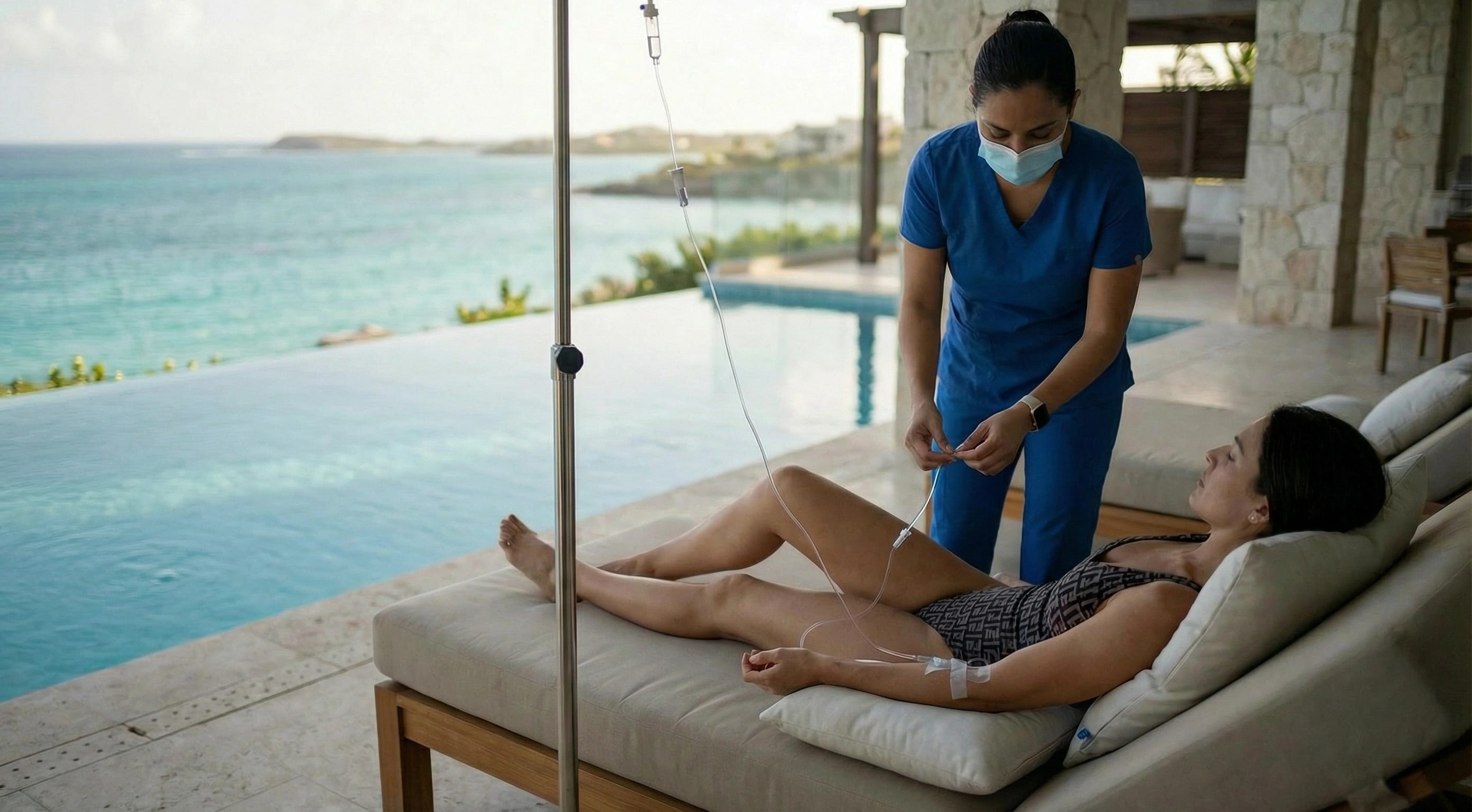
It’s become entirely normal for a villa host to order what amounts to a round of drips for ten guests—$10,000 total—with the same casual tone that ordinary people use when ordering a round of coffee.
Nurses set up IV poles beside the infinity pool so guests can rehydrate while tanning, the medical equipment creating a strange visual juxtaposition against the Caribbean backdrop.
By noon, the previous night’s excess has been chemically erased, vital signs restored to baseline, any trace of hangover eliminated through intervention that costs more than many people’s monthly rent. The billionaire class emerges refreshed, ready to attend the January 1st brunch invitations already filling their calendars, prepared to do some version of it all again.
The cycle continues until the migration reverses and the yachts disperse back to Monaco, the jets return to their home airports, and St. Barts returns to something resembling its normal rhythm—at least until next December, when the same patterns will reassert themselves with the same precision, the same hierarchies, and the same invisible rules that only make sense once you’ve seen them operate from the inside.
Fascinating to read!!