
The year is 1851.
Queen Victoria walks the aisles of the Crystal Palace, the glass hall built for London’s Great Exhibition, and stops at a display of Geneva watches.
One catches her eye, a small pendant in azure enamel, with rose-cut diamonds set in a bouquet of flowers. It has no name yet, only the number 4710.
Legend says the blue-eyed Queen is enchanted by the enamel, and she ends up buying it, along with a repeating pocket chronometer for Prince Albert.
Its real novelty, patented six years earlier, sits in the crown, the small knob at the top of the case that every mechanical timepiece still uses today. Most watches of the day still need a tiny separate key, while this one winds with a turn of the fingers. For the Queen, it means jewelry she can fasten to her dress with a matching brooch and wind herself, with no key to carry or lose.
The Geneva firm behind it belonged to two partners, a Polish exile named Antoni Patek and the crown’s French inventor, Adrien Philippe, and in 1851, it took both their names.
Einstein later ordered a gold Patek pocket watch. John Lennon received one from Yoko Ono for his 40th birthday, two months before he was killed.

Today, collectors rank Patek first in watchmaking’s “Holy Trinity,” ahead of Vacheron Constantin and Audemars Piguet.
Its watches hold eight of the ten highest prices ever paid at auction, led by a $31 million Grandmaster Chime, and for a serious collector, a Patek is the last watch, the one meant to stay in the family.
In 2017, it was reported that a third of the songs on the Billboard Hot 100 mentioned the brand, after hip-hop decided that owning one was incontrovertible proof an artist had arrived.
Through all of it, from the Queen’s pendant to the Hot 100, Patek answered to one family.
Patek’s slogan promises that “you never actually own a Patek Philippe. You merely look after it for the next generation.”
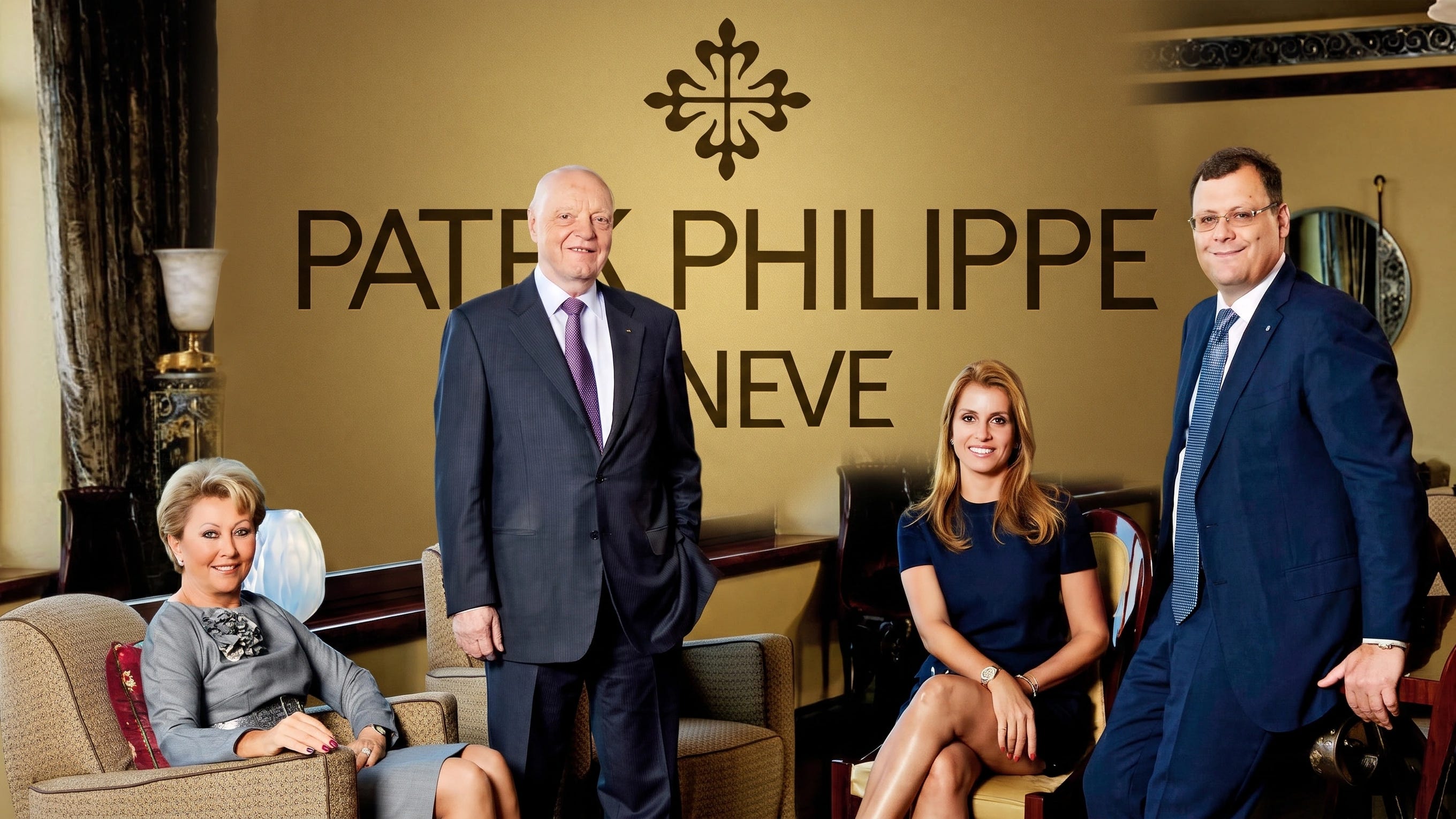
For the Sterns, the family who’ve owned the company since 1932, the line doubles as a house rule, with every share passing to a single heir.
Keeping it that way once put the family’s fortune at risk, when Philippe Stern borrowed so heavily to buy back shares that he warned his children they could lose everything. His death in June left his son Thierry facing the same rule with two sons of his own, and only one of them can own Patek.
Buyers have offered billions to break that chain, and every one has left Geneva with the same answer.
Not for Sale
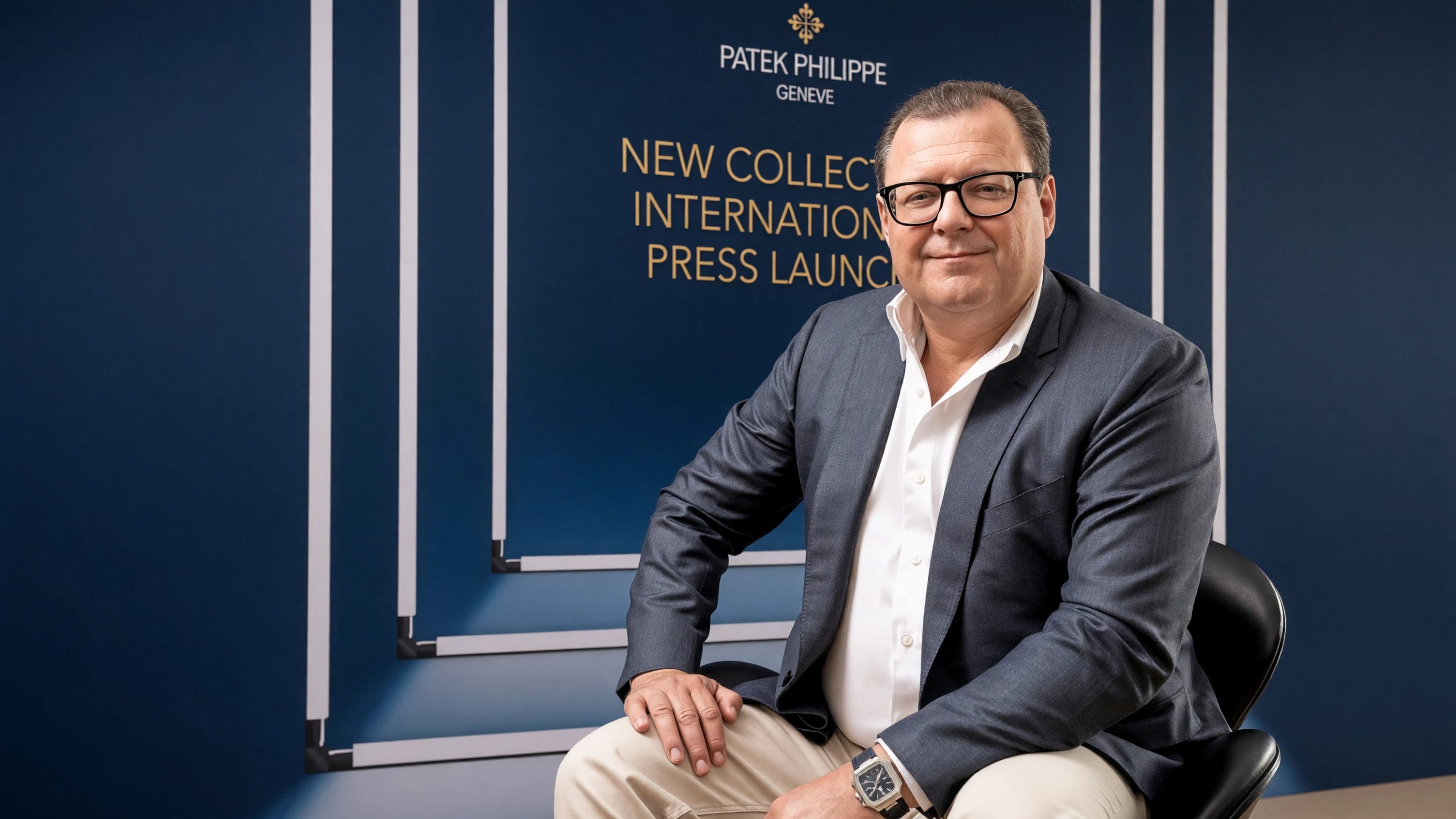
Every year before the Basel watch fair, an offer or two arrived at Patek Philippe’s headquarters in Geneva, sometimes through a lawyer, and the answer never changed.
In January 2019, analysts at the German bank Berenberg reported chatter about a possible sale and priced the company at as high as €9 billion.
Thierry Stern, the fourth generation of his family to run it, waved the idea away. “Why should I sell it?” he told GQ that year. “I have fun, it works pretty well.”
He imagined traveling for a year or two on the proceeds, then looking around and finding all his friends back at work. He’s warned that a conglomerate buyer might end up with “an empty shell” if key people walked out, and in 2024, he put it more bluntly:
“I will also not sell to LVMH. I will stay independent.”
The fortune behind that refusal rests on a single company with a single owner. Thierry has said his family holds 100% of Patek, and its rule is that one person should own all the shares, as protection against family feuds.
Forbes put the family’s wealth at around $3 billion back in 2014, and the company’s newest manufacturing building outside Geneva alone cost roughly CHF 600 million ($731 million).
And the family’s private pleasures matched the business.
Thierry’s father, Philippe, who ran Patek for more than three decades, won the Bol d’Or, Lake Geneva’s great sailing race, seven times, each time aboard a multihull named Altaïr. Forty years of his private collecting became the Patek Philippe Museum in Geneva, which opened in 2001.

Thierry reportedly owns a Perini Navi yacht named Nautilus, after Patek’s most famous sports watch, and flies a Gulfstream G650, while his sister, Christine, reportedly owns a Feadship yacht named Samaya. His wife, Sandrine, heads Patek’s creative department and is the only woman among its directors.
Thierry Stern calls Patek’s critics “haters.” Wealth on that scale draws scrutiny. When the Cubitus collection launched in 2024 to sharp backlash online, Thierry answered that “the haters are mostly people who have never had a Patek and never will.”
The watch writer Jack Forster countered that Patek’s own collectors had objected to the design.
Other family stories are harder to laugh off, from a charity auction where the winning bidder walked away from a $6.5 million watch to a share buyback so risky that Philippe once told his children they might lose everything.
Every one of the Stern family’s refusals protects another man’s name, and they came to own that name only because the Great Depression nearly destroyed his company.
The Cavalry Officer
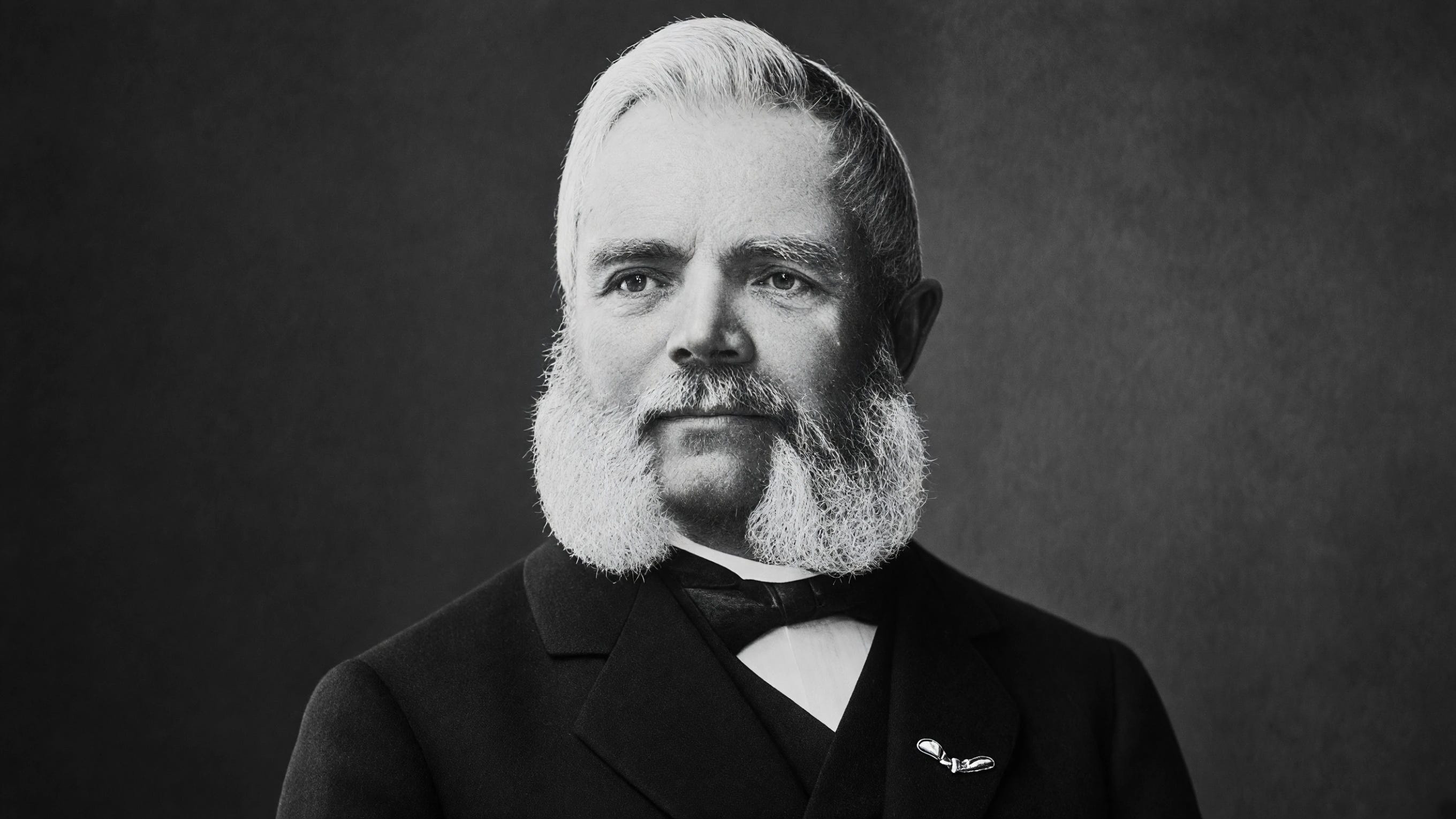
The name on every Patek dial belongs to Antoni Norbert Patek, born in 1812 near Lublin, in eastern Poland, to a noble family with its own coat of arms. Three years later, his homeland came under the rule of Russia’s tsar.
At 16, Patek joined the cavalry, and he was 18 when his countrymen rose up against Russia in November 1830. Over the year of fighting that followed, he was wounded twice and won Poland’s highest military honor.
When the rebellion collapsed in 1831, Patek fled west with thousands of Polish soldiers and ended up setting type in a French printing shop. Russian pressure soon pushed many exiles out of France, and he moved on to Switzerland, the heart of the watch world.
Antoni Patek sold liquor before he ever sold a watch.
He settled in a village on the shore of Lake Geneva, where a local family introduced him to his future wife and, it seems, to the watch trade.
Geneva’s workshops already made some of the finest watches in Europe, and Patek began buying their movements, the gears and springs inside a watch, and having cases made to his own designs.
In 1839, he opened a small workshop with Franciszek Czapek, a watchmaker from Warsaw, and about six employees. Some of their early watches carried portraits of Polish heroes like Tadeusz Kościuszko, a general who also fought on the American side in the Revolutionary War.

Czapek eventually left, and in 1845, Patek found a new partner in Adrien Philippe, the Frenchman behind the crown-winding mechanism.
In 1851, the firm became Patek Philippe & Co.
Patek traveled to England, America, and Russia in search of customers, and in 1868 the firm made the first Swiss wristwatch, later sold to a Hungarian countess. He died in Geneva in 1877.
Half a century later, his company was in trouble. The 1929 crash dried up Patek’s orders, and its board, still dominated by the Philippe family, went looking for a rescuer. The holding company of Jacques-David LeCoultre showed interest, but its terms were, as one account put it, “absolutely unacceptable.”
Two unassuming dial makers rescued the brand from dying in the Great Depression.
The answer came from the company’s own suppliers. Charles and Jean Stern were brothers who moved to Geneva and built a dial factory, Fabrique de Cadrans Stern Frères, which supplied Patek’s dials for years.
They quietly bought up shares, and by 1932, the company was theirs.
They kept the founders’ name and hired Jean Pfister, head of Geneva’s Tavannes Watch Co., who stopped buying movements from LeCoultre so Patek could make its own.
Charles became chairman in 1935, guided by a principle his son Henri later recalled:
“Some people can be bought, others never, no matter how high the price being offered.”
In 1943, Charles ordered a one-of-a-kind perpetual calendar chronograph with ruby hour markers on its dial. He died in 1944, just before he could take delivery.
The watch passed to his son, Henri, who already carried the family’s name across an ocean and nearly into a war.
The American
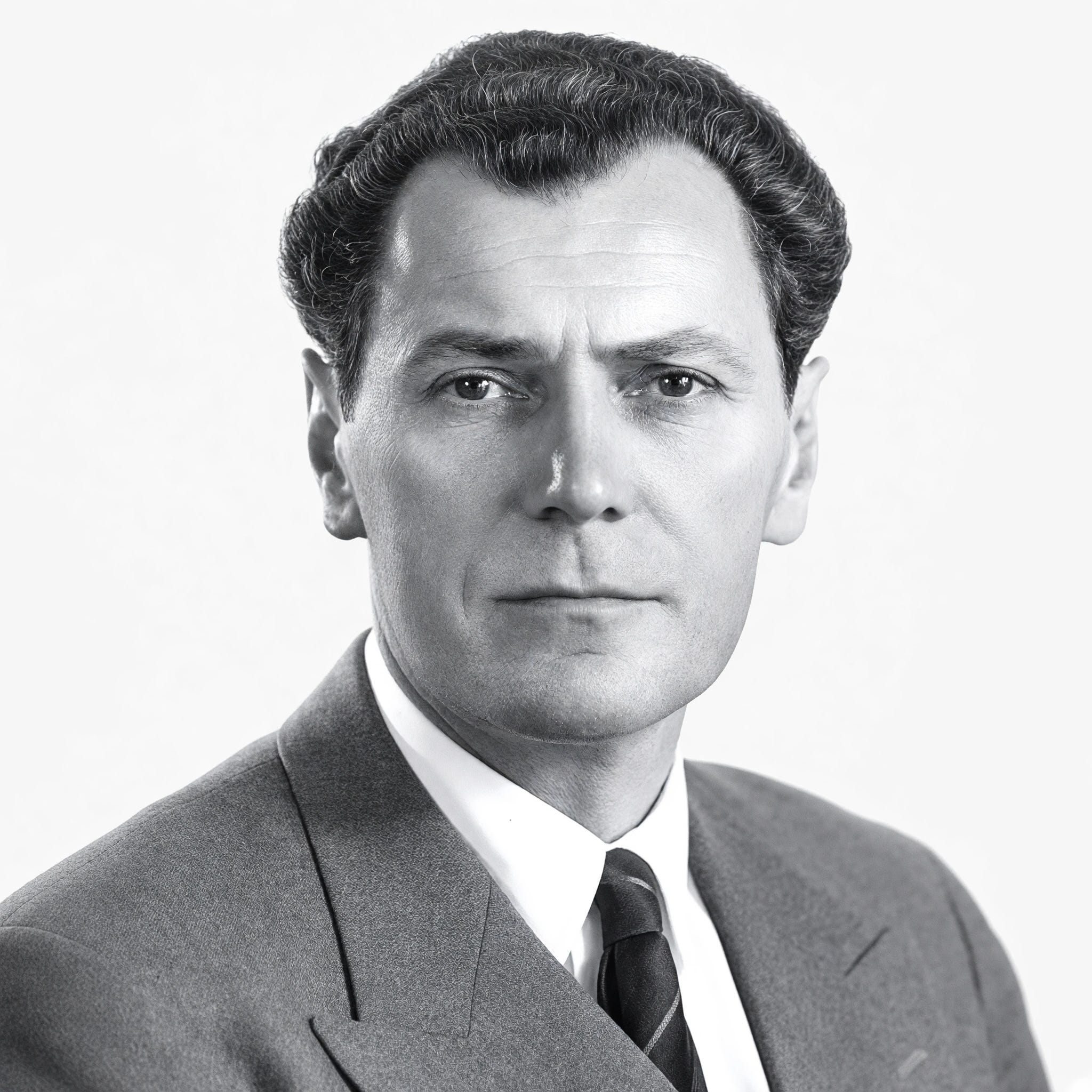
Henri Stern wore his father’s ruby-dial watch as a working tool on his travels.
He joined Patek in 1935 as commercial director, and two years later he was running Patek Philippe Incorporated of America. When war broke out, he went home to serve in a Swiss cavalry unit, more than a century after Antoni Patek rode against the Russians, then returned to New York.
Henri Stern rode with the Swiss cavalry, then sold Patek to America.
After the war, Henri’s New York agency became the only importer of Patek watches into America, and he traveled from Latin America to Asia selling the brand before returning to Geneva to run the company in 1958.
His son Philippe followed the same path, learning the trade and collecting watches in New York before coming home. Philippe took charge in 1977, as cheap battery-powered quartz watches from Japan were gutting the Swiss industry.
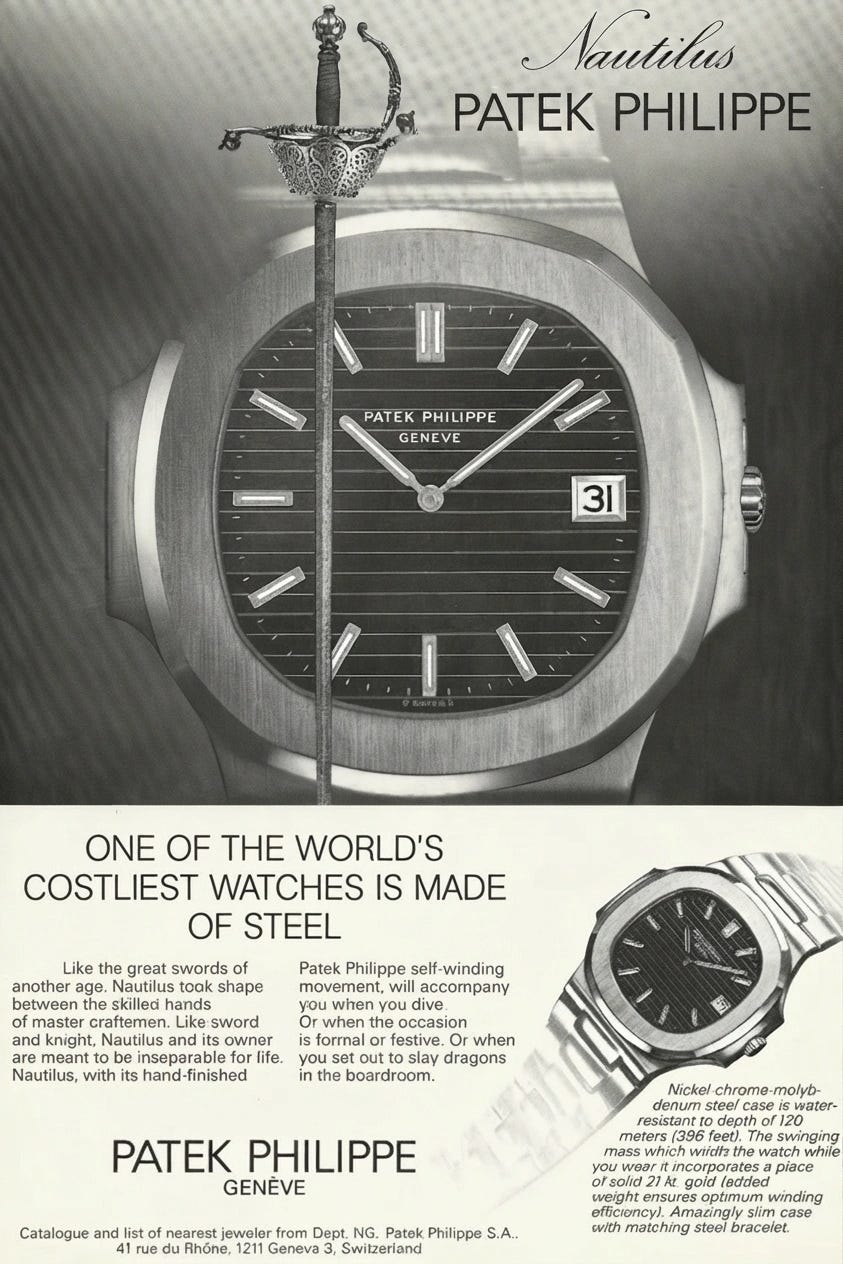
Yet, while Patek dabbled in quartz, he insisted its new steel sports watch, the Nautilus, keep a traditional mechanical movement. Philippe’s intuition was prescient. Once quartz made accurate time cheap, a hand-built mechanical watch became a status symbol.
But Philippe Stern warned his children the family might lose everything.
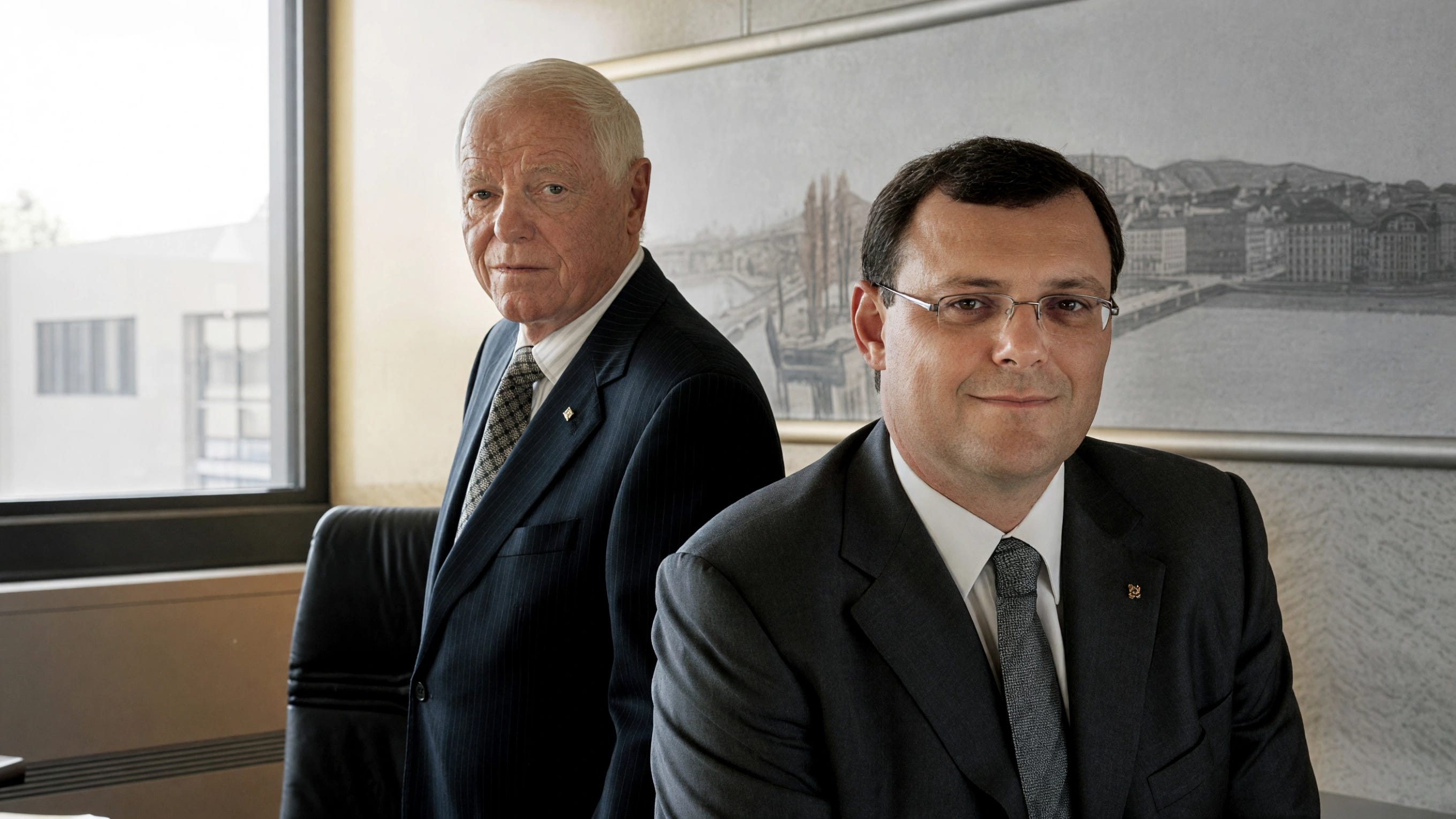
When Thierry was about 12, he sat at dinner with his father and his sister, Christine, as Philippe told them about the heavy loans he took on to buy back shares and protect the company. If the bet failed, he warned, the family could be in serious trouble.
Thierry remembered his father’s nervous face and the plates on the table.
Several years later, at a similar dinner, Philippe announced the loans were repaid.
“Now we are safe,” he said. The lender and the amount have never been disclosed.
Then Philippe set out to make Patek the most coveted name in watches. In 1989, for the company’s 150th anniversary, he unveiled the Calibre 89, a pocket watch with 33 complications, or functions beyond telling the time, that took nearly nine years to develop and stayed the most complicated portable mechanical watch for more than 25 years.
The same year, a Patek-only auction drew prices he called “unnaturally high.”
He became president in 1993 and opened a new manufacture at Plan-les-Ouates in 1996, the same year Patek launched the slogan that still sells its watches:
“You never actually own a Patek Philippe. You merely look after it for the next generation.”
The next generation, in his case, was a boy who made up his mind at six.
The Gold Coin
Around 1976, in an office on Geneva’s rue du Rhône, six-year-old Thierry Stern opened a cabinet drawer and found a row of blue enamel pocket watches resting on red velvet. His father let him look but wouldn’t let him touch.
“After that day I told him I wanted to make watches,” Thierry said years later.
He grew up between his father’s office, where Philippe smoked cigarettes, and his grandfather’s next door, where Henri smoked a pipe, riding the building’s old wooden elevator and accepting sweets from the assistants.
At 18, the age his family believed a child could understand the gift, he received his first Patek, a Nautilus. He chose work over university, joined the company in 1990, and learned it from the ground up, from retailers in Germany to the family agency in New York to the Geneva benches where cases were shaped and bracelets assembled by hand.
An older colleague told him that in watchmaking “everything has been done,” and Thierry later said the remark enraged him.

Then Thierry Stern clashed with his father over the color grey. He wanted a grey dial on a platinum annual-calendar watch. Philippe told him it wasn’t what Patek made, and Thierry kept the watch afterward as a reminder that the house also had to change.
Years later, when he helped design the case of a gold perpetual calendar chronograph, his father, a man he described as difficult to impress, told him it improved on its predecessor.
At the Basel watch fair, he met Sandrine, a jeweler’s daughter already working on Patek’s commercial side. As head of creation, she put every proposed design to a single test: “Yes, I can recognize that it is a Patek Philippe,” or “No, I can’t tell that is a Patek Philippe.” They had two sons, Adrien and Tristan.
“Sometimes I have to push more,” she said of her work, “because my husband is sometimes hard with me.”
Philippe Stern handed over Patek Philippe with the toss of a gold coin.
Thierry became vice president in 2003, and in 2009, Philippe tossed him a restored 1913 U.S. $10 gold coin with a miniature Patek watch hidden inside.
It was the coin watch Thierry played with as a boy, long thought lost, and the gesture meant the presidency was his.
“It wasn’t a happy day,” Thierry recalled. “But it was not a sad day either.” The title moved, while the shares, for the moment, stayed with Philippe.
“I don’t have a big ego to own the shares,” Thierry said at the time.
The same year, father and son replaced the prestigious Geneva Seal on Patek’s watches with the company’s own quality hallmark, and critics attacked the move because Patek was now certifying itself.
Twelve years into his presidency, he’d kill the one watch the whole world wanted, and soon after, his own sons would begin a race only one of them could win.
Willing and Able
In 2019, the New York Times reported waits of up to eight years for a steel Nautilus, and the watch grew so dominant it threatened to swallow the rest of the collection. In 2021, Thierry discontinued it.
“We make about 140 different models at Patek Philippe,” he said, “and the basic Ref. 5711 in steel is just one of them.”
Thierry Stern killed the watch with an eight-year waitlist.
Its farewell edition, 170 pieces with Tiffany-blue dials, turned up first on Jay-Z’s wrist, and one sold at a charity auction for $6.5 million to a bidder who never paid, though the charity still collected in full.
The decision fit his style. He’s roughly halved the number of stores allowed to sell Patek, said tourists generally have little chance of buying one, and still listens to every minute repeater, a watch that chimes the time, before it leaves the company.
(Watchmakers occasionally slip him a flawed one to test his ear.)
In 2024, he handed day-to-day management to an outside chief executive, Laurent Bernasconi, while the presidency and the shares stayed with the family.
Then, on June 14, 2026, Philippe Stern died at 87, on the anniversary of Antoni Patek’s birth, and Thierry, at 55, became the senior Stern with the next handover to plan.
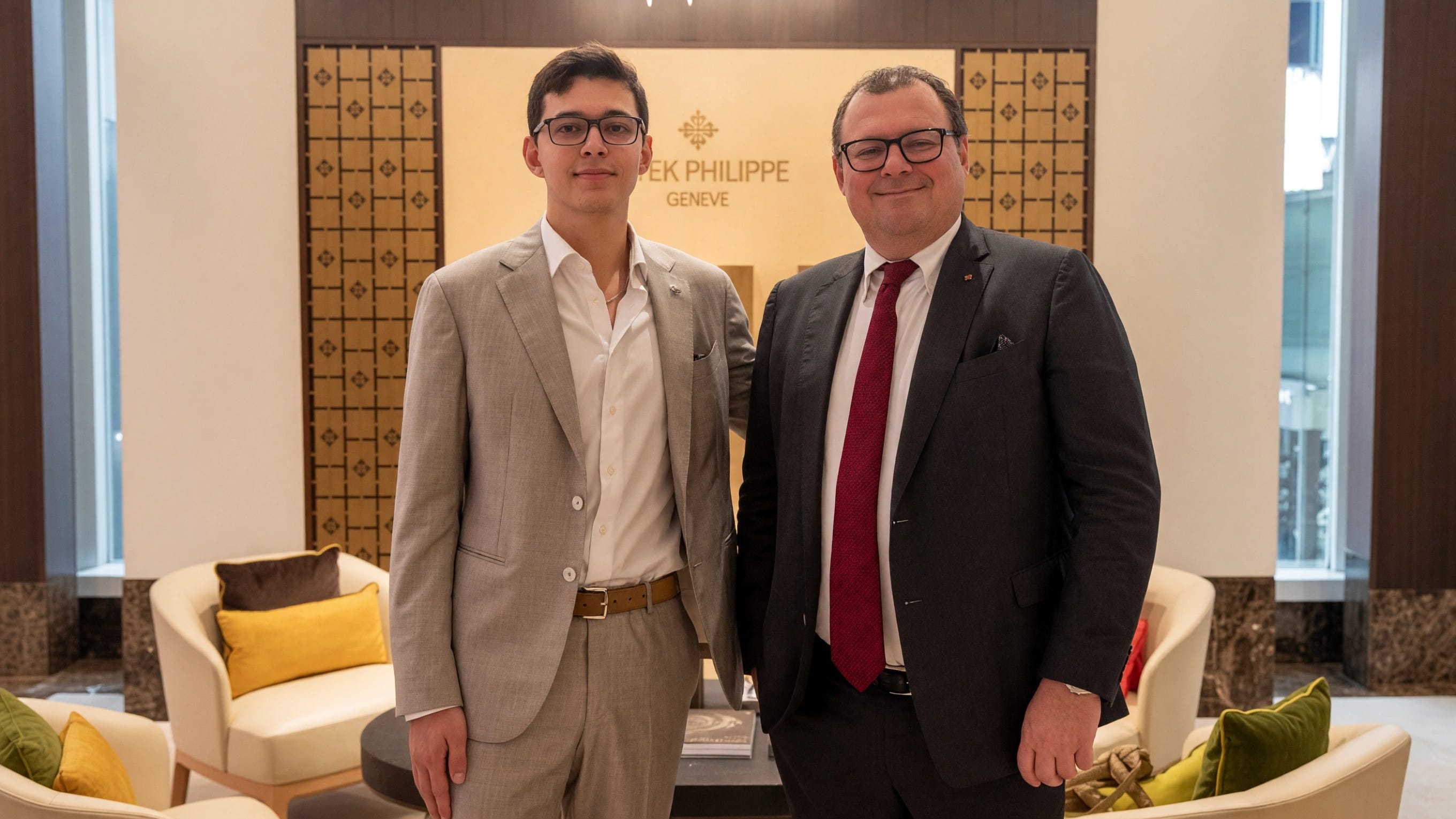
Years earlier, at a family dinner, his younger son said he couldn’t inherit the company because he wasn’t the eldest, and Thierry stopped the conversation. “The one who is willing to and the one who is able will take over,” he told them.
Thierry Stern’s sons will have to earn Patek Philippe.
Adrien joined in 2025 and trained in Singapore, and by October 2026, his father said he was on a five-year program rotating through departments. Tristan was expected to follow in about a year.
Thierry has said he’d rather give his sons something they can run than simply a bank account, and he’s admitted that “it’s difficult to be both father and mentor.”
Neither son has been named successor, and how the family would compensate the one who doesn’t inherit remains undisclosed.
Ninety-four years after Charles Stern bought the company, his great-great-grandson was learning the family’s oldest rule: some people can be bought, and the Sterns have always belonged to the other kind.
why sell? Keeping the company within the family brings both monetary value, and the joy of continuing to produce a world renowned watch
Keep the company private and controlled. That’s part of the mystic. I wanted a Patek back in the 80s. There was a jeweler in town that sold them. At that time the one I wanted was $8000. My father was a government employee and while high ranking, salaries didn’t afford an $8000 Watch for his daughter to run around town in. Just think how much that watch would be worth today.
I like the family story and the history of the company. The watches are much more than a status symbol. They are a true test of craftsmanship and time.