
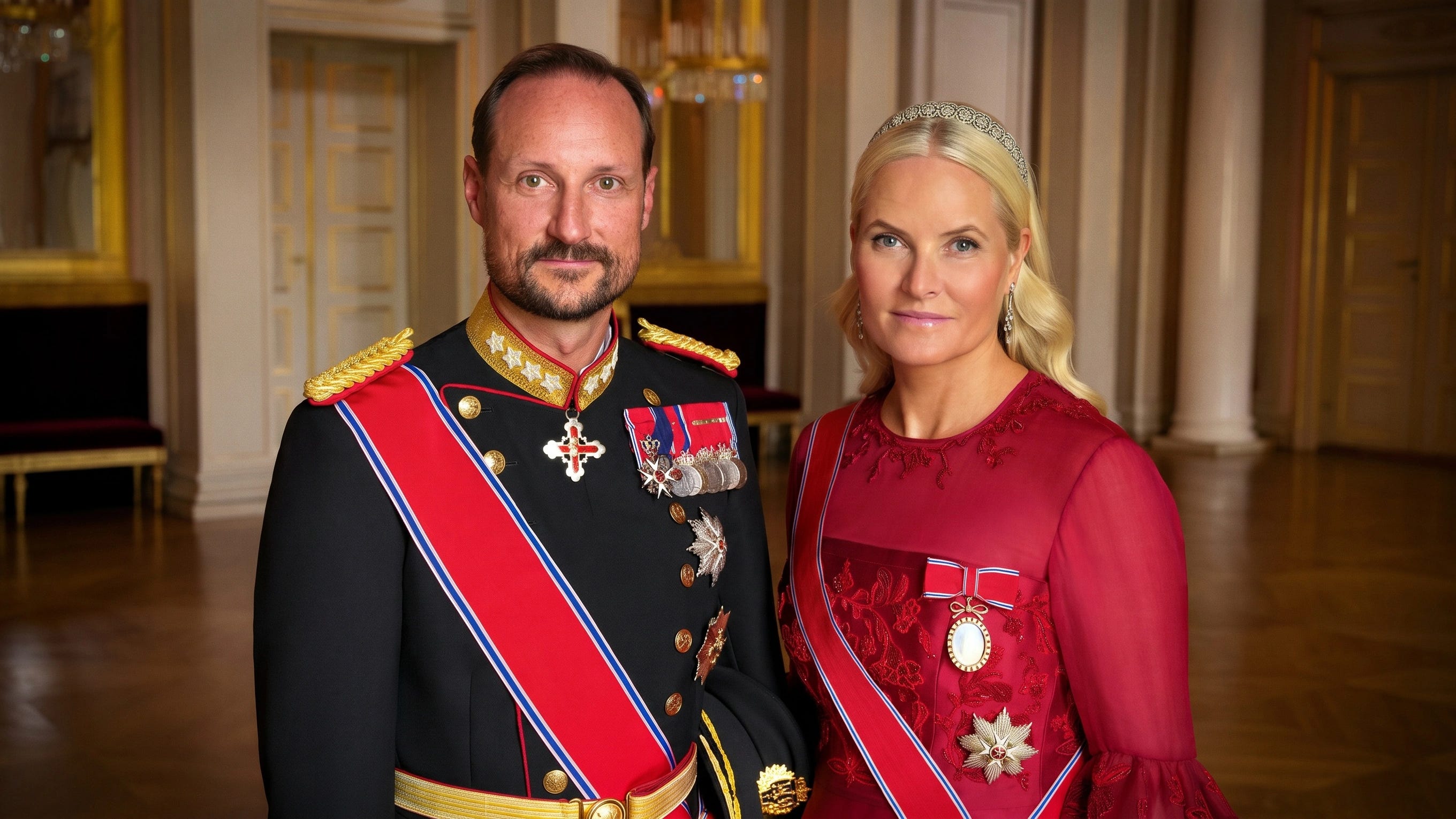
Now that the news has us all learning rather more about Norway’s royal family than most of us ever expected to know, one thing becomes clear very quickly:
This is a much more scandalous family than its wholesome Scandinavian image ever suggested.
For years, the Norwegian royals were easy for outsiders to overlook. They were dubbed the “bicycle monarchy,” the informal royals who took trains, sent their children to ordinary schools and cultivated a reputation for being refreshingly normal.
Then you start looking at the family itself.
The new king’s stepson, Marius Borg Høiby, has been convicted on two counts of r*pe and sentenced to four years in prison, with the verdict under appeal.
His wife, Mette-Marit, carried on a years-long correspondence with Jeffrey Epstein, including hundreds of emails exchanged after his 2008 conviction. Around the time her son’s verdict was delivered in June, she underwent a lung transplant after years of deteriorating health.
And then, in 2024, Haakon’s sister Märtha Louise married Durek Verrett, a self-described American “shaman” known for occasionally doing TikTok dances and other influencer-infused behaviors.
Yes, we’re only a few paragraphs in and we already have Epstein, a r*pe trial, a princess and her shaman, and a future queen whose public standing has collapsed.
Undoubtedly, any one of these would be enough to dominate the story of a royal family. Norway’s has been dealing with all of them at once.
Will they be able to walk, chew gum, and keep the crown on straight at the same time?
The answer may have been sitting in plain sight for generations.
A Young Throne
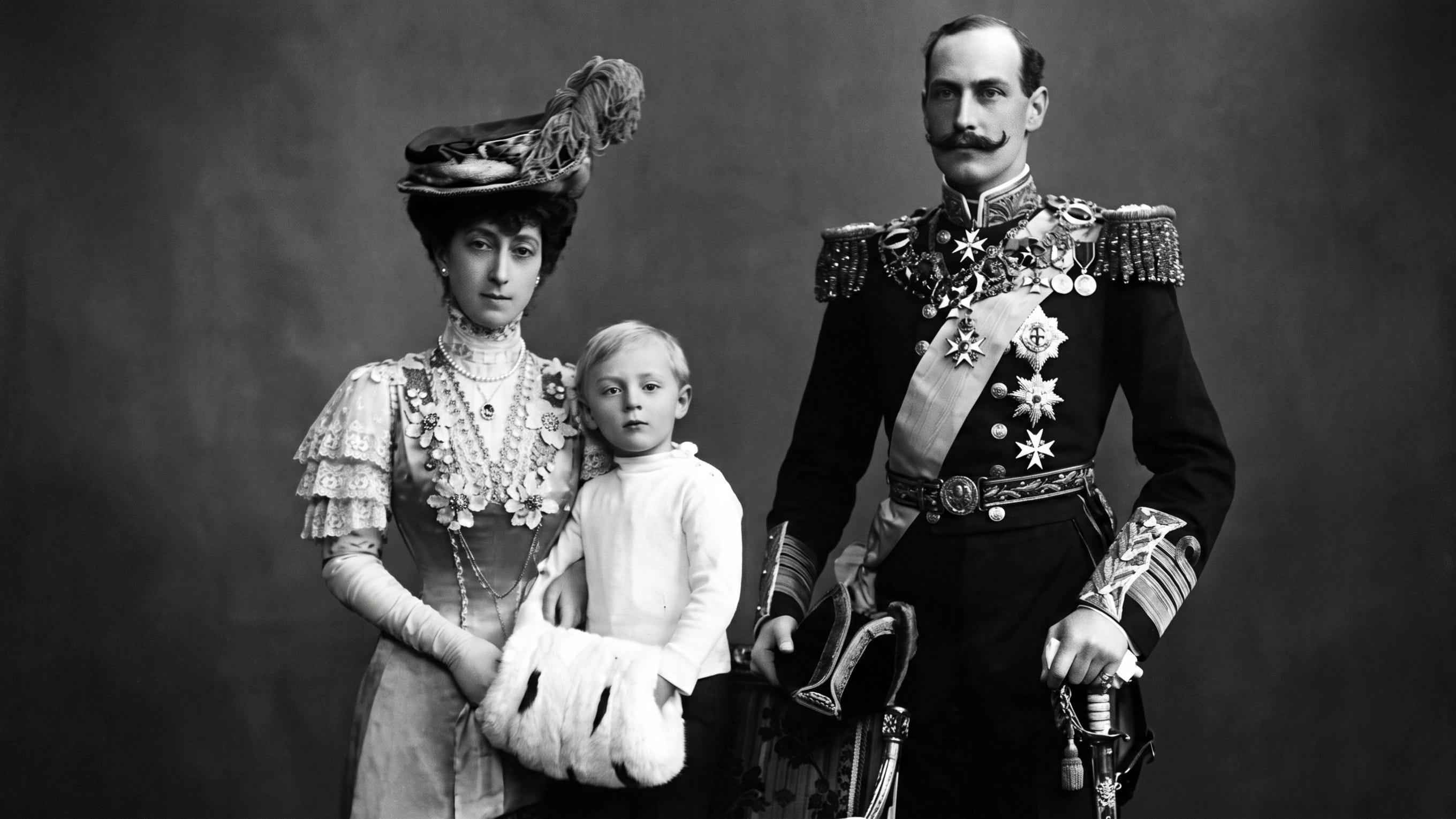
Norway’s monarchy is younger than most of us non-Scandinavians realize.
The country only became fully independent in 1905, when it dissolved its union with Sweden and went looking for a king.
The Storting, Norway’s parliament, offered the throne to a Danish prince named Carl, who accepted, took the name Haakon VII, and founded a royal house that has now produced exactly four kings across four generations, the latest of whom acceded this week.
The entire institution rests on a dynasty so shallow that the new king’s great-grandfather was the first one.
What the family has lacked in centuries of tradition it has compensated for with something rarer: an almost preternatural ability to absorb crises that would have toppled older, more rigid monarchies.
Haakon VII refused to cooperate with the Nazi occupation and fled to London in 1940 with his son Olav and grandson Harald, turning the crown into a symbol of resistance so powerful that the family returned after the war more popular than when it left.
His grandson Harald (the king who died yesterday) spent his childhood in American exile and grew up to fight a nine-year battle to marry a commoner, a fight that nearly ended the monarchy before it was two generations old.
The pattern that emerges across all four reigns is consistent: the Norwegian crown bends further than any other European monarchy, absorbs more damage, and somehow comes out the other side with enough public goodwill to keep going.
The first real test of that flexibility came from Harald himself.
The Bicycle Monarchy
Long before the current scandals, the Norwegian royals had already learned what happens when love collides with the expectations of the crown.
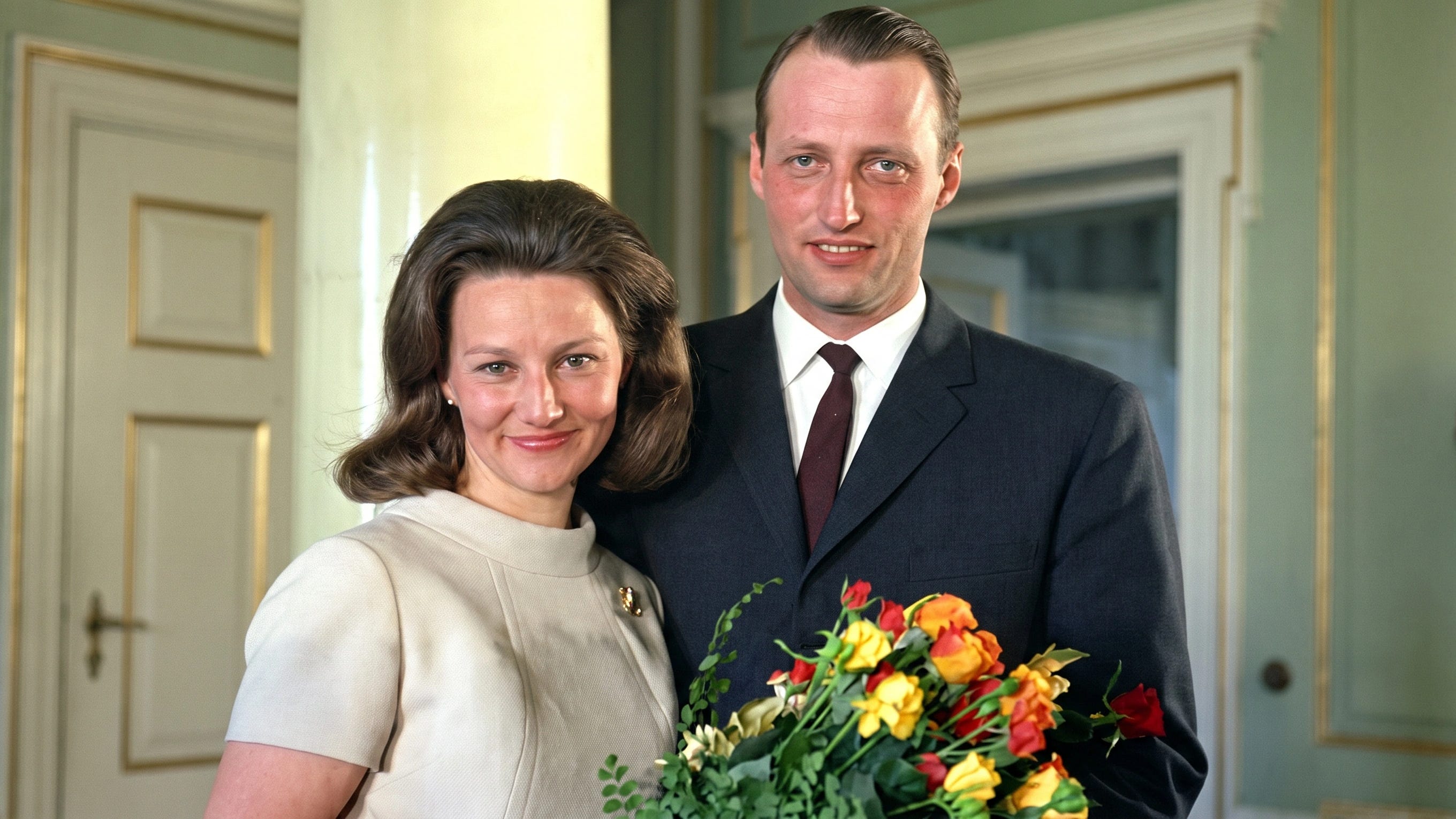
Harald met Sonja Haraldsen, the daughter of a clothing merchant, at a dinner party. They began seeing each other in secret because a future king marrying a commoner was still considered a serious problem in Norway in the early 1960s.
His father, King Olav V, opposed the match and encouraged Harald to consider more suitable Danish or German aristocratic alternatives. Even the prime minister became involved, warning that the standoff could threaten the monarchy.
Harald eventually gave his father an answer that left very little room for negotiation:
He would marry Sonja or remain unmarried for life.
That mattered because Harald was the heir. A permanent bachelorhood could have placed the continuation of his branch of the dynasty in jeopardy.
The courtship remained secret for nine years before Olav finally relented.
Harald and Sonja married on August 29, 1968, at Oslo Cathedral.
Sonja’s father had recently died, so Olav himself walked her down the aisle. The same king who’d resisted the match now delivered the bride to his son.
Sonja went on to spend almost 58 years married to Harald. Beginning in 1991, they reigned together for 35 years, and the woman once deemed unsuitable became central to the modern image of the Norwegian monarchy.
Over the decades, the royals would be increasingly presented as approachable, egalitarian and unusually close to ordinary life.
They took trains, sent children to ordinary schools and became associated with the Scandinavian idea of the “bicycle monarchy,” a royal house stripped of much of the pomp that surrounded other European courts.
Harald had also learned something from the whole affair. His father had believed Sonja was a risk. Harald believed love deserved the chance to prove everyone wrong.
Years later, his own son would ask him to apply that lesson to a woman with a far more complicated past.
The Party Girl
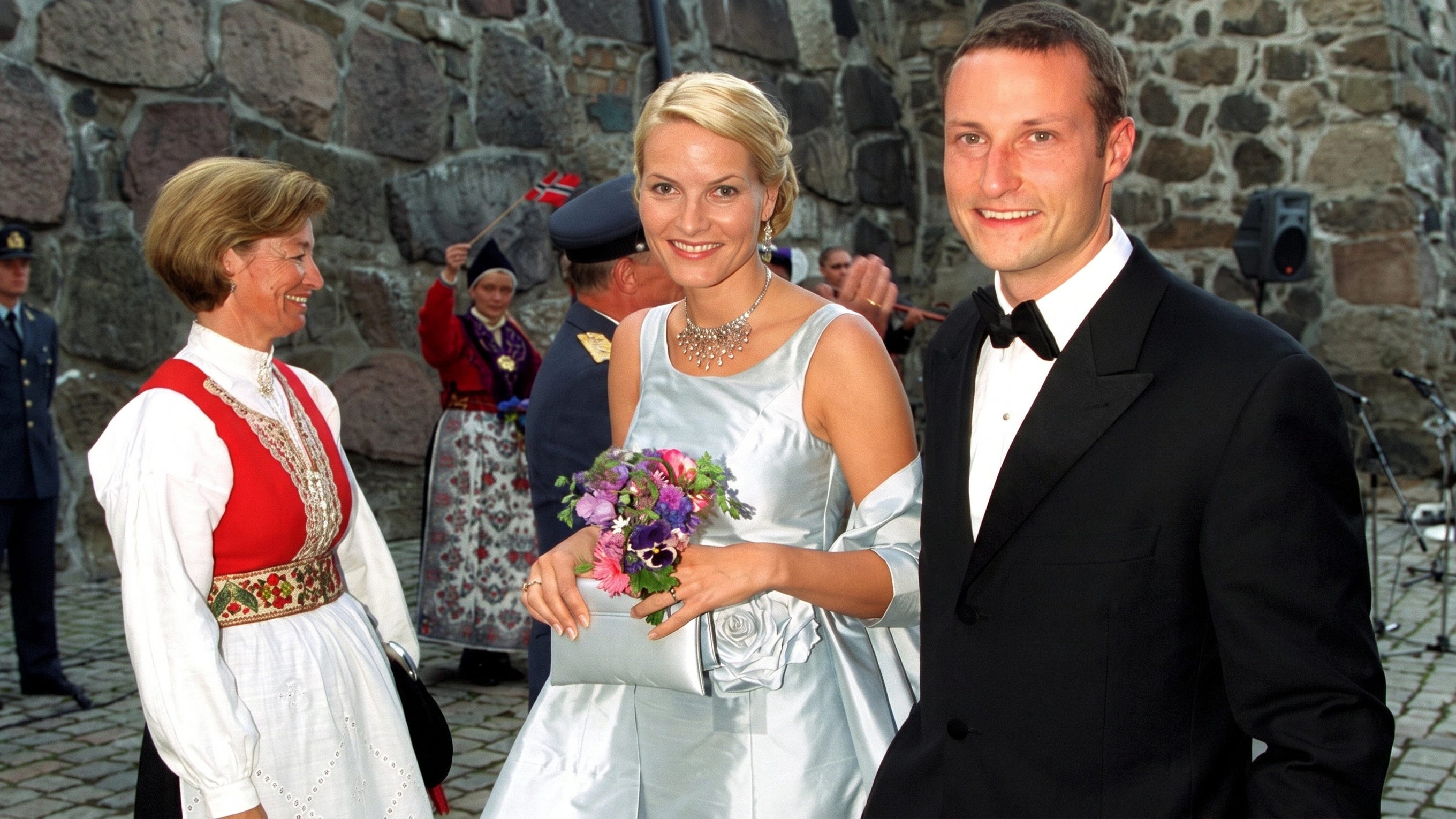
Heir to the throne Crown Prince Haakon met Mette-Marit Tjessem Høiby through mutual friends in 1999.
Sonja had been controversial because her father sold clothes.
Mette-Marit came with a different résumé altogether.
She’d worked as a waitress, moved through Oslo’s underground techno and house-party scene, and was raising a young son, Marius Borg Høiby.
Marius’s father, Morten Borg, had served prison sentences connected to assault and c*caine offenses. He was serving one of those sentences when Marius was born in January 1997. Before meeting Haakon, Mette-Marit had also lived with two DJs in Oslo and Kristiansand, with the young Marius in tow.
Once Norway learned that its future king was serious about her, the scrutiny became intense.
The future Queen eventually acknowledged her own history of drug use and heavy partying.
Support for the monarchy fell to record lows as the country debated whether this was really the woman who should someday become queen.
Harald sided with his son.
His own marriage made the logic easy to see. He’d spent years watching the establishment mistake unconventional for unsuitable.
Haakon understood the stakes too. Three days before his wedding, he held a press conference thanking his family and his country for allowing the relationship to proceed without becoming a succession crisis. He invoked Edward VIII, who’d given up the British throne in 1936 to marry Wallis Simpson.
Mette-Marit had already appeared before the cameras herself. A week before the ceremony, she spoke publicly about her past and condemned drug use.
Norwegians responded generously. One poll found 84 percent believed she’d been honest.
On August 25, 2001, she married Haakon at Oslo Cathedral before 300 guests and millions of television viewers. European royalty filled the church. The bishop told the couple:
“You have not chosen the easiest path, but love has triumphed.”
Now, four-year-old Marius served as page boy.
According to the Los Angeles Times, his mother’s marriage made him the first stepchild acquired through marriage by an heir to a European throne.
It was an appealing picture. The former party girl had become a future queen, her son was growing up inside a royal household, and Harald’s old argument about giving unconventional marriages a chance appeared vindicated again.
For 23 years, the wager looked exceptionally good.
Then the little boy in the wedding photographs became the crisis.
The Stepson
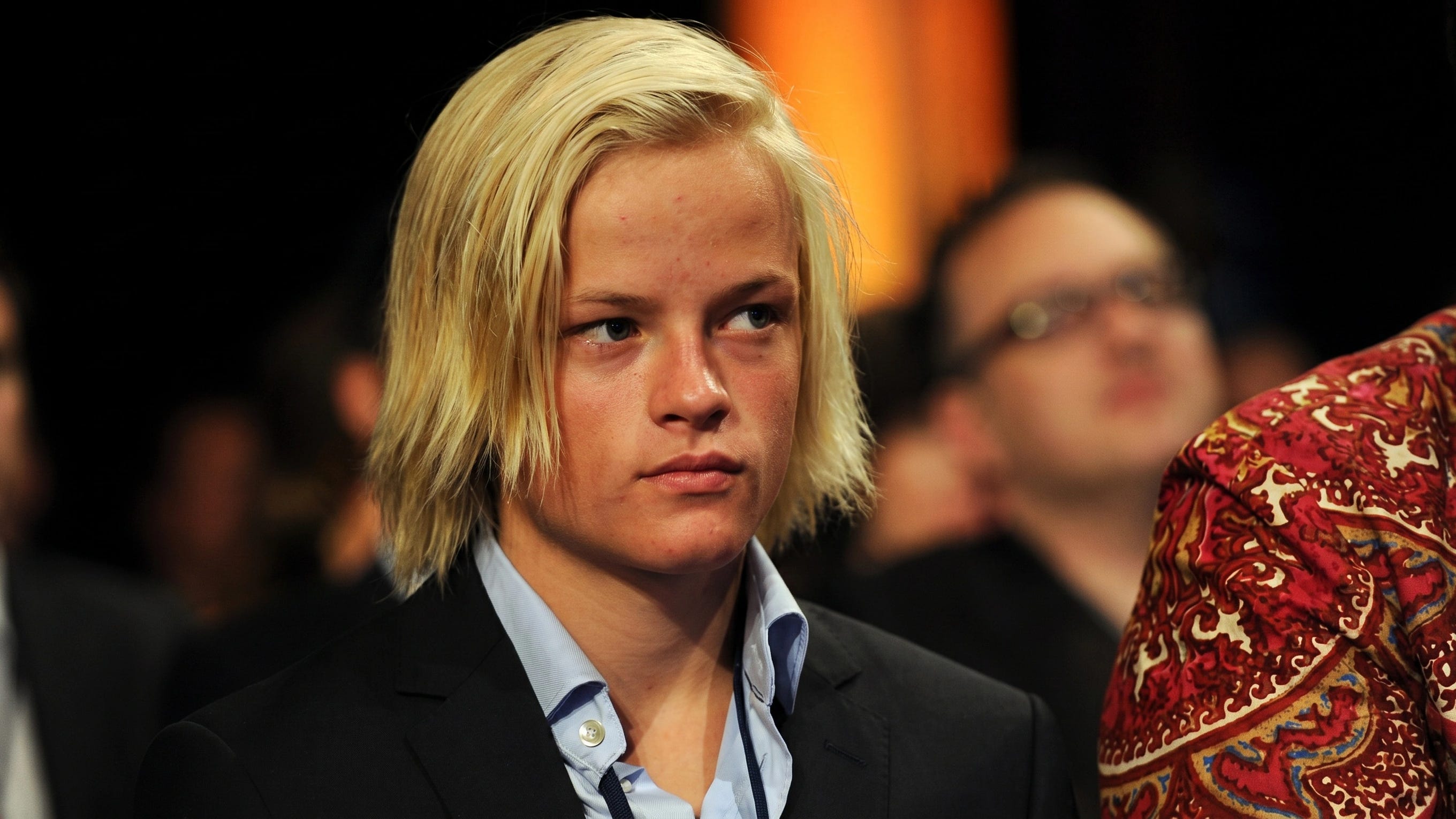
Marius Borg Høiby spent his childhood in a position few people anywhere could quite relate to.
He grew up at Skaugum, the royal family’s private estate outside Oslo, with a future king as his stepfather and a future queen as his mother. His younger half-sister, Ingrid Alexandra, was destined for the throne.
Marius remained outside the succession entirely.
He carried no royal title and held no official position, yet he appeared in family photographs and lived much of his childhood inside the same household as Norway’s future monarch.
The Norwegian press called him “Little Marius,” after a character in the 1883 novel Poison who, like him, was born outside marriage and portrayed as an outsider.
That sense of being both inside and outside the institution followed him into adulthood.
Royal watchers sometimes commented on photographs in which Haakon appeared more demonstratively affectionate with Ingrid Alexandra and Sverre Magnus. Marius was never legally adopted, but his financial dependence on Haakon and Mette-Marit continued.
During a police interrogation in 2024, it emerged that the couple paid his bills and gave him 20,000 Norwegian kroner a month, roughly $1,900.
Then came the arrest.
In August 2024, police detained Marius on suspicion of sexual offenses. By the following summer, prosecutors had charged him with 40 offenses, including four counts of r*pe, serious assault, drug violations and traffic offenses.
The trial opened in Oslo in February and ran for seven weeks.
The evidence brought the scandal directly inside royal life. Prosecutors and the defense introduced more than 800 electronic messages and self-recorded videos of sexual encounters.
One of the r*pe allegations dated to 2018 and was said to have taken place at Skaugum, the same estate where Haakon and Mette-Marit had raised their children.
Prosecutors sought seven years and seven months in prison. The defense sought 18 months based on the offenses Marius had admitted.
On June 14, a three-judge panel convicted him of 34 offenses, including two counts of rape involving women who were incapacitated or asleep.
He was sentenced to four years in prison.
The verdict remains under appeal.
The palace kept its response brief, saying that the matter had been considered by the courts and that it had no comment on the outcome.
Haakon addressed the human side more directly.
“Our thoughts are with everyone who is affected by this case,” he said. “Marius Borg Høiby is not a member of the Royal House of Norway and is therefore autonomous. We care about him, and he is an important member of our family.”
The distinction was precise. Marius remained deeply connected to them as a son and stepson while standing outside the Royal House as an institution.
That separation might have helped contain the damage under ordinary circumstances.
A few days before his trial began, however, his mother’s name had appeared hundreds of times in the Jeffrey Epstein files.
The Emails
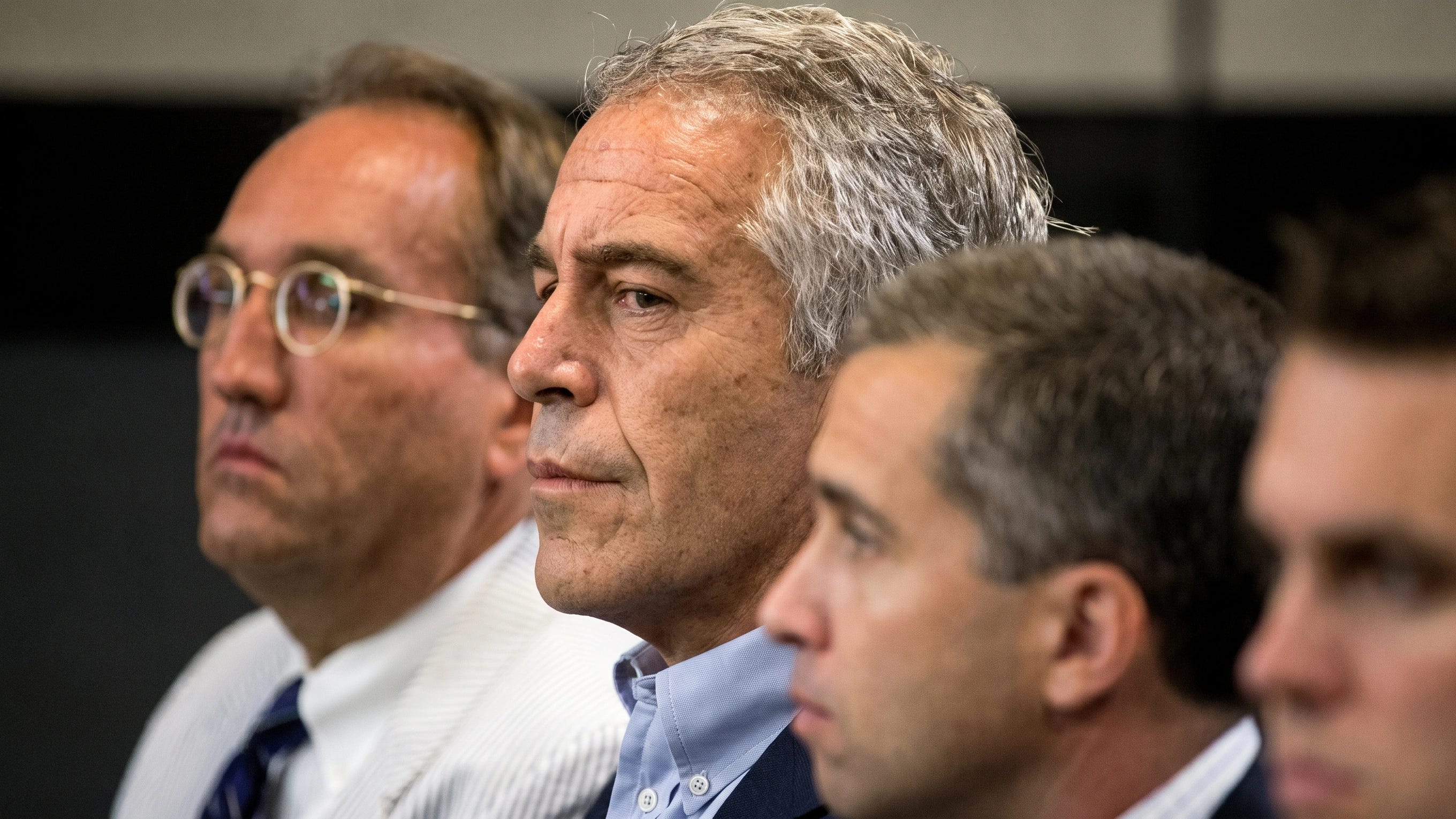
On January 30, the U.S. Department of Justice released more than three million pages of material connected to Jeffrey Epstein.
Crown Princess Mette-Marit appeared throughout these documents, dubbed “The Epstein Files”.
The files contained hundreds of email exchanges between her and Epstein from 2011 through 2014, with her name appearing more than a thousand times across the release.
The timing was brutal. Marius’s r*pe trial was only days away.
Norwegians already knew Mette-Marit had associated with Epstein. The connection first became public in 2019, when she apologized, said she’d understood too little about his crimes and indicated that their contact had ended in 2013.
The new documents showed correspondence continuing into 2014.
They also revealed something much harder to explain.
Epstein had pleaded guilty in Florida in 2008 to soliciting sex from a minor. Mette-Marit was introduced to him three years later.
In October 2011, she decided to look him up.
“Googled u after last email. Agree didn’t look too good,” she wrote.
The correspondence continued, despite her alleged knowledge of his heinous acts.
The emails showed Mette-Marit and Epstein discussing his “wife hunting,” his habit of dating young women and Vladimir Nabokov’s Lolita, a novel centered on the sexual abuse of a 12-year-old girl.
One exchange concerned pictures of naked women that Mette-Marit discussed giving to her then-15-year-old son Marius as a wallpaper image.
She also spent four days at Epstein’s Palm Beach mansion in 2013 while Epstein himself was away.
Another uncomfortable connection appeared from 2015. Haakon, Mette-Marit and their children, including Marius, spent a free week aboard a yacht owned by Terry Taylor, a close Epstein associate whose name appeared repeatedly in the files.
That trip came after the point when Mette-Marit had said she’d broken with Epstein’s circle.
The fallout reached well beyond the tabloids.
Three cultural organizations under her patronage formally expressed concern to the royal household. Norway’s prime minister criticized her “poor judgment.”
Mette-Marit issued another apology, saying she “strongly disavows Epstein’s abuse and criminal acts” and regretted failing to understand sooner what kind of person he was.
Then she added a line that drew its own attention: “Some of the content of the messages between Epstein and me does not represent the person I want to be.”
Public confidence fell quickly.
One poll found 47.6 percent of Norwegians believed she should never become queen. Another measured her personal approval rating falling by half in a month.
For Mette-Marit, the contrast with 2001 was painful.
Back then, she’d asked the country to judge her for the person she intended to become rather than the life she’d lived before meeting Haakon. Norway accepted the bargain.
The Epstein emails belonged to the years after she’d become crown princess.
She’d researched Epstein herself, concluded that what she found “didn’t look too good,” and carried on the correspondence anyway.
As that sank in, Haakon’s sister was still supplying Norway with an entirely different variety of royal controversy.
The Shaman
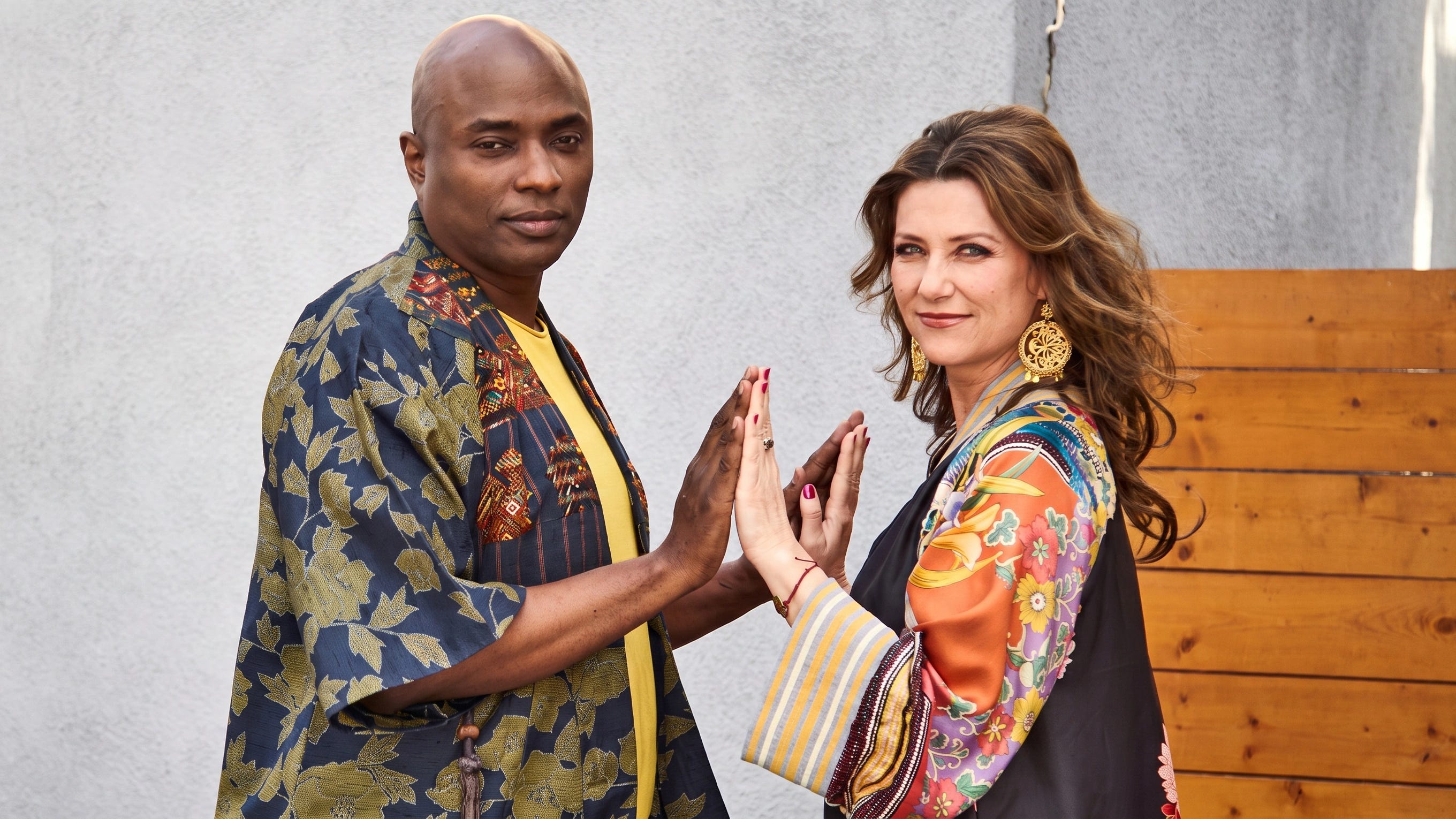
Princess Märtha Louise had been testing the outer limits of royal eccentricity for years.
King Harald’s daughter described herself as clairvoyant and ran a school that claimed to teach students how to “create miracles” and communicate with angels.
Then, in May 2019, she announced her relationship with Durek Verrett, an American who described himself as a shaman.
Verrett soon became a steady source of headlines.
He claimed that children can develop cancer because they subconsciously “want it”.
He additionally criticized chemotherapy as ineffective and financially motivated, and warned that casual sex could attract “subterranean spirits.”
He also described a near-death experience in which he said he died for four minutes and 25 seconds and returned after “receiving all the insights from the other side,” an account he later shared with the New York Times.
Norwegian media eventually included him on a list of “20 famous conspiracy theorists” alongside David Icke and Alex Jones.
Märtha Louise and Verrett then turned their relationship into a business.
They organized paid seminars called “The Princess and the Shaman,” combining her royal identity with his spiritual practice.
By 2022, the arrangement had become uncomfortable enough for the palace that Märtha Louise stepped back from her royal patronage roles and agreed to keep her commercial work separate from her title.
Harald took the diplomatic route and called Verrett “a great guy.”
In August 2024, the great guy became his son-in-law.
Märtha Louise and Verrett married in Geiranger, a fjord village and UNESCO World Heritage site. The BBC said the ceremony had “sparked division across the nation.”
Verrett received no royal title.
The argument over where Märtha Louise’s private business ended and her royal status began continued after the wedding.
In 2025, Netflix released Rebel Royals: An Unlikely Love Story. The palace accused Märtha Louise of again breaching her agreement to keep commercial ventures separate from royal life.
She and Verrett later apologized, saying there were “undoubtedly things we wish we had handled differently.”
For years, Märtha Louise’s story could be treated as the colorful eccentricity of a princess who’d moved away from official duties.
By 2026, that interpretation had become harder to sustain. Her brother’s household was dealing with Epstein and a rape conviction at the same time that her own relationship kept drawing the palace into fights over commerce, credibility and the royal name.
The oddities that once seemed safely dispersed around the edges had begun to converge around the throne.
The Crown Princess
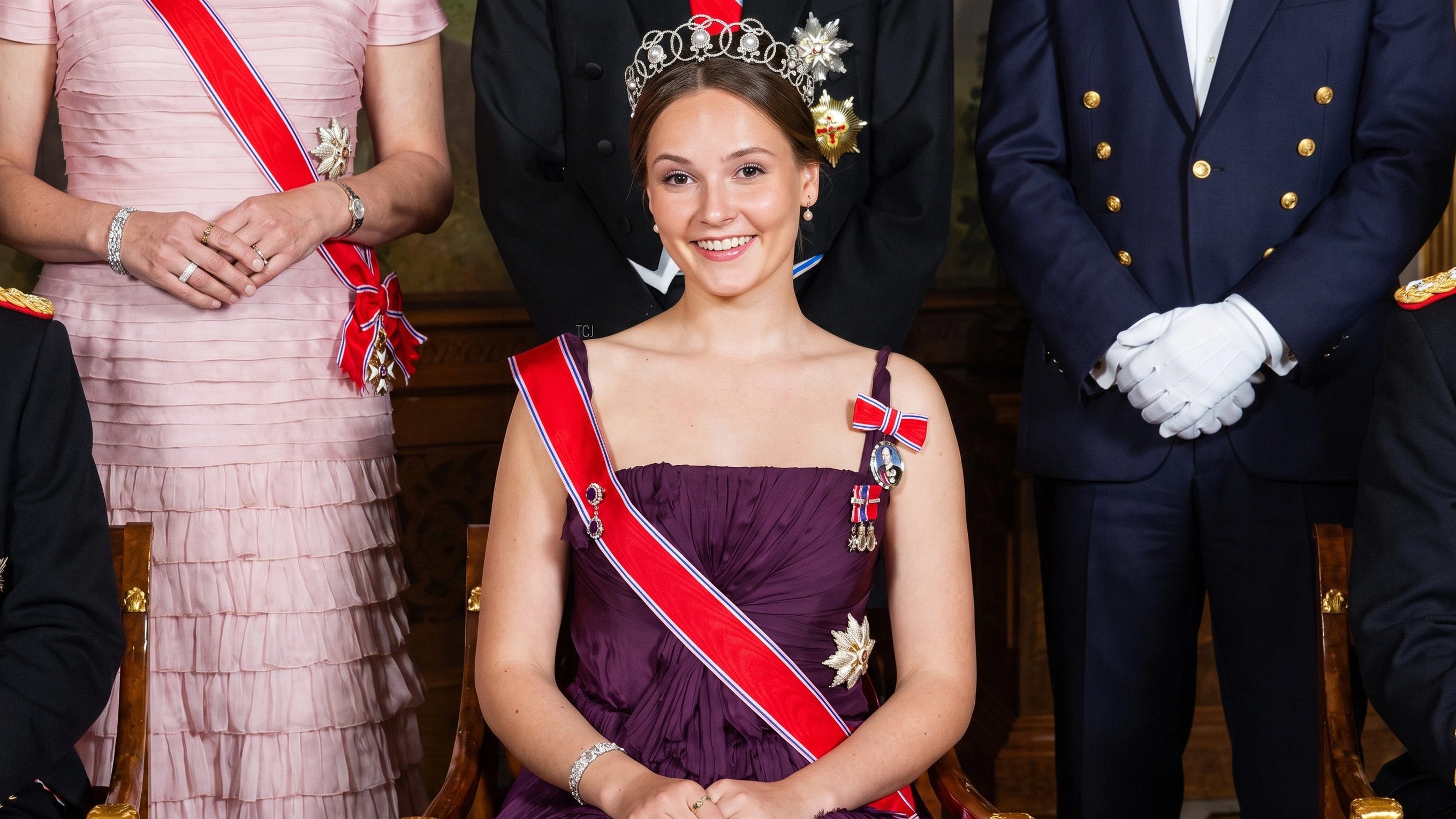
By this summer, another member of the family has been pulled rapidly toward the center of events.
Ingrid Alexandra is 22.
On the day King Harald died, she automatically became Crown Princess and heir apparent. Within hours, she accompanied her father to an emergency cabinet meeting at the Royal Palace, dressed in a black suit for her first official appearance in the new role.
Her responsibilities had already begun expanding months earlier because Mette-Marit’s health was failing.
The crown princess had lived with pulmonary fibrosis since 2018. By June, the condition had progressed far enough for the palace to announce that she’d been placed on the lung transplant waiting list.
The palace specifically stressed that she would receive the same treatment as everyone else in the queue.
The announcement produced one of the strangest contrasts of the entire saga.
At the same moment that Mette-Marit’s reputation was collapsing over the Epstein emails and her son’s criminal case, roughly 12,000 Norwegians registered as organ donors.
Within a fortnight, she underwent a successful lung transplant.
The public could be angry with Mette-Marit and still feel tremendous sympathy for her.
Ingrid Alexandra came home from her studies at the University of Sydney and took on a larger royal workload. She’d already completed a year of mandatory military service with the Engineer Battalion of Brigade Nord beginning in January 2024.
Now her education and early adulthood were being rearranged around the illnesses and scandals of the generation ahead of her.
Under the constitutional change introducing absolute primogeniture in 1990, Ingrid stands ahead of her younger brother in the succession. She’s positioned to become Norway’s first reigning female monarch of the modern era.
The institution she may inherit has taken a serious hit, though it remains very much alive.
On February 3, the Storting formally considered replacing the monarchy with a republic. The proposal lost by 141 votes to 26.
Public support for the crown had fallen to around 60 percent, down sharply from the levels it had enjoyed in easier years. Republican support had risen to 27 percent.
Harald himself remained in a different category.
His personal approval reached 9.2 out of 10 even as confidence in other members of the family deteriorated. That gap matters now.
Harald spent decades building an unusually personal relationship between the Norwegian public and its monarchy. Haakon inherits the goodwill, but he also inherits the consequences of choices that once looked like evidence of the family’s appealing informality.
His father fought to marry a commoner and won.
Harald later defended Haakon’s decision to marry Mette-Marit, believing that another unconventional woman deserved the same chance Sonja had received.
Mette-Marit brought Marius into the royal household.
Marius later became the defendant in the gravest criminal scandal the family had faced, while his mother’s friendship with Jeffrey Epstein created a second scandal only days before his trial began.
Märtha Louise, meanwhile, spent years turning royal eccentricity into a public spectacle of its own.
And now Ingrid Alexandra stands immediately behind them in the succession, young enough to have played no role in any of it and prominent enough to inherit whatever consequences remain.
For several generations, Norway’s royals have survived by trusting that the public would eventually accept the people they chose to bring close to the crown.
Haakon’s reign begins at the point where that old gamble has become very expensive.
This could be a Wes Anderson movie!
Wow! Just wow! I knew nothing about this country's royal alignments and ailments at all. It is astonishing to learn of the continued acceptance of less-than-regal behaviors in order to keep the facade of "royalty" afloat.