
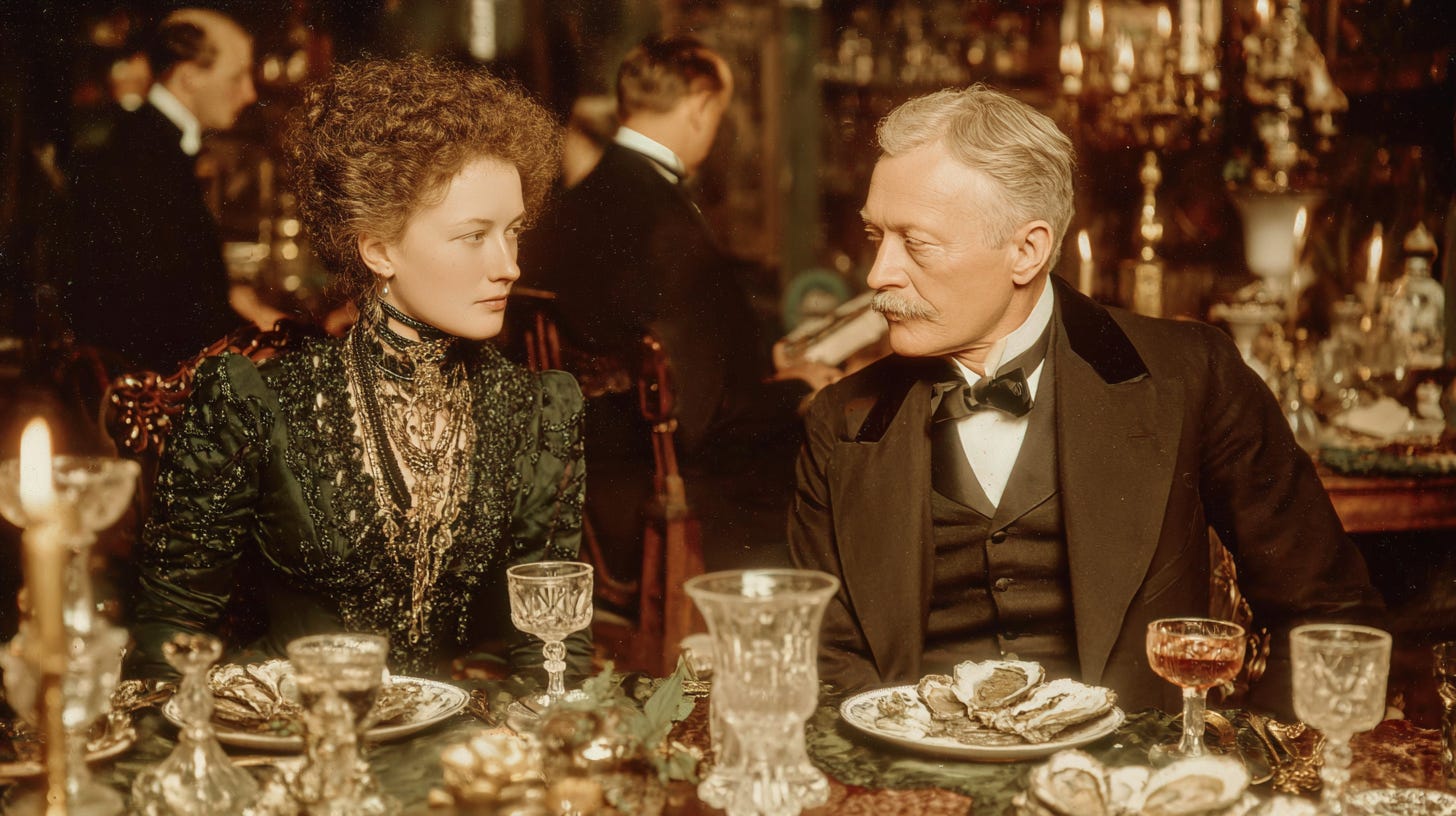
When you study how wealthy families entertained during America’s Gilded Age, the food itself was almost never what people remembered.
The meals were elaborate — sometimes twelve courses or more.
But what made these gatherings memorable wasn’t the quantity of food. It was the structure of the experience.
Many courses, small portions.
A typical Gilded Age formal dinner might include: oysters, soup, fish, chicken, an entrée of meat, game, a palate cleanser, salad, cheese, and dessert.
Twelve courses sounds overwhelming. But each portion was deliberately small.
Historical accounts confirm guests “weren’t necessarily expected to eat everything.” The goal was variety and experience, not volume.
This principle translates directly to modern hosting.
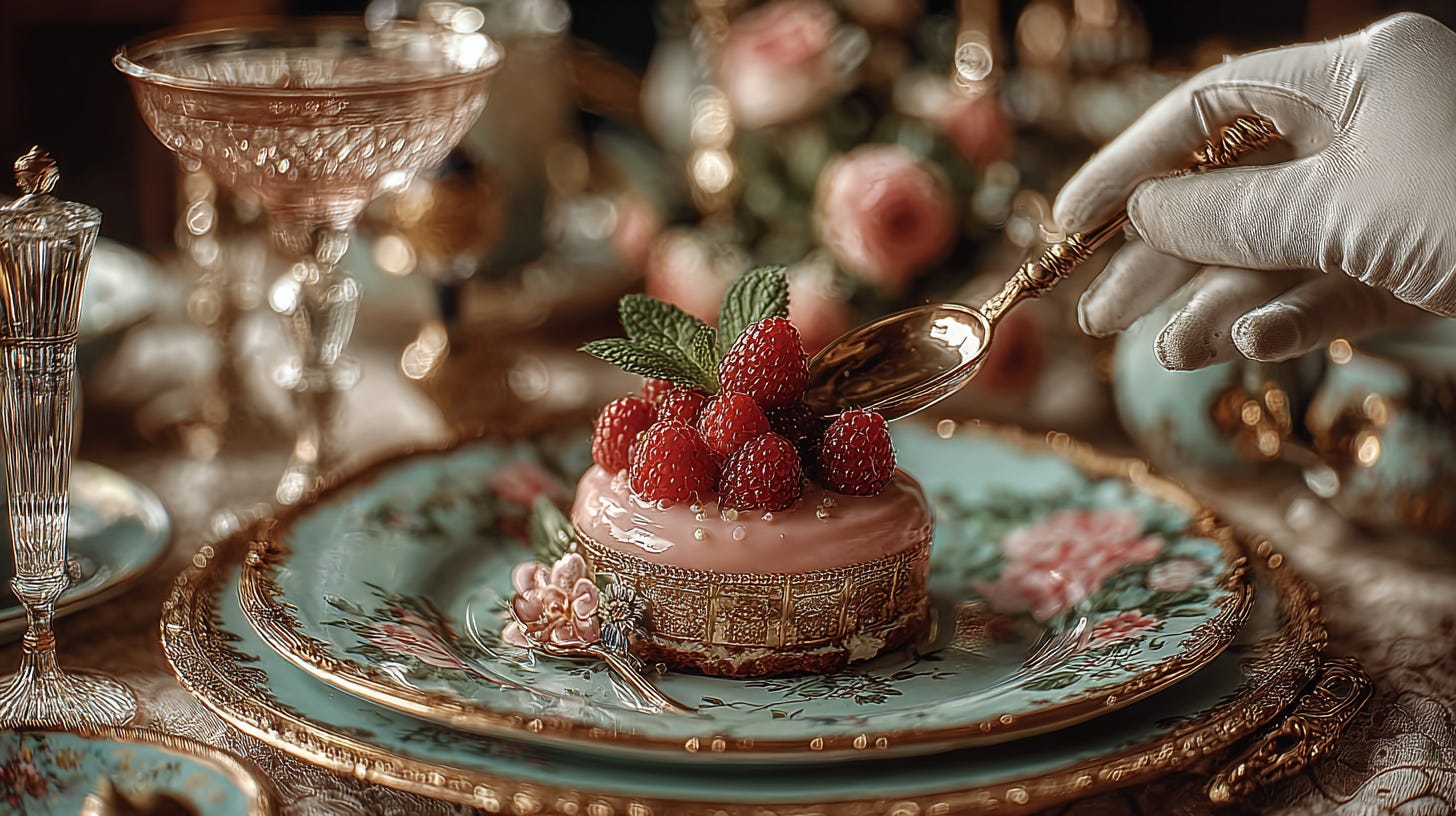
Better ingredients, smaller amounts. One exceptional cheese rather than a cheese board. One perfect dessert rather than a spread of options.
The abundance is in the care, not the quantity. Anyone can put out a lot of food. Curating precisely the right food — that requires thought.
Arrivals carry disproportionate weight.
Whatever your budget, the first few minutes of any gathering matter more than most hosts realize.
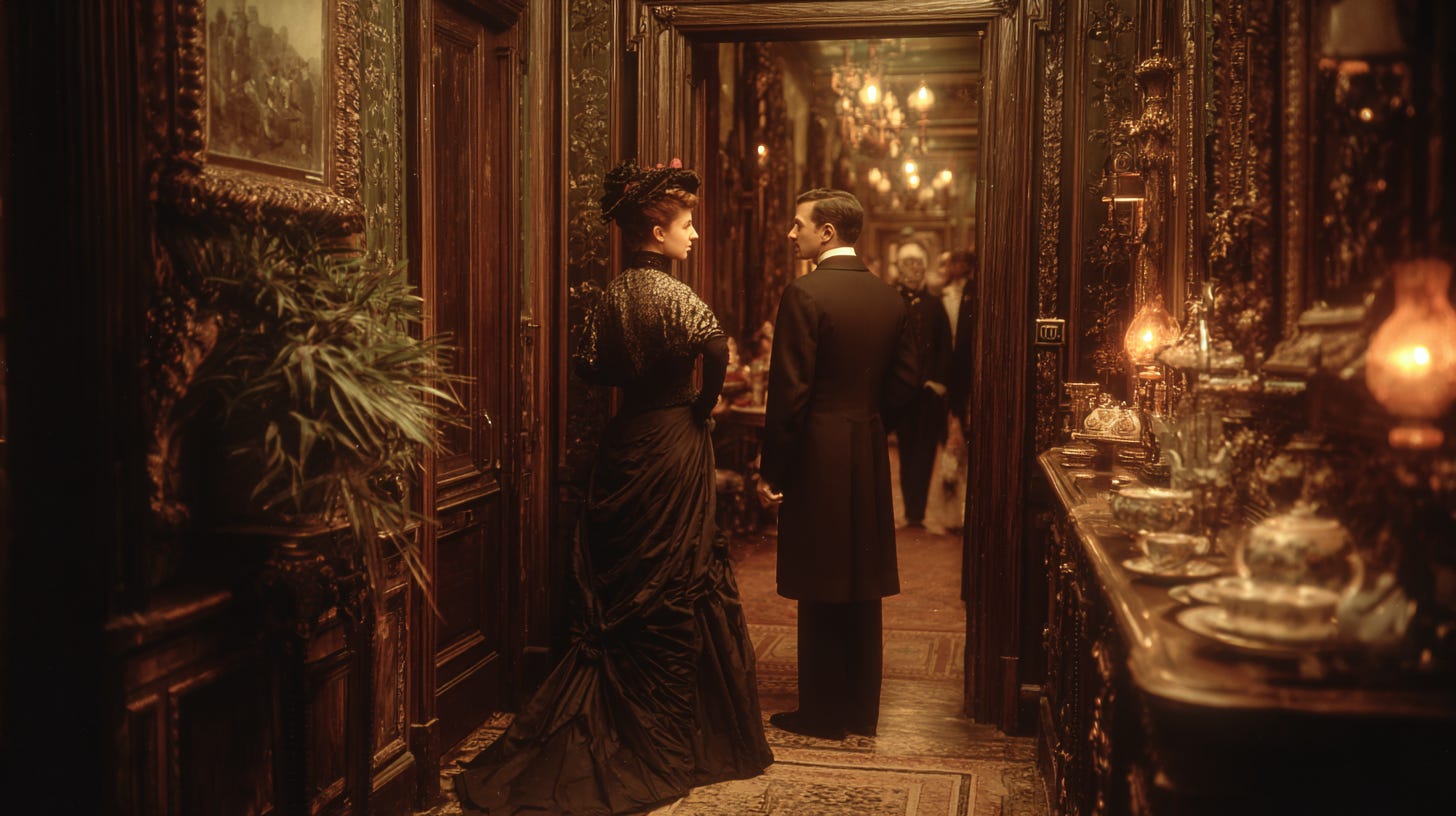
Gilded Age entertaining was obsessive about this. Guests were greeted immediately. Coats disappeared without awkwardness. Drinks appeared within moments. No one stood in an entryway wondering what to do.
And the principle holds today.
How quickly do you greet someone at the door?
How fast does a drink get into their hand?
Is there a clear place to put their things?
Those first minutes set the emotional tone for everything that follows. A guest who feels welcomed and oriented in the first five minutes will forgive almost any imperfection later. A guest who feels awkward on arrival carries that discomfort through the evening.
Departures are equally important.
Most hosts focus entirely on the event itself and treat departure as an afterthought. Gilded Age hosts understood that the last impression matters as much as the first.
Walk guests to the door personally. Have their coat ready before they ask. Say something specific — not just “thanks for coming” but a reference to something from the evening: a conversation you enjoyed, a story they told, something you want to continue next time.
Guests remember how they felt when they arrived and how they felt when they left. Everything in between blurs together.
Quality of attention over quantity of stuff.
The wealthy families of the Gilded Age had resources most of us will never have. They employed dozens of servants. They served imported delicacies. They entertained in mansions.
But the underlying principles don’t require wealth. They require intention.
Smaller portions of better food. Careful attention to arrivals and departures. Making sure no guest feels stranded or uncertain at any moment.
A thirty-dollar dinner can feel gracious. A three-hundred-dollar dinner can feel chaotic.
The difference is never the budget. The difference is whether the host was thinking about the experience from the guest’s perspective.
— OML