
The most romantic story dynastic families tell themselves about marriage is that “love won”.
It almost never did, and when it did, it cost the bride something else of equivalent weight.
See, the reason the popular imagination of “old money” marriage fixates on the runaway heiress, the secret elopement, the defiance of the family match, is that these moments compress an entire dynastic system into a single readable scene:
The arranged marriage. The unwilling daughter. The choice she makes when no version of the choice is free.
Yet, what gets edited out of those stories, almost without exception, is the price tag.
The currency varied (money, status, exile, suspicion, blood) but the bill always arrived.
Case 1: Winnaretta Singer and the Wardrobe
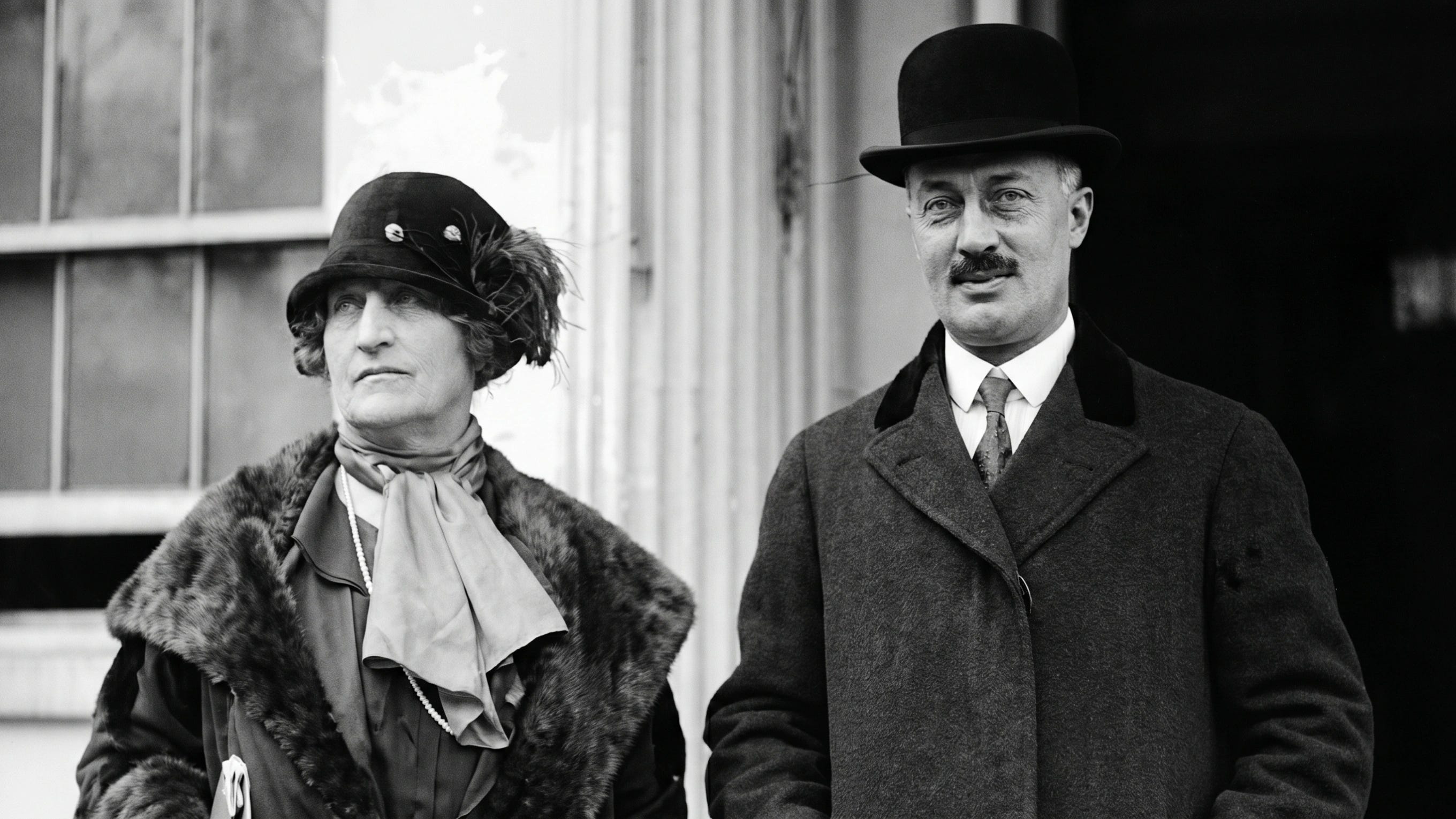
Winnaretta Singer inherited approximately $1 million (equal to around $30 million today - in the age before income tax) from her father, the Singer sewing machine empire, in 1875… she was 10 years old.
By the time she was 22, in 1887, she was the most strategically interesting unmarried woman in upper-class Paris: enormously wealthy, intellectually formidable, and (by her own private admission) a lesbian in a society that had no language for the fact.
Her family arranged her marriage to Prince Louis de Scey-Montbéliard, an aristocrat from an ancient but comparatively cash-poor aristocratic lineage.
Indeed, it was exactly the kind of titled family that increasingly relied on American industrial fortunes to preserve status and estates.
Conversely, for the Singers, the match offered what money alone still could not fully buy in Europe: unquestioned aristocratic legitimacy.
The wedding proceeded normally. The wedding night did not.
According to the most consistent surviving account, Winnaretta barricaded herself on top of a large wardrobe and refused to descend.
She held an umbrella as a defensive weapon, and when her new husband approached, she shouted that if he laid a finger on her she would kill him.
Unsurprisingly, the marriage was never consummated, and she filed for annulment. The Vatican granted it in 1892, on the grounds that the marriage had never been carnally completed.
This was the visible, theatrical refusal; it’s the kind of story that ends up in biographies. But what followed was the part the heiress always pays.
In 1893, she entered a second arranged marriage, this time to Prince Edmond de Polignac, a composer 20 years her senior and a gay man.
The match was negotiated openly between two people who needed each other for non-romantic reasons. Edmond gained financial security and an end to his social ambiguity. Winnaretta gained titular cover, social legitimacy, and a partner who would never expect what she could not give.
The mariage blanc became, against the odds, a real partnership. Winnaretta became one of the most important music patrons in modern history, commissioning Debussy, Ravel, Stravinsky, and Satie. Edmond composed until his death in 1901.
The price she paid for the first refusal was the second marriage. She did not escape the dynastic apparatus. She negotiated a second pass through it, this time on terms she could survive. Her wealth, her social position, and her ability to fund a salon all rested on her remaining inside the system she had publicly refused on a wardrobe in 1887.
The popular reading is that Winnaretta won. The structural reading is that she paid in years, in a second wedding she still did not want, and in the lifelong public performance of a marriage she had architected as a negotiated escape rather than a free choice.
Case 2: Mary Tudor and the £24,000 Fine
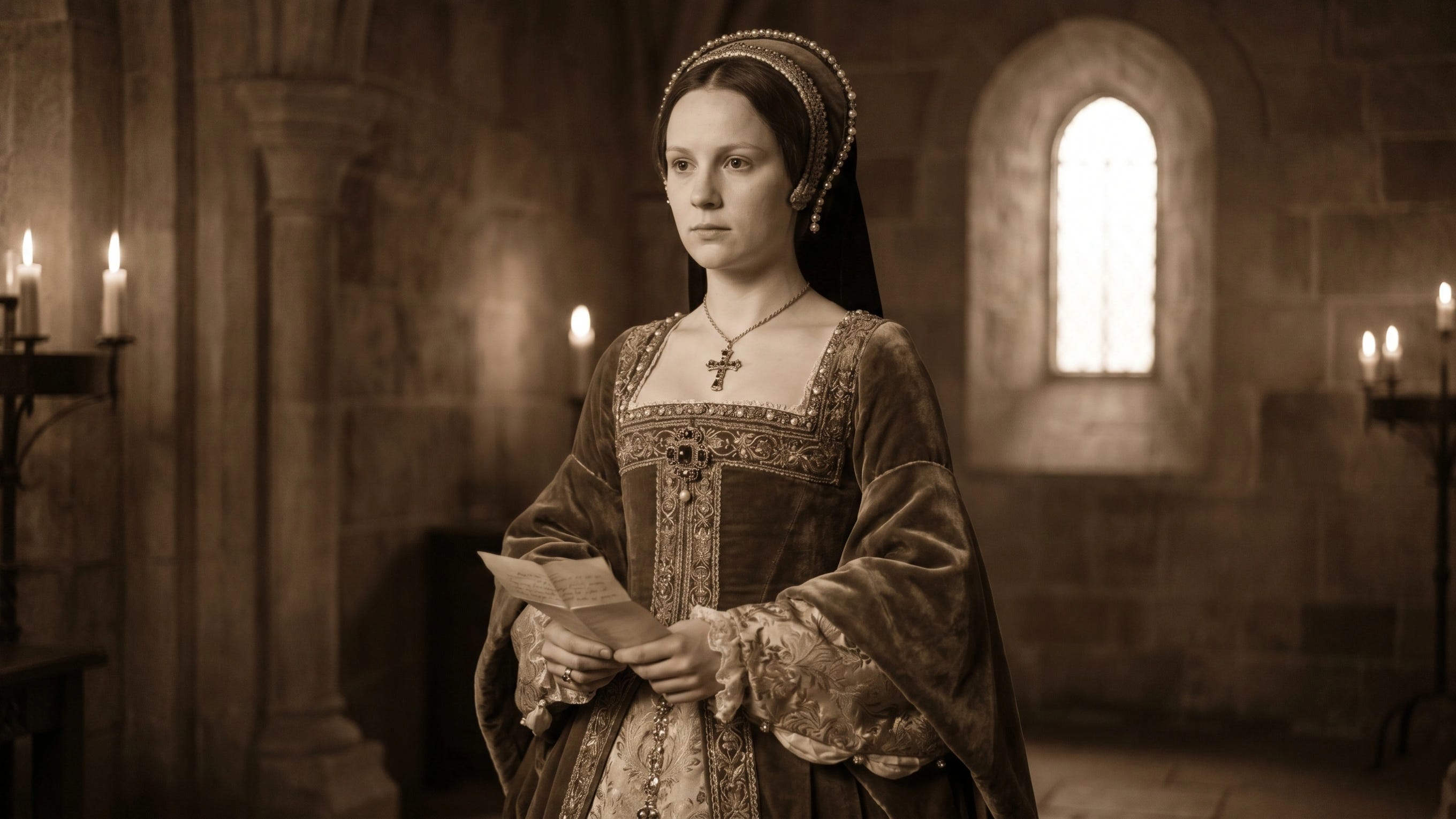
Mary Tudor, youngest sister of Henry VIII of England, was 18 years old in 1514 when she was married to Louis XII of France. He was 52. The marriage was the closing instrument on a diplomatic settlement that ended a war.
Mary did not want the match. She had, by this point, fallen in love with Charles Brandon, Duke of Suffolk, Henry’s closest friend.
The surviving letters between Mary and Henry are extraordinary because they preserve, in her own handwriting, the moment a Tudor princess negotiated the terms of her own future. Mary agreed to the French marriage on one explicit, written condition. If Louis died first and she was widowed, she would be permitted to marry whoever she wished.
Henry agreed.
But Louis XII died 82 days later, on January 1, 1515.
Mary moved within weeks, before Henry could renegotiate the terms of the deal she had extracted from him.
She married Charles Brandon secretly in Paris, in the chapel of the Hôtel de Cluny, with the new French king Francis I as witness. The wedding occurred without Henry’s knowledge or consent, despite the prior agreement.
Henry was, by all accounts, furious. The agreement had assumed her remarriage would happen on English soil, with English oversight, after a reasonable mourning interval. The secret Paris wedding violated none of the letter of the deal and most of its spirit.
The penalty was £24,000, an amount equivalent to roughly £11 million in modern terms.
Mary and Brandon were also required to forfeit Mary’s French dowry and the jewels Louis had given her, which were extensive. The payments took years to complete. The couple lived under the financial shadow of the fine for the rest of their working lives.
Yet, the marriage was permitted to stand. Mary kept Brandon.
They had four children, including a daughter, Frances Brandon, who later became the mother of Lady Jane Grey, the nine-day queen of England.
Mary Tudor’s case is the cleanest in the historical record because the price was written out in pounds, on parchment. She received a literal invoice for choosing her own husband. Henry let her keep the choice; she paid for it in installments for years.
The romantic reading is that love won. The dynastic reading is that the family priced the defiance, accepted the payment, and continued to run the institution around her. The system did not break. It charged her for the exception.
Case 3: Jacquetta of Luxembourg and the £1,000 Bill
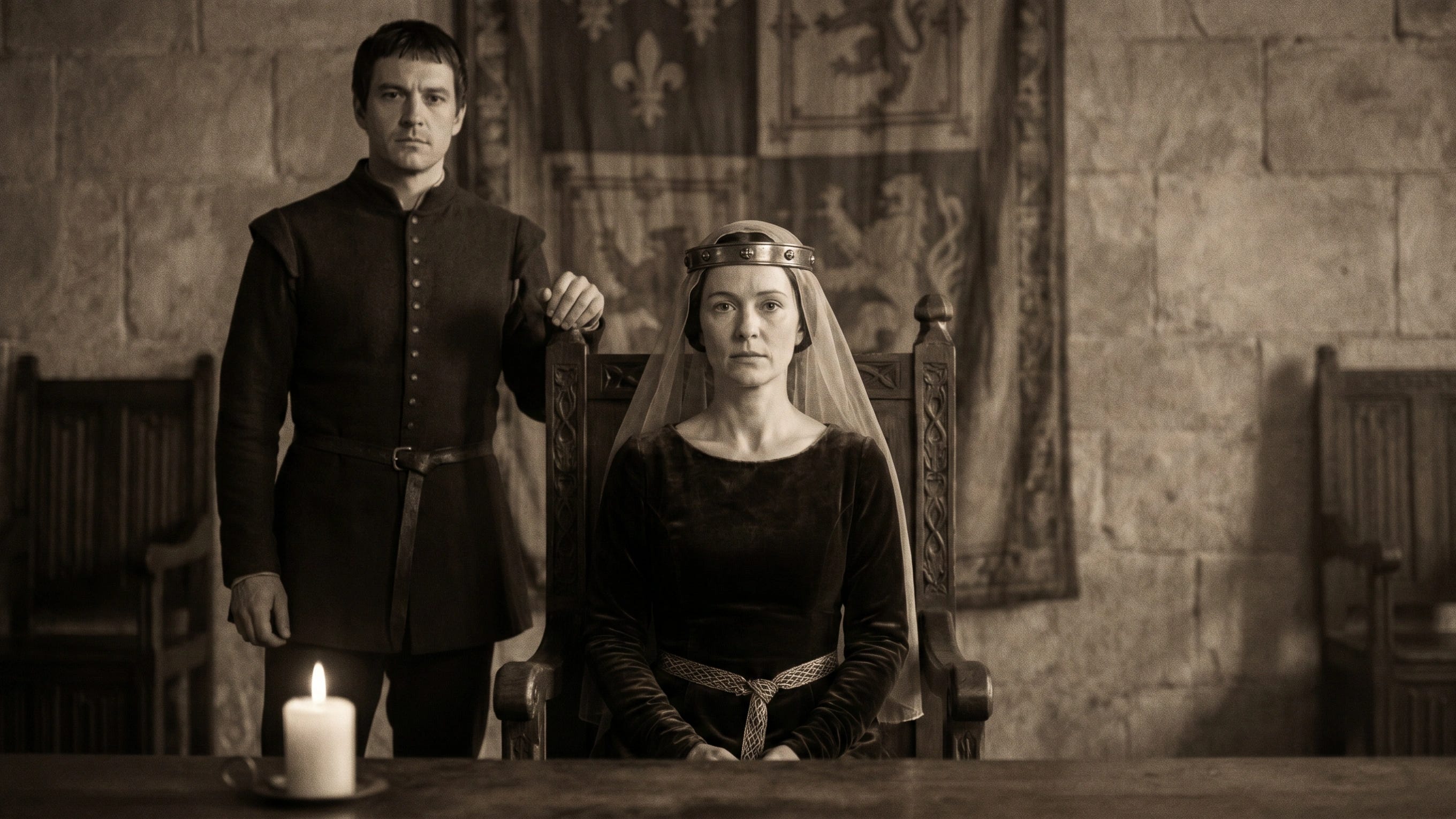
Jacquetta of Luxembourg was widowed at approximately 18, after the death of her first husband, John, Duke of Bedford, who had been the uncle of King Henry VI of England and one of the most powerful men in northern France. Jacquetta inherited a dower income, a title (Duchess of Bedford), and an exceptionally strong negotiating position for a remarriage of state.
She married her late husband’s chamberlain, Sir Richard Woodville, in secret, in 1437.
The match was beneath her by every measure that mattered to medieval dynastic logic. Woodville was a knight in royal service, not a peer of comparable rank. The elopement was not just a personal scandal. It was a structural violation of how widowed great ladies were supposed to be remarried, which is to say, through the king.
Henry VI’s response was to issue a fine of £1,000, an amount equal to 10s of millions of dollars today.
Jacquetta and Richard paid. She kept her dower income from the Bedford estate and most of her practical wealth, although she lost the elevated standing that came with the duchy. They went on to have 14 children, an extraordinary family that included Elizabeth Woodville, who would become Queen of England as the wife of Edward IV in another secret marriage two generations later.
This was the first payment. The second arrived 30 years later, in a currency the Tudor and Singer cases did not require.
In 1469, the Earl of Warwick, in open revolt against Edward IV, accused Jacquetta of witchcraft. The charge was politically motivated, designed to weaken the king through his mother-in-law, but it carried lethal weight. Warwick’s forces captured her husband Richard and one of her sons. Both were executed without trial.
Jacquetta herself was put on trial for maleficium. The case collapsed only when Edward IV escaped Warwick’s captivity and reasserted royal authority. The witchcraft charge was dismissed. She lived until 1472 and died at approximately 56.
The Jacquetta case is the most brutal because the bill kept arriving long after the original defiance had been settled. The £1,000 fine was the visible price. The political vulnerability that came from a marriage beneath her station was the structural price. The deaths of her husband and son, decades later, in a quarrel that wove her low-status marriage into a treason narrative, were the deferred price.
She got the marriage she wanted in 1437. The family of England, in the most literal sense, kept billing her for it for the next 35 years.
The Pattern
Three women, three centuries, three countries.
Each defied the marriage her family had selected for her. Each, in the immediate term, got something she wanted. And each paid for the choice in a currency that was tailored to her era but identical in its underlying function.
Winnaretta paid in a second arranged marriage and a lifelong performance of legitimacy.
Mary paid in pounds, with a fine equivalent to roughly £11 million in modern money, on a debt that took years to discharge.
Jacquetta paid in pounds first, in political exposure second, and in the lives of family members third.
The currency was different in every case, but the fact of payment was not.
The reason the price always arrives is that the heiress is not refusing a person, she is refusing a function the family has assigned her inside its long-running institutional logic.
The arranged marriage was never about the bride’s individual happiness, which is why her happiness was never the right exchange rate to apply against the refusal.
The arranged marriage was about a treaty, an alliance, a wealth transfer, a succession plan, a containment of titles.
Thus, in modern terms, the family office models the refusal the same way it models any unbudgeted variance.
There is the upfront cost (the fine, the public scandal, the cancelled treaty), and there is the downstream cost (the renegotiated marriage, the political vulnerability, the slow loss of dynastic position).
The deeper rule, the one “old money” still operates on today, is that the dynastic system has historically been willing to let an heiress choose her husband.
What it has never been willing to do, in any era, is absorb the cost of that choice without billing her for it.
The choice is treated as a withdrawal against future credit, and the credit terms are always set by the institution, never by the bride.
Love your style of writing. Easy read. Enjoyable I don’t need to use my grey matter too hard.
This is a very interesting way of looking at these women.