
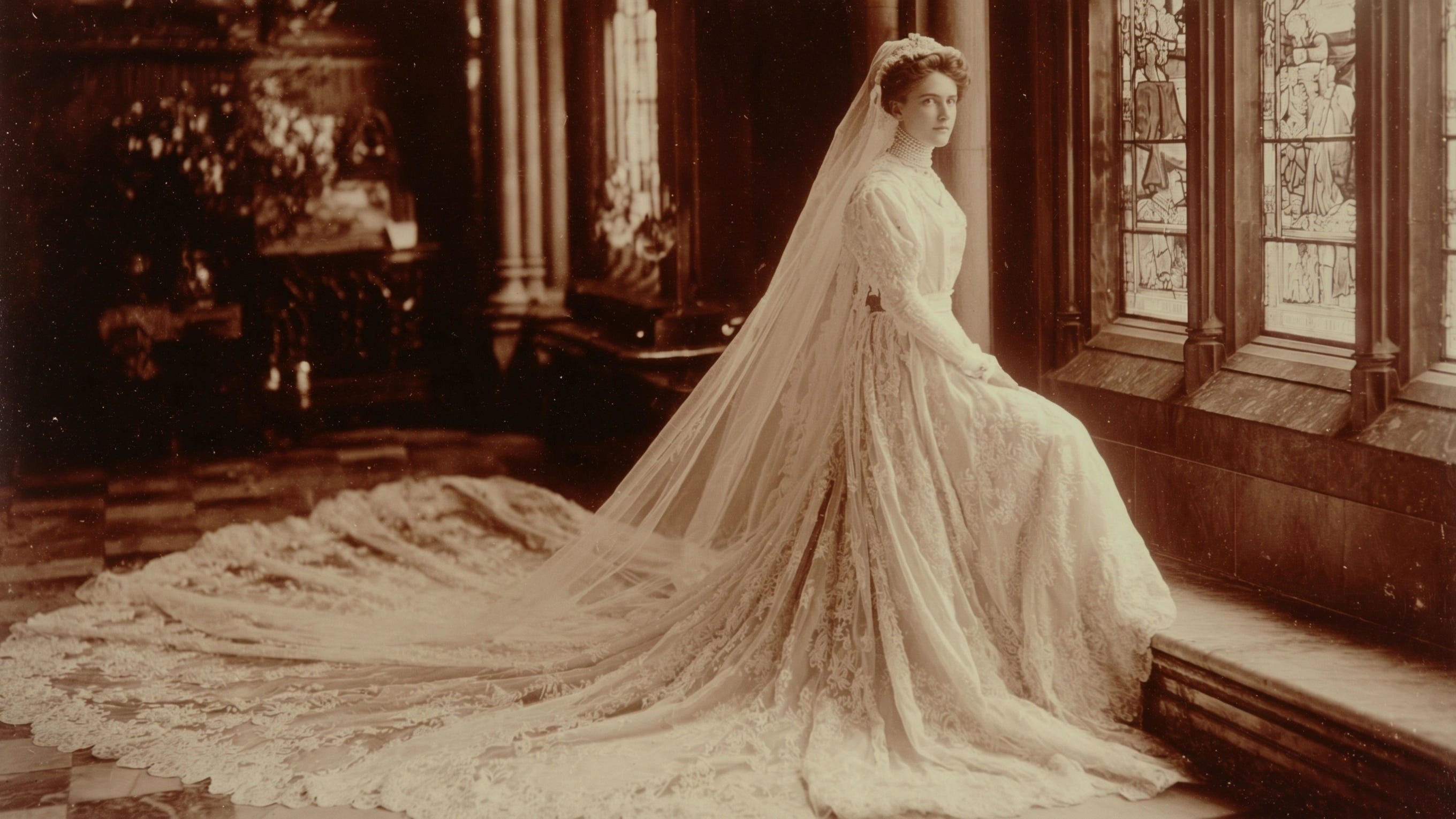
There is a story “old money” tells the public, and there is a story it tells the lawyers, and the two stories are never the same.
The public story is about love, lineage, and grand houses; the lawyer story is about settlements, trusts, and what the family is really acquiring when it lets a woman walk through the door.
In this article, we describe the women who only learned which version they had married into after the contract had already closed.
The pattern is older than the United States, and it repeats in every era where dynasties protect themselves through the careful selection of who gets to enter them.
The women change, the country changes, but the arrangement does not.
Undoubtedly, the unwritten terms are never disclosed at the altar; they are disclosed later, in the silences of a marriage that was never designed around the person who entered it.
The Arranged Sale: Consuelo Vanderbilt
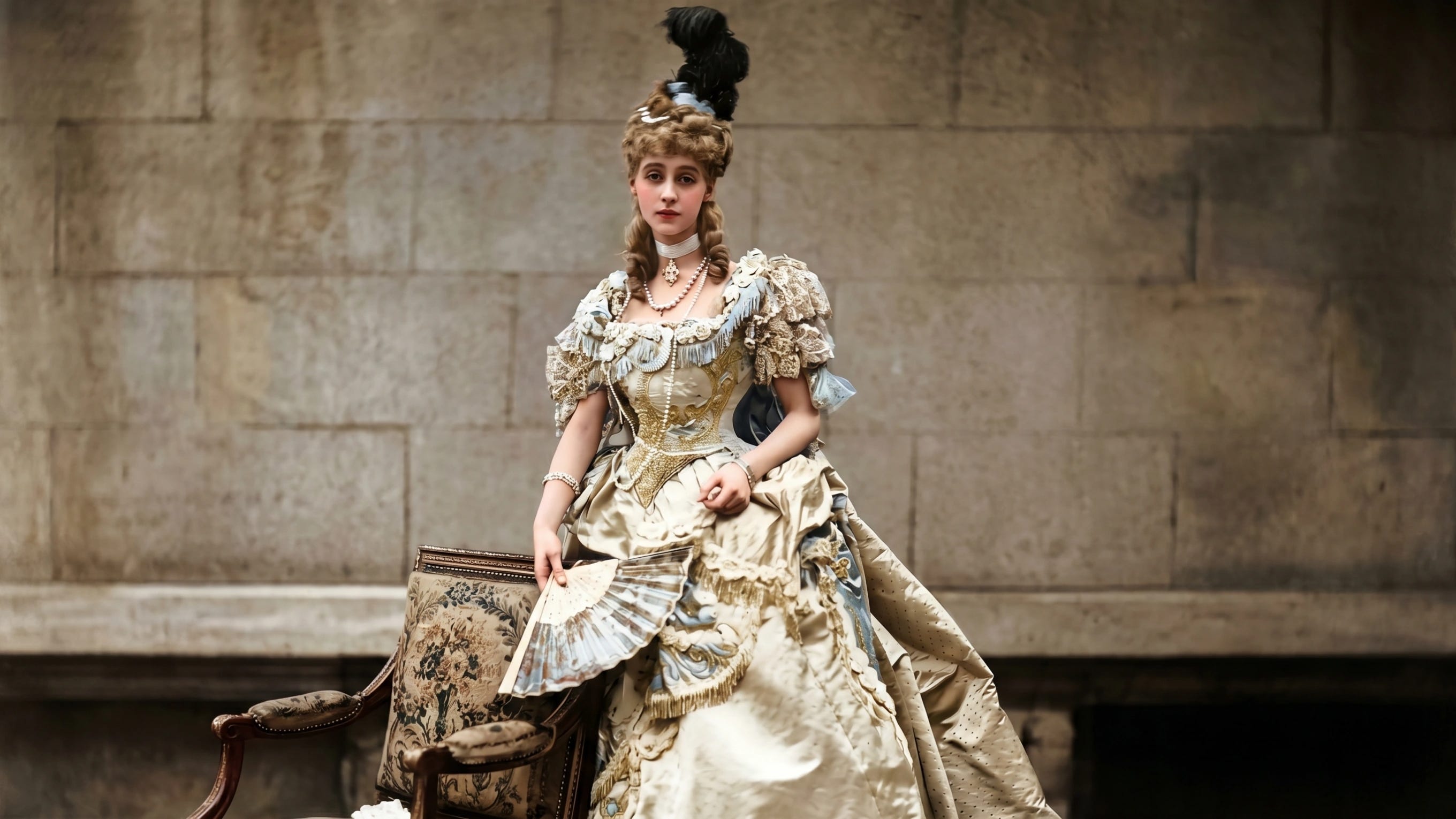
November 6, 1895, St. Thomas Church, New York City.
The pews held 2,000 guests, the flowers alone cost what most Americans earned in a year, and outside, a crowd of 5,000 pressed against the doors.
Inside, Consuelo Vanderbilt walked down the aisle at 18 years old and wept the entire way.
The newspapers reported tears of joy; they were not tears of joy.
The night before, Consuelo had begged her mother Alva Vanderbilt not to make her go through with it, and she had been locked in her room. Alva had already given her word to the family of the groom.
But the wedding was not a wedding in any ordinary sense, it was the closing of a transaction that had been negotiated for months, in drawing rooms on two continents, between people who understood exactly what they were exchanging.
Consuelo understood almost nothing of it until it was done.
William K. Vanderbilt was one of the wealthiest men in America, and his only daughter was beautiful, and in the social economy of the Gilded Age that made her a convertible asset.
On the other side of the Atlantic, Charles Spencer-Churchill, 9th Duke of Marlborough, possessed one of the great titles in England and one of the great problems.
Blenheim Palace, 187 rooms, ancestral seat of the Marlborough family, was deteriorating. The roof leaked, the grounds had gone to ruin, and the dukedom carried the weight of centuries and could no longer pay for it.
The settlement was precise: 50,000 shares of Beech Creek Railroad stock, valued at $2,500,000, placed in trust with a guaranteed income of $100,000 per year for the Duke, for life. Vanderbilt money would restore Blenheim, and the Duke would provide the title.
Alva later told an investigator, during the annulment proceedings: “I forced my daughter to marry the Duke. I have always had absolute power over my daughter.”
She said it without apparent remorse.
The Duke, by some accounts, told Consuelo on their honeymoon that he had married her only because he felt obliged to save Blenheim, and Consuelo spent the next 25 years inside a marriage arranged to serve a house, not a person.
They lived separately for most of it, formal separation came in 1906, divorce in 1921, and the annulment was finalized in 1926, after Alva’s testimony about the coercion.
By the time it was finished, William K. Vanderbilt had transferred approximately $20 million to the couple and their children. Blenheim had been restored, the dukedom had been preserved, and Consuelo had purchased the Duke’s cooperation with her own fortune, her own freedom, and the better part of her twenties and thirties.
In 1921 she married Jacques Balsan, a French aviator, and by most accounts spent the rest of her life in something closer to happiness. She was the most visible of what the press called “dollar princesses,” American heiresses traded to European titled men in exchange for social legitimacy. There were dozens of them; Consuelo was simply the one who wept visibly enough that everyone could see it happening in real time and chose not to ask why.
The Fortune Consumed: Barbara Hutton
Barbara Hutton inherited approximately $25 million at age 10.
She inherited it because her mother Edna Hutton died when Barbara was 5, of a self-inflicted gunshot wound, officially ruled accidental. Her grandfather F.W. Woolworth, founder of the dime store chain that bore his name, had built the fortune. His money was everywhere, and his granddaughter was, in most practical senses, alone.
By the time Barbara turned 21 in 1933, the fortune had grown to approximately $40 million, and the press immediately nicknamed her “Poor Little Rich Girl.”
She married 7 times.
Prince Alexis Mdivani was first, in 1933. Georgian-born, largely titled without a fortune, he received a substantial settlement when the marriage ended in 1935. Count Kurt Haugwitz-Reventlow was second, and they had one son, Lance.
Cary Grant was third, from 1942 to 1945, and by the general accounting of people who knew them, he was the only husband who did not extract money from her. He was also the only one without a title.
Then came Prince Igor Troubetzkoy. Then Porfirio Rubirosa, in 1953, for 53 days; the divorce settlement was $2.5 million. Then Baron Gottfried von Cramm. Then Prince Pierre Raymond Doan Vinh Na Champassak, in 1964.
The titles accumulated, but the fortune did not.
Barbara renounced her American citizenship in 1938 to avoid taxes, and she subsisted for long stretches on crackers and champagne. The eating disorders and drug dependency were not hidden, they were simply not discussed in any framework that acknowledged they had causes.
Her son Lance Reventlow died in a plane crash in 1972. She died in 1979 at age 66. Her estate was valued at approximately $3,500.
The wound at the center of her life was not the husbands or the titles or the taxes. It was a 5-year-old girl whose mother died and who was then handed an inheritance so large that everyone around her had an interest in managing her rather than knowing her. The men she selected to help her close that wound took the money instead.
She reportedly said, near the end of her life, that she still loved all 7 of her husbands.
The Displacement: Carolyne Roehm
Carolyne Jane Smith grew up in Kirksville, Missouri, where her father was a high school principal, and the trajectory she chose carried her about as far from that town as a person could go in one lifetime.
She married into a dynasty in November 1985, when she wed Henry Kravis, the leveraged buyout architect whose name was attached to some of the largest corporate transactions in American financial history.
He invested more than $20 million in her fashion house, and her identity as a designer and as a presence in New York society was built inside the architecture of his fortune and his standing.
By 1991, she shut the fashion house down to try to save the marriage. The marriage ended in 1993 regardless, and Kravis married Marie-Josée Drouin, a Canadian economist with her own credentials, her own career, and her own independent standing.
Yet what distinguishes Roehm from Consuelo and Barbara is what she did afterward.
Seven books. A design career rebuilt on her own terms. Gardens, photography, a country house she made into its own quiet institution. None of it lived inside someone else’s framework. The displacement was real, but, more importantly, the rebuilding was also real, and it was hers.
This Substack has covered her story before; she remains the rare third version of the pattern, the one that resolves differently from the others.
The Pattern
Therefore, we can see through three women across three centuries that the rule is not complicated, and it is not new.
When a woman enters a dynasty she did not build, she enters a system that preceded her and is designed to continue after her.
The marriage is not the point of the system, the dynasty is the point. Yet the marriage is the mechanism by which the dynasty acquires what it needs: money, legitimacy, an heir, a social presence. When the acquisition is complete, the mechanism is no longer the priority.
The women who understood this before they entered were rare.
Certainly, the pattern in each case is structurally identical. The woman arrives with something the dynasty needs, she does not negotiate the terms because the terms are not disclosed, and she discovers them later, in the particular way each life makes them visible: through a honeymoon admission, through a divorce settlement, through an estate valued at $3,500…
Consuelo was sold, Barbara was consumed, and Carolyne was displaced. Thus, each of them entered a set of terms they had not read and could not renegotiate once they understood them.
The one exception the record consistently produces is the woman who enters with an identity so complete and so independently constructed that the dynasty cannot absorb it. An identity that exists whether the marriage exists or not, and something that cannot be transferred in a settlement.
That is the only protection the arrangement has ever failed to reach.
So, if you have been paying attention to the marriages around you, the famous ones and the ordinary ones, you have seen the smaller version of this pattern more than once. One person enters a structure that already exists, the structure does not bend, and the person does, until they either reshape themselves around it or build something the structure cannot reach.
This topic feels like it could extend into an interesting exploration of the British Royal Family’s spouses. Especially with Diana, Fergie, Kate and Meghan.
Read. from the NY Times: Carolyn Bessette Was Living the Dream. Then She Met John.
In the sixth episode — “The Wedding” — Ms. Bessette’s onscreen mother, Ann, played by Constance Zimmer, gives voice to a concern for her daughter that hindsight confirmed: Wasn’t marrying into the Kennedy clan going to make her lose herself entirely?
In real life, once Ms. Bessette Kennedy and her husband returned from their honeymoon in Turkey, she essentially vanished, almost literally. She never spoke to the press. She became increasingly blond; even her eyebrows https://www.nytimes.com/2024/03/03/style/eyebrow-tweezing-growth.html. Her clothes became armorlike. Married to America’s prince, she became the princess trapped in the tower — in this case, a floor-through TriBeCa penthouse loft. On the rare occasion when she was seen on the street, she looked terrified, overwhelmed by the onslaught of cameramen. She was often photographed looking down, rarely smiling. I can’t help wondering if she craved the freedom she once had, the same way we do more than a quarter-century later.
https://www.nytimes.com/2026/03/11/opinion/carolyn-bessette-kennedy-love-story.html?unlocked_article_code=1.i1A.7SpJ.9mSqUPfpevQ9&smid=url-share