
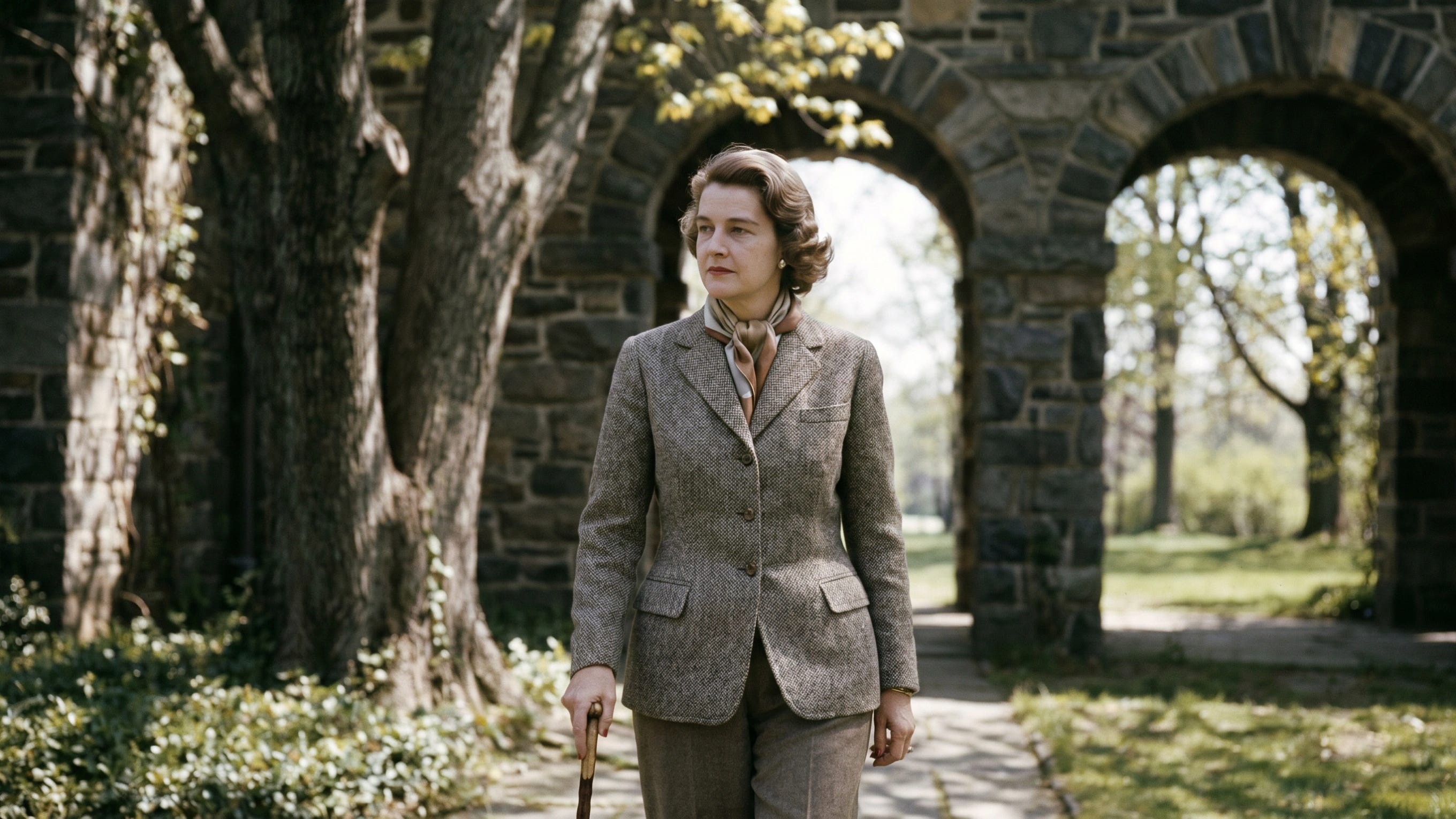
Newport, Rhode Island. October 7, 1966.
Edward Tirella was opening the iron gates to Rough Point, Doris Duke’s oceanfront mansion, when the car rolled forward and crushed him against the post.
He was 50 years old and had spent months transforming her Newport interior.
He then died on the street outside her property.
Now, Duke told investigators her foot slipped on the accelerator. The Newport Police Department proceed to investigate the issue… for less than a week.
They called it “an unfortunate accident,” and no charges were filed.
No grand jury was convened, and no prosecutor stood before a judge to explain why a car traveling fast enough to snap iron gates and kill a grown man was the result of a foot slipping.
Tirella’s family eventually received a civil settlement, but the amount was never disclosed.
At the time, Duke was worth approximately $1.2 billion.
The Gate at Newport
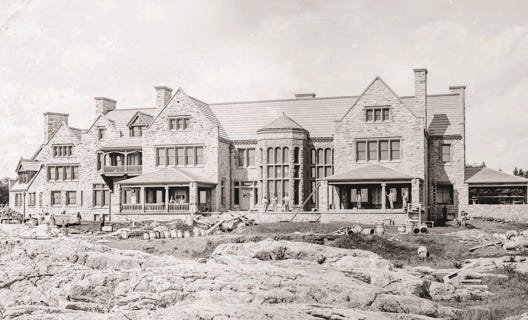
The physical facts of October 7, 1966 are not in dispute.
Duke was behind the wheel of her Dodge station wagon and Tirella had stepped out of the passenger seat to push open the estate’s heavy iron gates. The car lurched forward, pinned him between the bumper and the gate, dragged him approximately 75 feet, and left him in the road. He died from his injuries.
Eyewitnesses placed the vehicle at the scene. The damage to the gates was documented. The coroner established cause of death.
What the Newport Police Department did not do was treat this as a potential manslaughter (or even homicide) investigation.
The chief of police at the time, Joseph Radice, closed the inquiry within days, and Duke’s attorneys were present throughout. Within a month, Radice retired from the force.
Whether that retirement was connected to the investigation has never been established as fact. What is established is the sequence: investigation closed, chief retired, woman with unlimited legal resources walked away without ever appearing before a judge.
Tirella’s estate sued in civil court, where the lawsuit was settled confidentially with the terms were sealed.
Naturally, a foot slipping on an accelerator is not, on its own, a crime. Manslaughter requires a finding of criminal negligence. But that finding requires an investigation willing to pursue it. Newport’s investigation was not that investigation.
The gate at Rough Point was repaired, the iron posts were replaced, and within a few years, the incident had become a footnote in profiles that emphasized Duke’s philanthropy, her art collection, and her fondness for gardening.
The Richest Girl in the World
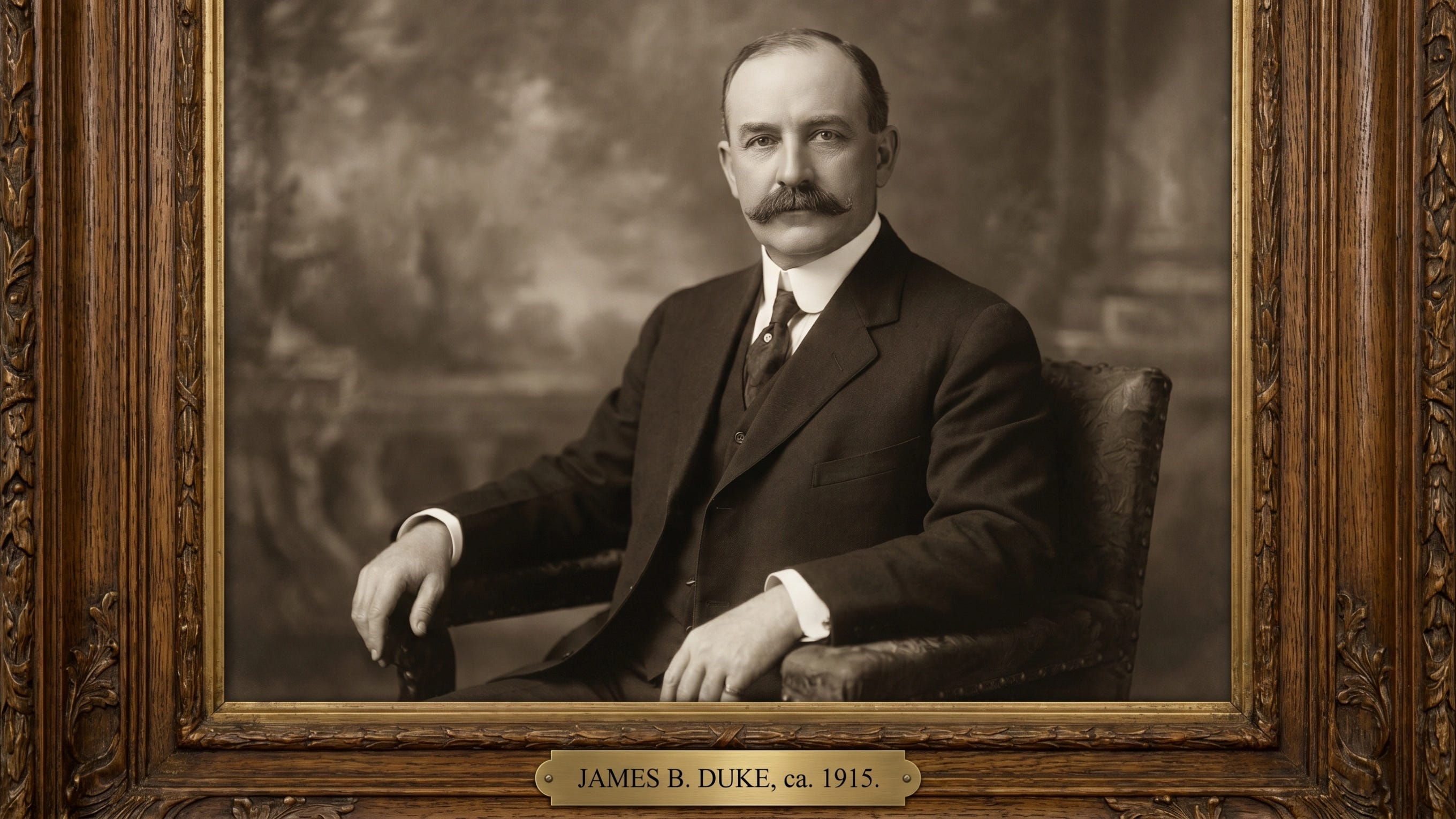
James Buchanan Duke built American Tobacco into the largest cigarette company in the United States, was forced by the Supreme Court to break it apart in 1911, and died with a fortune worth roughly $100 million in 1925 dollars. His only child inherited it all at age 12.
The press had a name for her immediately: the richest girl in the world. The name stuck.
What the coverage rarely examined was what that inheritance actually meant for a child in 1925. $100 million then is the equivalent of well over $1 billion today.
And Buck Duke had not been careless about his daughter’s safety. In the years before his death, he had surrounded her with a full-time bodyguard and a personal chauffeur. The fear was kidnapping. It wasn’t irrational: wealthy children were targets, and the Lindbergh kidnapping was still seven years away from making that fear universal.
What the security also created was isolation. Doris Duke grew up without ordinary social friction. There were no public school classrooms, no neighborhood sidewalks, no unremarkable friendships with children who did not know about the money. There was the money, and then there was everything else, arranged around it.
She became, by most accounts, a woman of genuine curiosity. She studied Islam. She rescued architectural artifacts from demolished Islamic buildings and rebuilt them at her New Jersey estate, Shangri La. She funded preservation work in Hawaii. In fact, she gave away approximately $400 million over the course of her life. The Doris Duke Charitable Foundation, funded by her estate after her death, became one of the largest private foundations in the United States.
She also never lived in a world where consequences applied to her the way they applied to other people.
The Last Room
By the late 1980s, Duke was in her seventies, her health declining, and her circle of close companions had narrowed to almost no one. Bernard Lafferty arrived as her butler in 1987. He was Irish-born, soft-spoken, and, by all accounts, skilled at making himself indispensable.
As Duke’s physical condition deteriorated and her other relationships frayed, Lafferty became the central figure in her daily life. In April 1993, approximately 6 months before her death, Duke named Lafferty the executor of her estate.
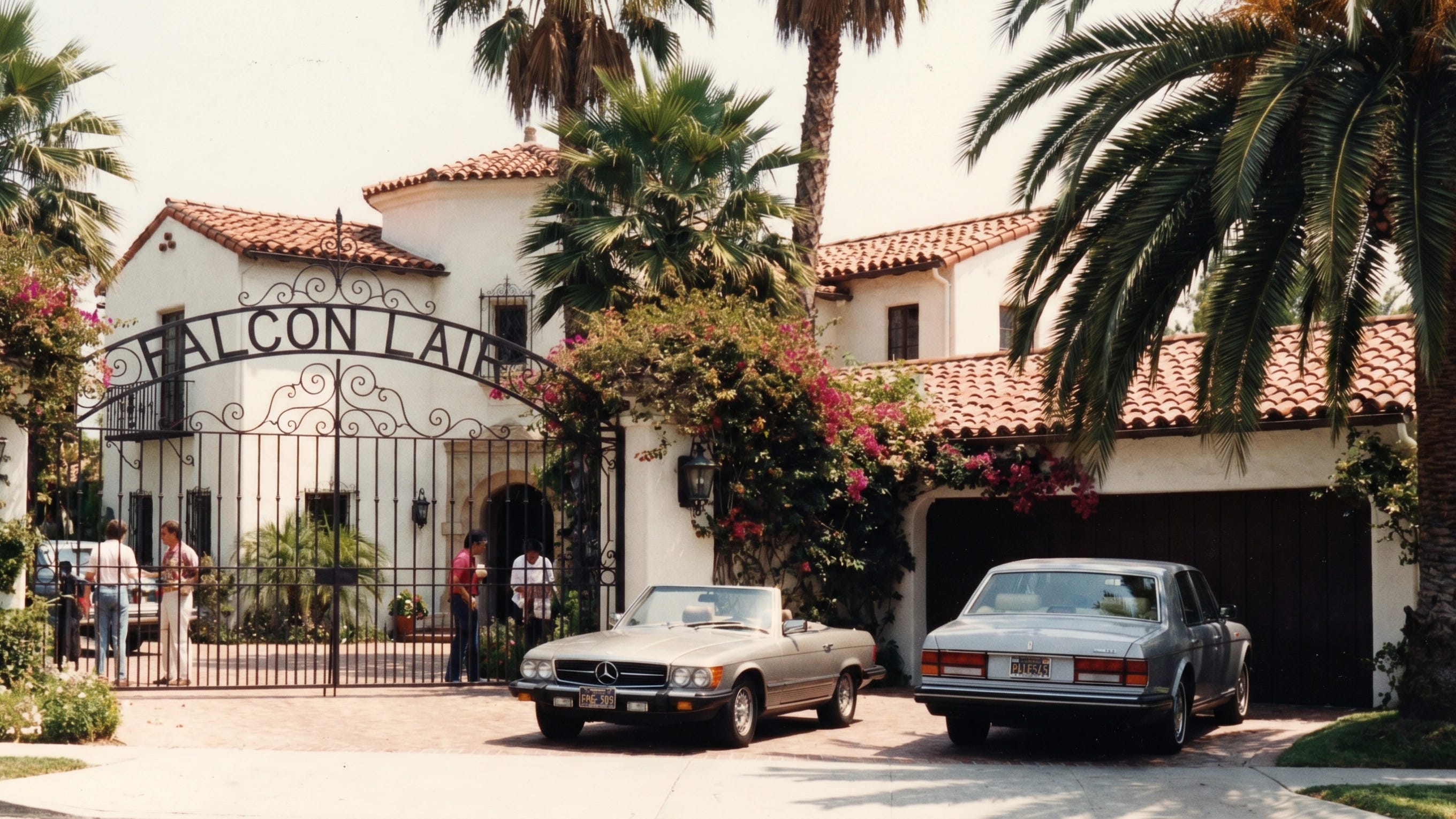
She died October 28, 1993, at Falcon Lair, her gated Beverly Hills estate, the former home of Rudolph Valentino.
She was 80 years old. No family members were present. No close friends were at her side. Lafferty was there.
No autopsy was performed and Duke was cremated within 24 hours. Her ashes were scattered in the Pacific.
In January 1995, nurse Tammy Payette filed an affidavit alleging that Duke had been given fatal overdoses of morphine and Demerol by Lafferty and her physician, Dr. Charles Kivowitz. The allegation triggered an LAPD inquiry.
Lafferty, in a 1995 settlement over the estate’s administration, collected $4.5 million in executor’s fees and a $500,000 annual annuity. He ceded formal control of the estate in that same settlement.
In July 1996, the Los Angeles District Attorney concluded there was no credible evidence of criminal homicide. The investigation closed.
Payette was later revealed to have stolen jewelry and valuables from Duke and from other wealthy dying patients she had attended. She recanted her affidavit from prison.
Lafferty died November 4, 1996, at age 51, of a heart attack, in his Bel Air mansion. His will directed that all his money return to Duke’s charitable causes.
What actually happened in the last room at Falcon Lair remains genuinely unknown. The cremation made it unknowable.
The Pattern Has One Rule
Step back from the individuals and look at the shape of both events.
In 1966, a man died outside Duke’s gates. The one piece of evidence no one disputes is that her car killed him. That investigation closed in days.
In 1993, a woman died inside those gates. No body remained for examination. The investigation that followed was built on an affidavit from a witness later convicted of theft, who later recanted.
The outcomes are structurally identical: nothing was proven, nothing was charged, and the public record closed without resolution.
Thus, the rule that Duke case actually illustrates is that “old money” does not just resist accountability. It makes accountability structurally optional.
The gate is opened, or it isn’t. The body is preserved, or it isn’t. The investigation has resources, or it doesn’t.
At each of those junctions, money is not pulling strings. It is quietly, legally, rearranging which junctions exist.
I wrote about the the Newport incident. There was new evidence from the paper boy (now grown) who heard the crash and approached Duke. She told him to get the hell out of there. I can provide a link with your permission. It answers some of the questions in the comments.
Love your posts and you tubes. Interesting