
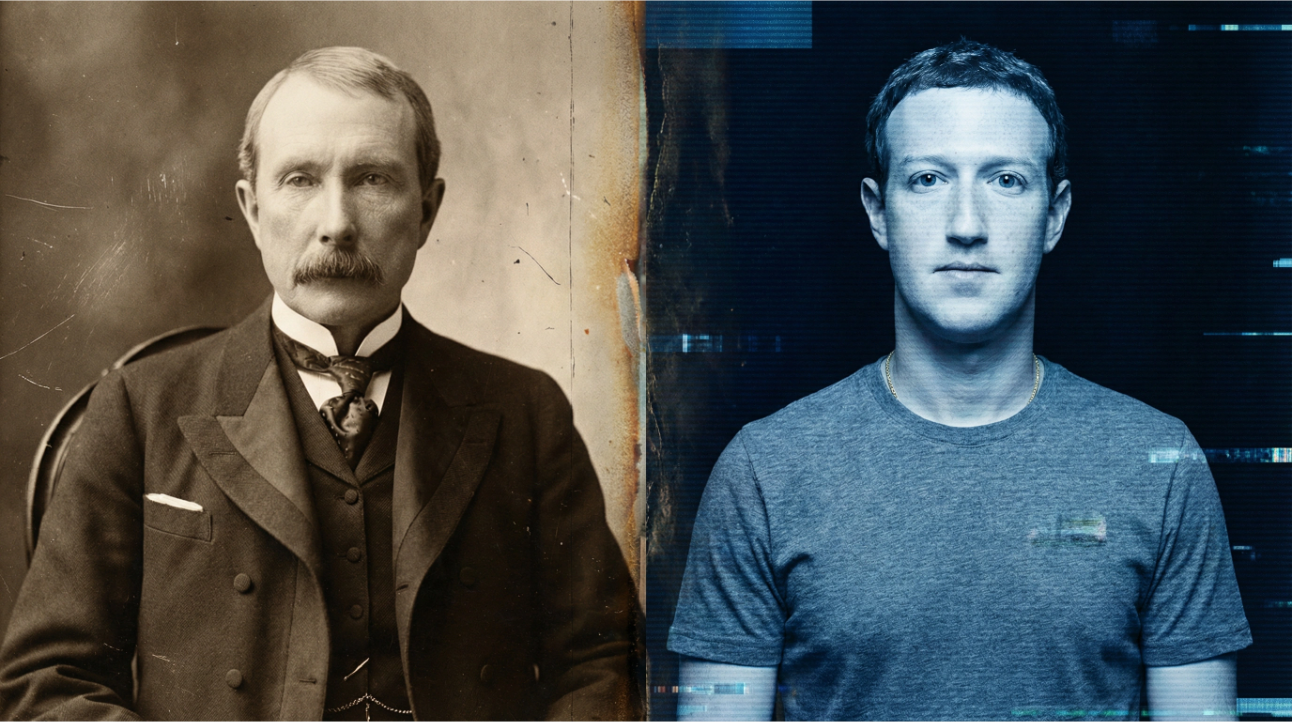
In Part 1, we laid out the case that we’re living through Gilded Age 2.0.
The wealth concentration, the speed of fortune-building, the immigrant labor, the monopolies, the conspicuous consumption.
At this point, it kinda goes without saying the patterns match.
In fact… the numbers often exceed the originals.
But Gilded Age 1.0 ended.
Not gradually. Not because the Rockefellers and Carnegies decided to share. It was killed by three forces working together over about 30 years: journalists who exposed the corruption, a tax system that didn’t exist until crisis forced it into being, and catastrophic shocks that broke the political resistance to change.
If you understand what those forces were, you start seeing which ones might be forming again. And which ones aren’t.
The Muckrakers
In 1902, a 44-year-old journalist named Ida Tarbell began publishing a series of articles in McClure’s Magazine.
Her target was Standard Oil, the largest corporation in America, controlled by John D. Rockefeller.
She then spent five years on the investigation, obtaining internal company documents, interviewing former employees, and tracing the secret railroad rebates that made it impossible for competitors to survive.

Now, the series ran for 19 installments, from November 1902 through October 1904. Meticulous, damning, and widely read.
In 1911, the Supreme Court ordered Standard Oil broken into 34 separate companies, citing violations of the Sherman Antitrust Act, but the political momentum came from Tarbell.
Public opinion had shifted. The Trust was no longer tolerable.
Yet, there’s an irony worth noting: Rockefeller maintained holdings in all 34 successor companies, and the breakup actually made him richer. But the concentration of power was broken and competition returned. In short, the model worked.
NYU’s journalism department later ranked Tarbell’s series as the fifth greatest work of journalism of the 20th century.
The “muckrakers” of that era converted exposure into action. Tarbell’s 19 articles led to one Supreme Court decision that restructured an entire industry.
Today’s journalists have produced exposés arguably as damning as Tarbell’s. The conversion mechanism is what’s broken.
