
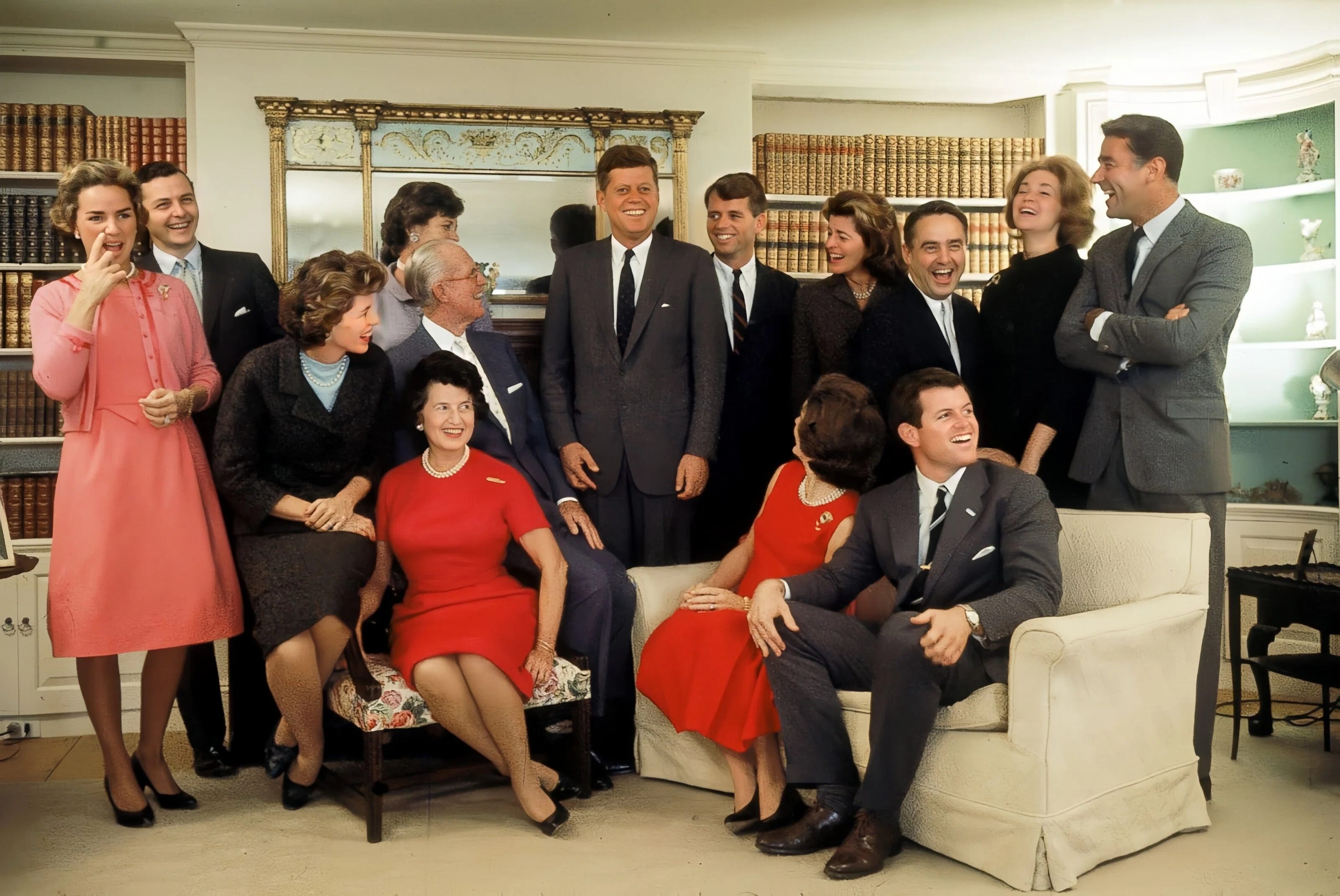
Jack Schlossberg looks like a Kennedy.
He has the dark hair swept back at the same angle his grandfather wore it, the same hair that stayed in place even jumping off Air Force One.
He has the striking jawline his forebears carried so naturally on the campaign trail, and that specific kind of face passed down through a family that was the first to demonstrate that modern American politics was partly a beauty contest with better press.
He also has the double-Ivy League pedigree to match.
Yet in the summer of 2026, running for a congressional seat in New York, those well-worn attributes turned out to be the most Kennedy things about him.
He finished third with just over 10% of the vote. Behind two state assemblymen.
So what happened?
You see, for most of the twentieth century, the Kennedy name functioned less like a political credential and more like a weather system.
It arrived before the candidate did. It filled rooms. It made serious people treat seriously the proposition that a single Irish Catholic family from East Boston had built, across three generations, something that functioned in American life the way a royal name functions in a country that officially has none.
At least in the 20th century.
When the Times questioned his readiness for office in May 2026, Schlossberg posted a video of himself napping in a bodega with the caption:
“If you’re gonna hit me, then hit me!!”
His great-grandfather had spent four decades clawing the family name into the fabric of American political life using the Protestant establishment’s own tools against it.
The grandson posted a bodega nap.
Once more for the cheap seats in the back… what happened?
The answer starts somewhere less dramatic and more instructive than Camelot and the grassy knoll: with a Harvard graduate who couldn't get into a club, and what four decades of that particular humiliation made him decide to build for his sons.
The story of how the Kennedy mythology was built begins with a door that wouldn’t open.
What The Clubs Refused
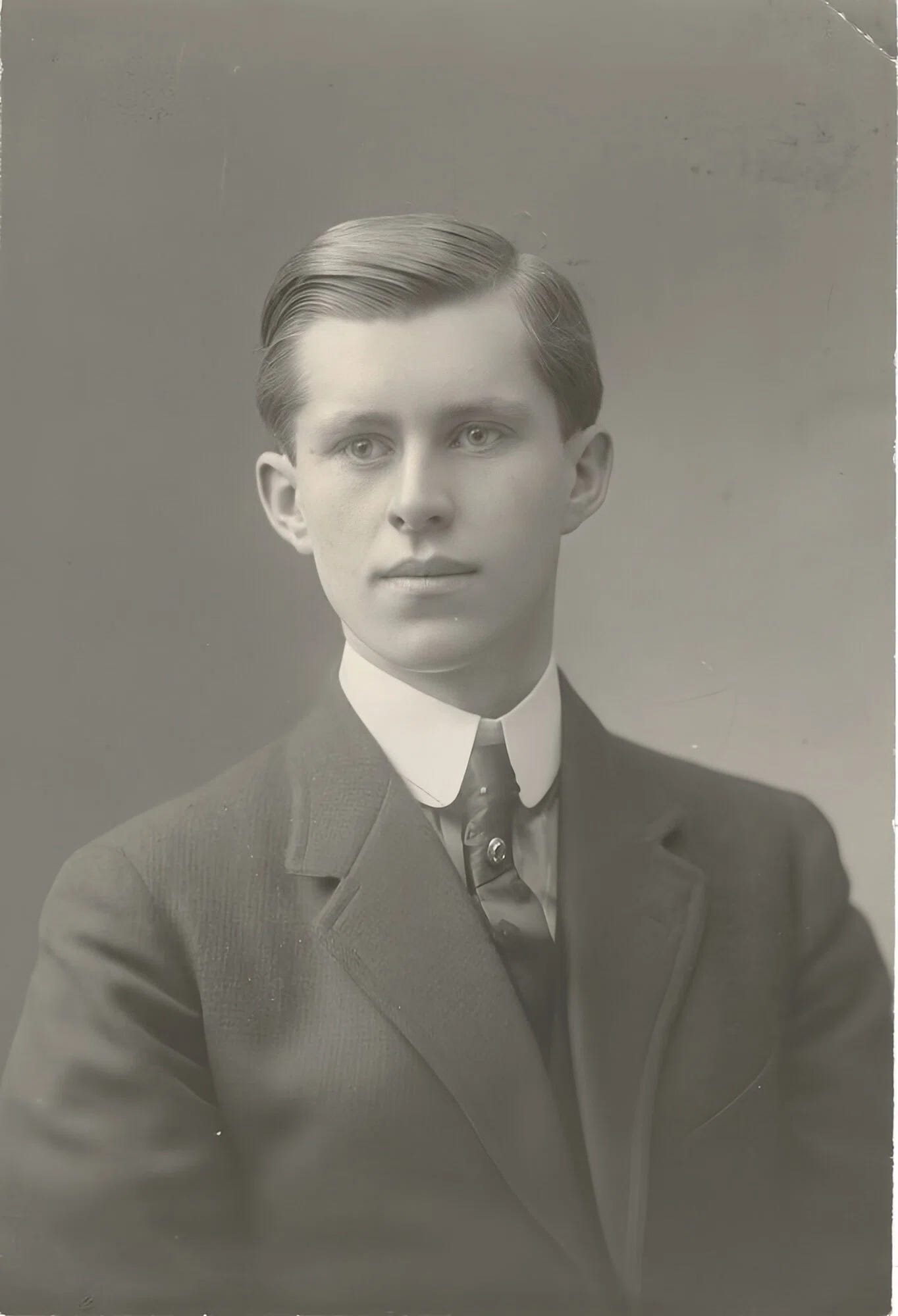
Joseph Patrick Kennedy Sr. was born in Boston in 1888, the son of Irish immigrants who’d arrived in a city that still posted “No Irish Need Apply.”
His father P.J. ran a saloon, a ward operation, and eventually a stake in Columbia Trust bank in East Boston. The family had money and political reach by the standards of the neighborhood.
But being the richest in an Irish neighborhood wasn’t the point.
The point was Beacon Hill, the Cape Cod estates, the Harvard clubs that processed the sons of old Protestant families and produced the men who ran Massachusetts. Joe Sr. got into Harvard in 1908 and graduated in 1912. He sat in the same lecture halls, walked the same grounds, collected the same degree.
But he left without a club membership, and carried that fact with him for the rest of his life.
Now, a different man might have accepted that ceiling and built a comfortable life beneath it. Joe Sr. made a different calculation: if the Protestant establishment refused to let him in, he’d build sons who made the Protestant establishment beside the point.
Kennedy moved through the liquor-adjacent world before and after Prohibition, and after repeal in 1933 he founded Somerset Importers… named deliberately after the prestigious Boston WASP social club that had refused him entry, and turned it into the exclusive American agent for brands that are still household names to this day, such Gordon’s Dry Gin and Dewar’s.
He built the operation into one of the most profitable import businesses in the country. In the late 1920s he acquired Film Booking Offices of America and merged it with Keith-Albee-Orpheum theaters and RCA’s sound technology to create RKO Pictures (later of Citizen Kane fame), walking away with over $5 million from his total Hollywood investments.
In a shrewd maneuver that would become one of his hallmarks, he liquidated his positions right before the Wall Street Crash of 1929, then rebuilt his fortune during the Depression through short positions and careful re-entry.
Within 5 years, Joe Kennedy’s fortune had grown from roughly $4 million to an estimated $180 million (equal to over $4 billion today).
The mechanism was visible, aggressive, and entirely self-made, which was precisely the problem. The old Protestant fortunes of Boston had the decency to age. Joe Sr.’s was still warm on the page, still smelling of the ward and the import warehouse.
His sons would need a different kind of ledger entirely.
Five Names
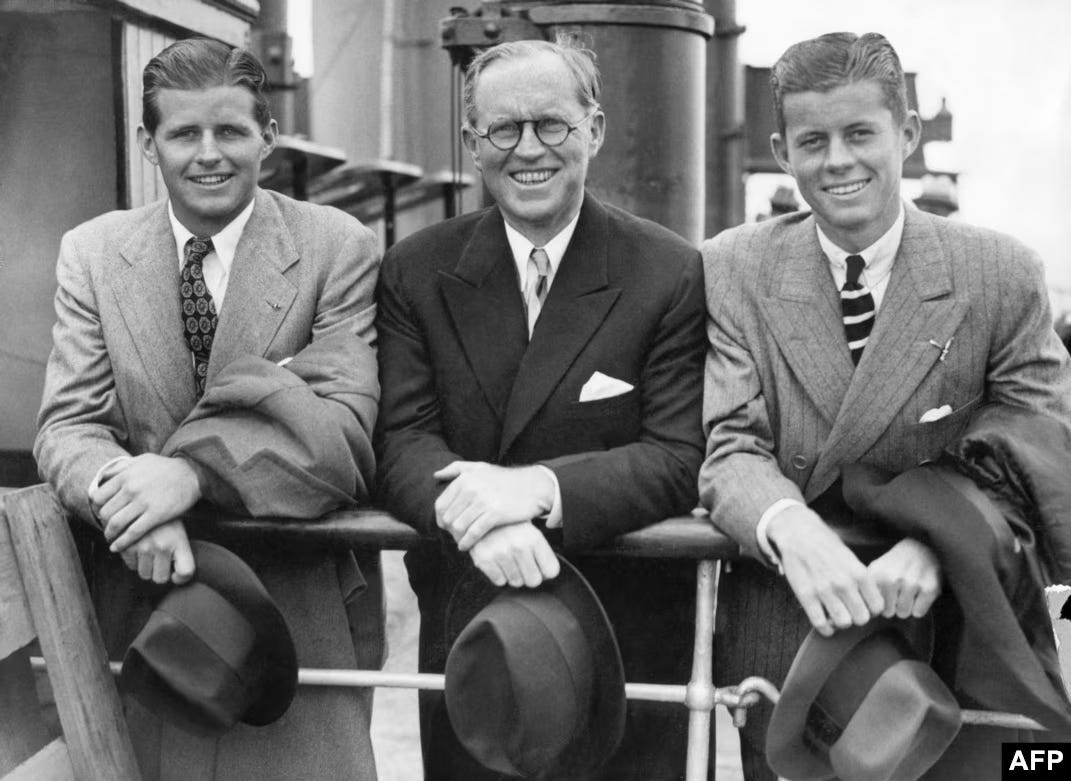
Joe Sr. understood something the Boston Brahmins had always understood and never bothered to articulate: political authority in America ran on formation before it ran on money.
The schools, the affiliations, the summers, the institutional reflexes that allow a person to walk into a room full of Protestant bankers and read as belonging without having to announce it.
He sent his children through the Protestant establishment’s own machinery and let it do the work it was built to do.
Critically, none of his sons went into “business”.
Joe Sr. routed the family entirely toward public life, toward elected office, toward the kind of legitimacy that comes from service rather than commerce. That choice was itself a form of social laundering, deliberate and decades-long, and it produced exactly what he designed it to produce: sons who moved through the most powerful rooms in the country as though they’d always belonged there, because by the time they arrived, they had.
What he couldn’t design was what history would do to those sons once they got there.
Joseph Kennedy Jr. was the one Joe Sr. had always imagined at the center of it. The eldest son, the war hero in waiting, the physical embodiment of everything the old man had spent his life constructing. He’d flown combat missions in Europe with a record distinguished enough that the family’s political future felt not like a plan but like a foregone conclusion.
On August 12, 1944, he volunteered for a secret mission over England, a remote-controlled bomber packed with explosives that was meant to detonate over a German target after he and his co-pilot bailed out. The plane exploded prematurely over the Suffolk coast before they had the chance. He was 29.
Joe Sr. received the news at Hyannis Port and went into his room and closed the door and didn’t come out for a long time. When he did, the succession had already reorganized itself in his mind around his second son, the one who’d been living in Joe Jr.’s shadow long enough that stepping into it felt, to John at least, like an inheritance he hadn’t asked for and couldn’t refuse.
One John Fitzgerald Kennedy was everything the machinery had been designed to produce.
The “war hero” tag, the Harvard degree and the published thesis, the Choate formation, the Bouvier marriage, the easy physical authority in front of a camera that no amount of coaching could manufacture in someone who didn’t already have it.
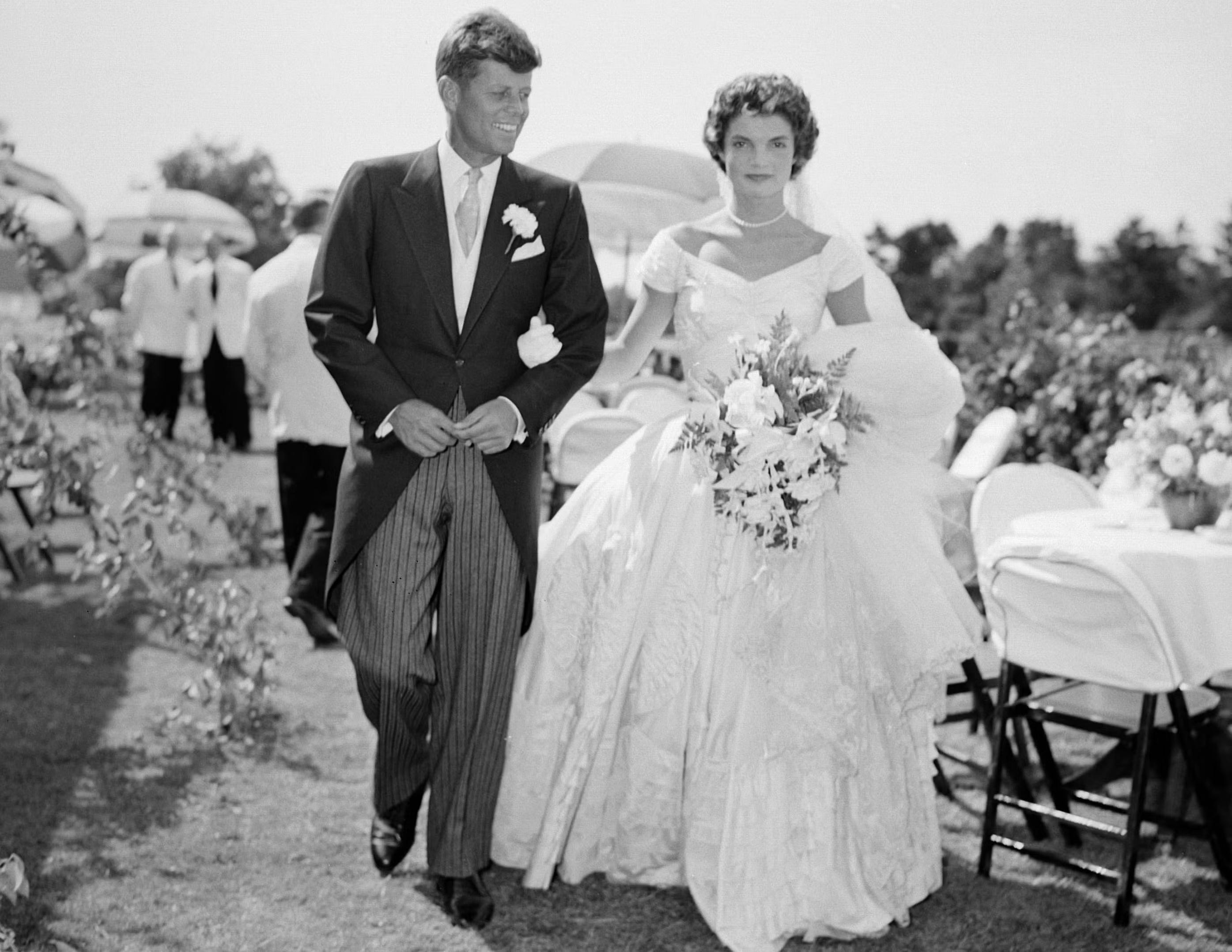
He won the Senate seat in 1952, won the presidency in 1960, and stood in front of the world on a January morning and told an entire generation to ask not what their country could do for them. The Protestant establishment that had refused his grandfather a club membership watched one of his grandsons take the oath of office, and there was nothing left to say.
He was assassinated in Dallas on November 22, 1963. He was 46, less than three years into his first term.
The specific combination of political pedigree that had taken Joe Sr. three decades to assemble, the military record, the particular quality of presence that the camera loved and the crowd felt, the “old money” marriage, couldn’t be reassembled. It had existed once, in one man, and now it was gone.
The machinery could produce another candidate. It couldn’t reproduce the particular man.
Robert F. Kennedy had been his brother’s attorney general, the one who’d run the political operation from the inside while Jack ran it from the front.
He was, in many ways, the most purely Kennedy of Joe Sr.’s sons.
He was harder than Jack, more driven, carrying the hunger that had powered the whole enterprise with an intensity that occasionally frightened even people who admired him.
He’d absorbed his father’s specific fury at exclusion and converted it into something almost frighteningly effective, a political instinct so acute that even his enemies found him difficult to dismiss.
By 1968 he was running for president, and on the night of June 5, moments after winning the California primary, he was shot in the kitchen of the Ambassador Hotel in Los Angeles. He died roughly twenty-six hours later. He was 42.
Three of the four Kennedy sons Joe Sr. had built the machinery for were gone before any of them turned 50, across a span of nearly twenty-four years that began with a plane over England and ended on a kitchen floor in Los Angeles.
What remained was Ted, the youngest, the one nobody had originally designated as the torchbearer, who’d grown up in the long shadow of brothers who’d already become myths before he had a chance to become himself.
The Bridge
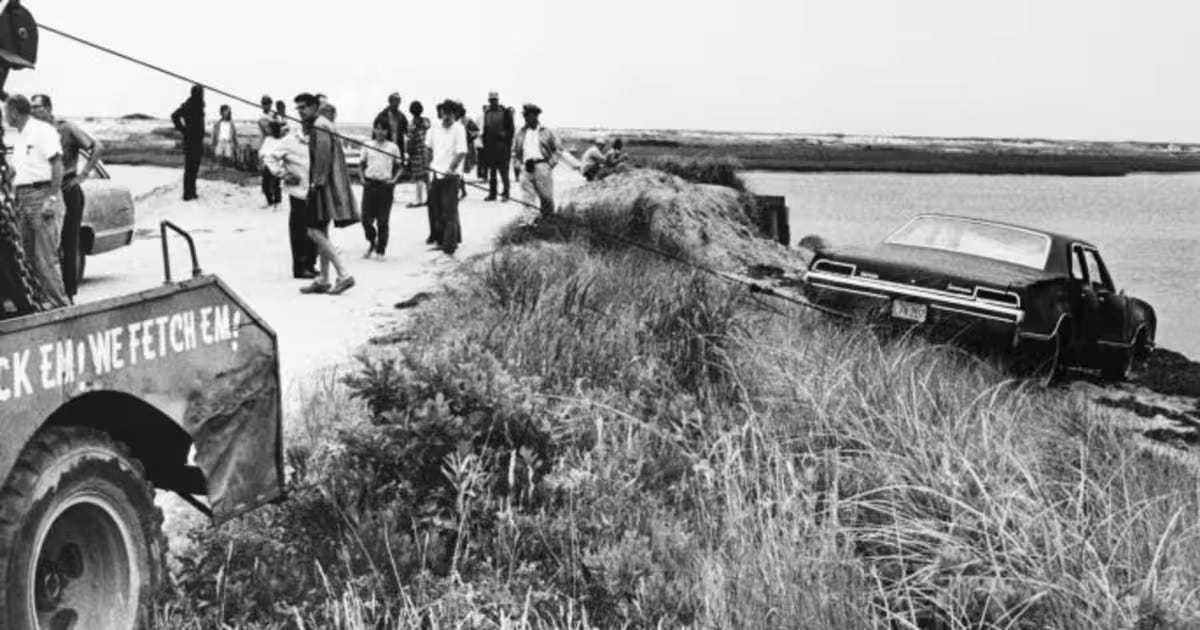
In July 1969, Senator Edward Kennedy drove off the Dike Bridge on Chappaquiddick Island, Massachusetts.
His passenger, Mary Jo Kopechne, drowned in the submerged car while Kennedy swam free. He didn’t report the accident until the following morning, a delay of roughly nine hours that he never fully explained and that the public never fully forgave.
Seven days after the incident, Kennedy gave a televised address to Massachusetts voters, describing his own conduct as indefensible and raising, in almost so many words, the question of whether some awful curse actually hung over the Kennedy name.
It was a calculated speech, and it worked in the narrow sense: he kept his Senate seat and served for another four decades, building one of the most substantial legislative records of any senator of his era on healthcare, civil rights, and immigration.
But Chappaquiddick took something that no amount of legislative achievement could replace… the presidency. Ted Kennedy was the last son standing, and after July 1969 the path to that destination was closed in a way that everyone understood but nobody said plainly.
A decade later, with Carter’s presidency collapsing under the weight of the hostage crisis and a stalled economy, Ted Kennedy entered the 1980 race as the heir apparent, polling better than two to one over an incumbent president. The Kennedy restoration, the thing that Joe Sr. had always imagined was simply a matter of time, felt closer than it had since Dallas.
On November 4, 1979, the same night the Iran hostage crisis began, CBS aired an hour-long profile called Teddy. Roger Mudd of CBS sat with Kennedy at Hyannis Port and asked him a single question.
Why do you want to be president?
Kennedy hesitated for four seconds, his eyes moving to the ceiling.
What followed was a wandering, incoherent non-answer that began somewhere in America’s natural resources and arrived nowhere in particular. The Washington Post called him uncomfortable, faltering, almost dazed. The interview aired to millions of Americans who had grown up believing the Kennedy name was synonymous with political inevitability, and what they saw instead was a man who seemed genuinely uncertain whether he wanted the thing his entire family had been built to produce.
He challenged Carter across the primary calendar, won several states, and lost the nomination. Carter lost the general to Ronald Reagan, a defeat multiple commentators traced in part to the damage Kennedy’s prolonged challenge had inflicted on a weakened incumbent.
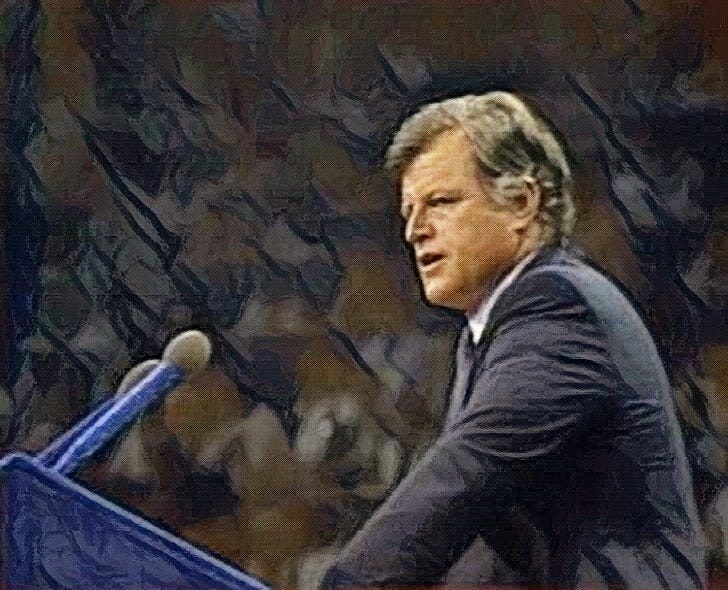
At the convention that August, Kennedy delivered the finest speech of his career: the hope still lives, he told the hall, and “the dream shall never die”. The crowd rose. It was also, unmistakably, a goodbye.
The presidency had now been out of reach for seventeen years. And the man who’d just given that speech had looked into a camera and been unable to explain why he wanted it.
The Clearest Path Back
John Fitzgerald Kennedy, Jr. changed the calculation simply by existing.
He’d grown up as the most photographed child in America, tracked by cameras from the moment he saluted his father’s coffin at the age of three, and what the cameras found, decade after decade, was someone who wore the weight of it lightly enough that it never read as burden.
He’d inherited his father’s physical ease and his mother’s cultural authority, and by the mid-1990s he’d launched George magazine, a publication that treated politics as culture and culture as politics and felt, to anyone paying attention, like a very long runway.
But the magazine was almost an afterthought. What people were responding to was something harder to name: the sense that the Kennedy succession, which had felt broken since Dallas and buried since Chappaquiddick, had somehow repaired itself in the form of this one person.
He had the face and the name and the bearing, but more than any of that he had the quality his father had possessed and his uncles had spent careers trying to replicate, the ability to make a room feel like something was about to happen. Political reporters who covered him in those years described the same phenomenon: that being around JFK Jr. produced a specific kind of anticipation, a collective holding of breath, as though the country had been waiting thirty years for exactly this and had finally exhaled.
By the late 1990s the speculation had moved past idle. Senate seats were being discussed. Governorships. The trajectory felt not like a possibility but like a schedule, and the only real question was which office came first and when.
Then, on the evening of July 16, 1999, he died when the plane he was piloting went down off Martha’s Vineyard on July 16, 1999. He was 38. His wife Carolyn Bessette-Kennedy and her sister Lauren Bessette died with him.
Sadly, what likely passed alongside them was the hope of another viable run. Indeed, it was the last time the question felt like when rather than whether, the last moment the Kennedy succession seemed to have a plausible next operator who understood instinctively what he was inheriting and what it required.
After July 1999 the family remained prominent, remained accomplished, remained genuinely active in Democratic politics across multiple generations. Patrick Kennedy represented Rhode Island in the House for sixteen years. Joe Kennedy III ran for Senate in Massachusetts in 2020 and lost to an incumbent in the primary. The family never stopped producing serious people.
But none of them came close to the White House, and with each passing year the distance between the name and that office grew in a way that stopped feeling temporary and started feeling permanent.
The Heir Who Went His Own Way
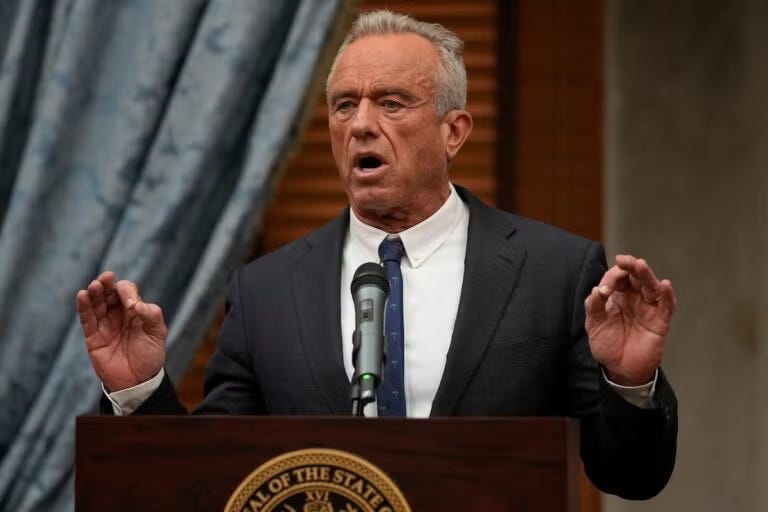
Robert F. Kennedy Jr. had spent decades as a prominent environmental lawyer, building a record on water quality and corporate accountability that sat comfortably inside the family’s established tradition.
He was, for most of his adult life, a recognizable product of what Joe Sr. had built: credentialed, institutionally serious, running the Kennedy name toward causes that fit the mythology.
The turn came gradually and then all at once.
Through the 2010s and into the pandemic years, RFK Jr. became one of the most prominent voices in the American vaccine skeptic movement, promoting claims that public health authorities and mainstream medical institutions consistently and specifically rejected. In 2020 he resigned as president of the Waterkeeper Alliance, the environmental organization he’d founded, to devote himself to other work.
Members of his own family issued statements distancing themselves from his vaccine positions, and later from his political direction entirely. In 2023 he launched a Democratic presidential primary challenge against Joe Biden, exited the Democratic race to run as an independent, then suspended that campaign in August 2024 and endorsed Donald Trump. His sister Kerry Kennedy and other family members called his third-party candidacy dangerous to the country.
The family had absorbed difficult chapters before, tragedies and scandals that the mythology had always proved large enough to contain.
What RFK Jr. represented was different: not a scandal the mythology could absorb, but evidence that the mythology had stopped organizing the behavior of the people carrying it. Without the hunger that had built it, the name was just a name, and each heir was free to spend it however their own temperament directed.
Joe Sr. had converted his family into political deities. His descendants were converting the dynasty, quietly and individually, back into people.
The New 21st Century Normal
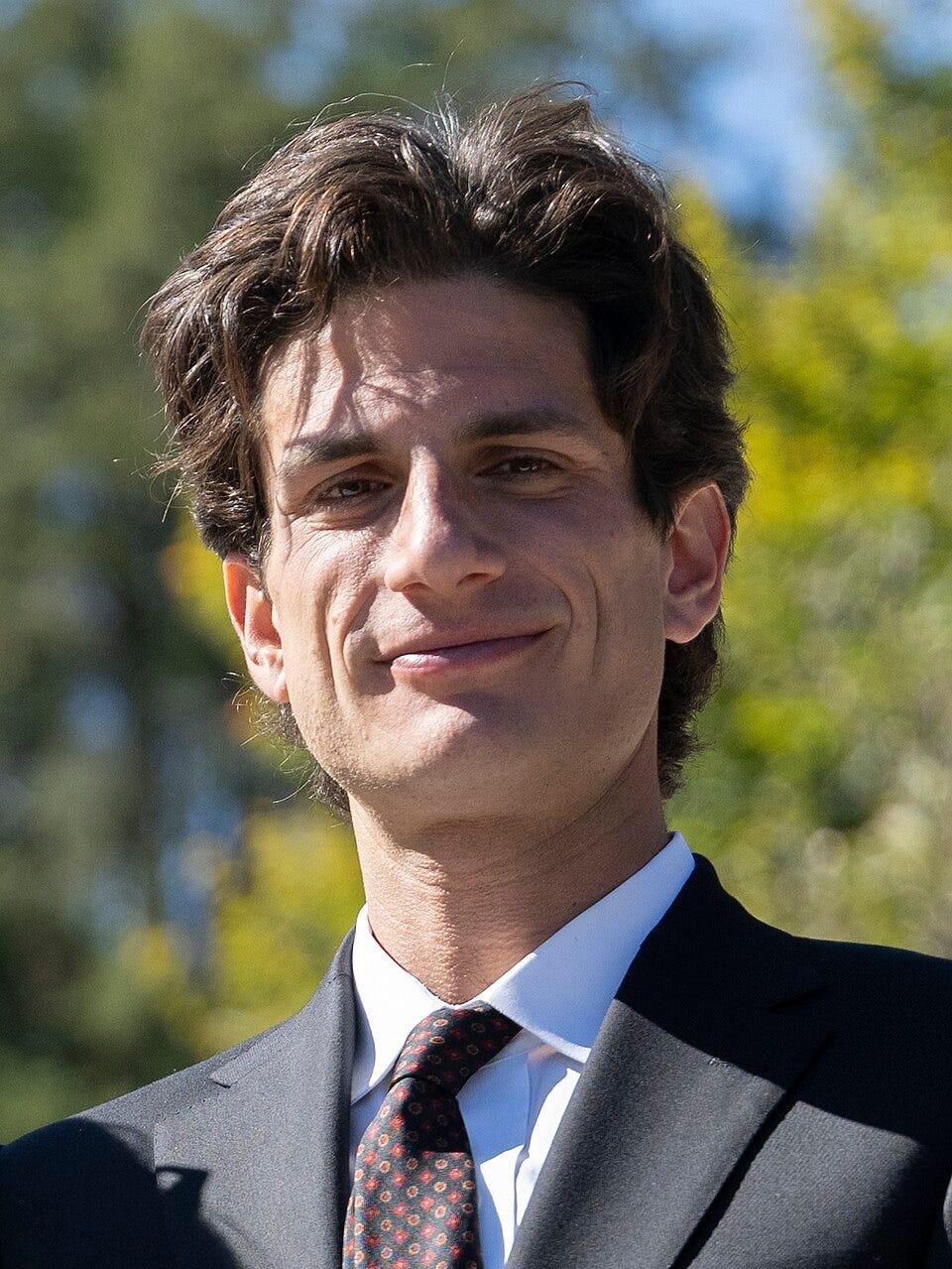
Jack Schlossberg had the schools, the address, the lineage, and the mythology delivered by birthright. Indeed, he had, by every external measure, everything his great-grandfather had spent four decades assembling.
Everything except the century Joe Sr. built it in.
See, the 20th century Kennedy machine ran on a particular America… one that still believed in collective meaning, in the shared mythology of the underdog made good, in the idea that a single family could embody something the whole country was reaching for.
When Jack Kennedy stood in front of that January crowd in 1961, the country felt it together, in the specific way that a nation feels things together when it still has enough shared culture to feel anything collectively at all.
That America is gone. Not because the Kennedys lost it, but because nobody has it anymore.
The establishment Joe Sr. spent his life running against has been replaced by a country that can’t agree on what the establishment is, let alone who’s fighting it.
The Irish Catholic outsider story that once carried genuine emotional weight now reads, to large parts of the electorate, as just another Harvard family asking for a seat it feels entitled to.
The Camelot mythology that Jackie built in that sitting room in 1963 was designed for a media landscape of three television networks and a handful of magazines that everyone read. It has no natural habitat in an attention economy that runs on disruption and distrust of exactly the kind of institutional sheen the Kennedys spent three generations polishing.
Schlossberg didn’t lose just because he failed to be his grandfather. He lost because his grandfather’s America, the one where that particular face and that particular name and that particular story added up to something a broad coalition of people wanted to believe in, has been gone for a long time.
Jack Schlossberg is a KINO, Kennedy in name only. His mother, Caroline, is a huge disappointment and apparently part of his behavioral problem. I don't want to get into mudslinging here but something is very amiss with Caroline’s generation of Kennedys. Their entitlement knows no bounds and they're apparently not bright enough to understand that their name alone entitles them to absolutely nothing let alone any respect. They fail to understand the concept of working, earning respect and a proper place in society. The only one who's done that work and has deservedly earned it is RFK JR who the former ingrates treat w disdain and mockery failing to understand that their own ill advised, inappropriate behaviour only serves to reflect and promote their misguided, self destructive lack of breeding. Jackie and JFK must surely be turning over in their graves.
Sorry—he looks more like his own father than he does like a Kennedy. Except for the hair. He’s not particularly handsome either. A pretender in many ways.