
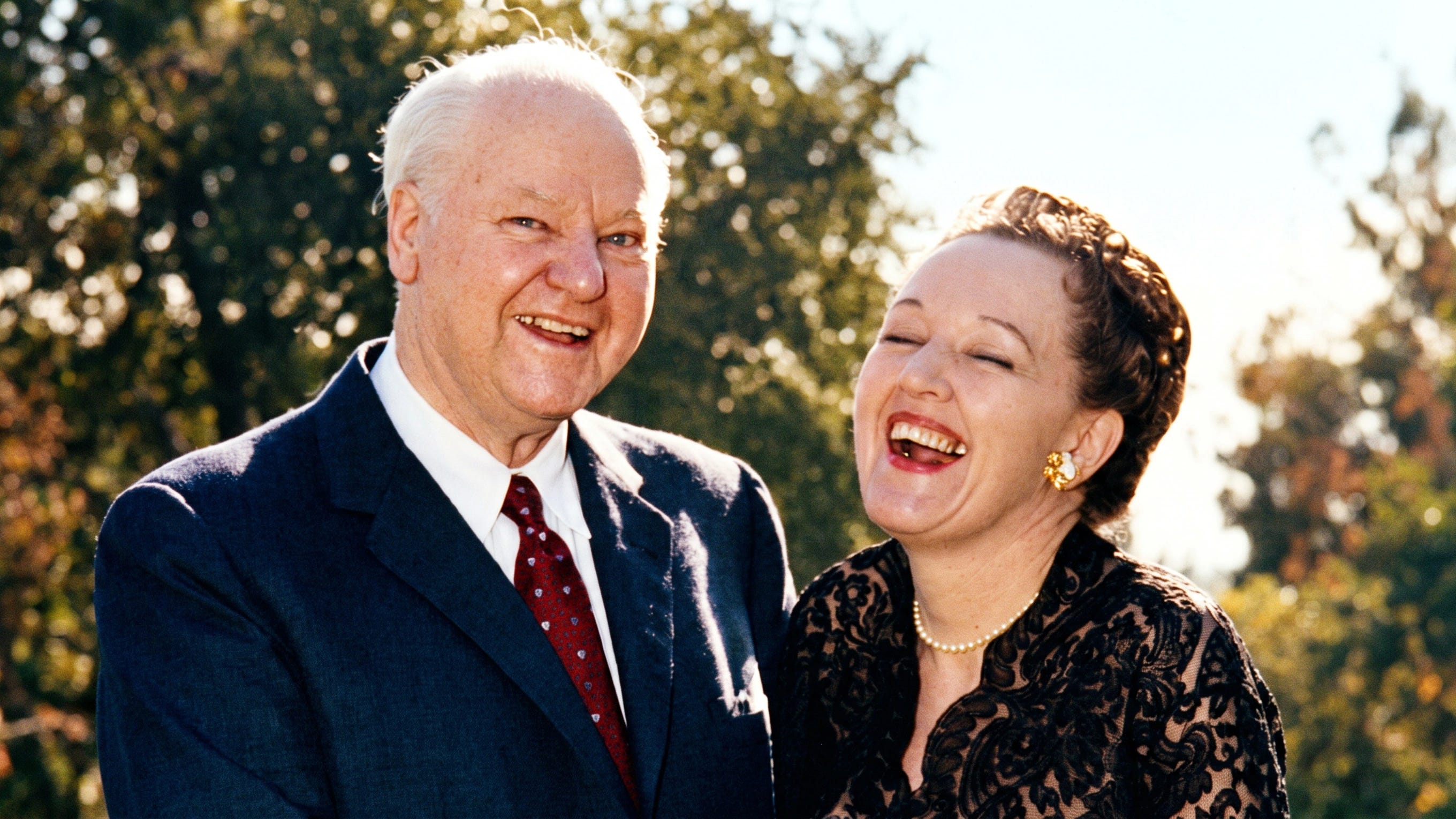
In 1948, Fortune magazine valued the oil properties of Texas tycoon H.L. Hunt at $263 million, equal to over $30 billion today, and named him the richest man in the United States.
The magazine never mentioned that America’s richest man had not one, not two, but three families.
Hunt’s wife, Lyda Bunker Hunt, was raising their children in Dallas, while in another home a woman named Ruth Ray was raising more of his children under the surname Wright.
In yet another state lived the children of Frania Tye. She’d since married a man named John W. Lee, who gave her Hunt children his name, and she’d signed a 62-page document denying she ever married Hunt at all. Later, she told a very different story.
She said she’d married him in 1925 without knowing he already had a wife.
She was young and working in real estate in Florida, and the charming stranger at the altar called himself Major Franklin Hunt.
She didn’t learn his real name for nine years, and during that time she and Lyda gave birth to his children on nearly the same schedule.
Hunt fathered 14 children who survived infancy by three women.
Decades later, a federal court had to decide whether Hunt had really married Frania in Florida, and with it, who had a claim to the richest fortune in America.
The Richest Man in America
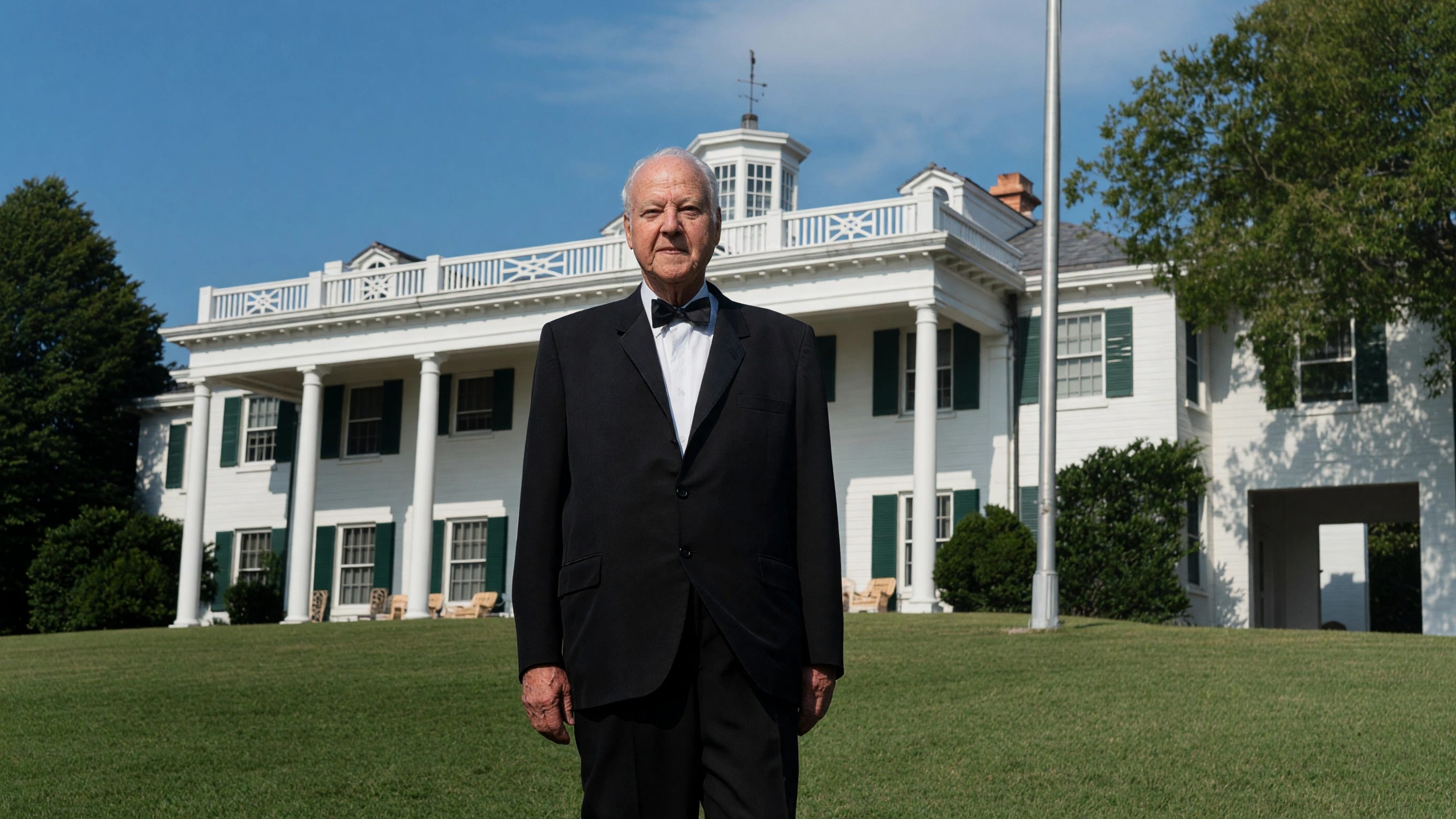
On the shore of White Rock Lake in Dallas sits a white Georgian mansion built to look like George Washington’s Mount Vernon.
Hunt moved his family there on New Year’s Day, 1938, and for decades its ten acres of lakefront lawns, tennis courts, and swimming pool served as the seat of a Texas dynasty.
But its owner still carried a cheap packed lunch to the office.
The thrift was a quirk, never a necessity. His East Texas wells were producing an estimated 65,000 barrels of oil a day in 1948, and that year he picked up the Hoodoo Ranch near Cody, Wyoming, as well.
A decade later, estimates of his fortune reached $700 million, about $8 billion today.
At the end of his life, it stood between $2 billion and $3 billion, roughly $13 billion to $20 billion in modern dollars, and it earned him more than $1 million a week.
Like so many billionaires before and after him, Hunt used money to try to rewire American politics.
In 1951, he launched Facts Forum, a conservative, anti-Communist broadcast operation that championed Senator Joseph McCarthy. Its successor, Life Line, sent 15-minute programs across more than 400 radio stations. He backed Lyndon Johnson’s presidential ambitions in 1960 and Barry Goldwater’s in 1964.
He even put his political fantasies into fiction. In 1960, he published a novel called Alpaca, imagining a society where the wealthiest taxpayers got more votes than everyone else.
But not every door in Dallas swung open for him. Texas Monthly reported that the city’s Brookhollow Country Club turned him down because its members disapproved of how he did business.
His family, meanwhile, was building a world of its own.
One son, Lamar, would found the American Football League and the Kansas City Chiefs. Another, Bunker, would assemble roughly 1,000 racehorses and win the Epsom Derby. His daughter Caroline would create Rosewood, the luxury hotel company behind Dallas’s Mansion on Turtle Creek.
The Hunt family is still wealthy today, with Forbes ranking them in the top 15 richest in America at more than $25 billion.
But the dynasty’s founder was hiding far more than money. He fathered children the way he bought leases, in bulk and across state lines.
His appetite for oil, land, influence, and women seemed to have no bottom, and it started on a small Illinois farm where he was the youngest of eight.
The Gambler

The youngest of eight children rarely gets much attention, and Haroldson Lafayette Hunt Jr. spent the rest of his life making up for it.
He was born on February 17, 1889, on a stretch of farmland outside a small town in Illinois, and his parents gave him a comfortable start.
His mother, Ella Rose Myers, was a former schoolteacher who taught him at home, and his father, Haroldson Lafayette Hunt Sr., a Confederate veteran who’d moved north after the war, built a living as a farmer, commodities dealer, and local banker.
Hunt came by his grandiosity naturally, in a family that claimed grand roots: Ella’s French Protestant ancestors who’d landed in 1797, and supposed ties with famous colonial Hunts.
He repeated those stories proudly for the rest of his life, even though the colonial connections were never proven.
It was an early sign of how much he liked a good legend, especially one about himself.
At 16, he walked away from the comfortable life his father built, and by 1905, he headed west.
Drifting through Colorado, California, and Texas, he washed up in kitchens, worked farms and ranches, and took jobs in lumber camps.
But the work that paid best happened at night, across a card table.
Hunt had a sharp memory and a mind for numbers, and in a smoky game those gifts made him dangerous. His reputation as a skilled gambler traveled ahead of him, and the habit of betting big never left him.
When his father died in 1911, an inheritance equal to $200,000 today fell into his hands, and Hunt put it straight to work.
A year later, he was running a cotton plantation in Arkansas, mixing cotton, land deals, and gambling into a single high-risk career.
With land under his feet and money in his pocket, the drifter was finally ready to settle down.
He was 25 when he chose a wife. Lyda Bunker would stay married to him for 41 years, and for most of them, she wasn’t the only woman raising his children.
