
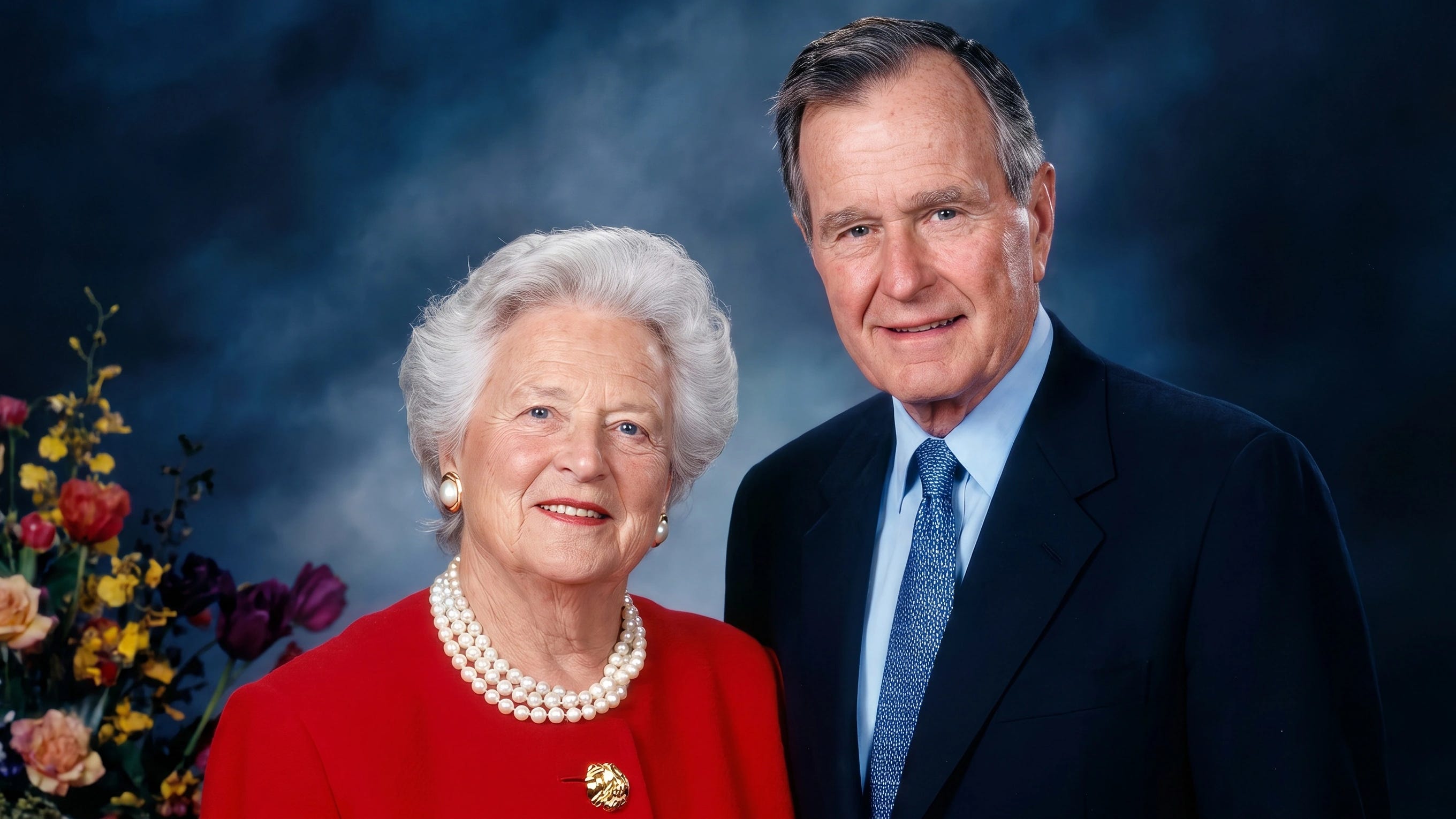
Sometime in the mid-1970s, Barbara Bush pulled her car to the side of the road and waited.
She was around 50 years old, her children were leaving home, and her husband had just become director of the Central Intelligence Agency. He couldn’t tell her what he did all day. She couldn’t tell anyone what she felt all night.
The urge she was waiting out was the impulse to drive into a tree or steer into oncoming traffic.
She later said she lacked the courage to act. The more accurate reading is that pulling over was the act, the last thread of self-preservation available to a woman whose entire identity had been organized around a man who was now, for reasons of national security, forbidden to let her in.
In January 2018, newspapers celebrated her 73rd wedding anniversary as the longest presidential marriage in American history. The love letters were quoted and the pearls were photographed.
But rhe official love story depended on everything America was required not to see.
The Christmas Dance
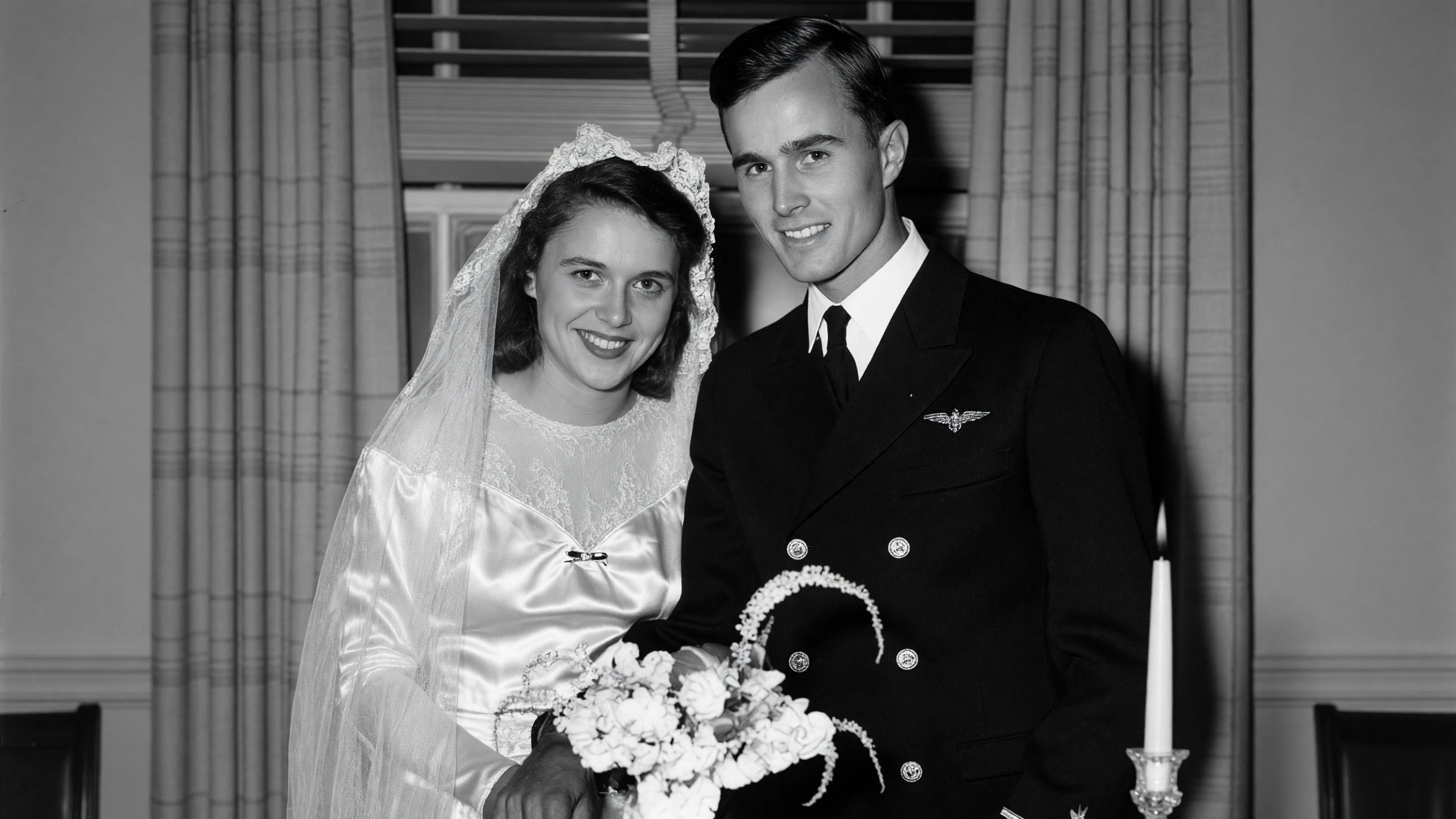
Barbara Pierce met George Herbert Walker Bush at a Christmas dance in Rye, New York, in December 1941.
She was 16, a boarding-school girl home for the holidays. He was 17, from Greenwich, the son of Prescott Bush, a partner at Brown Brothers Harriman who would later become a United States senator.
They sat out a waltz and talked for roughly 15 minutes while the country they’d both grown up in was reorganizing itself for war.
Her background was comfortable but complicated. Her father, Marvin Pierce, would become president of the McCall Corporation, a publishing company. Her mother, Pauline Robinson Pierce, moved through a world of civic clubs and garden societies.
Susan Page’s biography reports our first indication of trouble in Barbara’s early life.
Her mother Pauline criticized Barbara’s weight throughout her childhood, leaving wounds that Barbara carried into old age.
The fake pearls, the undyed white hair, the jokes about being fat or old that would later become her public armor all trace back to a girl who learned to make the joke first, before anyone else could use her appearance against her.
War accelerated the courtship. George enlisted in the Navy at 18, became one of the youngest aviators in the service, and was shot down over the Pacific.
They corresponded through his deployment. His December 1943 letter, written on Navy stationery, addresses her as “My darling Bar” and describes how she had displaced every other ambition as the center of his imagined future.
The engagement was announced at home while he was still at sea, and on January 6, 1945, they married when Barbara was 19 years old.
She’d been studying at Smith College, but she left without finishing her degree to marry George. She spent the rest of her public life defending the decision, but the defense always carried a faint echo of the question it was answering.
When George chose to move the family to Texas after Yale, he later admitted it had never occurred to him to ask whether she wanted to go. His explanation was simple: “Bar” wasn’t spoiled, and things worked out.
That sentence reveals more than any speculative anecdote. The marital hierarchy was so natural to him that consent didn’t enter the memory of the decision.
She followed him to Odessa, then Midland, then a succession of oil towns where the lawns of Rye and Greenwich were replaced by dust, drilling equipment, and temporary housing.
The first of roughly 29 moves had begun, and the girl who’d left Smith College was about to learn what the next 73 years would actually cost.
Robin
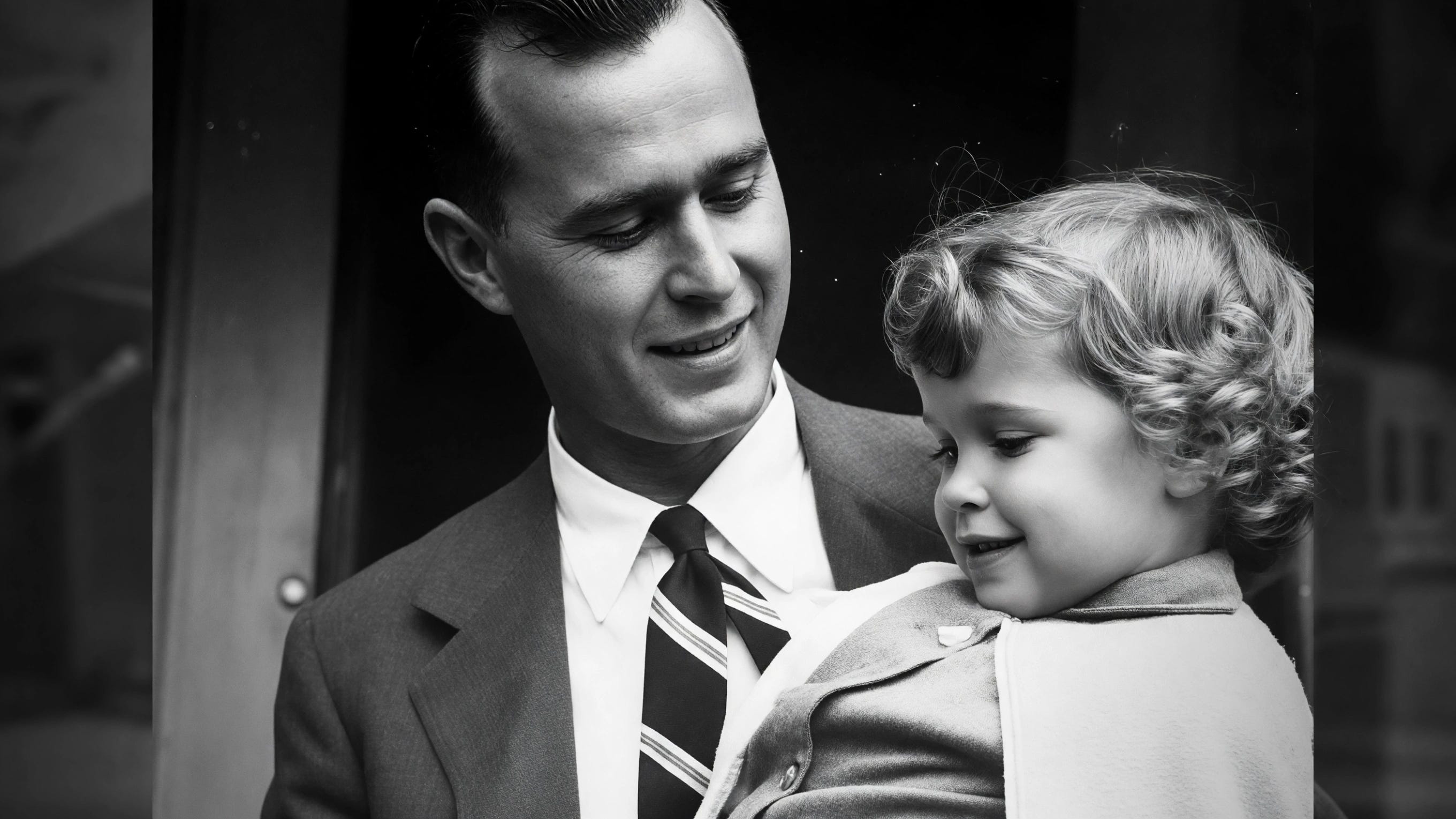
In 1953, their daughter Robin was three years old when fatigue led to a diagnosis of leukemia.
Doctors in Texas advised taking her home. Barbara and George refused.
They flew Robin to New York, to what was then Sloan Kettering, and for roughly seven months Barbara lived inside that hospital while her daughter underwent transfusions and bone-marrow procedures that the medicine of 1953 could offer but not make work.
She taped photographs of George and the boys near Robin’s bed so her daughter could see the family she’d been pulled away from. George traveled between New York and the Texas business, carrying the weight of a double life that would become, in different forms, the permanent architecture of their marriage.
Their daughter Robin died in October 1953 with both parents beside her.
George wrote afterward that the household still needed “some soft blonde hair” and that although they could no longer touch Robin, they could still feel her.
Years later, when Barbara read the letter aloud, her voice broke on the description of the missing head at the family table, and for a moment the composure she’d spent decades perfecting came apart in front of the cameras.
Susan Page calls Robin’s death Barbara’s defining experience. It hardened something inside her that would never fully soften again, deepened her empathy toward sick and vulnerable children in ways that would shape her public life for decades, and fused the marriage through a shared catastrophe that nobody outside the two of them could fully understand.
They were 28 and 29 years old, far from the drawing rooms of Rye and Greenwich, watching their daughter die in a Manhattan hospital, and whatever the marriage became afterward, it carried Robin’s absence at the center of it like a weight sewn into the lining.
Later, Barbara admitted she’d handled young George W.’s grief badly. He’d been kept from the hospital, told abruptly, given little room to process what had happened.
Her response to pain, then and for the rest of her life, was containment and forward movement, keeping the household running so the grief never became the story. Those qualities would make her formidable in politics and nearly impossible to reach at home.
The white hair that would later be used to mock her as older than her husband became, in family memory, another residue of the months she spent at Robin’s bedside.
The marriage that survived that hospital room was about to become something closer to a political machine.
Twenty-Nine Boxes
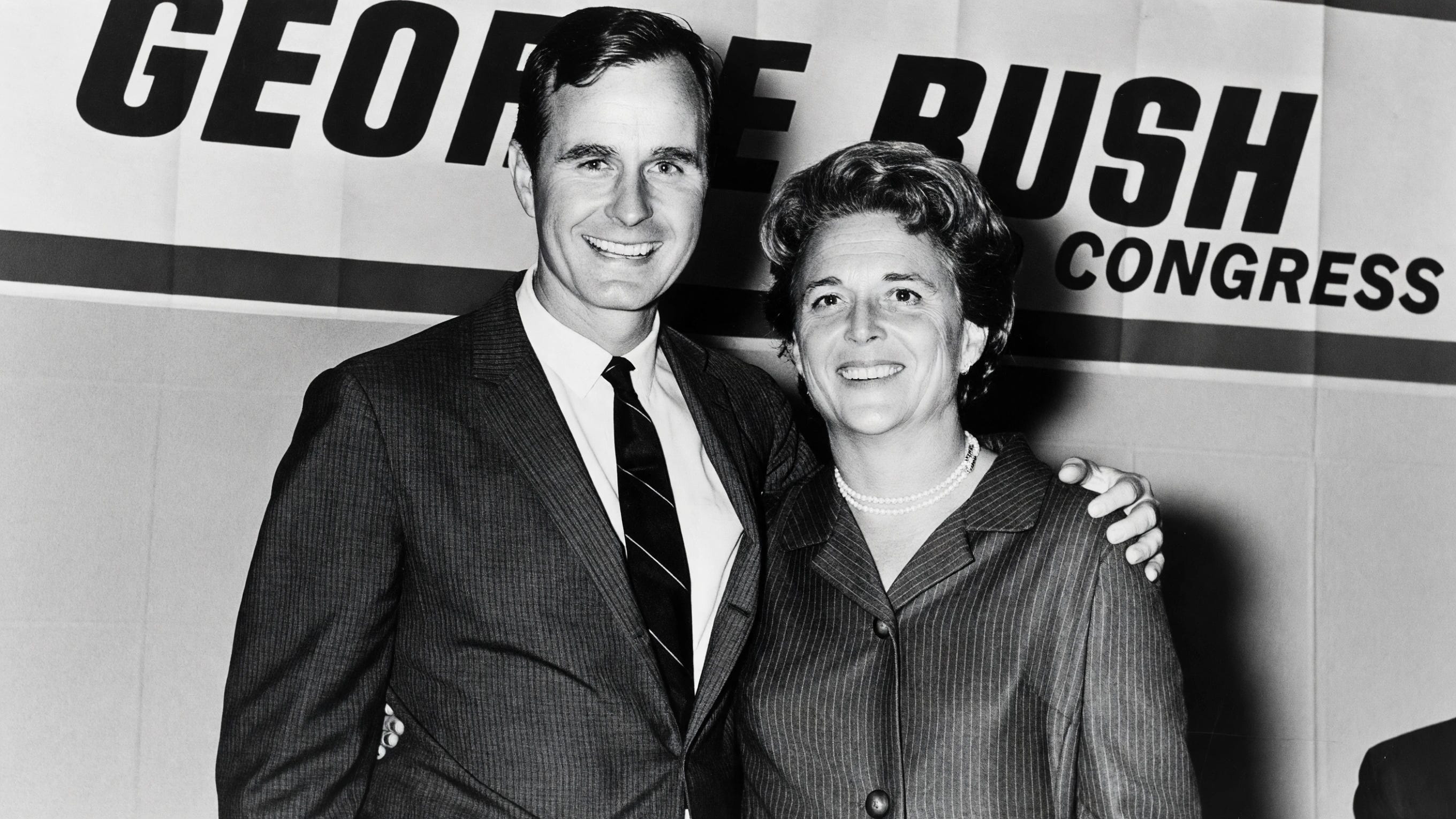
George’s career appears in biographies as a ladder. Barbara experienced it as rooms repeatedly emptied.
The official count varies between 29 and more than 30 household moves across the first 44 years. Each one represented invisible labor: houses found and abandoned, children resettled, social networks rebuilt, entertaining systems recreated, and her husband’s newest identity made to look established.
Six children arrived between 1946 and 1959. Barbara raised them largely alone while George built an oil business, then a political career, then a national profile that would eventually carry him from Congress to the United Nations to China to the CIA to the vice presidency to the White House.
Her campaign labor functioned like unpaid senior political work. She was effective enough that it created a problem for George’s advisers. He once warned an aide that a strong wife could make a husband appear weak, a sentence that identifies the arrangement’s trap: he needed her strength but couldn’t advertise dependence on it.
She could be witty, decisive, and relentless, provided those qualities were presented as extensions of George.
Thus, appearance became political discipline. George looked younger than his age. Barbara looked older, and voters sometimes mistook her for his mother. Her sister-in-law Nancy Ellis reported a family discussion, held without Barbara, under the heading “What are we going to do about Bar?”
In 1988, Saturday Night Live repeatedly built sketches around the premise that she was frumpy, maternal, and ridiculous beside younger-looking political women.
Barbara later denied that the caricatures hurt and pointed out that one mocked rug remained in her home, a classic example of mastering humiliation by absorbing the joke.
The vice presidential years added a second female hierarchy. Barbara and Nancy Reagan were never close, and Page found the hostility more extensive than expected. A draft guest list for a 1985 dinner for Prince Charles and Diana showed the Bushes struck from the invite. For Barbara, this was another version of the marriage bargain: proximity to power without ownership of it, enforced partly by another political wife.
And she could be cutting in defense of the dynasty. During the 1984 campaign she described Geraldine Ferraro with a word that “rhymes with rich,” then apologized.
The discipline required to survive inside the arrangement was formidable, and the next test of that discipline wouldn't come from a political opponent or a television sketch.
It would come from inside George's own office.
The Aide
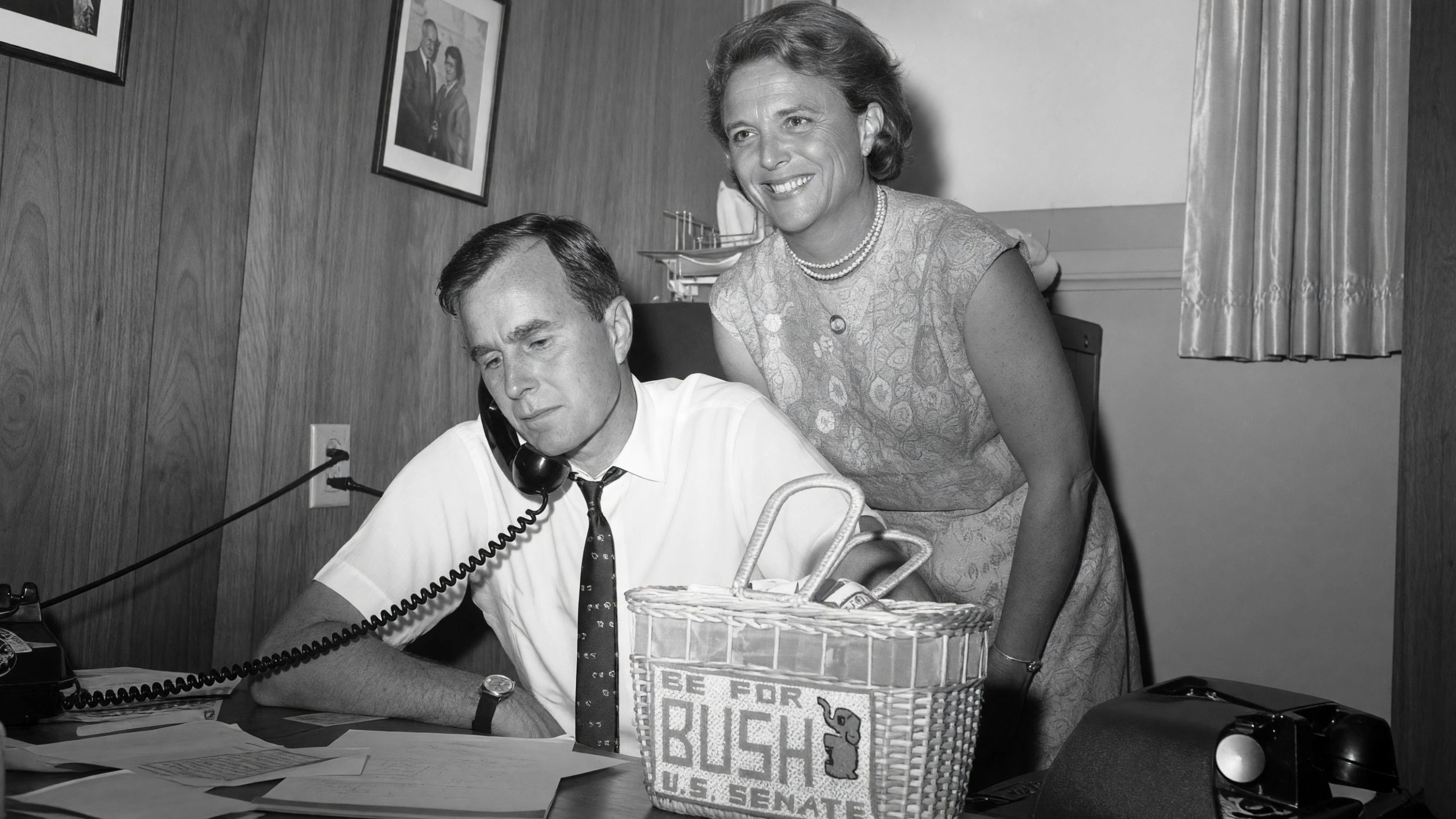
Sometime in the 1970s, a woman named Jennifer Fitzgerald began working for George and became a trusted, indispensable aide through his national career.
She later held a State Department protocol position during his presidency. Reports of an affair circulated for years and reached the campaign press in 1992.
What is documented is emotional disturbance, not adultery. Barbara’s diary, as reported by Page, records her belief that Fitzgerald had a malign effect on George and that his attention shifted whenever Fitzgerald was mentioned. Someone in the Bush circle told Page that George was “captivated” by Fitzgerald.
Barbara reportedly cried to George at night, described feeling empty, and wondered why he didn’t leave her.
George and Fitzgerald separately denied an affair when biographer Jon Meacham asked them. Page, despite access to Barbara’s diaries and more than 100 interviews, did not reach a definitive conclusion.
But making Fitzgerald the sole cause of Barbara’s depression would be too simple. Barbara herself attributed it to a convergence of pressures: menopause, the children leaving home, George’s CIA job, and her abrupt exclusion from a part of his life she could no longer share.
The Fitzgerald question, however, ran through all of it. Barbara had built much of her identity around participating in George’s world. Now she was alone, shut out of his work and unsure whether another woman had taken the emotional place she once occupied.
That is when the car pulled to the side of the road.
At home, she wept in George’s arms night after night. In her 1994 memoir, she described herself as depressed, lonely, and deeply unhappy, recalling that George held her while she cried.
She never sought medical treatment and later said she simply “sweat it out,” eventually describing the episode as something that had helped her grow.
Her later stoicism can obscure how dangerous the moment actually was. The woman who would become the model of the indestructible political wife was privately frightened by what she might do with a moving car, while the husband comforting her each night remained at the center of the life that had brought her to that point.
Years later, that same arrangement would become the basis of a very public accusation: that Barbara Bush had built an entire life around a man and was now being celebrated for it.
The Petition
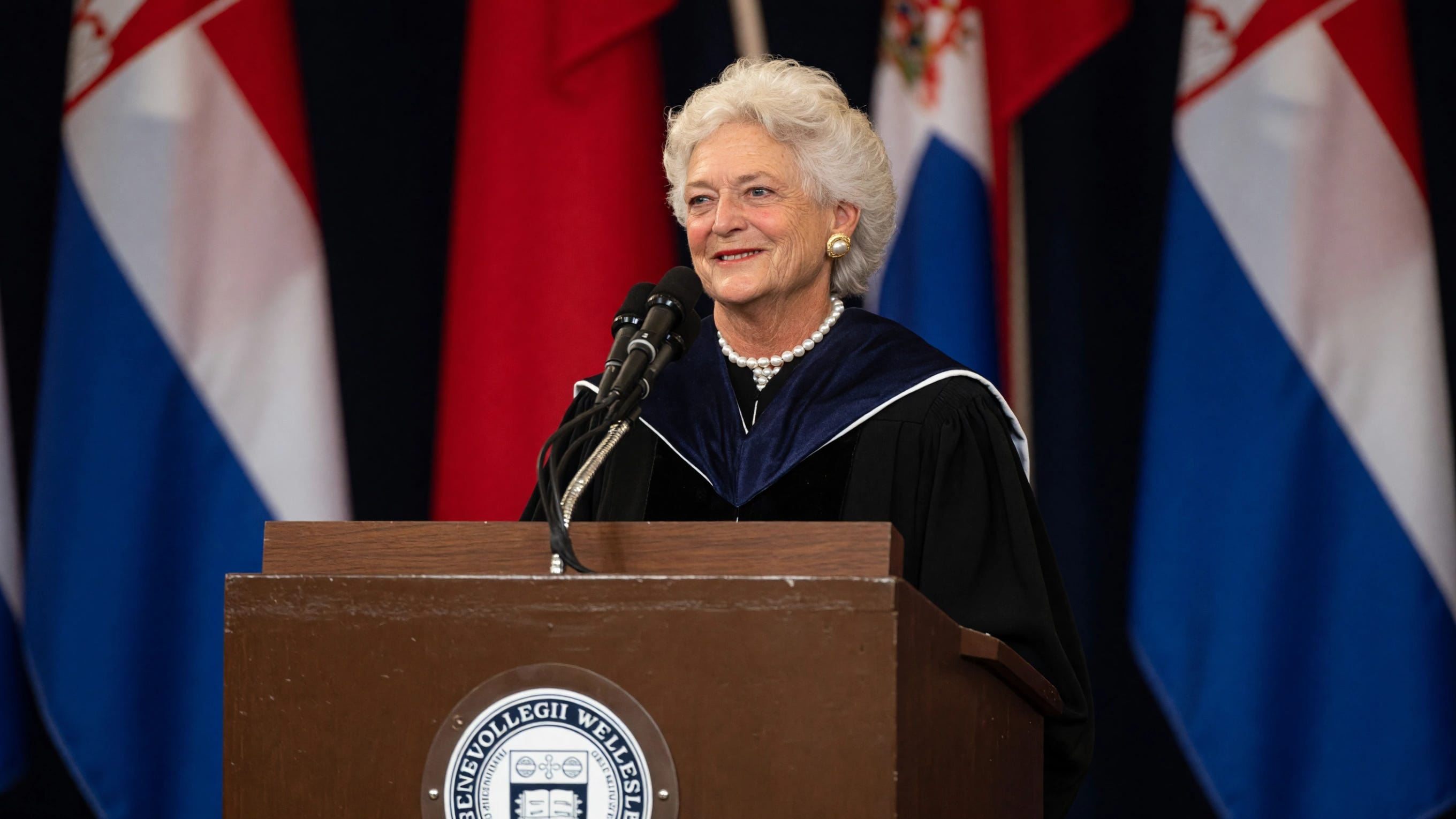
In 1990, Wellesley College invited Barbara to deliver its commencement address. Of approximately 600 graduating seniors, 150 signed a petition objecting to a speaker known principally through her husband.
The petition argued that honoring her contradicted the college’s promise that women would be recognized on their own merit.
Barbara was hurt but refused to retreat. Her 11-minute speech urged graduates to value belief, joy, and human relationships, then joked that a future president’s spouse in the audience might be male.
It was widely praised. But the students’ objection couldn’t be fully dismissed, because Barbara herself would express a version of it 16 years later.
In 2006, an honorary-degree citation at George Washington University celebrated her father, husband, children, humor, and domestic identity but omitted her literacy work and board service.
In her diary she wrote furiously that the citation made her a saintly housewife who had sacrificed everything.
She insisted she hadn’t known she was a women’s liberationist until that moment.
Then she quickly added she loved both family life and “the other side.”
Indeed, choice and regret can coexist. She loved the family role, defended it publicly, and still resented having every independent accomplishment erased.
Her substantive views exceeded her public remit. She supported the Equal Rights Amendment and held a more permissive view of abortion than the Republican platform. In 1992 she called abortion a personal matter and argued it should be excluded from party platforms. And she muted such differences when they threatened George’s political interests.
But the first ladyship finally gave her an institution of her own. She founded the Barbara Bush Foundation for Family Literacy in 1989, which later reported more than $110 million in support for literacy programs. Her public embrace of people and children with AIDS challenged stigma at a moment when physical contact carried powerful symbolic weight. The foundation and the AIDS work proved what she could do once marriage supplied a platform.
The question of whether the platform had been worth the price would follow her to the last conversation she ever had with George.
A Drink
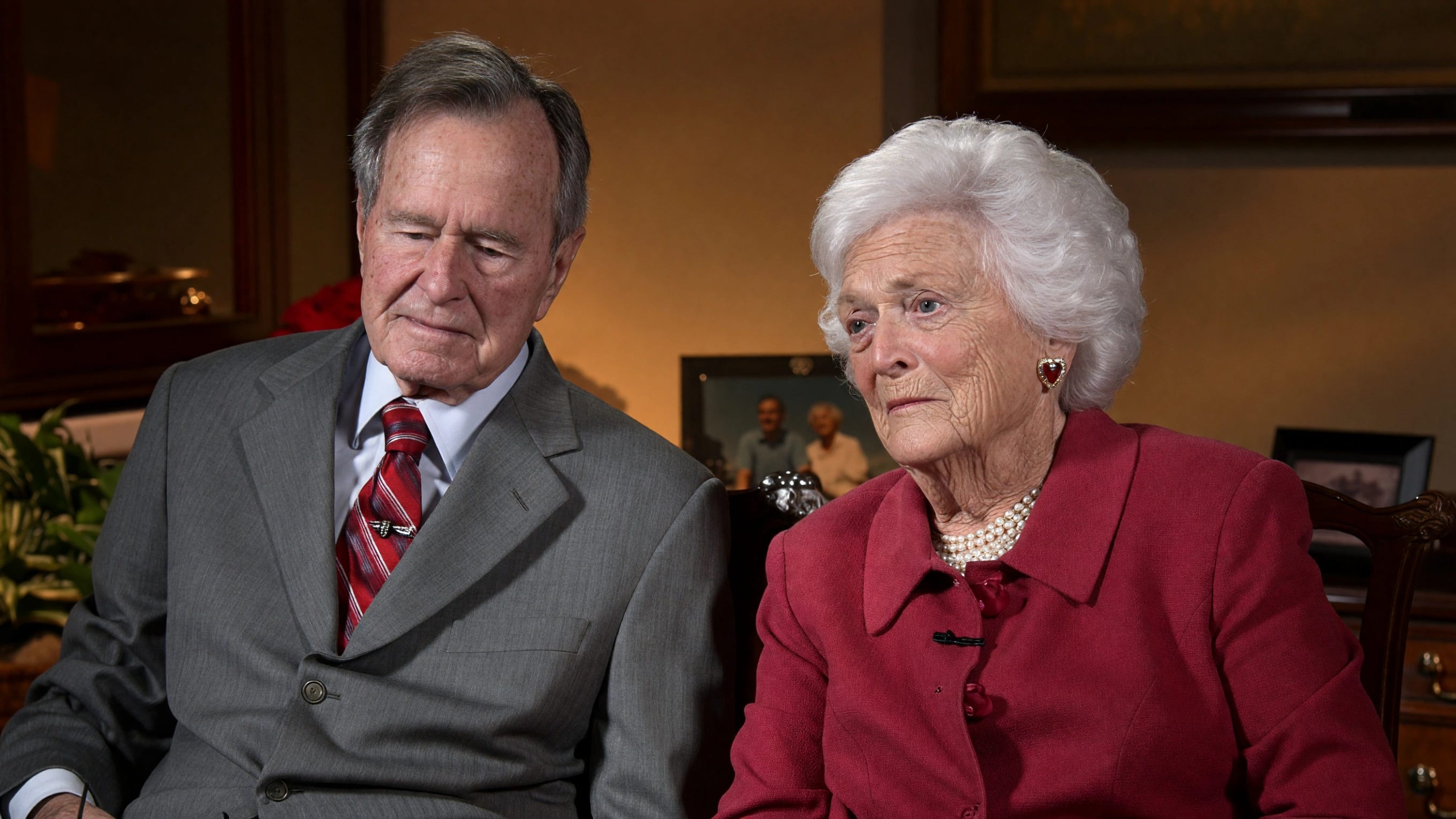
The ending is almost too perfectly suited to family mythology.
Two days before Barbara died, Page recounts, the couple sat in their Houston den and told each other not to worry.
Then they had a drink. Barbara chose comfort care after repeated hospitalizations and died on April 17, 2018. George died less than eight months later.
It would be manipulative to treat this tenderness as public relations merely because it complicates the headline. It would be equally manipulative to use tenderness to erase the roadside, the tears, or the diary.
Their marriage was both an enduring attachment and a structure that demanded disproportionate sacrifice from Barbara. America celebrated its length as proof of its happiness. Barbara’s own record suggests something harder: that endurance was not the absence of suffering but the form her power learned to take.
I would not have recognized Barbara Bush in her wedding photo.
For me it’s an accomplishment to raise a family of six children. From what o know the Bush children are all very accomplished.
I just find the title a bit inaccurate. I don’t think it was a “quiet hell”. It’s a life she chose. There may have difficult chapters in her life but one takes the good with the bad. That doesn’t make it hell.
Another great read. People assume marriage tenure is a sign of happiness. Anyone in a good marriage will tell you honestly it is not.