
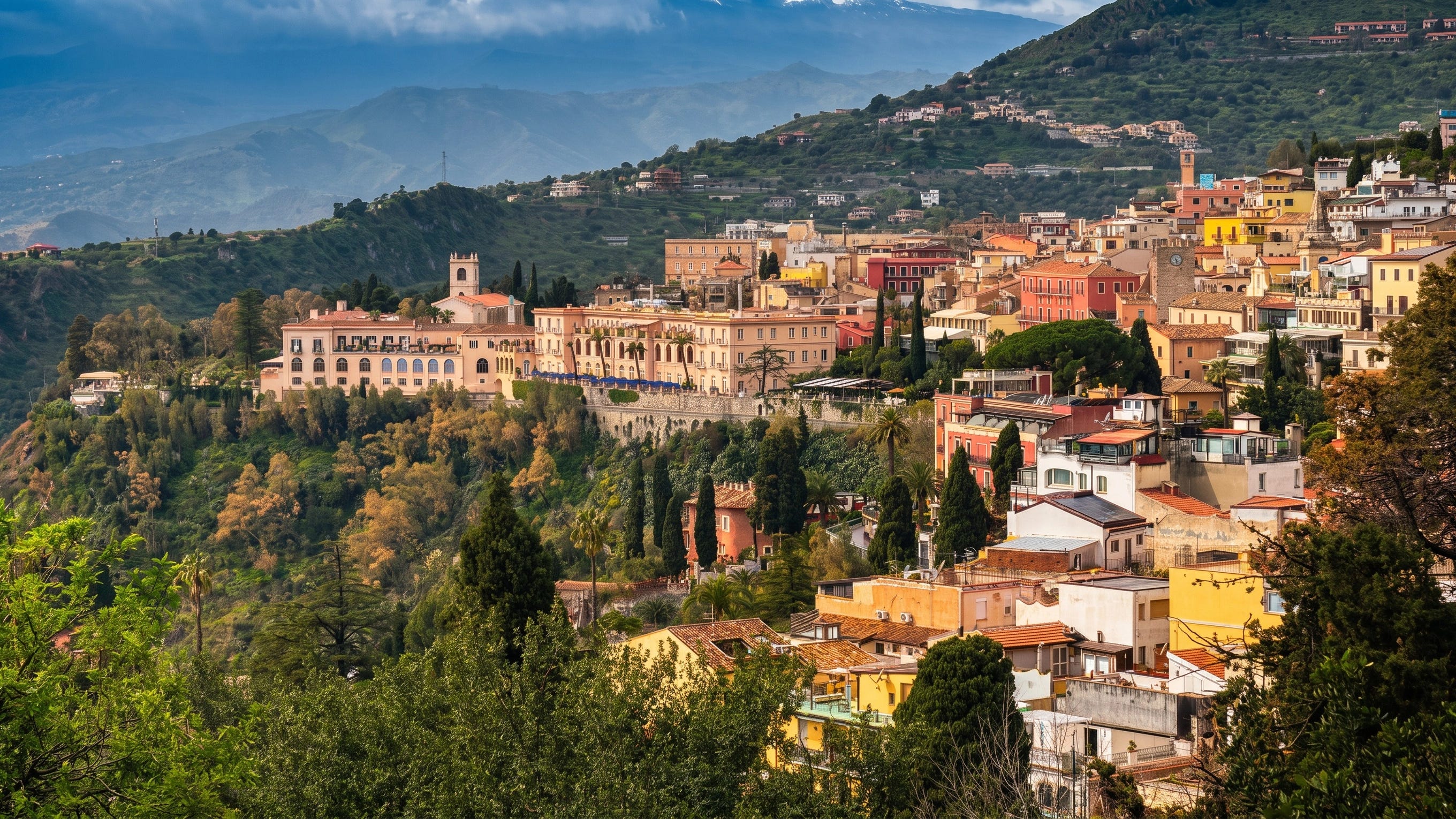
It seems like everyone is going to Taormina.
Jeff Bezos chose it for his honeymoon, and Dua Lipa followed suit with hers. Michael Jordan has returned summer after summer, the fashion crowd descends whenever Dolce & Gabbana comes calling, and superyachts spend the summer floating beneath the cliffs like extremely expensive bath toys.
Your 1,000-year-old seaside town has rather forfeited its claim to being a ‘hidden treasure’ when another billionaire turning up barely qualifies as news.
And anyone with Instagram has probably seen the rest already: impossibly blue water beneath striped umbrellas, lemon trees hanging over stone terraces, narrow streets crowded with linen shirts and enormous sunglasses, and aperitivo tables positioned against the sunset. At this point, Taormina does not need much help from social media; it already looks slightly unreal.
Then The White Lotus arrived.
HBO used Taormina to make fun of rich people behaving badly in paradise, filming much of its second season inside the San Domenico Palace (now a Four Seasons hotel). The result was slightly inconvenient for the satire: millions of viewers watched these “dreadful” wealthy people and decided they wanted their holiday.
Taormina became even hotter, with rooms harder to book, the San Domenico transformed into a destination in its own right, and an already impressive collection of yachts growing still larger. Almost overnight, a tiny Sicilian town seemed to have become one of the defining luxury playgrounds of the 2020s.
Except Taormina has seen all of this before.
In fact, the constant search for the “next Taormina” is part of the same cycle that made this one famous in the first place.
Top Tier Taormina
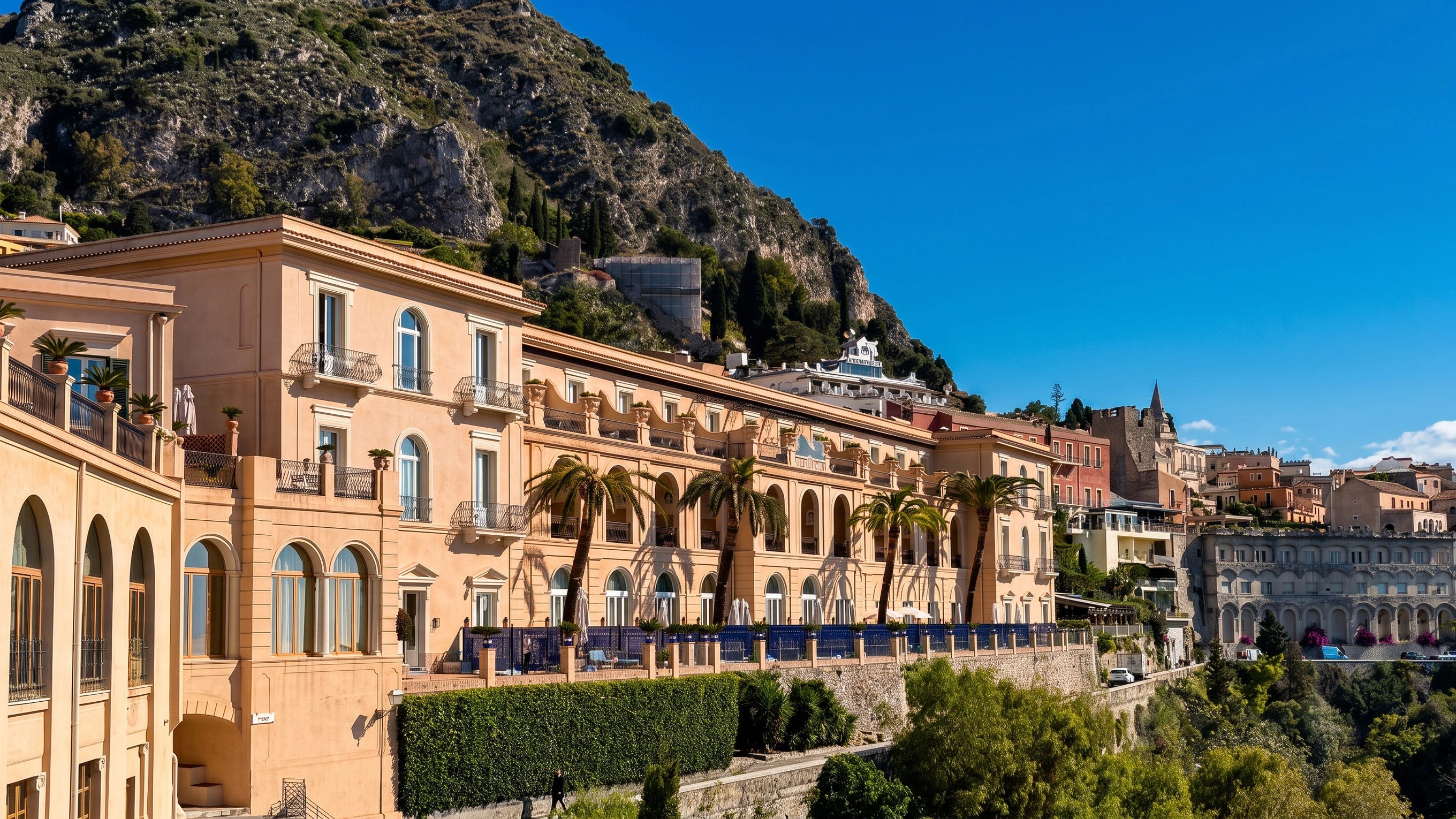
Modern Taormina begins, appropriately enough, at the San Domenico Palace.
The Four Seasons, now instantly recognizable as the hotel from The White Lotus, occupies a 14th-century Dominican monastery high above the Ionian Sea.
Ironically, the monks practiced poverty. Their former home now contains Principe Cerami, a Michelin-starred restaurant with a wine cellar of more than 1,000 labels, and Anciovi, where lobster pasta and seafood are served beside the hotel’s famous infinity pool.
(Indeed, it’s difficult to imagine a more complete defeat for the original business model.)
By late afternoon, drinks move to Bar & Chiostro, inside the old cloister of the Four Seasons. Staff circulate beneath stone arches with cocktails and Sicilian wines while the sea glows below, and the considerable machinery required to keep a Four Seasons running remains politely invisible.
A few minutes away stands its great rival, Grand Hotel Timeo, beside the Teatro Antico.
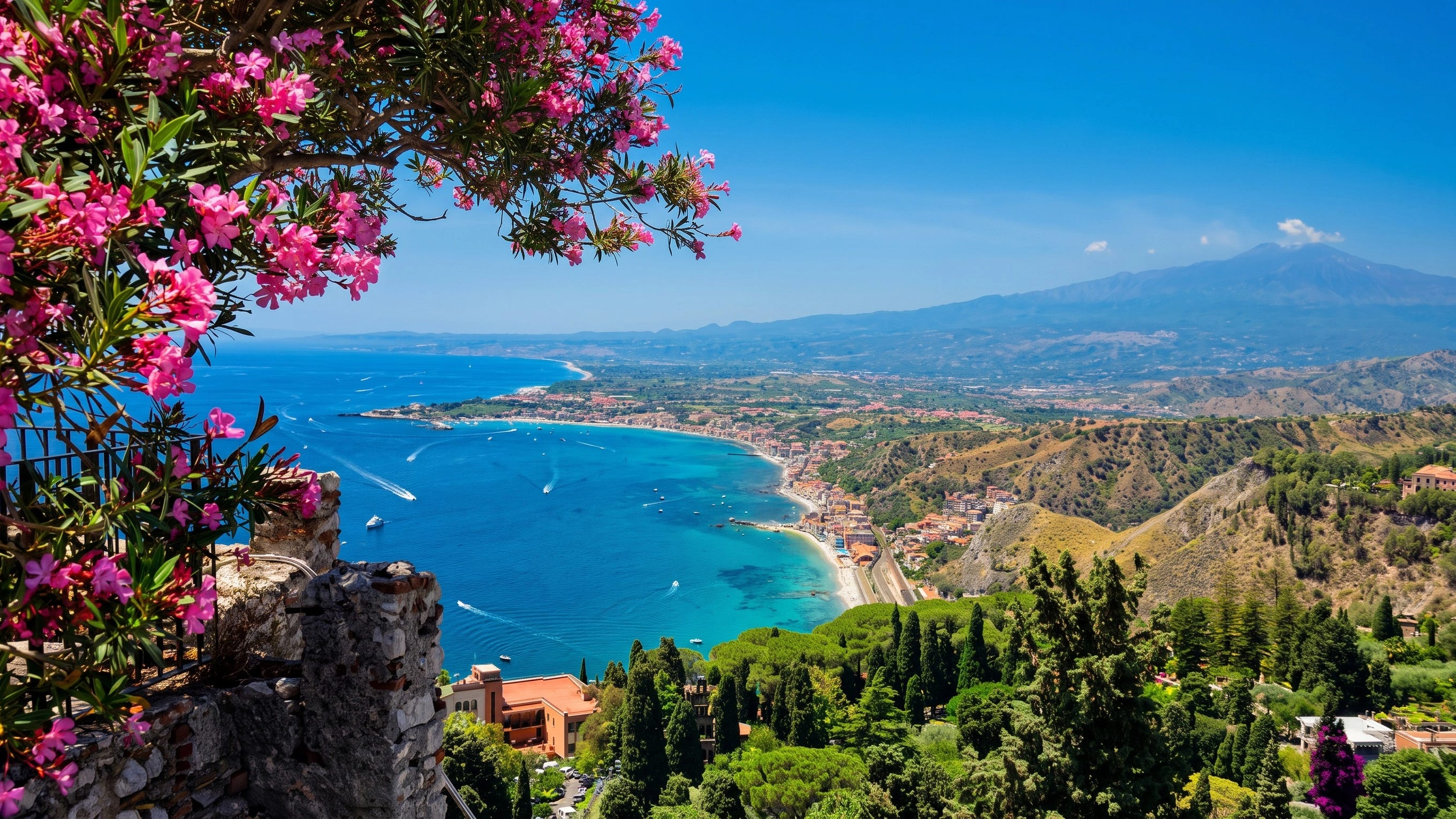
The terrace at Ristorante Timeo looks straight across Naxos Bay toward Mount Etna.
Speaking of Etna, she looms in the distance like a crown over Taormina and occasionally reminding everyone that it is, inconveniently, still an active volcano.
A half-day excursion up its blackened slopes has become almost compulsory, partly for the lunar scenery and partly because spending the morning walking around a volcano makes the afternoon aperitivo feel unusually well earned.
Back down on solid ground with us mere mortals, Bar Timeo handles the aperitivo crowd, while dinner becomes considerably more serious at Otto Geleng, the hotel’s Michelin-starred restaurant, where just 16 tables face one of the most theatrical views in Sicily.
For the crowd that arrived after seeing Taormina on TikTok or Instagram, this is usually where the photographs suddenly become real: Etna rising beyond the terrace, the Ionian Sea hundreds of feet below and a 2,000-year-old theatre sitting next door as casually as if every hotel came with one.
And Timeo also has a Dior Spa, naturally. A normal spa would apparently risk ruining the atmosphere.
Then the evening parade begins on Corso Umberto.
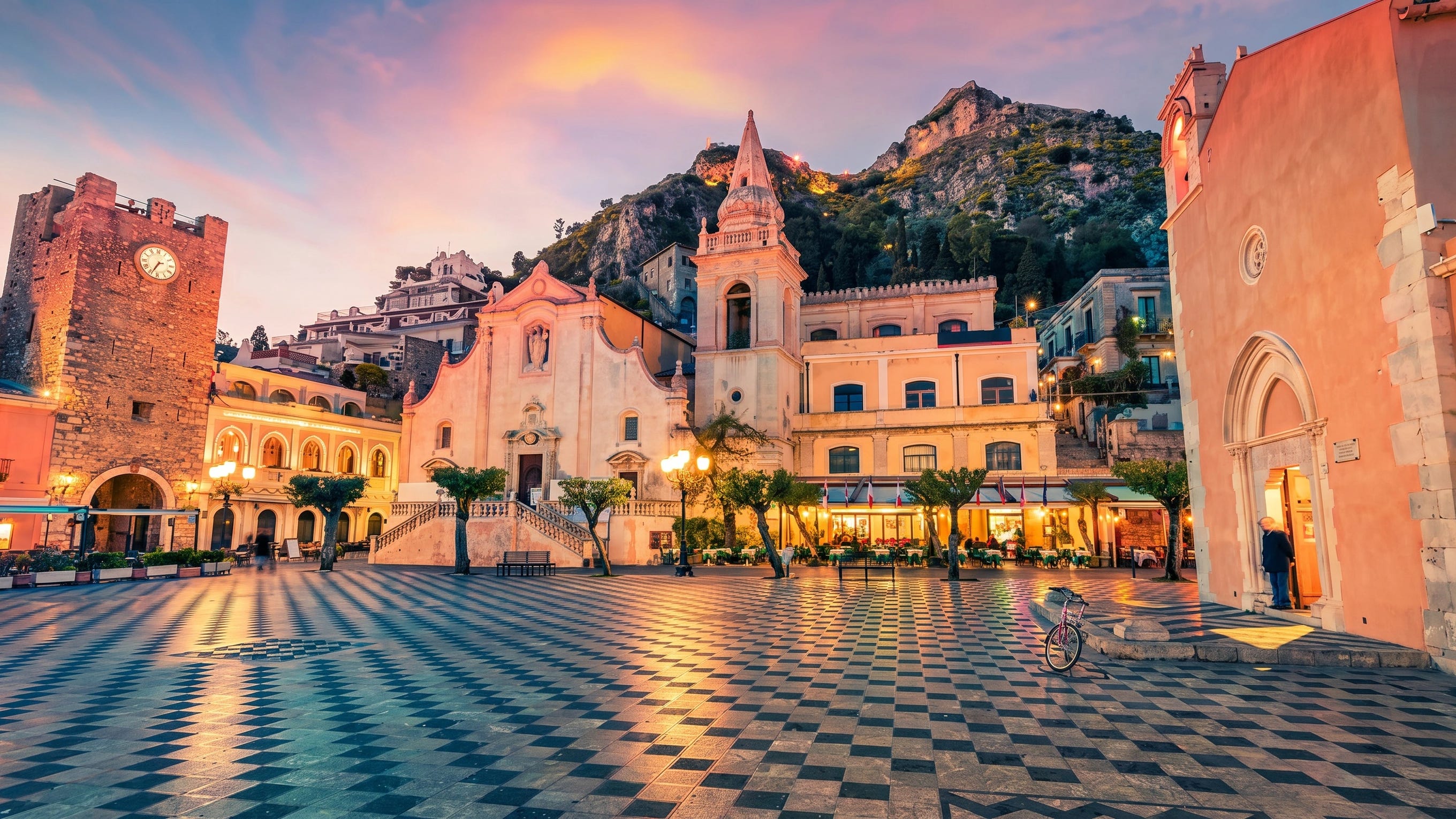
Running between the medieval gates of Porta Messina and Porta Catania, the Corso is Taormina’s main artery, shopping street, promenade and unofficial catwalk compressed into one narrow pedestrian strip.
Restaurants and boutiques spill into centuries-old buildings, side streets plunge toward flashes of blue sea, and nearly everyone in town eventually passes through it, making the nightly passeggiata less a simple walk than a rolling census of who has arrived and what they decided to wear.
The crowd eventually drifts toward Piazza IX Aprile for aperitivo, although a remarkable amount of effort has gone into looking effortless.
This is Taormina at full volume: San Domenico suites, Timeo terraces, Michelin stars, couture, drivers, superyachts and the occasional billionaire wandering past a souvenir shop.
It feels perfectly designed for the social media age, and that is Taormina’s finest trick.
But the Instagram crowd is only the latest crowd to discover it, and another will eventually replace them.
Therefore, what separates Taormina from the long laundry list of fashionable luxury resorts is not simply the scenery or the money, but the fact that this particular cycle has already been repeating for centuries.
The View That Started Everything
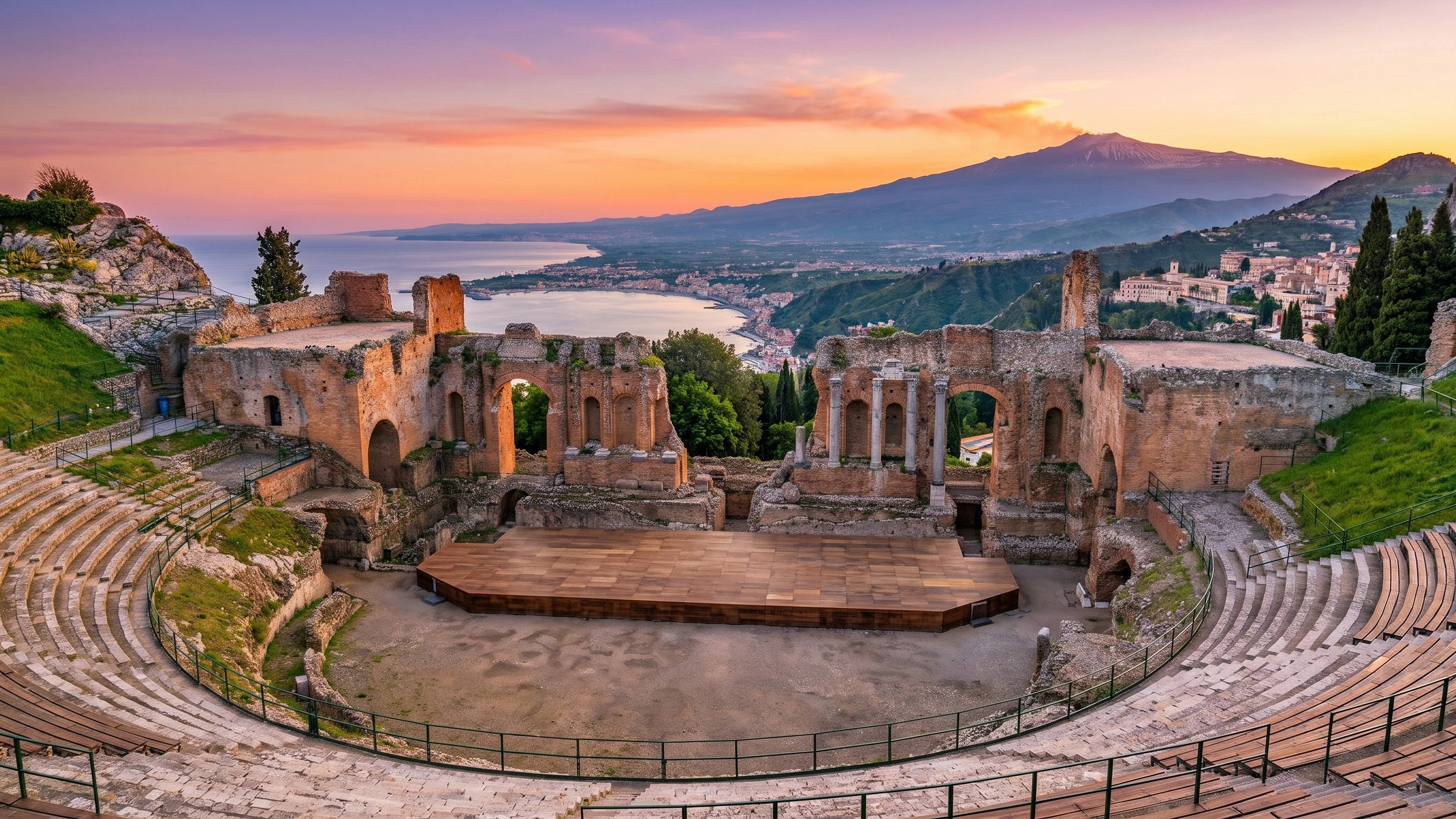
Long before the Four Seasons, the film festival or the first honeymooning billionaire, Taormina’s greatest asset was already sitting in plain sight.
In 1787, Johann Wolfgang von Goethe arrived in Sicily and made his way up to the ancient theatre above the town. Goethe was already one of Europe’s most famous writers, and when he described Taormina, the town acquired a new audience: educated, wealthy Europeans with both the means and the inclination to follow him south.
The view did most of the work.
The theatre dates to the third or second century BCE, though most of what survives reflects a Roman reconstruction. It stretches hundreds of feet across, the seating faces southeast, and through the broken arches of the old stage wall, Etna, the Ionian Sea and the Bay of Naxos appear in a single frame so perfectly arranged that it looks less discovered than designed.
Goethe was captivated. Once he wrote about it, other Europeans began arriving to see what all the fuss was about.
The Prussian painter Otto Geleng arrived in the 1860s, lodged with a local property owner named Don Francesco La Floresta, and painted the view.
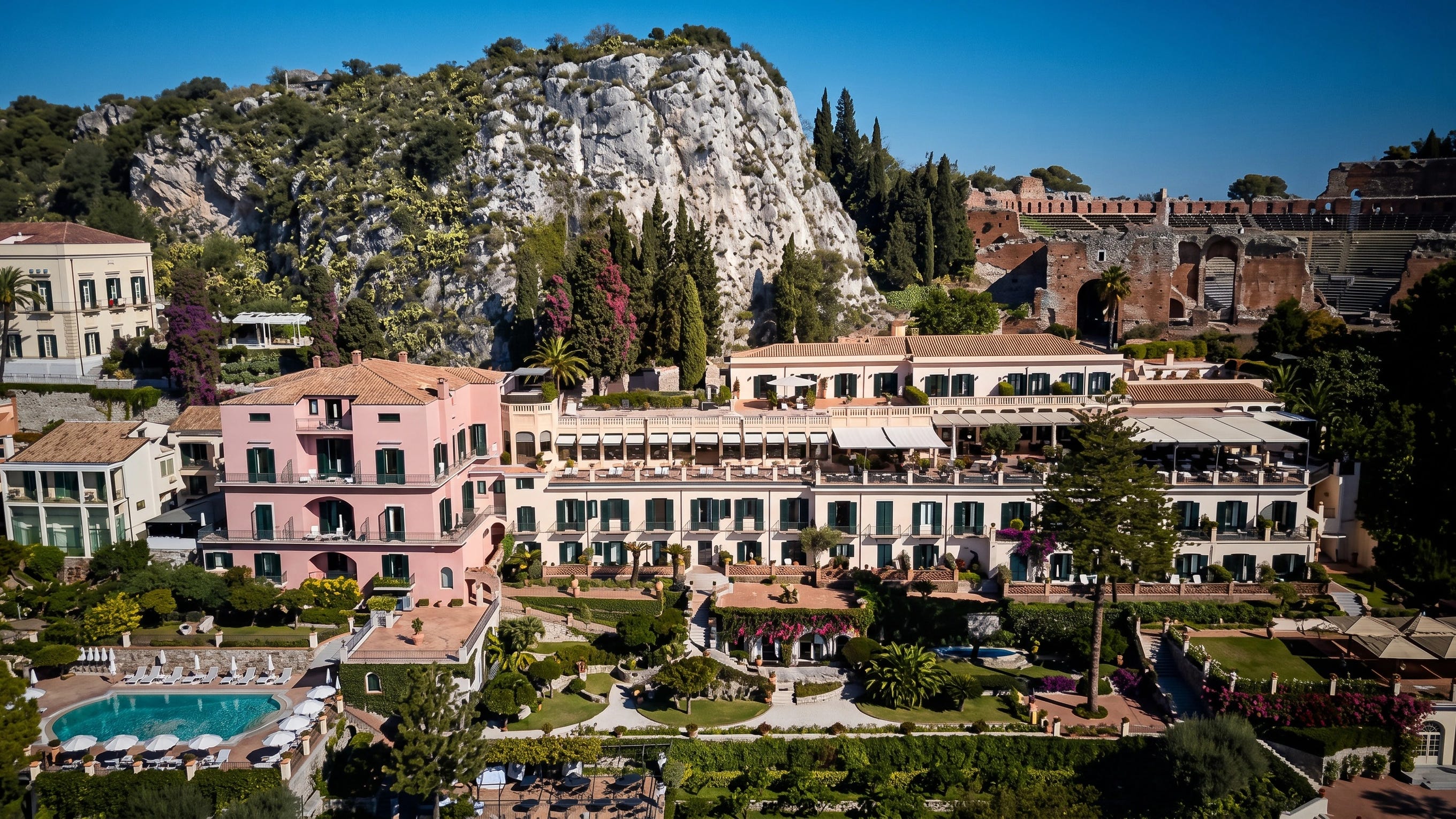
His watercolors circulated through European exhibitions, and some viewers allegedly refused to believe the composition was real: snow on a volcano, the sea below it, Mediterranean light holding both together in a single frame.
La Floresta understood what the paintings were doing to demand. In 1873, he converted his property beside the theatre into the Grand Hotel Timeo.
Landscape appreciation became a bookable experience with a room rate attached. An archival photograph from April 2, 1904, shows Kaiser Wilhelm II breakfasting with his retinue on the Timeo’s terrace, hats and flags scattered across the table, the theatre visible just beyond the garden gate.
Once a head of state eats breakfast in front of your view, the view has been officially certified.
The pattern that would govern Taormina for the next 150 years locked into place, and the essential luxury-travel formula was already visible: somebody interesting discovers the place, somebody influential validates it, and somebody with capital works out how to sell the experience to everyone following behind.
The Outsiders
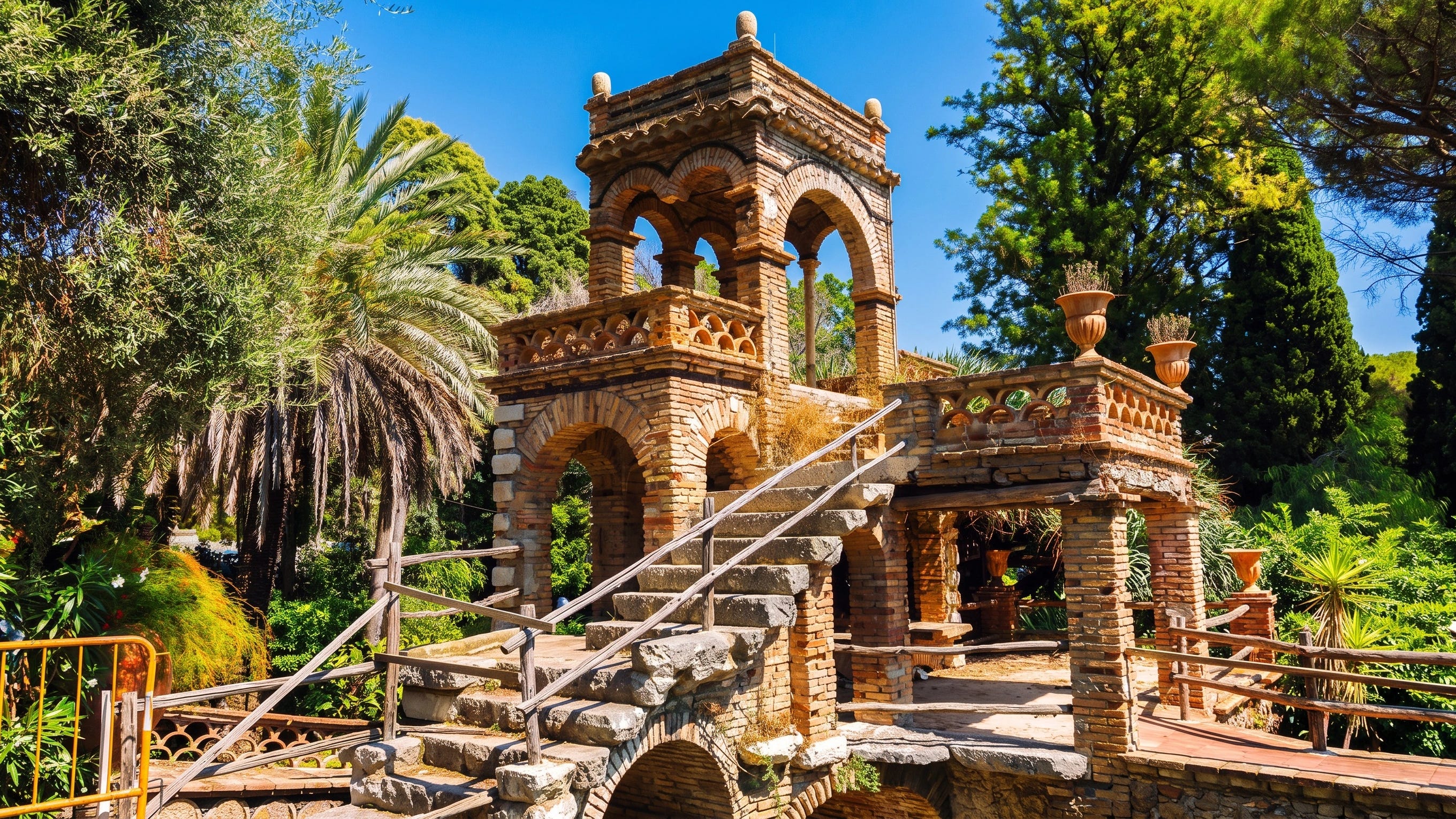
In the 1880s, two outsiders settled in Taormina and built the mythology that would carry the town through the next century.
Florence Trevelyan was an English heiress from a prominent Newcastle family, independently wealthy after her mother’s death in 1877.
According to a durable local legend, she left Britain after a royal entanglement with the future Edward VII. No documentary proof has been established, but the legend became part of the appeal.
But what is documented might just be better than the scandal.
In 1890 she married Salvatore Cacciola, a local doctor, and together they assembled 87 separate land parcels into the gardens that became Taormina’s public park. She bought Isola Bella, the tiny island connected to the mainland by a sand strip that appears and disappears with the tide, built a house on it, and cultivated tropical plants alongside Mediterranean vegetation.
She constructed eccentric brick-and-stone follies that rise from the garden like improvised observation posts built by a woman who had decided that looking at things was the entire point of being alive.
She died in 1907 without ever fully explaining why she’d left England.
The absence of explanation became the town’s template. Taormina thrives on the gap between what’s documented and what’s whispered.
Taormina generates legends about its visitors, and the legends become part of the draw for the next wave of enthusiasts, who arrive hoping to add their own chapter to a story the town has been writing about outsiders since Goethe sat in the theatre and refused to leave until dark.
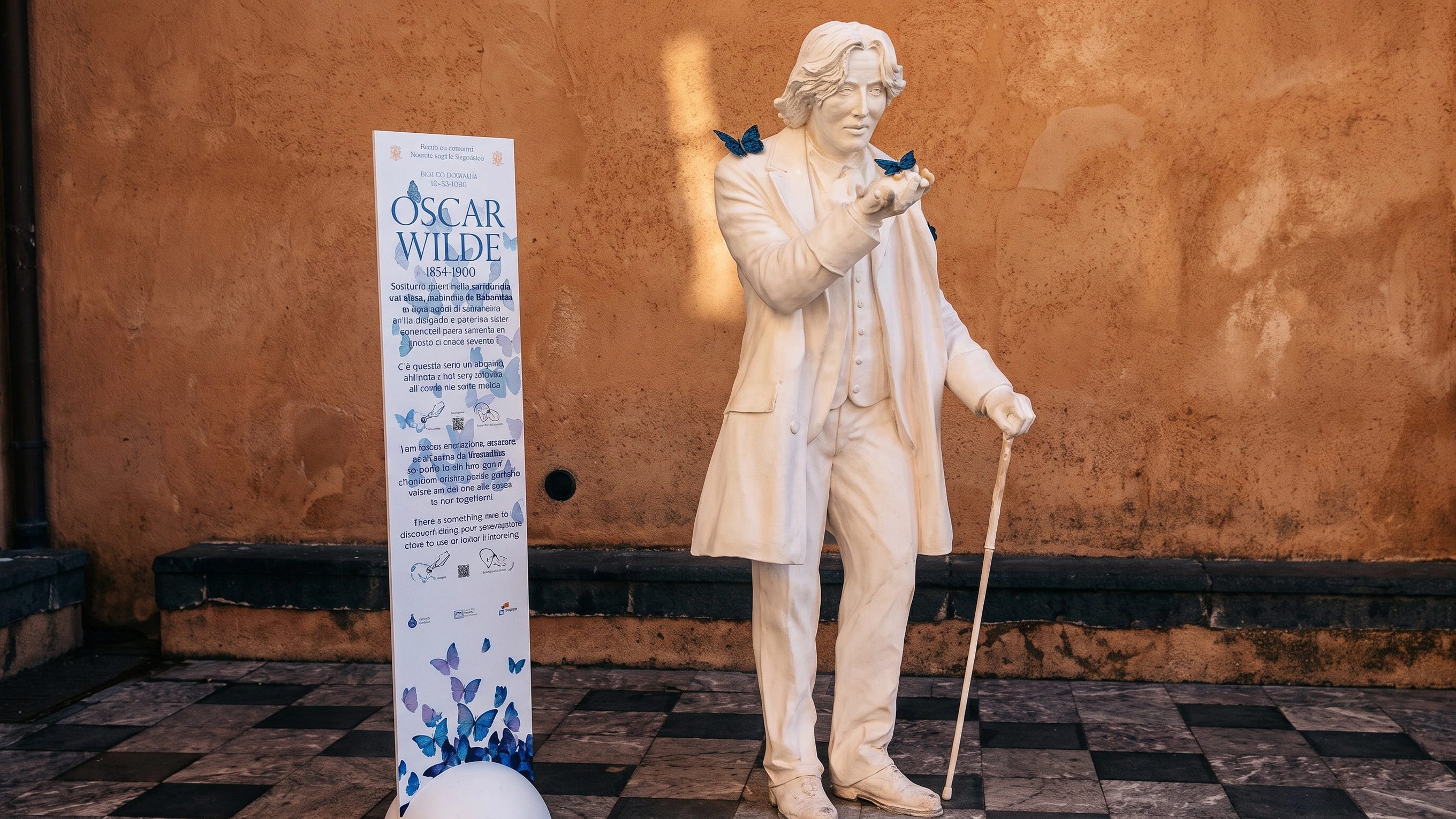
Oscar Wilde arrived in Taormina in the difficult months after his release from Reading Gaol, the English prison where he served the final part of his two-year sentence for “gross indecency”, when the most famous wit in London had become an exile from the society that once celebrated him. He stayed at the Hotel Victoria on Corso Umberto, considerably less grand than the palaces and great hotels beginning to fill with aristocratic visitors nearby.
He was still writing, although not another play or novel. From Taormina came letters to Lord Alfred Douglas and Robert Ross, and some of Wilde’s most revealing comments about the place survive in that correspondence. To Bosie, he described Taormina as a paradise for lovers and imagined the two of them returning to live there together.
Wilde was also living through the strange final chapter of his literary career. The Ballad of Reading Gaol, begun after his release and completed during his exile in France and Naples, was moving toward publication while he travelled through southern Italy. It appeared in February 1898 under his prison number, C.3.3., rather than his name.
There is something particularly Taorminese about Wilde ending up there. The town was already becoming fashionable among conventional European travellers, but it was also acquiring another reputation: a southern refuge for artists, aesthetes and people whose lives fitted rather badly within the rules of northern Europe.
That reputation mattered. The richest travellers rarely want a place simply because it is expensive; they want the satisfaction of arriving while it still feels slightly difficult to explain to everyone else.
The Cheap Seats
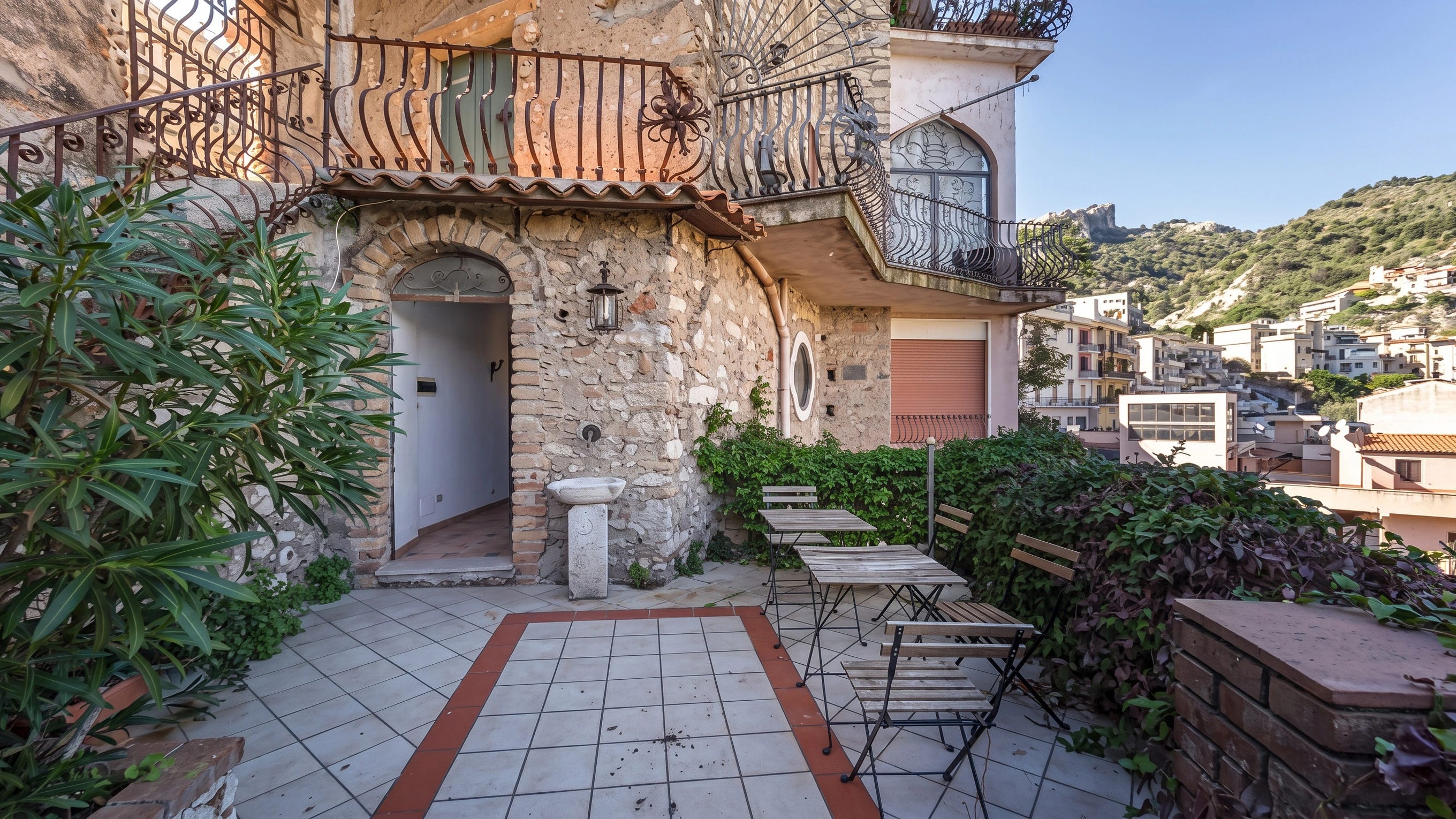
The grand hotels told one version of Taormina. A rose-colored house on a hillside told another.
D. H. Lawrence and his wife Frieda rented Fontana Vecchia from 1920 to 1922. While guests at the Timeo and San Domenico were dressing for dinner, Lawrence was living cheaply among almonds and olives, writing The Lost Girl and Mr Noon in a house where the rent was a fraction of a single night at either grand hotel.
He called the setting “the world’s morning,” which is the kind of sentence a man writes when the light is good and the bills are low.
Truman Capote took the same house decades later and noted the word “Pace,” peace, carved into the stone doorstep.
Two writers, separated by 30 years, chose the same cheap hillside house over the grand hotels below, and both produced work that added to Taormina’s mythology without adding to its hotel revenue.
The town could sustain a writer’s garret and a monastery-turned-luxury-hotel with a view of the same sea, and the coexistence of the two is part of what kept the mythology alive.
Prince Cerami had converted a former Dominican monastery into the San Domenico Palace (the future Four Seasons and “White Lotus”) in 1896, adding a second grand hotel to the Timeo’s monopoly.
A film festival established in the 1950s put movie stars on the ancient theatre’s stage, evening gowns on ancient stone, applause rising into the open Sicilian sky.
In 2017, G7 leaders met in Taormina, motorcades winding through streets designed for donkey carts while the same view Goethe described 230 years earlier served as the most efficient prestige backdrop available to seven heads of state and their photographers.
Each generation repackaged the same ingredients: antiquity, danger, beauty, social display, and the persistent feeling that you were standing where important people had stood before you. The medium changed, but the fantasy didn’t.
By then, Taormina had already survived the fate that supposedly kills fashionable destinations: everybody had found out about it. Rather than disappear, it kept recruiting a new elite to replace the one already complaining that the place had been discovered.
And what streaming changed was the velocity: the 250-year-old process of mythologize, package, expose, and reprice, which used to unfold across a generation, now happened in a single television season.
The Blueprint
Every luxury destination follows some version of the same sequence, and most of them don’t know it yet.
An artist, writer, or aristocratic exile arrives somewhere beautiful and relatively unknown.
They produce something, a book, a painting, a photograph, a social-media post, that makes the place legible to a wealthier audience. Hotels formalize the experience. A critical mass of recognizable names establishes the destination as a signal of taste. Coverage accelerates. Prices rise. And at some point the original visitors, the ones who valued the place precisely because it hadn’t been discovered, begin looking for the next version.
Ischia ran the cycle when The Talented Mr. Ripley made it cinematic. Bodrum is running it now, Turkish coastal villages absorbing the same influx of architects and boutique hoteliers that Taormina absorbed a century ago.
Each one follows the same arc: obscurity, artistic discovery, infrastructure, celebrity, saturation, and the quiet migration of the original audience toward something they haven’t ruined yet.
Taormina is unusual only because it has been running the cycle longer and more shamelessly than almost anywhere else on earth.
Goethe’s prose, Geleng’s paintings, von Gloeden’s photographs, Trevelyan’s gardens, the grand hotels, the film festival, the G7 summit, and The White Lotus each represent a different generation’s medium for packaging the same view.
The theatre still faces Etna. The Corso still fills with linen and shopping bags at dusk. What changes is who’s watching and how much they’re paying for the privilege.
The rich don’t need a next Taormina because they’ve exhausted this one.
Five-star rates above €1,500 a night suggest the opposite. They need a next Taormina because the social value of a destination depends on scarcity, and scarcity disappears the moment a place becomes legible to everyone.
Etna hasn’t noticed. The volcano was there before Goethe and will be there long after the last influencer leaves.
Once something gets “ discovered “ it just kills the original vibe that made special.
I really enjoyed this article! I went to Taormina in 2014 and it was really wonderful!